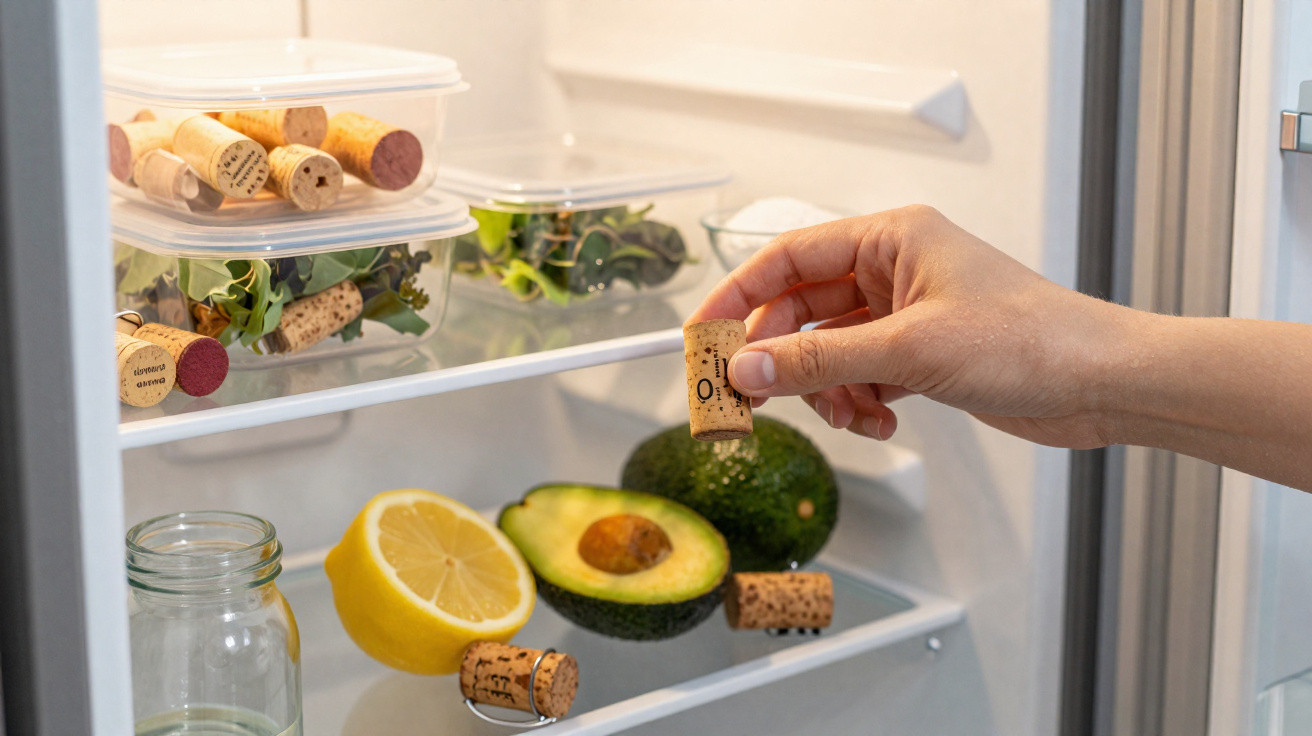
A small item, perhaps currently rolling about in a drawer, may subtly alter both the smell and performance of your fridge.
People usually think about the food they store in the fridge rather than the little measures that affect its day-to-day operation. Used properly, one wine cork may help keep food fresher for longer, reduce unwanted smells and even have a modestly positive effect on energy use.
Why a wine cork suddenly matters in your fridge
The basic principle of the modern fridge has changed little in a century: cold air behind a closed door. Even so, millions of households continue to face familiar issues, including wilted leftovers, unexplained odours, wasted food and inconsistent cooling. Increasingly, home-hack enthusiasts are championing an item that is normally discarded after a meal: the modest cork.
A natural cork can act as a moisture buffer, a divider, an odour trap and a space helper inside your fridge – all at once.
Cork is harvested from the bark of the cork oak. It is lightweight, springy and made up of countless tiny cells filled with air. The qualities that help it protect wine from oxygen can also influence the microclimate inside a refrigerated appliance.
From wine bottle to food saver
How the cork protects open bottles
The most familiar use of a cork is resealing an unfinished bottle. Pressed securely into the bottle neck, a natural cork reduces the wine's exposure to air. With less oxygen reaching the liquid, its flavours deteriorate more slowly.
Refrigeration slows oxidation further because of the lower temperature. A bottle can therefore remain pleasant to drink for several extra days, particularly white and rosé wine. For households that do not finish a bottle in one evening, this may reduce waste on its own.
Using cork on cut produce
Wine is not the only food cork may assist. Some home cooks place a clean, dry cork against the cut surface of selected foods before wrapping them.
- Halved lemons and limes, which can dry out rapidly
- Cut onions, which become soft and spread their odour
- Pieces of cheese with an uncovered edge
- Large garlic bulbs with cloves removed
Rather than working like cling film, cork functions more as a breathable cover. It lightly takes in surface moisture while reducing direct exposure to cold, dry air. This may reduce the hard rind that develops on firm cheese and postpone the rubbery texture citrus can develop.
Placed correctly and kept clean, a single cork can extend the “tasty window” of vulnerable foods by a day or two.
Experts nevertheless stress essential hygiene: use only natural, untreated corks, wash and dry them before they touch food, and never put them against ingredients that have already spoiled.
The energy angle: what a cork has to do with your bill
Why half-empty fridges work harder
Keeping air cool needs a continuous supply of energy. Solid mass, such as containers, water and food, helps maintain a steady temperature. In a half-empty fridge, opening the door allows a substantial volume of cold air to be replaced by warm kitchen air. The compressor must then work more to lower that air to the chosen temperature again.
Energy advisers commonly suggest using bottles of water to fill unused space. However, some households favour lighter items that require less room and do not add as much weight. Corks cannot provide the same benefit as several litres of water, but they may influence air movement.
Filling gaps and guiding airflow
You can place corks in spaces between containers, beneath trays or along the rear of shelves. Doing so alters the way air circulates and interrupts large, open pockets of cold air.
| Use | What the cork does | Potential benefit |
|---|---|---|
| Between jars or boxes | Minimises empty air pockets | A steadier temperature after opening the door |
| At the back of shelves | Stops items touching the cold rear wall | Reduced freezing of delicate foods |
| Under a small tray | Forms a small “second floor” | Improved circulation and less stacking |
No robust study has yet measured energy savings from using corks alone. Experts still identify suitable thermostat settings, clean door seals and defrosted freezers as the main ways to improve efficiency. Nevertheless, minor adjustments to airflow may produce more even temperatures, benefiting both food safety and ease of use.
Fighting fridge odours with a cork
Fridge smells generally arise from volatile compounds released by food as it ages: sulphur from onions and garlic, amines from fish, and organic acids from dairy products. These particles cling to plastic surfaces, seals and containers. In time, a mild background smell can become difficult to clear.
Activated charcoal and bicarbonate of soda are still widely used as absorbers. Cork occupies a middle ground: it cannot equal charcoal, but its porous structure can capture some odour-causing components.
Placed in a small open dish near strong-smelling products, cork can act as a first line of defence against lingering odours.
Users say results are best when they:
- Choose several small pieces of cork instead of one large, whole cork
- Allow the pieces to dry completely before positioning them near food
- Replace or boil them regularly to restore their absorption capacity
With fish, mature cheese or leftover takeaway, cork pieces can be put inside the container without directly touching the food. This may lessen the burst of smell released whenever the door is opened. It is not a substitute for sealed containers, but it can reduce the impact in shared fridges in flatshares and offices.
Organising space: corks as quiet shelf helpers
Separating foods and limiting flavour transfer
The position of food on a shelf can affect both flavour and shelf life. Raw meat belongs beneath ready-to-eat food, fruit should not sit against uncovered cheese, and herbs can lose their aroma when crushed behind jars. Corks can serve as small, adjustable barriers to prevent items from sliding together.
Standing corks upright in a drawer or basket creates separate lanes for foods, such as fruit, vegetables and packets. This limits direct contact and can help households follow basic food-safety practices without having to think about them continually.
Preventing crush damage
Delicate foods can easily be damaged in an overcrowded fridge. Berries may be flattened beneath yoghurt pots, herbs bruised by jars, and packed lunches tipped over until they leak. By lifting a shallow tray a few millimetres above the surface, corks can create a second level.
Positioned beneath the corners of a plate, corks transform it into a small shelf. Air can still move around it, while the weight above is no longer placed straight onto fragile food. This makeshift arrangement is suitable for:
- Leftover cakes or tarts that must not be crushed
- Fresh herbs gathered into small bundles
- Delicate berries in shallow containers
This method will not solve a severely cluttered appliance, but it can prevent frustrating occasions when a dessert or salad arrives at the table already partly squashed.
How safe is it to use cork around food?
Wine corks must comply with strict standards, but after a bottle has been opened, the cork has already been exposed to wine, lips and air. Reusing it in a fridge therefore requires a little basic care.
- Rinse corks in warm water to remove any wine residue.
- Boil them for several minutes if they will be kept near uncovered food.
- Allow them to dry fully to prevent mould from growing.
- Do not use painted or plastic-coated corks that could shed flakes.
Anyone with serious allergies or sensitivity to mould should handle cork as they would any organic material: clean it, inspect it and throw it away at the first sign of discolouration or odour.
When a cork won’t help – and what to do instead
A cork can reinforce sensible habits, but it cannot fix an uncared-for fridge. Forgotten leftovers left for weeks will still create odours, and a leaking door seal will still waste energy. Professionals highlight several priorities that make any small hack much more useful:
- Check use-by dates regularly and discard questionable food.
- Clean up spills promptly before they penetrate plastic.
- Wash door seals, where crumbs and liquids often collect.
- Defrost manual freezers before ice accumulation becomes excessive.
Households that already maintain these routines are most likely to benefit from subtle measures such as using corks. Those dealing with old leftovers or a malfunctioning appliance may need to address more significant problems first.
Beyond cork: other small tweaks to cut waste and stress
Once people begin using a cork, many start to view their fridge in a new way. The door can become somewhere to note what should be eaten first, rather than simply a haphazard row of jars. Clear containers make remaining food more visible, while labels can record the cooking date instead of the date printed on the original packaging.
Some families carry out simple comparisons: one week using the cork method alongside basic organisation, followed by another without it, then assessing how much food is thrown away. The outcome is seldom dependent on the cork alone. Instead, it acts as a prompt that a fridge is an active tool rather than merely a cold storage space. That change in mindset can bring fewer overlooked leftovers, less stressful meal planning and slightly lower energy consumption, even when nobody measures the difference exactly.
With energy prices still unpredictable and food waste remaining high, small changes in behaviour can add up. A cork in the fridge will not alter global trends, but it provides an inexpensive, almost playful means of improving everyday habits. For many households, meaningful change starts there: with one small object given a more intelligent second use.







Comments
No comments yet. Be the first to comment!
Leave a Comment