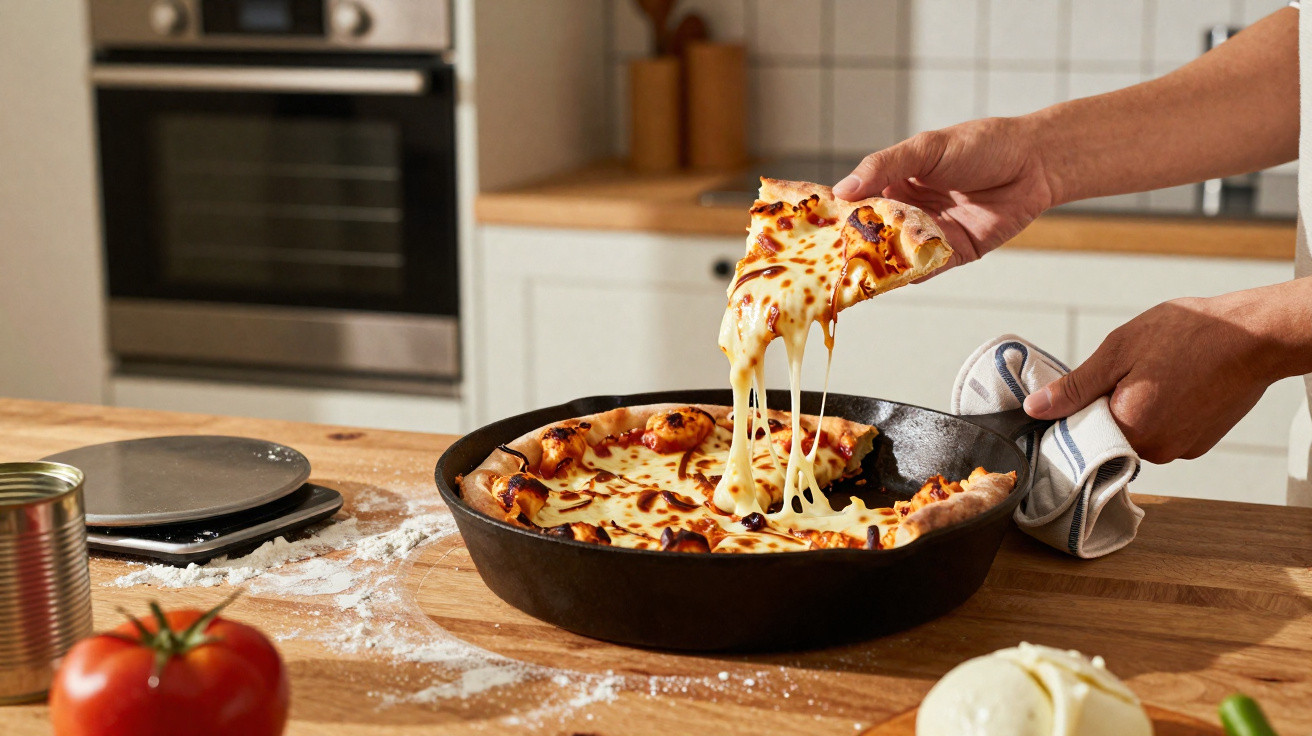
When I first saw my neighbour Mike lift a Detroit-style pizza from his cast iron skillet, I assumed he had gone mad. Its edges were deeply browned and caramelised, nearly as though they had caught, while the cheese had spread right to the rim in what looked like a glorious mistake. He sliced it with kitchen shears – kitchen shears! – then gave me a square portion heavier than nearly every New York slice I had tried. After one mouthful, I understood why Detroit locals take offence at it being called “deep dish.” The crust was crisp yet airy, with an exceptional chew, and the caramelised cheese border was simply magical. Better still, making it at home does not require a costly pizza oven or specialist kit.
The Cast Iron Secret Behind Detroit’s Most Misunderstood Pizza
Detroit-style pizza emerged in 1946 at Buddy’s Restaurant, born from necessity when the restaurant used repurposed automotive-parts trays from nearby factories. Those blue-steel pans gave the pizza its distinctive rectangular form and legendary foccacia-style crust, the hallmark of authentic Detroit pizza. Their tall sides give the dough room to rise, while the metal transfers heat evenly to form the sought-after crisp base.
A cast iron skillet recreates the effect of those original pans remarkably well. A 25 cm or 30 cm cast iron pan provides the heat retention and distribution that helped make Buddy’s famous. Its seasoned finish stops the dough sticking and contributes subtle flavour notes that aluminium tins cannot replicate. I have made Detroit pizza in standard cake tins, and honestly, it simply is not the same.
The real brilliance comes from the way dough responds to cast iron’s thermal qualities. The material warms gradually but retains heat extremely effectively, allowing the base to crisp without scorching while keeping the middle light and airy. That is precisely what the automotive trays delivered decades ago, which makes your grandmother’s skillet an ideal vessel for Detroit pizza.
Mastering Detroit-Style Pizza Dough and Assembly
Begin with a high-hydration dough, using roughly a 70% water-to-flour ratio, and cold-ferment it for a minimum of 24 hours. Combine 3 cups of bread flour, 1¼ cups of lukewarm water, 1 teaspoon of active dried yeast, 2 tablespoons of olive oil and 2 teaspoons of salt only until incorporated. It should be sticky and shaggy, almost excessively wet to work with. That high moisture level produces the pizza’s signature air pockets.
We have all overthought dough and produced a dense, chewy disappointment rather than the airy, focaccia-like result Detroit pizza is known for. Adding extra flour because the dough feels “wrong” is the biggest error. Trust the method: that wet, sticky texture is exactly the goal. Allow time and fermentation to do the work rather than trying to force it with your hands.
“The secret to great Detroit pizza isn’t technique – it’s patience. Let the dough tell you when it’s ready, not the clock on your wall.”
- Generously oil the cast iron – do not hold back.
- Stretch the dough into the corners; if it springs back, allow it to rest.
- Cheese goes to the edges – this creates the frico.
- Always put the sauce on top.
- Bake at 260°C for 12-15 minutes, until the edges turn golden.
Beyond the Recipe: Why This Pizza Changes Everything
Preparing authentic Detroit pizza at home changes something fundamental about pizza night. Rather than attempting to reproduce a faraway restaurant meal, you are taking part in a real American food tradition rooted in working-class resourcefulness. Being able to achieve restaurant-quality results using equipment you already have makes the process approachable instead of daunting. Honestly, no one needs yet another complex recipe demanding specialist ingredients from three separate shops.
| Key Point | Detail | Value for the Reader |
|---|---|---|
| Cast iron versatility | The skillet you already own works perfectly | No need to buy new equipment |
| High-hydration dough | 70% water produces the authentic texture | Professional results at home |
| Sauce on top | Stops the crust becoming soggy and builds layers of flavour | An understanding of authentic technique |





Comments
No comments yet. Be the first to comment!
Leave a Comment