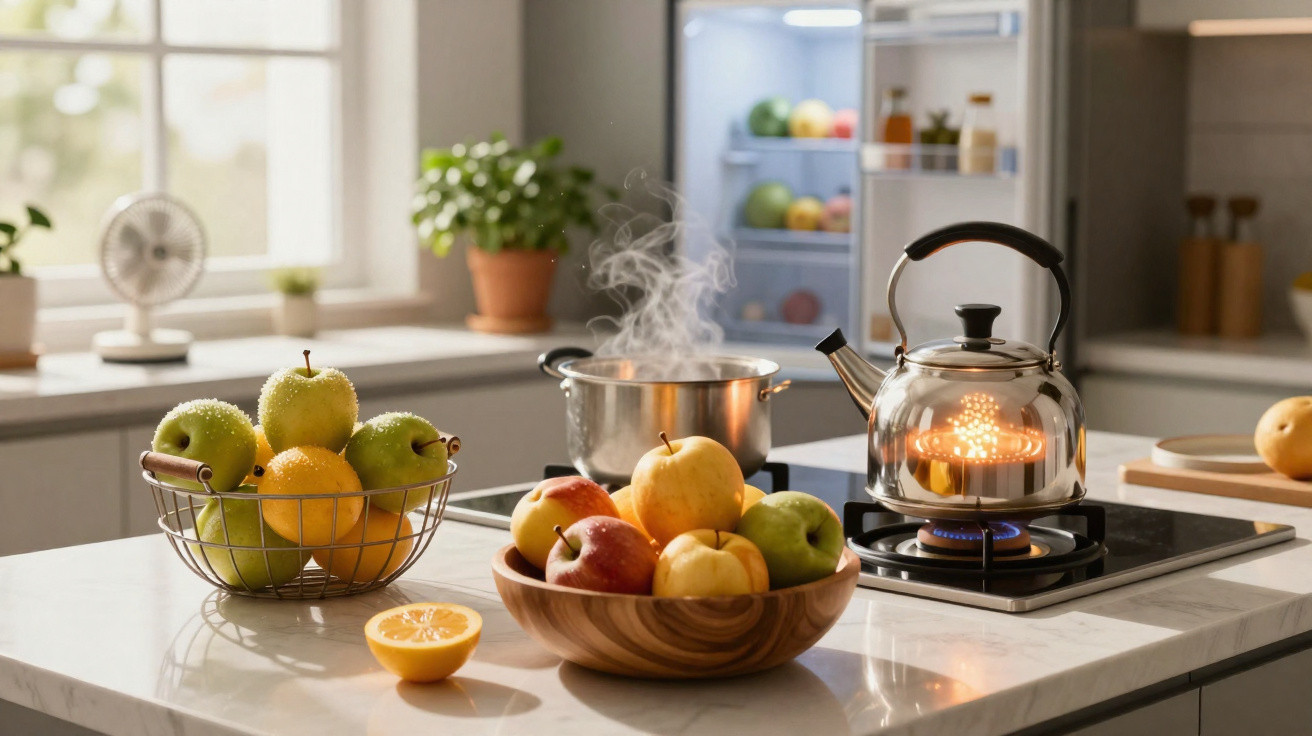
A shining pile of oranges, bananas and two avocados sits like a magazine-cover still life. Come Tuesday evening, though, the bananas are speckled with black, the avocados have become alarmingly soft, and a slight acidic odour sits beneath the comforting smell of a kitchen that is always heated.
There is nothing spectacular about it. It is simply the familiar frustration of binning supposedly fresh food yet again. The radiator keeps humming, the underfloor heating remains on and the oven goes on twice daily. In truth, the kitchen barely gets the chance to cool. The fruit suffers well before the energy bill arrives through the letterbox.
In plenty of British homes, the kitchen has gradually become the hottest room in the property. That is ideal for bare feet on tiled floors in January, but far less helpful for strawberries. Between the thermostat and the fruit bowl, a quiet yet persistent process is at work.
The real issue is not heat alone, but what warmth activates.
Why a constantly warm kitchen turns fruit into fast-track compost
Enter a contemporary flat in London or Manchester and you are likely to see the same scene: a smart kitchen that stays gently warm even at midnight, with pears in a bowl by the window, tomatoes sitting on the worktop and a half-open bag of satsumas near the hob. By Thursday, decay can seem to spread before your eyes, like unwanted time-lapse footage.
The warmth is reassuring and, during winter, can feel almost indulgent. You cook, brew tea, run the dishwasher and let the heating cycle on and off. Together, that activity keeps the room in a mild, consistent 21–23°C bubble. It is a pleasant temperature for people, but also an ideal retreat for the microbes and ripening hormones present on and within fruit.
Put simply, your fruit believes summer has arrived, even in February.
Consider bananas. At 13–14°C, they ripen at a measured pace: sugars develop and their texture remains intact. Put them in a kitchen that seldom falls below 22°C, however, and everything accelerates. Within three days, they can change from bright yellow to spotted brown and drooping: the fruit version of jet lag. Strawberries left on a bright, warm kitchen tray offer another example; in a continuously heated room, they may go from perfect ruby red to grey fuzz in under 48 hours.
UK households throw away an estimated hundreds of thousands of tonnes of fruit annually, and ever-present indoor heating quietly contributes to the problem. Minute organisms on fruit skins become active more quickly in warm air, while any bruise creates an entry point. It is easy to fault supermarket shelf life, but the same punnet generally lasts much longer in a cool hall or unheated room.
The science behind it is remarkably straightforward. Harvested fruit remains alive: it continues to breathe, albeit slowly, and emits ethylene, the plant hormone that signals cells to ripen. Higher temperatures turn those chemical reactions from a stroll into a sprint. Microbes benefit too, since many bacteria and moulds thrive at ordinary indoor comfort temperatures. With permanent warmth, fruit never receives a cooler night-time pause to slow its metabolism. It is rather like running a marathon while asleep.
Add dry, heated air that draws moisture from fragile skins and the result is shrivelled grapes, floppy berries and oranges that soften in the centre despite appearing sound outside. Spoilage is not random; it is built into the indoor climate we have made.
How to beat the heat and keep fruit fresh for longer
The most useful solution is not complex science but location. Shift fruit away from the hottest weather zones in the kitchen: not above a radiator, beside the oven or on a sunny windowsill, where double glazing holds additional heat. A shaded shelf, cooler corner, unheated pantry or even the top of the stairs can give it several extra days.
Treat the home as a small map of microclimates. The fridge is the Arctic; the airing cupboard is the tropics; and the floor near the back door resembles a mild spring afternoon. Bananas, avocados and tomatoes favour that spring-like area. Apples, pears and citrus manage well in cooler places, including near the chill of the back door, provided they are protected from direct frost.
One straightforward test is useful: if you can stand somewhere barefoot for a minute and feel comfortable, it is probably warm enough to hasten ripening.
There is another truth, though: life is busy, and fruit storage is rarely foremost in anyone's mind. On a wet Sunday, you may carefully separate bananas from apples and place avocados in a cooler basket. By Wednesday, the bananas are back over the hob because that is where the children leave them. Let’s be honest: nobody really does that every day.
Even so, a handful of easy habits can make a real difference. Keep high-ethylene super-emitters, including ripe bananas and apples, separate from delicate fruit such as berries and grapes, as well as leafy herbs. Wait until you are ready to eat berries before washing them: water plus warmth is an open invitation to mould. Also rotate displayed fruit: leave ripe pieces in a visible bowl, store less ripe items in a cooler place, then exchange them as they mature.
If your heating follows a set programme, make one small adjustment by allowing the kitchen to drop a couple of degrees overnight. Your energy bill might appreciate it, and your fruit certainly will.
One food scientist put it to me memorably:
“Fruit doesn’t hate warmth. It just treats it as a countdown timer.”
That thought alters how you view a cosy, overheated room. A kitchen that is permanently warm acts like a slow cooker for ripening. Once you have noticed it, it is impossible to overlook.
There is an emotional element too, one that storage advice rarely addresses. Discarding a soft mango or a punnet of mouldy raspberries costs more than money: it undermines our intentions to eat better, waste less and live sensibly. On an exhausting Thursday, it can feel like a minor personal defeat.
We have all felt that small sting of guilt over a slimy cucumber or blackened peach. The answer is not perfection, but a few forgiving systems that still function when you are worn out.
- Keep a “cool zone” basket in the coldest room for apples, pears and citrus.
- Store berries, grapes and cut fruit in the fridge, but eat them within 2–3 days.
- Begin hard avocados and green bananas in a warm location, then move them somewhere cooler once they soften.
- Fully open fruit bags so moisture is not trapped and heat cannot build up.
- Do one weekly “fruit check” while the kettle boils: move, eat or freeze anything close to spoiling.
Rethinking warmth, waste and what “fresh” means at home
Take a step back and this is about more than a single browning banana. The modern heated kitchen represents comfort, progress and even care. Yet its gentle, continuous warmth also quietly reduces the lifespan of the foods we most value as fresh. It is a strange contradiction: the cosier the room becomes, the sooner the fruit vanishes.
There is a modest opportunity in that. It is not an argument for living in a cold home, but an invitation to use temperature as deliberately as we use light or sound. Put a cooler basket in an unheated corner. Make a habit of taking ripening fruit out of the hottest area. Position the fruit bowl away from a spot where sun lingers all afternoon. These tiny, almost effortless actions can make every orange, kiwi and punnet last a little longer.
When you recognise that a constantly heated kitchen behaves like a greenhouse, patterns begin to emerge. You notice which fruit spoils first, which shelf keeps apples crisp for an additional week, and which winter-chilly room might be the perfect home for a box of clementines at Christmas. It is quiet knowledge gained in your own home, rather than from packaging.
Perhaps that is the real change: understanding that your home forms part of your food's life story rather than merely its final destination. The thermostat, sunny sill, humming radiator and forgotten cool hallway all affect how long fresh really lasts - and how often you scrape a soft, unhappy peach into the bin instead of sharing fruit at its perfect ripeness.
| Key point | Detail | Why it matters to the reader |
|---|---|---|
| Warm kitchens speed ripening | Constant 20–23°C increases ethylene activity and microbial growth on fruit | Explains why fruit may spoil faster at home than expected |
| Use home “microclimates” | Put fruit in cooler rooms or shaded corners, away from radiators and ovens | An easy way to extend freshness without specialist equipment |
| Separate high-ethylene fruits | Keep bananas and apples away from fragile fruit such as berries and grapes | Limits premature spoilage and reduces food waste |

















Comments
No comments yet. Be the first to comment!
Leave a Comment