A bowl of leftover pasta turns slowly, with the edges already becoming rubbery. On the worktop, another appliance sits quietly and solidly, partly covered by a cookbook and a roll of foil. There are no lights, beeps or spinning turntable - only its silent presence.
I am in a friend’s London flat, watching her push a fork into those microwave-heated leftovers. She pulls a face after the first mouthful, gives a shrug and says, “That’s just how reheated pasta tastes, right?”
My attention returns to the other appliance: the one that inspires none of the same near-religious loyalty, and which microwave devotees quietly overlook.
The reality of that unassuming appliance is beginning to get out.
And people who love their microwaves will not enjoy hearing it.
The quiet rival beside your microwave
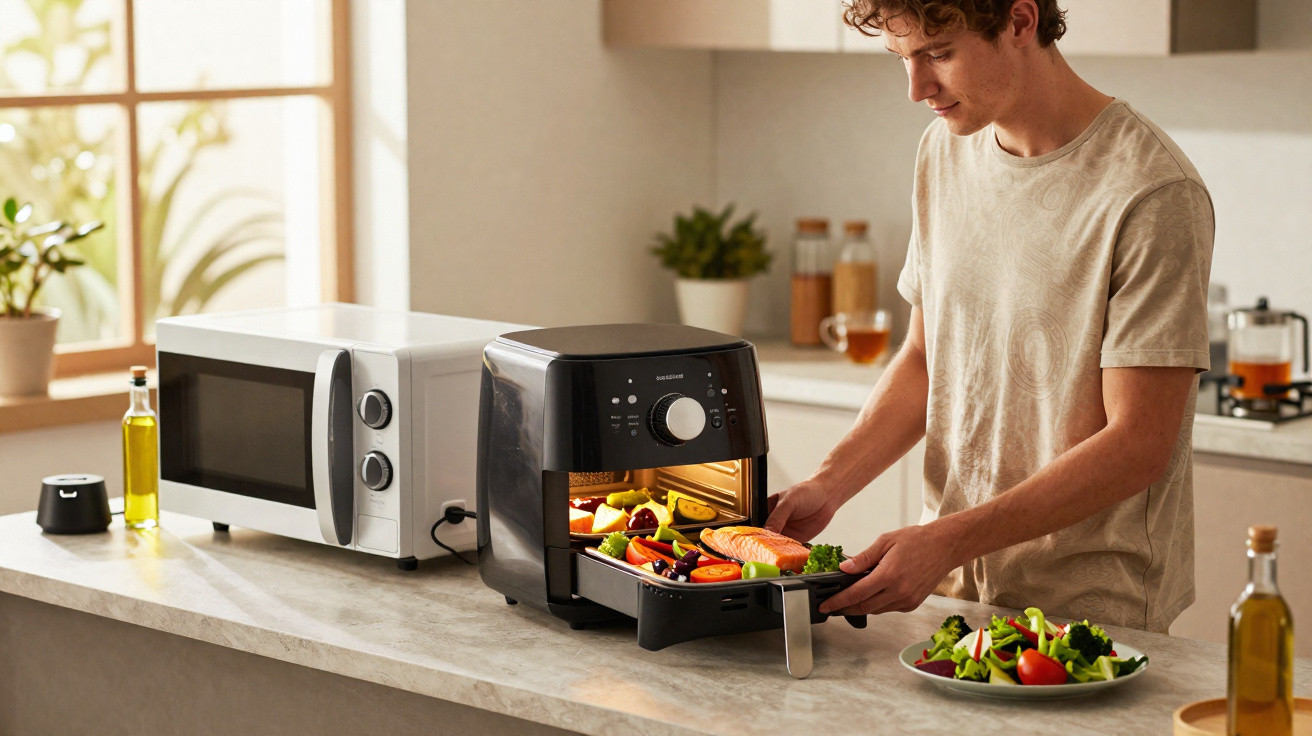
Take a proper look at a modern kitchen and an odd arrangement becomes clear. The microwave takes centre stage: noisy, polished and celebrated. Meanwhile, the other box - an air fryer, modest convection oven or bulky toaster oven - is pushed into a corner and treated as an understudy.
But this supposedly secondary appliance can often achieve what a microwave cannot: it makes food taste like food again. A crust returns. Chips regain their crunch rather than going limp. Pizza no longer resembles a rubber coaster. It does not demand attention with endless buttons and rapid timers; it simply gets on with the job.
We act as though we do not notice.
If we acknowledged how much better it can be, we would need to reconsider a decades-old routine: blasting everything in the microwave and calling it supper.
Ask why people choose a microwave and the response usually comes down to three words: quick, simple, practical. Whether it is a compact Paris kitchen or a New York studio flat, that reasoning ends the debate straight away. Put in the leftovers, press 30 seconds, then carry on with your day.
Yet research into how microwave heat affects food structure gives a less appealing picture. Microwaves stimulate water molecules unevenly, so some areas become scorching while others remain merely warm. This is why lasagne can be molten around the edge and still cold in the centre.
An air fryer or convection oven works differently: hot air moves around the food, gently drying the outside and restoring crispness to starches. The result is not that gloomy, damp texture. Instead, it is much nearer to freshly cooked food. It does take longer, certainly, but taste tests repeatedly reach the same conclusion: people favour the texture created by the “old-school” appliance over the microwave’s hurried heating.
There is a reason microwave fans avoid making that comparison. It does not reflect well on their favourite appliance.
Microwave supporters also tend to overlook the emotional aspect. Reheating leftovers is not only about ease; it is tied to comfort, habit and the sense that you have rescued your evening. Tap, beep, ding: suddenly you feel efficient, productive and modern.
Convection ovens, air fryers and toaster ovens cannot provide quite the same immediate reward. They require several additional minutes and a little more care. Preheat. Arrange. Wait. For many busy people, that wait is precisely what they are trying to avoid.
However, blind taste tests reveal another psychological effect. When the same leftovers are reheated in two ways - microwave versus a hot-air appliance - people consistently call the air-fried or oven-warmed food “more comforting,” “more like home,” more real. They do not merely describe it as tastier; they find it more emotionally satisfying too.
The startling point is not simply that another appliance can outperform the microwave on quality.
It is that we have exchanged genuine satisfaction for the illusion of speed.
How to quietly “betray” your microwave and eat better
If your microwave is still part of your daily routine, there is no need to throw it away. The change can begin with small, almost unnoticed decisions. Start with foods most damaged by microwave heating: pizza, chips, breaded chicken, roast potatoes and anything that was originally crisp around the edges.
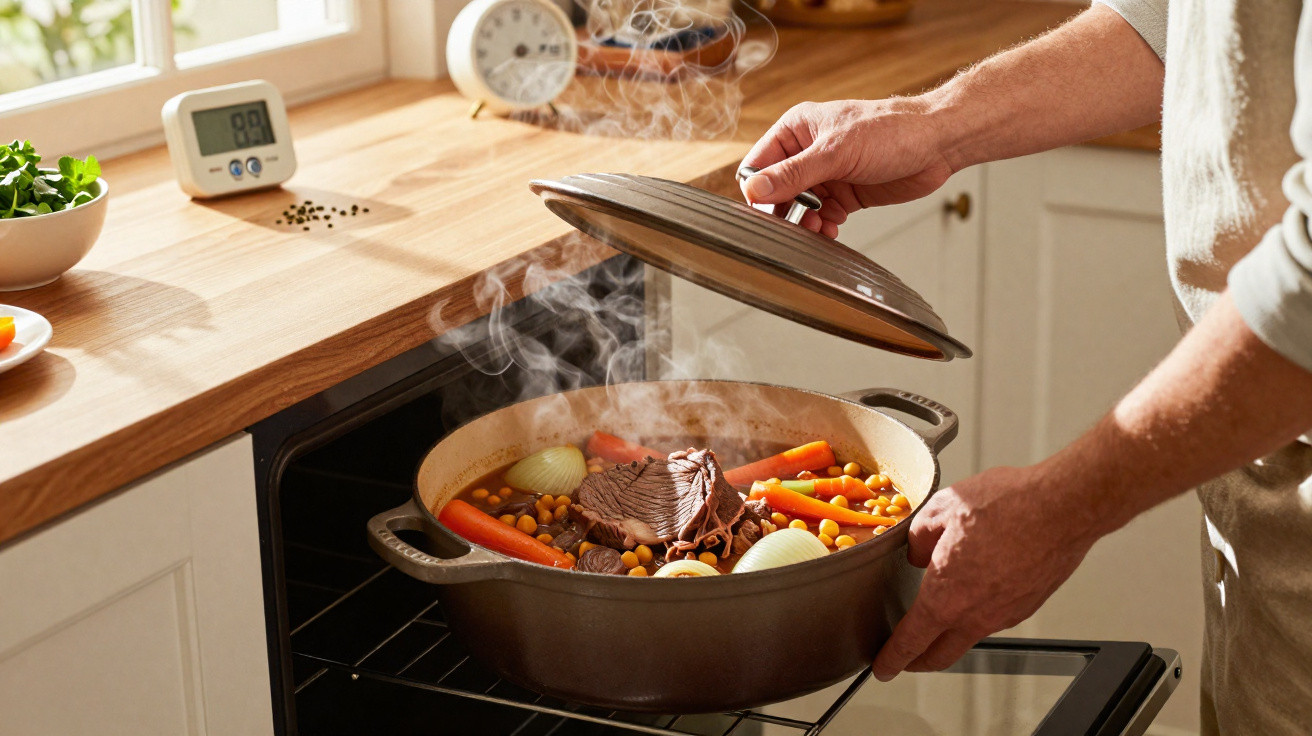
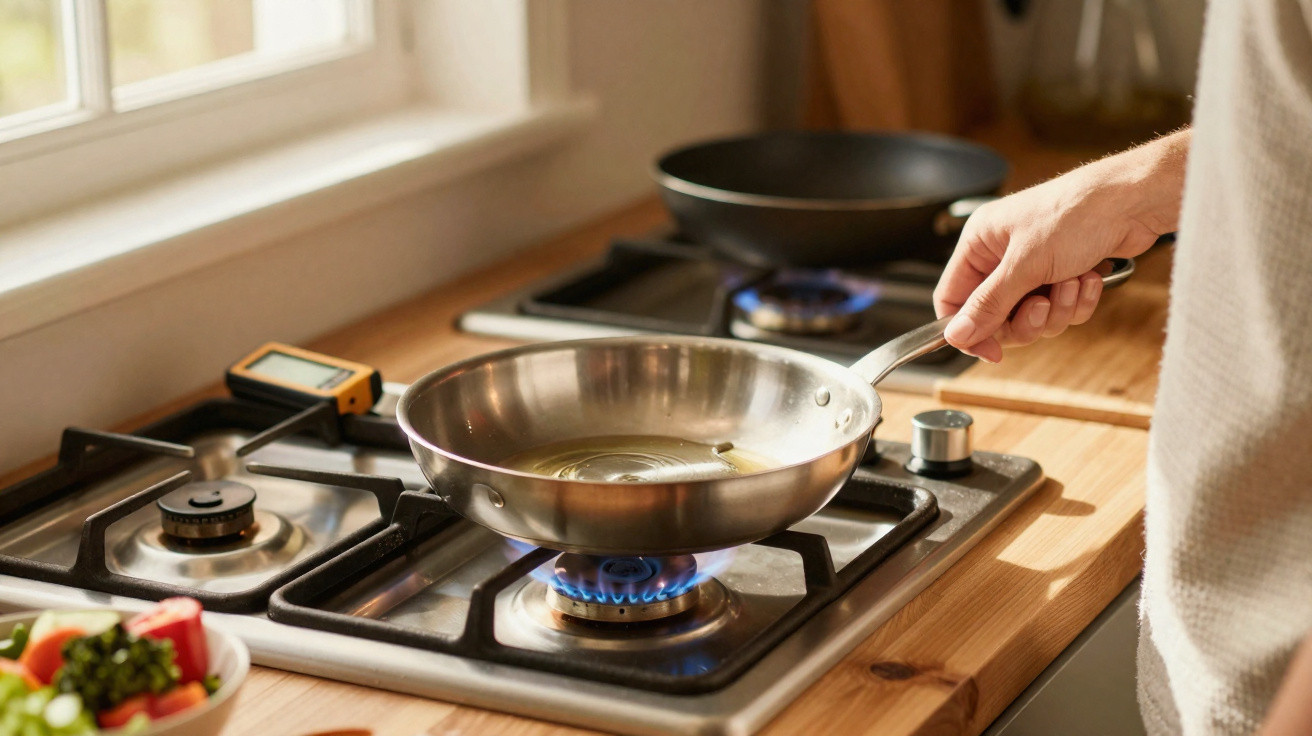
Rather than putting those foods in the microwave, place them in an air fryer or toaster oven. Set the appliance to roughly 180–200°C, leave it for 3–7 minutes and wait for that gentle sizzle. You are not preparing a meal from the beginning; you are simply bringing back what was good about it in the first place.
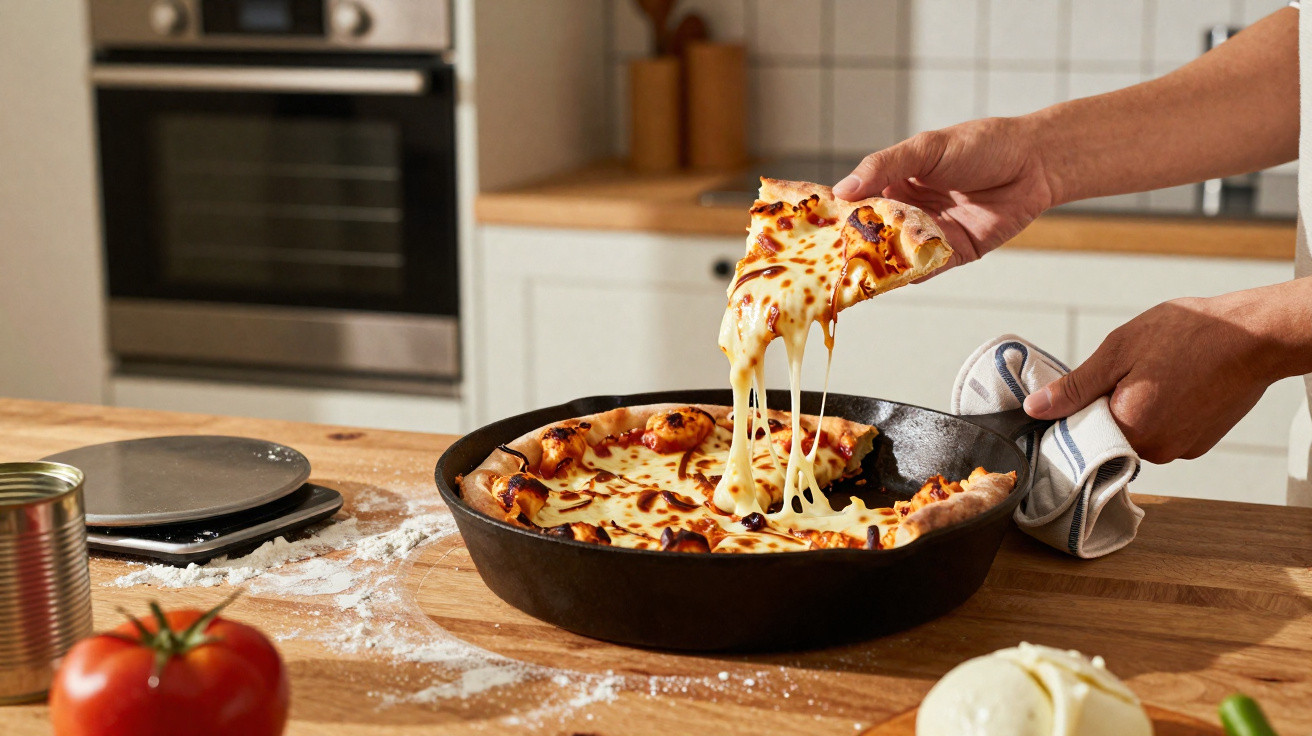
Consider a single slice of pizza: give it five minutes in a preheated toaster oven, on a tray or rack. The cheese softens gradually, the base loses excess moisture and the crust becomes firm once more. Give the same slice five minutes in a microwave and it turns into floppy, sweaty cardboard. It is one small change on the same kitchen worktop, but the experience is entirely different.
On a hectic weekday, that can seem indulgent.
Then you try the result and start wondering why you put up with soggy food for so long.
Here is the uncomfortable truth many people avoid: convenience comes with a hangover. It appears as limp leftovers, suppers left half-finished and more snacking because the meal never felt fulfilling. We have made this so normal that we hardly stop to challenge it.
Begin with one rule instead: if it was crisp yesterday, reheat it in the oven or air fryer today. There is nothing dramatic about it, and no need for a “new you” makeover. It is simply a modest boundary between you and depressing reheated food.
There are predictable mistakes, too. Some people cram the basket too full, stack chips in deep layers or heat bread directly on foil, causing the underside to steam rather than crisp. Then they announce, “See? Not better than the microwave,” without realising that they have undermined the appliance themselves.
Make smaller portions. Leave room for air to circulate. Use a rack where possible. And do not punish yourself when you forget.
On a difficult day, you will still press “30 seconds” on the microwave and walk away. Let’s be honest: nobody truly follows this every single day.
“Every time I reheat leftovers in my air fryer instead of the microwave,” a reader from Lyon told me, “it feels like I’m getting my evening back. Same food, same kitchen, totally different mood.”
That change in feeling is real. It is the small pleasure of a crunch rather than a squelch, the smell of warm bread rather than moist dough, and the experience of sitting down to a proper meal instead of a compromise. On a grim Tuesday evening, that minor distinction can matter more than we like to acknowledge.
- Reheat foods that should be crisp with hot air rather than microwave heat.
- Allow an additional 5–7 minutes and see how it affects your appetite.
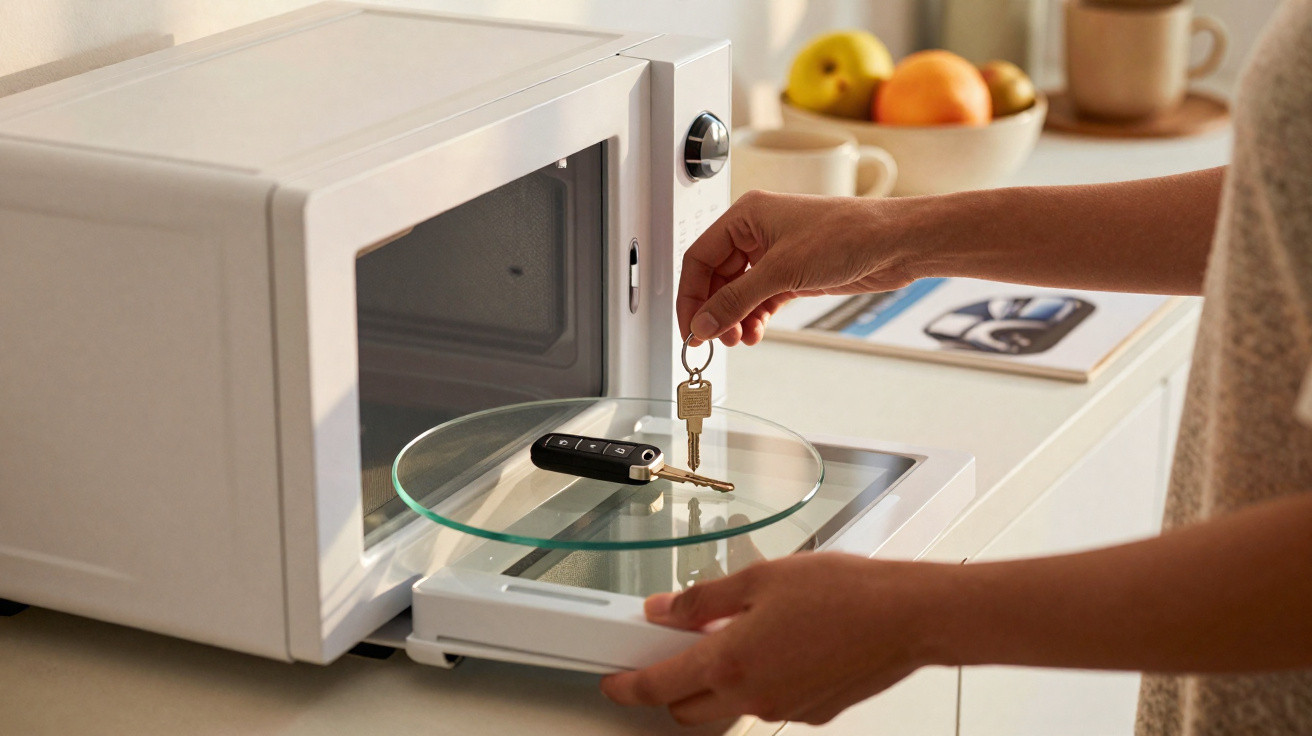
- Keep the microwave mainly for liquids, steamed vegetables and quick defrosting.
- Think of the oven as a way to “revive” food, rather than using the microwave to “blast” it.
- Pay attention to which method actually makes you finish what is on your plate.
The air fryer and oven nobody boasts about - but that keep winning
The most peculiar part of this is that the appliance which often outperforms the microwave seldom receives any attention. Nobody puts an Instagram post up saying, “Look at this stunning reheated chicken from my boring countertop oven.” The air fryer enjoyed a short-lived social-media moment before becoming another ordinary part of daily life.
Microwaves still control the conversation. Advertising sells “speed” and “power” as though they are the only measures that count. Hardly anyone asks whether that speed reduces the enjoyment of eating. Yet the pattern in real kitchens is obvious: once people start reheating more food in an oven or air fryer, they generally return to the microwave only for coffee, soup or an urgent shortcut.
At a human level, the contest is not really between appliances but between values. Are you after the absolute shortest cooking time, or food that feels worth sitting down to eat? On an exhausting evening, those priorities quietly clash.
We seldom admit it, but we taste our priorities every night.
The microwave will probably always remain on a crowded worktop. It is too deeply woven into habit, kitchen design and culture to disappear. But that does not mean you must accept floppy leftovers indefinitely. The “shocking truth” is not that microwaves are bad; it is that they are simply the wrong tool for particular foods.
And microwave lovers understand this somewhere inside. That is why they wince at soggy chips before saying, with a shrug, “Well, they’re just leftovers.” Lowering expectations is easier than altering a routine. We all do that in some part of life.
Once you have seen a cheap toaster oven give cold, uninspiring pizza a crackling edge again, though, it is difficult to forget. Once you have heard the crisp tear of a reheated baguette, the microwave’s damp chew feels like a minor betrayal. At a very quiet level, that is what this rival appliance continues to reveal.
Not a revolution in technology.
Only the difference between what we have settled for and what five extra minutes could provide.
So next time you are standing in the kitchen with a bowl in your hands and the timer within reach, stop for half a second. Look towards the other box - the one that does not beep as insistently or boast about watts and seconds. Ask yourself a straightforward question: am I genuinely in such a rush that I would choose to eat worse deliberately?
The response will vary from one day to the next. On some evenings, you will still survive on “30 seconds, start.” On others, you will put that plate in the oven and give your future self seven modest, generous minutes. One option is about getting through the evening; the other is about living a little more fully.
On paper, these are merely kitchen appliances built from metal and wire. In reality, they subtly influence how your evenings feel, how your meals are received and how much enjoyment you allow into an ordinary Tuesday. That may not appear remarkable on a specification sheet.
But it certainly tastes like a reality microwave lovers would prefer not to confront.
| Key point | Detail | Why it matters to the reader |
|---|---|---|
| Texture comes first | Hot-air cooking restores the crispness that microwave heating destroys. | Eat leftovers that genuinely taste like a proper meal. |
| Time versus pleasure | 5–7 minutes in an oven or air fryer completely changes the experience. | Accept a small delay in return for a huge increase in satisfaction. |
| Change one habit only | Reserve the microwave for liquids and emergency use. | Improve everyday life without transforming the entire kitchen. |



Comments
No comments yet. Be the first to comment!
Leave a Comment