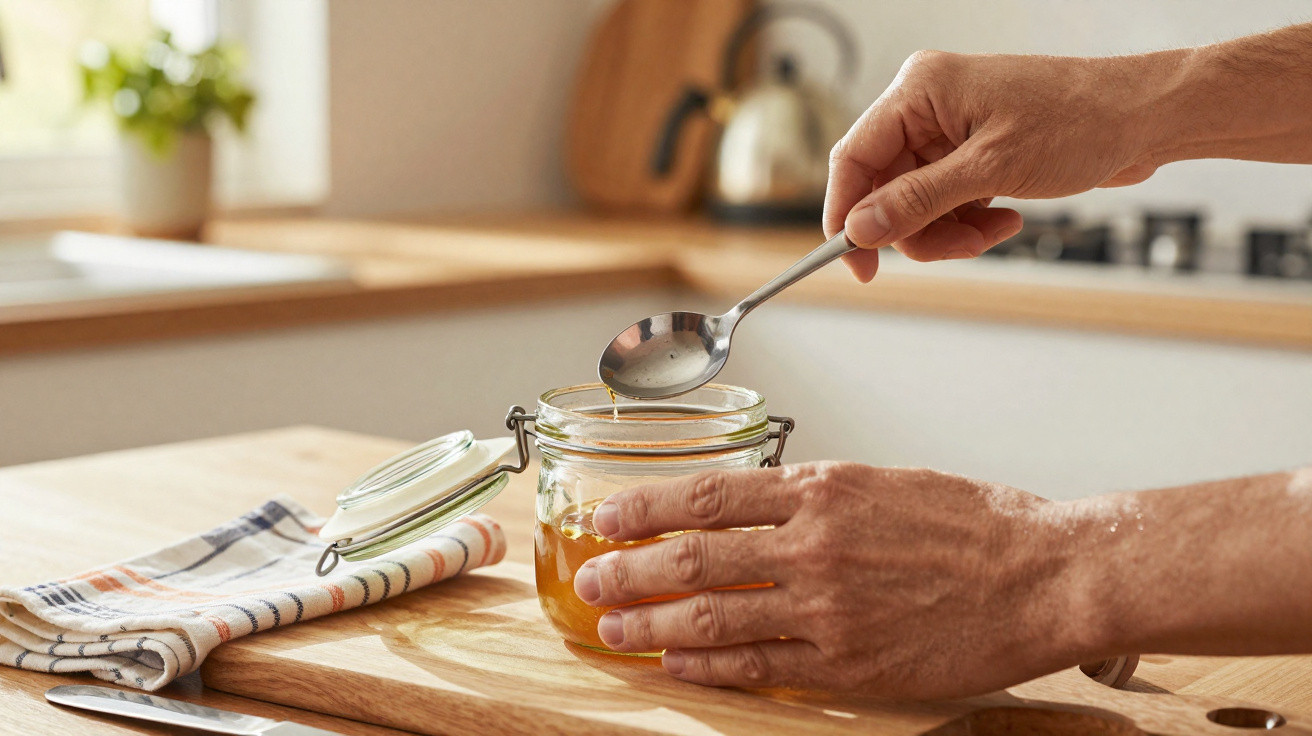
You have twisted harder, reached for a tea towel and asked anyone nearby to “just try once”, yet the lid still will not budge. Before abandoning your chickpea curry or comforting tomato sauce, try an unusually straightforward technique that is gaining attention in French kitchens: the spoon trick. It needs no specialist gadget or brute force - only simple physics and a little confidence.
The familiar frustration of a stuck jar
Jars are understated essentials in today’s kitchen cupboards. They hold everything from sweetcorn and green beans to olives, pickles and pasta sauces. Their contents can keep for months or even years, helping to rescue many weekday dinners.
Their drawback, however, can derail a recipe entirely. If a lid has sealed particularly firmly, the vacuum in the jar may seem more powerful than your hands. For older people, children and anyone living with joint pain, opening a jar can become more than a small irritation; it can be a genuine barrier.
That stubborn “pop” isn’t just irritating; it’s the sound of a vacuum seal finally giving way.
Knowing what causes the problem makes it easier to tackle. Shop-bought jars are sealed using heat: when their sterilised contents cool, the air inside shrinks, producing negative pressure. This pressure draws the lid down with unexpected strength. Rather than battling the metal lid, your aim is to release that vacuum gently.
The spoon trick for a stuck jar: leverage instead of strength
With the spoon method, an ordinary piece of cutlery becomes a small lever. Rather than depending on how tightly you can grip, you use leverage to allow air into the jar.
Opening a jar with a spoon
Use the following simple steps:
- Pick a sturdy metal spoon with a substantial handle and a rounded bowl.
- Keep the jar steady on a secure, flat surface such as the kitchen worktop.
- Find the top edge where the lid meets the glass.
- Ease the rounded end of the spoon beneath this edge, between the lid and the glass.
- Lever the spoon by pressing its handle down gently, so that its bowl raises the lid.
- Turn the jar and repeat at several points until you hear a quiet hiss or pop.
The hiss indicates that air has entered and cancelled out the vacuum. Once the pressure has been released, the lid will generally unscrew with minimal effort.
The key is not force, but patience: small, controlled lever motions around the rim gradually free the lid.
For many, the first time it works is unexpectedly satisfying. In one instant, the lid seems completely fused in place; in the next, it almost spins freely beneath your hand. The spoon does not “break the jar”; it simply gives the trapped pressure a route out.
Why a spoon is so effective
A few features make this modest utensil particularly useful:
- Rounded end: Compared with a sharp blade, the spoon bowl is less likely to chip the glass.
- Easy handling: Its handle offers reliable control, including when your hands are a little oily or wet.
- Leverage: A longer handle increases your applied force without putting undue pressure on your wrist.
- Convenience: Almost every kitchen drawer has a spoon close at hand.
Plastic spoons are prone to flexing or breaking, which is why a metal one is preferable. A dessert spoon or tablespoon is normally the right combination of strength and shape.
Alternatives when you do not have a spoon
Kitchen arrangements differ, and occasionally every spoon is hidden beneath a pile of washing-up. Several other utensils may create a similar result, provided they are used with care.
| Utensil | Method | Risks |
|---|---|---|
| Butter knife | Put the tip beneath the rim and twist lightly, working your way around the lid. | The blade may slip, so keep your fingers clear of its edge. |
| Table knife (non-serrated) | Apply the tip as a lever, much as you would with the spoon technique. | Excessive force can chip the glass or bend the knife. |
| Fork | Catch one tine under the rim and lever it gently, moving gradually to new positions. | Tines may slip or break; do not pry aggressively. |
| Jar opener tool | This is made to grip or raise the lid in order to release the seal. | It needs storage room and some familiarity to use. |
Of these options, a robust butter knife or fork may help when necessary. The action remains unchanged: apply gentle, repeated leverage around the rim while listening for the pressure to release. Even so, a spoon will usually feel safer, especially for anyone uneasy about using sharp implements in this manner.
Whichever tool you choose, the goal stays identical: break the vacuum seal, not the glass.
Safety precautions for stubborn jars
Frustration can lead to unsafe improvisation. Social media contains plenty of videos showing people knocking jars on worktops or holding them beneath hot water for too long. Some of these approaches have unpleasant results.
Techniques to avoid
- Banging the lid against the worktop: This may crack the bottom of the jar or deform its lid.
- Using extremely hot water: Rapid shifts in temperature can cause glass to shatter.
- Piercing the lid with a sharp knife: If it slips, the blade could strike your hand.
- Securing the jar in unsuitable tools: Makeshift clamps and grips can crush or misshape the jar.
Running the lid briefly under warm rather than boiling water may occasionally help, because metal expands more quickly than glass. However, the spoon trick addresses the actual issue - the vacuum - and will normally work more quickly and with less danger.
When a jar is giving you a warning
A sealed jar is not always something that should be opened. In some cases, the concern is not how hard the lid is to remove, but whether the food inside is safe.
Check for these warning signs before attempting to open any jar:
- A lid that is clearly swollen or domed.
- Rust, deep dents or holes in the lid.
- Escaping liquid or sticky deposits around the rim.
- Cloudy brine, odd colouring or unusual bubbles inside.
If a jar looks suspicious, treat it as compromised food, especially with home-made preserves.
Failures in home preserving can enable harmful bacteria to grow, including bacteria responsible for severe food poisoning. If you have any doubt, the safest option is to discard the contents, regardless of the effort you put into opening the jar.
Why the spoon trick offers more than convenience
As well as saving dinner, an uncomplicated way to open jars can make the kitchen more accessible. For someone with arthritis, reduced hand strength or a temporary injury, a firmly sealed jar may feel like a locked door. A dependable, low-effort method can help restore independence.
Think of a teenager at home alone who is making pasta with a jar of sauce, or an older family member who wants pickles with lunch. The spoon trick is suitable across different ages and abilities because it relies on a straightforward movement, not raw strength.
A quick everyday example
Imagine a weekday evening: pasta is cooking, you have promised a quick vegetable stew and the chickpeas are in a jar that refuses to open. Rather than struggling for several minutes or asking a neighbour for help, take a metal spoon:
- Slip the spoon bowl beneath the lid’s edge.
- Lever it gently while rotating the jar three or four times.
- Listen for a soft pop, then unscrew the lid in a single movement.
The entire job takes less than 20 seconds, allowing the meal to carry on without fuss. After doing it a few times, the movement can become almost instinctive.
Beyond jars: leverage around the kitchen
The spoon trick provides a useful introduction to the wider kitchen principle of leverage. The same idea helps when cracking nuts with a nutcracker, lifting weighty cast-iron pot lids or pulling out tight oven racks using a long-handled utensil.
Small changes in where you apply force can make tasks feel lighter and joints feel safer.
Noticing how leverage works can lessen strain during everyday cooking. A chopping board positioned at a suitable height, knives that suit your hand size and holding pan handles nearer to your body can all cut down needless effort. The jar and spoon are simply one clear example of this everyday physics at work in the home.





Comments
No comments yet. Be the first to comment!
Leave a Comment