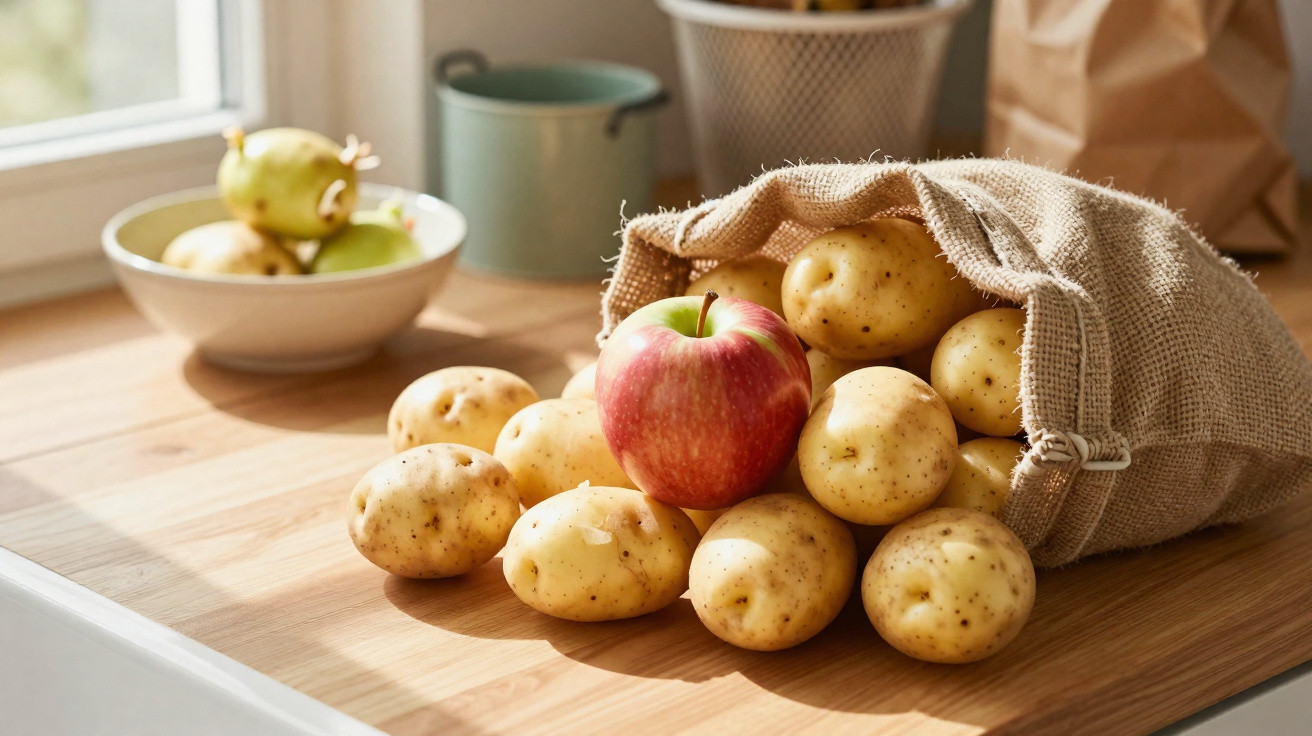
In the cupboard, potatoes often sprout faster than they can be used.
One simple fruit from the fruit bowl can make a noticeable difference.
Nearly everyone knows the situation: you reach for a bag of potatoes and, rather than firm tubers, find long, pale shoots. Throwing them away is frustrating, especially as food keeps becoming more expensive. A straightforward, almost forgotten kitchen tip passed down from our grandparents’ generation may help: placing one piece of fruit with your potato supply can noticeably slow sprouting.
Why potatoes sprout so quickly in the first place
Although potatoes seem like a long-lasting staple food, biologically they are a living storage organ of the plant. Each tuber contains energy waiting to produce a new plant. When conditions are right, the potato switches into “spring mode” and begins to grow shoots.
Common household triggers include:
- Too much warmth – for example, when the bag is stored beside an oven or radiator.
- Light – even an open wire basket in a bright kitchen can be enough.
- High humidity – such as in a sealed plastic bag.
- Damaged tubers – bruises and small cuts speed up the ageing process.
Potatoes are best kept somewhere dry, dark and at around 6 to 10°C. Many homes cannot quite provide these conditions, but a cool hallway cupboard or an unheated pantry can make a major difference. It is better not to store potatoes in the fridge: at very low temperatures, some of their starch turns into sugar. This can make them taste slightly sweet and give them a floury texture; if they brown heavily during frying, it also increases the formation of acrylamide, a substance viewed critically by experts.
The right storage spot determines whether your potatoes last for weeks or start sprouting within days.
The fruit-in-the-potato-bag trick
For decades, many households have shared the advice of putting a particular fruit with potatoes: an ordinary eating apple. It may sound odd at first, but there is a logical reason behind it.
As it ripens, this fruit releases a gas called ethylene. Plants use ethylene as a type of signalling substance to regulate ripening and ageing processes. In a carefully controlled amount, it can delay the start of potato sprouting and keep the tubers dormant for longer.
In practice, many households report that potatoes generally remain free from visible shoots for several additional weeks when an apple is placed in the middle of the supply. It should not be expected to work miracles throughout the entire winter, but the effect is often more than enough for ordinary stock-up shopping.
Does this contradict other advice? Not necessarily
You will often also read that potatoes should be kept away from fruit and vegetables because they too produce ethylene. This sounds contradictory, but there is an explanation.
- Several heavily ripening fruits in a warm, damp setting can significantly speed up the ageing of the tubers.
- A single piece of fruit in a well-ventilated bag, stored somewhere cool and dry, can slow sprouting.
The deciding factors are therefore quantity, temperature, humidity and ventilation. One apple in a breathable bag behaves very differently from a colourful fruit bowl in a warm kitchen placed directly beside the potatoes.
A piece of fruit in the bag does not replace good storage – it only enhances it.
How to use the trick correctly
To prevent this kitchen hack from becoming a sprouting accelerator, it is worth paying close attention to how it is done. This step-by-step guide also works in small city flats.
Suitable containers and preparation
- Choose a container: A hessian sack, open basket or wooden crate lined with paper is ideal. Air needs to circulate.
- Avoid plastic: Closed plastic bags trap moisture, causing the tubers to sweat and spoil more quickly.
- Sort the potatoes: Remove soft, badly damaged or very green potatoes straight away.
- Do not wash them: The thin, dry layer of soil acts as a small protective coating.
Positioning the apple correctly
Put the potatoes into the prepared container, then place one whole, undamaged apple in the middle. For a very large supply, use two apples distributed through the pile. It is important that the fruit is not squashed and that air can flow around it.
A quick weekly check is useful:
- Check the apple: Replace it if it becomes soft, shrivelled or brown.
- Inspect the potatoes: Use any that are sprouting heavily or becoming noticeably green first.
- Remove “problem cases”: Put very soft, foul-smelling or extensively green tubers in food waste or on the compost heap.
| Condition of the potato | Recommendation |
|---|---|
| Firm, without shoots, skin intact | Store or use without concern |
| Firm, small shoots, a few tiny green patches | Peel generously, remove shoots and cook thoroughly |
| Clearly soft, long shoots, larger green areas | Better not to eat; discard |
| Very soft, musty smell, patches turning mushy | Dispose of immediately; do not store further |
Health considerations: how dangerous are green patches really?
One term repeatedly comes up in discussions about potatoes: solanine. This is a natural protective substance produced by the plant, found particularly in green parts of the skin and shoots, and in larger amounts in very young, unripe tubers.
If solanine levels rise significantly, consuming large quantities may cause symptoms such as stomach pain, nausea or headaches. In properly stored potatoes that have not sprouted, levels remain within a range that the body can handle well.
The greener and more heavily sprouted a potato is, the more solanine its skin and shoots contain.
Practical everyday rules of thumb:
- Remove small shoots completely and cut away the affected areas generously.
- Peel off green areas of skin thoroughly rather than merely trimming them.
- It is best not to eat heavily green or soft tubers at all.
- Cook potatoes thoroughly, whether boiling, frying or baking them.
How smaller potato supplies can save money and stress
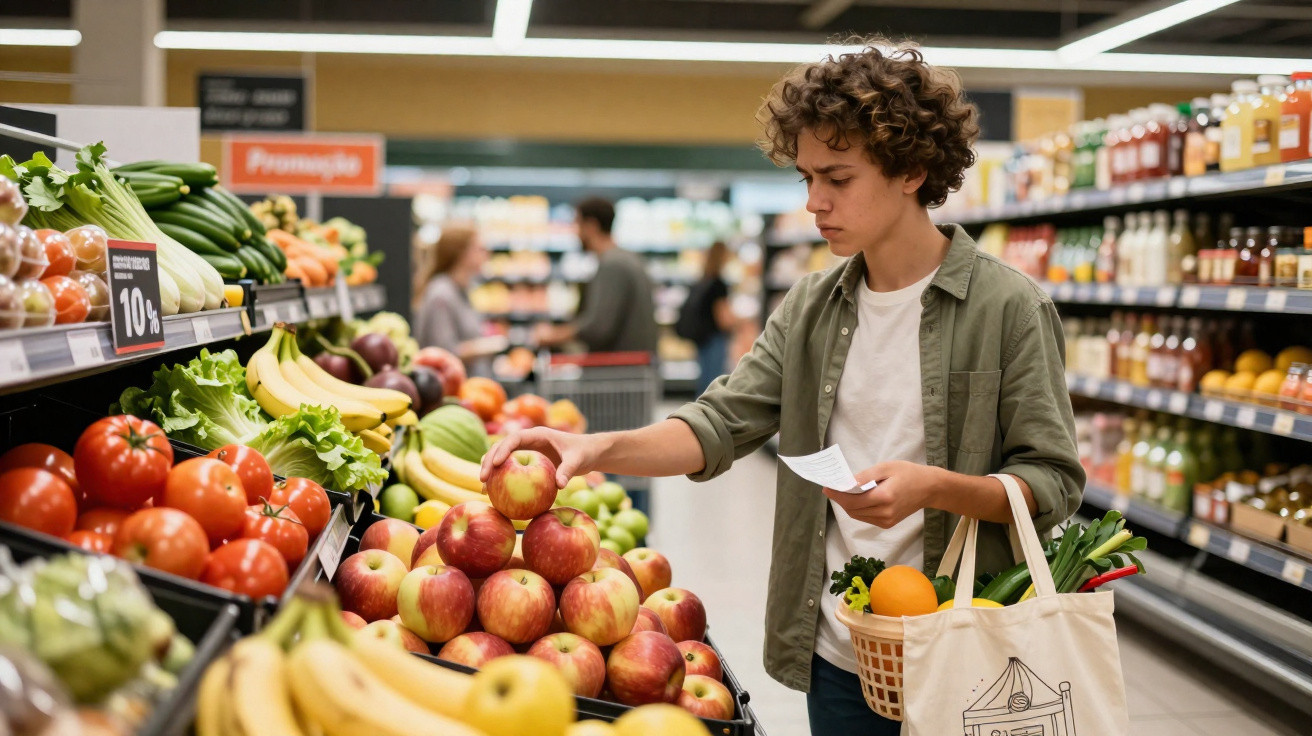
Anyone without a cellar or cool storage room should plan potato purchases more carefully. A huge discounted sack may be tempting, but in a kitchen that stays warm, some of it will almost inevitably end up in the food-waste bin.
A more practical approach is to buy smaller amounts, such as a 2 kg bag, and use it within two to three weeks. Adding the apple trick can then usually provide exactly the few extra days needed in a busy routine before you get round to cooking.
It also helps to plan meals according to the potatoes’ condition: save firmer, completely smooth tubers for fried potatoes or salad, while potatoes showing their first signs of sprouting are better used quickly in soup, mash or a bake.
More easy ways to reduce food waste
An apple among the potatoes is only one way to throw less food away. Small changes in routine can already have a noticeable effect in many households.
- Write a shopping list: Roughly planning meals makes it less likely that you will buy excessive amounts.
- Keep supplies visible: Food that is in sight is more likely to be used before it goes off.
- Plan leftover meals: Once a week, deliberately cook with what is already available; leftover potatoes are ideal for pan-cooked or oven dishes.
- Read labels: “Best before” usually does not mean that a product automatically becomes inedible after that date.
Compared with many other foods, potatoes have a fairly robust shelf life. With cool, dark storage, a breathable container and a single apple as a “timekeeper”, they keep for even longer and are far less likely to be thrown away unused.




Comments
No comments yet. Be the first to comment!
Leave a Comment