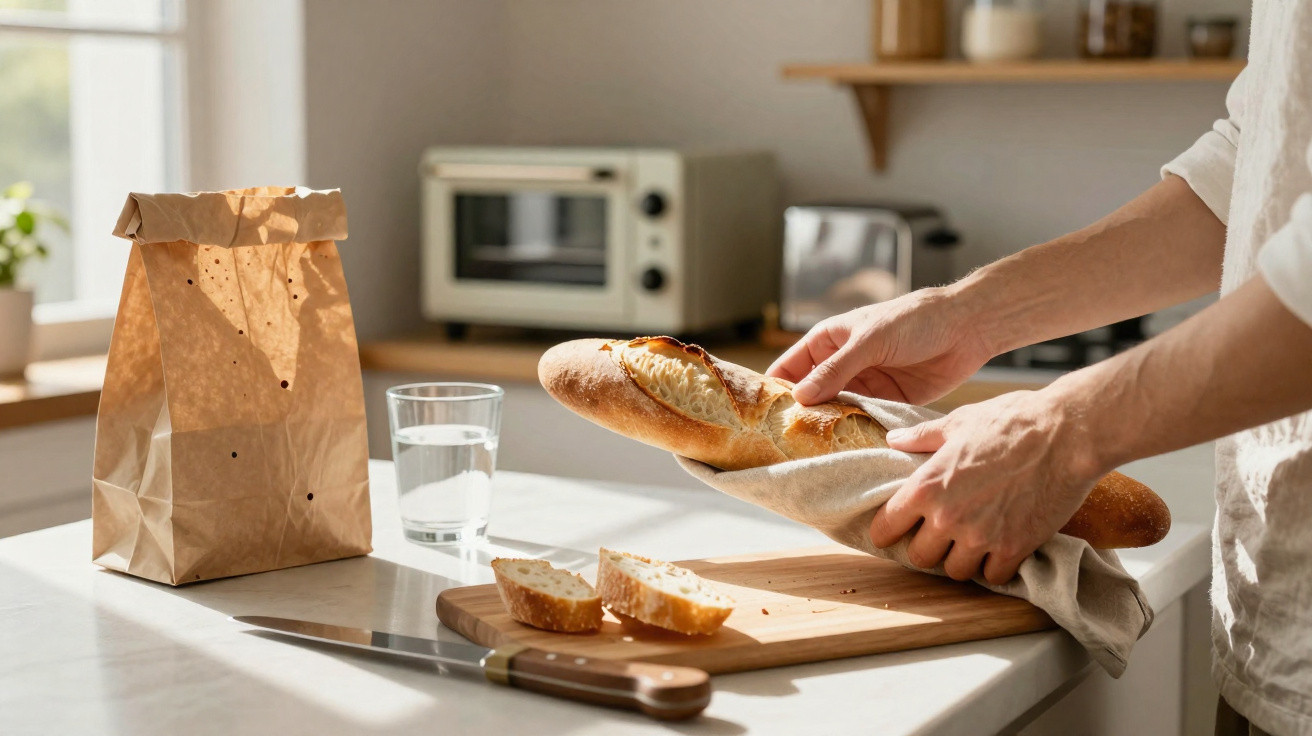
Bread goes stale quickly, but in Britain a baguette often loses its best qualities faster than most loaves.
Bring home a warm French-style loaf and the countdown begins. Bakers understand why that just-baked appeal disappears, yet a handful of easy practices can slow the process. You can retain flavour and crispness without using the freezer.
Why baguettes go stale so quickly
A baguette combines a fine crust with a moist, airy crumb, and this balance is delicate. During cooling, moisture travels from the middle towards the exterior. The crust then becomes soft. Meanwhile, starch molecules inside rearrange through a process known as retrogradation, leaving the crumb firmer and less appealing in the mouth.
Artisan loaves become stale sooner than packaged alternatives because their recipes are lean: flour, water, yeast and salt. They contain no oils, preservatives or gums. This creates excellent flavour and texture on the first day, but offers less protection by the second.
Refrigeration hastens staling, as cold conditions encourage starch to recrystallise. Plastic bags hold in steam and destroy the crust's crispness. Nearby heat is unhelpful too, because it dries the loaf unevenly. The best conditions are a cool room, consistent airflow and breathable materials.
Keep baguettes at room temperature, never in the fridge, and never sealed warm. Breathable wrap preserves the crust, not plastic.
The simple storage routine that actually works
Working bakers and experienced home cooks use this straightforward method, including Martine Lefèvre in Lyon, who has tried more approaches than many kitchens encounter in a year. It is affordable, practical and easy to repeat.
Choose breathable wrap
Reach for a clean cotton or linen tea towel, or use a fabric bread bag. Bakery paper is suitable for carrying the loaf home, while cloth is better for longer storage. It reduces moisture loss without trapping steam against the crust. In a particularly dry kitchen, place the paper bag around the cloth for a light extra buffer.
Place it right
Keep the baguette lying horizontally, well away from the hob, oven and direct sunlight. A ventilated bread bin or wooden bread cupboard works particularly well. Once you have cut the loaf, place its cut side down on a board to protect the crumb.
- Allow a still-warm baguette to cool completely on a rack.
- Wrap it in dry cotton or linen, rather than plastic.
- Keep it horizontal in a cool, shaded place with gentle airflow.
- Cut slices only when serving, and leave the cut end face down between meals.
- Keep it away from heat and out of the fridge, as both speed up staling.
Wrap only when the loaf is cool. Warm bread traps steam, softens the crust and makes day two feel like day three.
Quick ways to revive a soft or day-old baguette
Oven refresh
Moisten your hands lightly, then run a few drops of water across the crust. Set the baguette directly on the middle oven rack at 180°C for 5–8 minutes. Leave it for 3 minutes before slicing. Reheating loosens the crumb, while the crust turns crisp again.
Toaster or pan trick
For individual slices, toast them briefly, mist the crust side with water, then toast for a further 15 seconds. To refresh half a baguette, warm it in a hot, dry frying pan for 60–90 seconds; this revives the underside while the middle remains soft.
What to do with day-two and day-three bread
Stale bread is not wasted bread; it simply needs a new purpose. Once paired with heat and seasoning, a lean French-style crumb performs brilliantly.
- Garlic bread: halve the loaf, add a drizzle of olive oil, rub it with garlic and toast beneath the grill.
- Croutons: cut into cubes, coat with oil and salt, then bake at 170°C for 10–12 minutes.
- Pan con tomate: grill slices, rub them with tomato and garlic, then finish with olive oil and salt.
- French toast: soak slices in egg and milk, fry gently and serve with berries or a smear of marmalade.
- Breadcrumbs: blitz dried pieces, dry them in a low oven and keep in a jar for schnitzel or gratins.
Storage methods at a glance
| Method | Freshness window | Pros | Trade-offs |
|---|---|---|---|
| Cotton or linen wrap | 24–36 hours | Keeps the crust crisp, inexpensive, reusable | Requires a reasonably cool room |
| Paper bag in ventilated bread bin | 24–48 hours | Provides steady airflow and shields from draughts | The bin must genuinely be ventilated; some are not |
| Cut-side down on board | Same day | No equipment needed and convenient for frequent snacking | The uncovered crust dries more quickly |
| Plastic bag at room temperature | Longer softness | Keeps the crumb soft for sandwiches | The crust becomes leathery and flavour becomes muted |
| Fridge in any bag | Looks “kept” but stales fast | Reduces mould growth during heatwaves | Speeds up staling and damages texture |
Small science, big gains
Two processes govern bread after baking: moisture migration and starch retrogradation. Neither can be prevented, but both can be managed. Keeping the loaf whole for as long as possible reduces surface area and slows each process. Its crust acts as a natural shield, whereas slicing opens a direct route for moisture to escape. Salt content, fermentation length and baking level play a role as well. A deeply browned, well-baked baguette retains its texture for longer because its crust is drier and stronger.
In the first day, typical baguettes shed 3–4% of their weight through evaporation. A room at 18–20°C with mild airflow is helpful. Excessively dry air makes the crumb tighten sooner, while excessive humidity causes the crust to soften. Where kitchen conditions vary greatly, a ventilated bread bin helps moderate those changes.
Buying smarter in the UK
When you expect to eat a loaf gradually, request a baguette baked slightly darker. Its more substantial crust provides extra protection. Some bakeries sell sourdough baguettes, whose natural acidity may delay mould and add depth of flavour. Smaller options can also be more practical: demi-baguettes or ficelles often suit a weeknight better than a full baton.
Match your purchase to your household routine. If dinner uses half the loaf, leave the remaining portion whole and wrapped, then refresh its crust before lunch the following day. If sandwiches are your priority, a softer crust is unavoidable; use a loose paper-over-cloth arrangement to help balance moisture.
Safety, risks and small advantages
Look out for mould, not dryness. Blue, green or white fluffy spots mean the baguette must be discarded, as toasting does not make it safe. Warm, sealed bags promote mould growth, especially during summer. Should a loaf become wet in a rain shower, dry its surface in a low oven before storing it in cloth.
Avoiding the freezer frees up space and saves a little energy. It also protects the character of the crust, particularly valuable for soup night, cheese boards or a quick tartine with salted butter. With suitable wrapping, the right storage place and a brief oven refresh, a baguette can remain lively well beyond its first day-without a single ice crystal in sight.

















Comments
No comments yet. Be the first to comment!
Leave a Comment