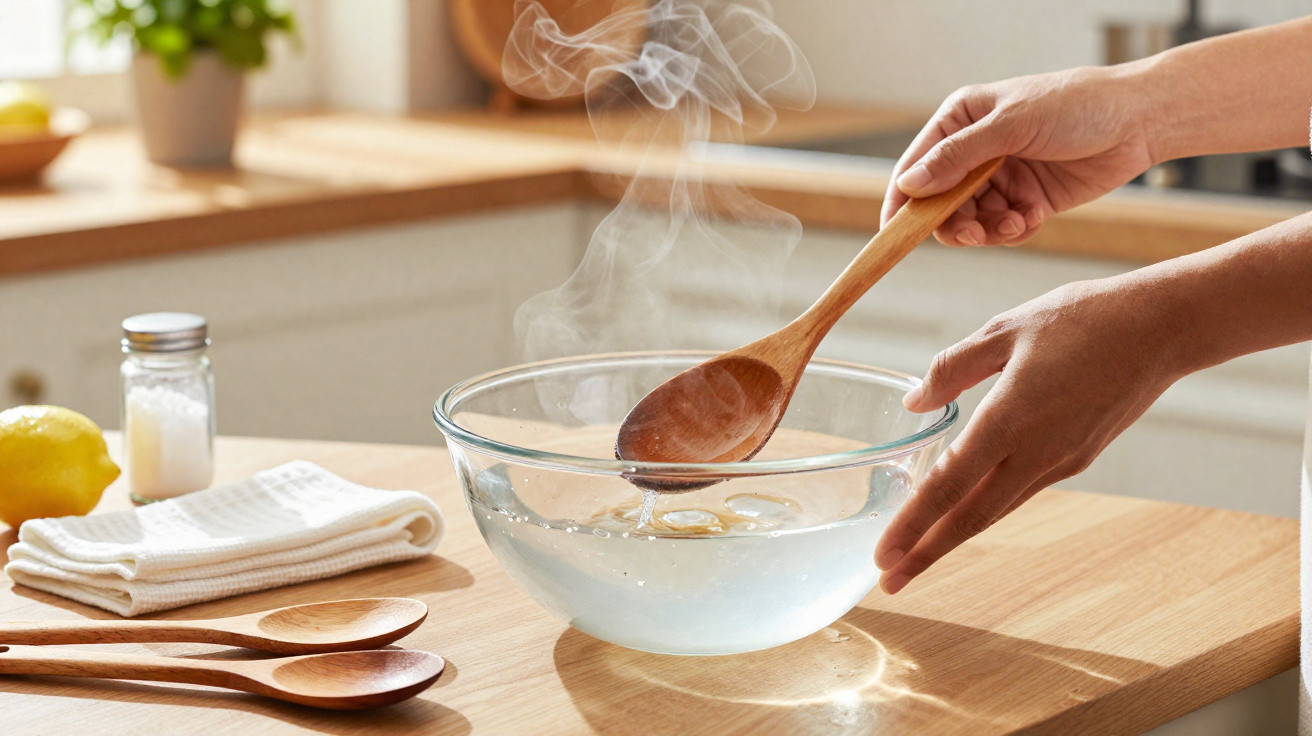
A steaming mug of tea in one hand, a saucepan in the other, plus a collection of perfectly harmless-looking wooden spoons. It all began with one question: what is actually lodged in the grain?
I set out my wooden spoons - the curry spoon, the pasta spoon and the battle-scarred “stir-anything” spoon - with that small surge of anxiety that comes just before an unwelcome discovery. Into the pan they went as the bubbles clattered away, and I waited. Soon, the water changed colour.
The unsettling truth hidden in wooden spoons
In less than a minute, the clear water had become the colour of weak tea, topped with a slick that looked very much like stale oil. An unwanted hint of garlic, along with cumin from last month, drifted upwards. I had washed these spoons more times than I could count, dried them carefully and even worked in a little oil when they began to look worn. Watching that film rise was like discovering a friend had lied: the supposedly clean spoon was not clean at all.
One spoon gave the most revealing demonstration. It is my Sunday sauce spoon, softly amber-stained by tomato and paprika. As soon as it met the simmering water, its surface began to fizz like a subdued rave, while minute wisps of colour seeped out as though the spoon were breathing out a secret stored all winter. No laboratory coat or elaborate equipment was required - only a pan, water and the awkward candour of wood under heat.
The explanation is straightforward, and far more physical than mysterious. Wood is porous, packed with tiny capillaries that readily absorb fat, juices, colour and odours. Warmth opens the fibres slightly and drives the held oils out again, rather like squeezing a waterlogged sponge. Boiling water does not “sterilise” everything, but it loosens the close relationship between the spoon and the substances it has taken in. That cloudy water is largely oil and microscopic debris left behind by normal washing. Unpleasant, certainly - but strangely satisfying too.
How to deep-clean wooden spoons without damaging them
Take a medium saucepan and add enough water to cover the spoon heads. Bring it to a steady simmer rather than a furious boil, then stir in a teaspoon of bicarbonate of soda to provide a mild cleaning boost. Put the spoons in for 2–3 minutes and watch the oils bloom into the water. Remove them with tongs, rinse them under hot running water and pat them dry. Leave the spoons standing upright somewhere warm and well ventilated for an hour. Once completely cool, apply a light layer of food-grade mineral oil. Two minutes is plenty for most spoons.
The same mistakes come up again and again. Some people boil spoons for far too long, which may warp the wood or split its grain. Others put them through the dishwasher, rather like subjecting a wool jumper to a spin cycle it cannot withstand. Then there is the long cold-water soak, which makes the wood swell and can lead to cracking later on. Most of us have made at least one of these errors. Honestly, nobody does this every day.
“Wood moves with water and heat. Treat it like skin, not stone,” a cabinetmaker told me when I asked why some spoons last decades and others die in a season.
- Keep immersion short: never leave them to soak.
- Rinse with hot water, dry promptly and use a light coating of oil every few weeks.
- Avoid bleach and aggressive detergents, which make the fibres brittle.
- When a spoon still has a strong smell after cleaning, stop using it for desserts.
- Got rough areas? Gently sand them with 240-grit paper, then re-oil.
Why this small wooden spoon ritual changes your kitchen
Cooks become fond of wooden spoons for good reason. They are quiet kitchen companions, gentle on cookware, and retain the memory of meals in a way stainless steel never can. A swift simmer and rinse does not wipe away that history; it removes only what no longer belongs. That lingering garlic, the old oil that leaves fresh onions tasting dull, the turmeric trace that transfers to tomorrow’s porridge. I genuinely winced. Yet I also felt unexpectedly proud. A hard-working spoon bears its marks. Cleaning it this way makes the next dish taste brighter and the everyday motion of stirring feel a little sharper. It is also a reminder of what a kitchen is meant to be: not perfect, merely better.
| Key point | Detail | Benefit for the reader |
|---|---|---|
| Heat drives oils out | Simmering water opens wood fibres and releases absorbed fats and odours | Cleaner flavours and fewer unwanted notes in fresh dishes |
| Brief dunk, quick drying | 2–3 minutes in water, followed by thorough drying and a light oiling | Helps prevent warping and lengthens the life of spoons |
| Gentle products work best | Bicarbonate of soda, mineral oil and light sanding for roughness | Safer care without harsh chemicals |










Comments
No comments yet. Be the first to comment!
Leave a Comment