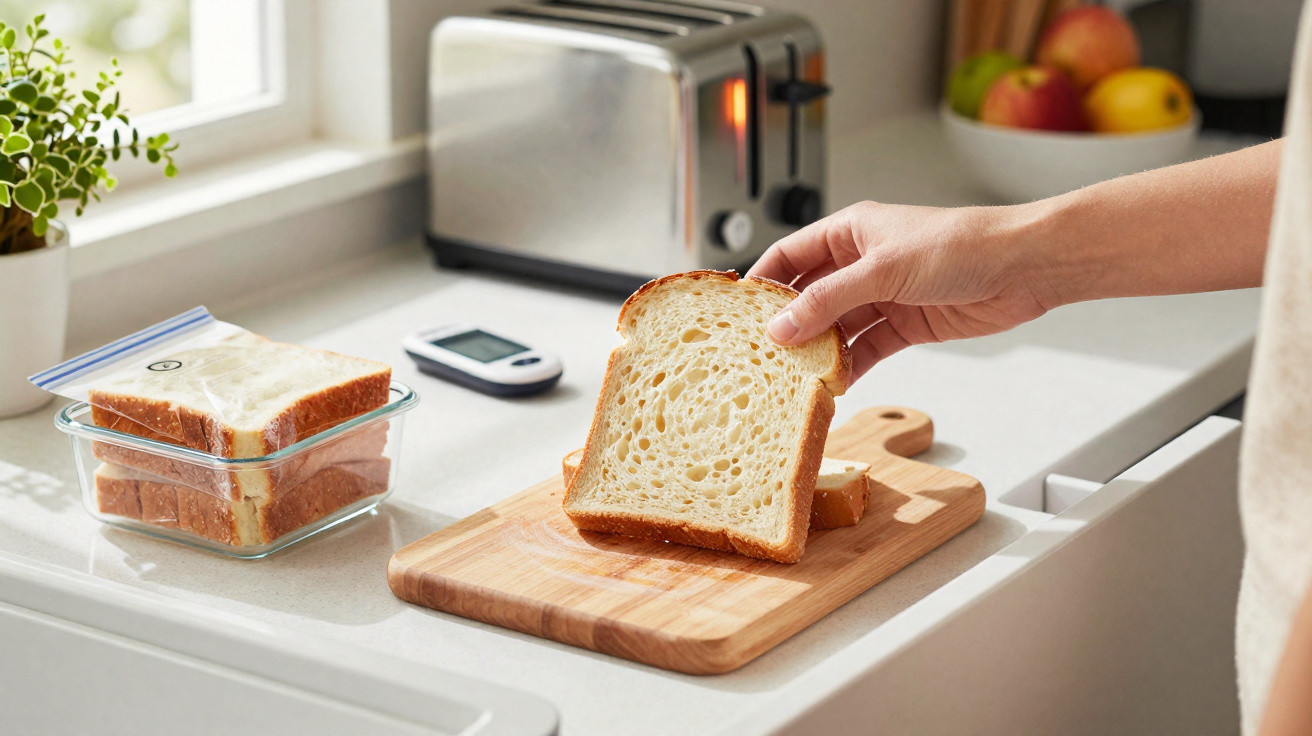
Reaching for a freezer bag has long been second nature: leftover bread goes into the freezer and that is that. Fewer slices end up in the bin, which feels like the right thing to do. At the same time, warnings circulate about germs, supposedly “dead” vitamins and questionable effects on blood sugar. So what is true, what is scaremongering, and how can you freeze bread so that it reaches the plate without any problems?
What bread provides – and how freezing affects it
In many homes, bread is a staple food. It mainly supplies complex carbohydrates, along with some protein, fibre, B vitamins and minerals such as magnesium. The type of flour matters: white rolls are primarily a source of starch, whereas wholemeal bread also contains the outer layers of the grain and therefore provides more nutrients.
Freezing has less impact on these nutrients than many people assume. The more significant losses usually occur beforehand:
- during baking in the oven,
- while bread is kept on the worktop for a long time,
- through exposure to light, warmth and dry air.
Putting bread into a freezer at around -18°C tends to halt these processes rather than intensify them. Vitamins and minerals are broadly retained. Freezing bread early may even preserve its nutrients better than leaving it uncovered for several days, where it gradually dries out.
“From a nutritional perspective, freezing fresh bread causes very little harm – provided it is put into the freezer promptly and well wrapped.”
Hygiene: when frozen bread can become a risk
The more important issue is germs. Low temperatures stop most bacteria, moulds and yeasts from growing, but they do not reliably kill them. Freezing a loaf that is already partly dried out and has been handled repeatedly effectively freezes its microbial load as well.
Common mistakes that raise the risk include:
- leaving bread unprotected in the kitchen for hours before freezing it;
- placing it in the freezer uncovered or only loosely wrapped;
- storing it for months among open ice, freezer-burned vegetable packets and ice cubes;
- defrosting it slowly in a warm kitchen, then leaving it at room temperature for even longer.
When these factors combine, microorganisms can multiply readily after defrosting. Slightly damp areas and the soft interior of the loaf provide particularly favourable conditions.
Typical warning signs in bread stored in the freezer are:
- slimy, stringy patches (“ropy bread”);
- an unusually sharp, sour or musty smell;
- visible spots of mould, even when they appear small;
- rubbery, damp crumb in individual areas.
“If bread shows filaments, mould or smells odd, it belongs in the bin without question – cutting it away is not enough.”
What really changes inside bread during freezing
A closer look reveals what happens in the freezer: water in the crumb forms ice crystals. These move liquid into other areas and alter the structure made up of starch and protein. As a result, thawed bread can feel slightly rubbery, while the crust loses some of its crispness.
If a thick piece of bread is only partly thawed, its centre remains cool while the outside has already reached room temperature. The middle may then warm up afterwards, creating areas that stay “pleasantly warm” for a long time – ideal conditions for unwanted bacteria.
The surprising effect on blood sugar
The metabolic aspect is particularly interesting. Small studies involving adults suggest that bread which has gone through the sequence of “baking – cooling – reheating” produces a smaller rise in blood sugar than freshly baked white bread.
The reason is that some of its starch becomes what is known as resistant starch. This type is not absorbed into the bloodstream as readily. Instead, it behaves more like fibre and is further processed by gut bacteria in the large intestine.
One small study found roughly the following differences:
- fresh white bread: a marked rise in blood sugar;
- frozen and then thawed bread: a blood sugar peak around one third lower;
- frozen, thawed and subsequently toasted bread: a slightly smaller rise still.
“Frozen bread that is toasted later causes blood sugar to rise measurably more slowly than the same quantity fresh from the bakery.”
For people with type 2 diabetes or highly fluctuating blood sugar levels, this may be a small but useful part of everyday management. However, a white-flour roll does not become a diet food as a result: its calorie and carbohydrate content remain unchanged.
How to freeze bread safely and sensibly
Anyone using the freezer as a bread store can get a great deal right with a few simple measures. Ideally, freeze bread on the day it is bought or baked, once it has cooled completely.
Recommended method:
- Portion it: Cut the loaf into slices or manageable pieces, so that only the amount needed has to be taken out later.
- Pack it airtight: Put it in a freezer bag or container, pressing out or vacuuming away as much air as possible. Label it with the date.
- Limit storage time: Two months is a useful household guideline for maintaining acceptable flavour and texture.
- Defrost quickly: Either thaw it in the fridge over several hours or at room temperature within one to two hours.
- Heat it through: Briefly warm it in an oven or toaster to revive the crust and flavour, while also reducing surface germs.
- Never refreeze it: Defrosted bread should be eaten or discarded, not returned to the freezer.
For more vulnerable groups, including pregnant people, older adults and those with weakened immune systems, it is advisable to defrost bread in the fridge and heat it thoroughly in the oven.
Anti-food-waste benefits: when freezing bread is especially worthwhile
People who regularly buy more bread than they need can noticeably reduce waste by using the freezer. Rather than throwing away half a dried-out loaf every other day, they can freeze small portions and use them as required – as toast, croutons or bread cubes in bakes.
Freezing early is particularly worthwhile for wholemeal and seeded loaves: the valuable fatty acids and vitamins in the outer grain layers remain considerably more stable than when bread is left ageing in a warm kitchen for days.
Practical everyday examples
A few familiar situations show how the freezer approach can be used effectively:
- One-person household: Slice the entire loaf immediately after buying it, freeze it in several bags and take out only two or three slices at a time.
- Family with school-age children: Buy several loaves at the weekend, eat some fresh and freeze the rest in slices – then pop it in the toaster in the morning and place it straight into the lunchbox.
- Home-baked bread: Once cool, cut it into thicker slices, freeze them and reheat them in the oven when required – keeping the effort involved in each baking day manageable.
Anyone who needs to watch their blood sugar can establish a personal routine: chill or freeze bread as standard, then thaw and toast it briefly later. Keeping an eye on the total carbohydrate amount remains essential nonetheless.
Risks and limitations of the freezer method
The method is not entirely without drawbacks. Long periods in the freezer reduce quality: flavour fades, the crust becomes duller and the crumb more prone to crumbling. Breads with a high water or fat content, such as ciabatta or very moist multigrain loaves, lose their structure more quickly.
Hygiene inside the freezer matters too. Old open packets, layers of ice and strong smells from foods such as fish or garlic dishes can transfer to poorly wrapped bread. Defrosting, sorting and quickly cleaning the freezer once every quarter helps to limit these effects.
There is another consideration: feeling that there is an unlimited bread supply in the freezer may lead some people simply to eat more because something is always within reach. For people who are overweight or experience binge eating, this can be a disadvantage. Defrosting only small portions at a time and planning bread as part of meals, rather than snacking on it “on the side”, can help.
What terms such as resistant starch mean
The phrase “resistant starch” often appears in this context. It refers to starch that passes through the small intestine relatively undigested. Technically, it counts as fibre, although it originally developed from conventional starch. It provides fewer calories than normally digestible starch, can keep people fuller for longer and may have a slightly more favourable effect on blood sugar patterns.
This form of starch is not created only by freezing bread. More generally, it develops when starchy foods such as potatoes, rice or pasta are cooked, cooled and later reheated. Bread that undergoes this cold-to-warm cycle therefore follows a familiar pattern.
Anyone aiming for steadier blood sugar overall should focus on the basics alongside such techniques: more wholegrains, more vegetables, enough protein and regular movement. Freezing bread can make a small, practical contribution, provided hygiene, storage time and portion sizes are right.
















Comments
No comments yet. Be the first to comment!
Leave a Comment