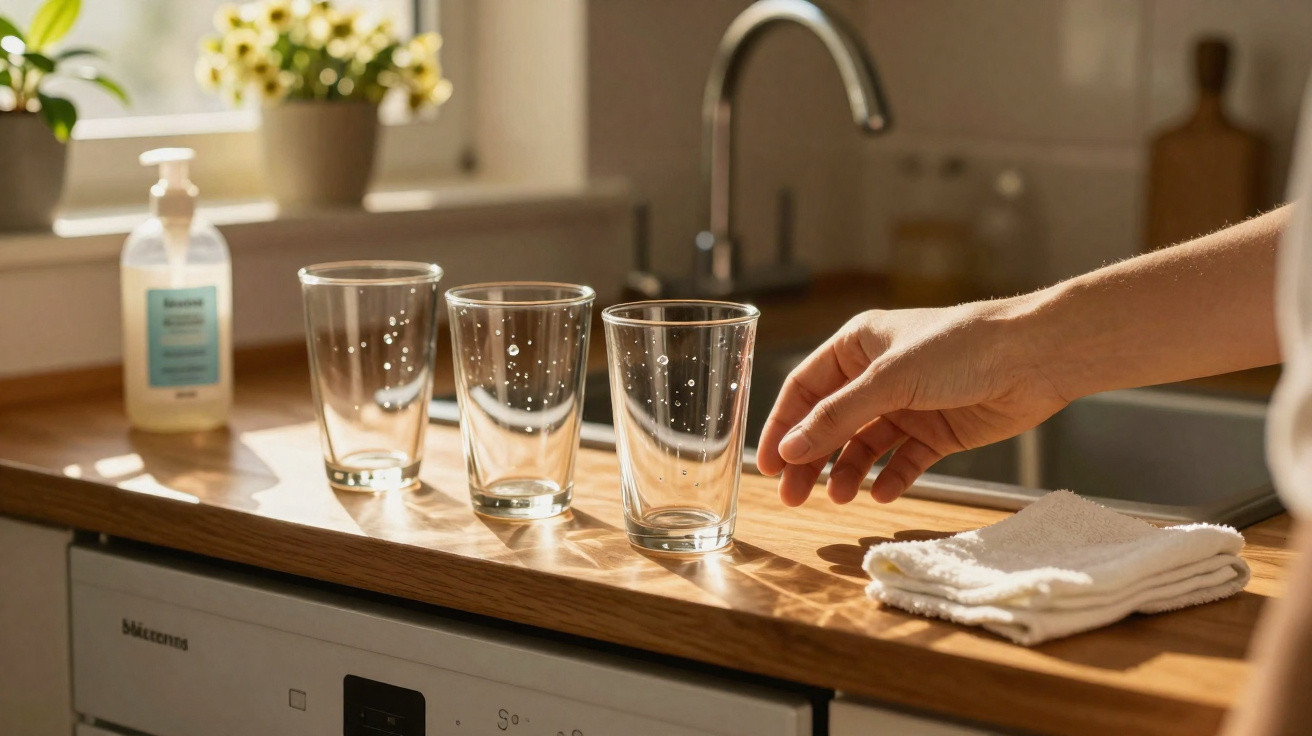
Cloudy rings around the rim, chalky specks on the bowl - I assumed either my dishwasher was on its way out or the water was at fault. Then one minor adjustment to the way I loaded the top rack left every glass crystal-clear, wash after wash.
Dinner had finished, the plates were piled up, the children were bargaining over bedtime like miniature solicitors, and all I could notice were the marks. I changed detergents, cleaned the filter, selected the hot cycle and even offered a quiet prayer to the appliance gods. Then I spotted it - it was neither the detergent nor the sensor, but the angle. I nearly laughed at how tiny the adjustment was. Just a few degrees and a little breathing room made the glasses look brand new. After three washes, I was certain it was no coincidence. The answer had been there all along.
The small adjustment that transformed every glass
I used to push every glass firmly onto the tines, upright and close together, like soldiers on parade. It seemed safe and space-efficient, with neat rows and satisfying symmetry. Then I began resting glasses between the tines, tipping them towards the central spray arm and leaving a finger-width between the rims - and the results changed completely.
We have all unloaded the dishwasher in a hurry, only to discover pale milk rings and ghostly mineral spots still clinging to the glassware. For me, they always appeared around and just below the rim, precisely where water appeared to settle. One Saturday, after brunch, I put on a quick wash, arranged the top rack in diagonal rows and positioned each glass at an angle by feel. The following morning, when the light caught them, they almost seemed to ring.
Here is the unexciting fact that makes all the difference: water naturally settles, and settled water leaves spots. When a glass is held upright on a tine, its rim acts as a small ledge where droplets linger and minerals dry into place. Tip the glass 10–20 degrees towards the centre spray and away from the side walls, and gravity helps it dry while the jets can reach it directly. The answer was not a different detergent - it was a different angle.
How I now load a dishwasher for spotless glasses
The adjustment is simple: I set each glass between the tines rather than onto them, then angle it gently towards the middle of the rack so its opening faces the spray arm. I leave a finger-width between rims, avoid resting the lip against tine tips, and do not place tall items directly in front of the glasses. If the rack design permits, arrange cups and tumblers in staggered diagonal lines, allowing the spray to pass through like wind through a fence.
When you are tired, it is easy to slip into old habits. You press a glass down until it catches on the metal, then tuck a bowl in front because there is room. That is the trap that creates spots. Keep three things in mind: angle, space and a clear route to the spray. Rinse aid is useful, but it cannot overcome poor positioning. Honestly, nobody manages this perfectly every day. Even so, after a week, that two-second tilt becomes automatic.
When I asked a repair technician why the method worked so effectively, he gave the gentle shrug of someone who has seen a thousand dishwashers. “Spray, air, gravity - give them a path, and they’ll do the rest.”
“Glasses don’t need force; they need flow. Blocking the rim is like putting a cap on clean.” - Home appliance tech, 12 years on the job
- Position glasses between the tines, angled 10–20° towards the centre spray.
- Keep a finger-width between rims; never nest glasses or rest their lips against tine tips.
- Stagger the rows diagonally and keep tall items clear of the spray route.
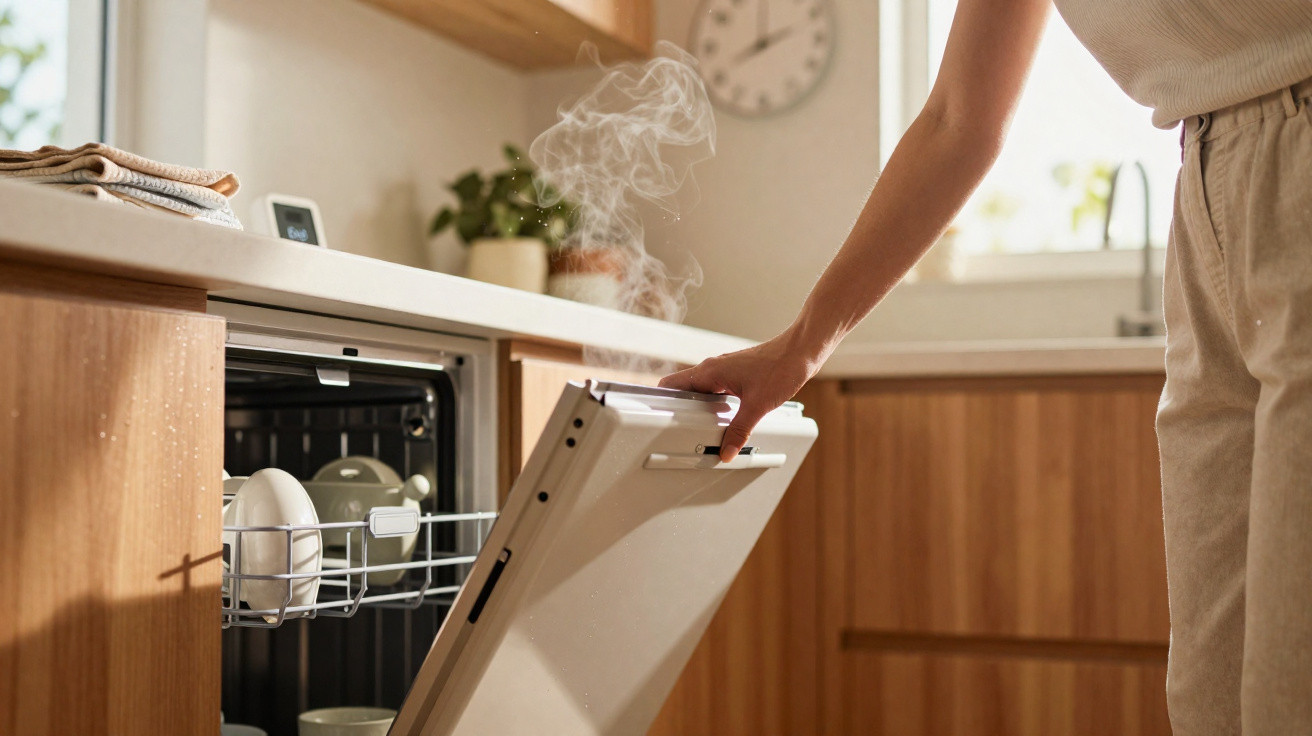
- Use rinse aid and choose a hot cycle with heated drying, or open the door at the end.
- Clean the filter monthly to maintain strong water flow.
The effect throughout the kitchen
Once the glasses began to sparkle, the rest of the load improved as well. Bowls dried more quickly because I was no longer creating a barrier, and the spoon that always emerged sulking in a puddle finally found its sunshine. The kitchen felt more peaceful, not because I was doing extra work, but because those small decisions were doing it for me.
That is the understated magic of household routines that genuinely last. You do not need to rebuild an entire system; you simply tilt a glass. Friends began asking why my water tumblers looked so new, and I felt slightly foolish explaining the finger-width gap and diagonal layout. Then they tested it themselves and sent back photographs. Space beats soap.
There is a quieter pleasure in seeing one straightforward idea spread further. You start noticing direction and flow everywhere - in the way coats collect by the entrance, the route you follow with the vacuum cleaner, and how leftovers move through the fridge. Aim the rims, not the bases. Often, the right angle is the one you had overlooked.
| Key point | Detail | Why it matters to the reader |
|---|---|---|
| Angle and spacing | Rest glasses between tines, angle them towards the centre spray, and leave a finger-width between rims | Eliminates areas where water settles and creates marks or streaks |
| Keep the spray path clear | Arrange rows diagonally and prevent tall bowls, chopping boards and baking trays from blocking the jets | Allows jets to reach inside glasses for a complete rinse and clean |
| Rinse aid, heat and maintenance | Use rinse aid, select a hot final rinse, clean the filter monthly and crack open the door after the cycle | Improves drying, avoids mineral residue and reduces the time needed for spotless results |











Comments
No comments yet. Be the first to comment!
Leave a Comment