You open the fridge while still half asleep, looking for milk. The first thing that greets you is a wall of odour: curry leftovers from three days ago, half an abandoned onion and unidentified takeaway tubs clustered at the back. You shut the door, then open it again, as though a second attempt might somehow smell better.
Wiping down the shelves makes a slight difference, and airing the fridge achieves almost nothing. Meanwhile, scented supermarket “fridge fresheners” can feel like spraying perfume over body odour rather than dealing with the actual problem.
Yet there is one tiny, almost absurdly simple item that can quietly tackle it.
It is probably already in your kitchen cupboard.
Why your fridge smells… even when it looks clean
Most people associate a dirty fridge with spills, stains and sticky shelves.
In reality, the strongest odours often come from vapour rather than visible grime. Minuscule particles from cheese, fish, onions, sauces and fruit move through the chilled air, settling on every surface inside.
You clean the glass shelves, bin the questionable Tupperware and feel pleased with yourself for about ten minutes. Then, the following day, that faint but persistent odour returns.
It is not unpleasant enough to be revolting, but it is enough to make your yoghurt taste faintly of last night’s garlic.
Imagine a friend visiting and you offering them a drink. As you open the fridge, a wave of “something” drifts out.
You both act as if you have not noticed. They smile, you grab the bottle more quickly than usual, close the door too fast and immediately change the subject.
A 2023 household survey in Europe found that unpleasant fridge odours are among the top three reasons people feel “embarrassed” about their kitchen when guests visit.
Not an untidy sink. Not crumbs on the worktop. The fridge.
What is happening is chemistry, rather than a lack of cleanliness.
Odours are volatile molecules suspended in the air. Certain foods, particularly sulphur-rich items such as eggs, cruciferous vegetables and fish, release molecules that adhere to plastic, rubber seals and even the insulation in your fridge.
Routine cleaning gets rid of the sources, but it does not remove every odour molecule that has already dispersed throughout the appliance.
That is why you need something in the fridge that does more than mask the smell: it needs to react with, capture or neutralise those molecules gradually.
The quiet power of a simple bowl of baking soda
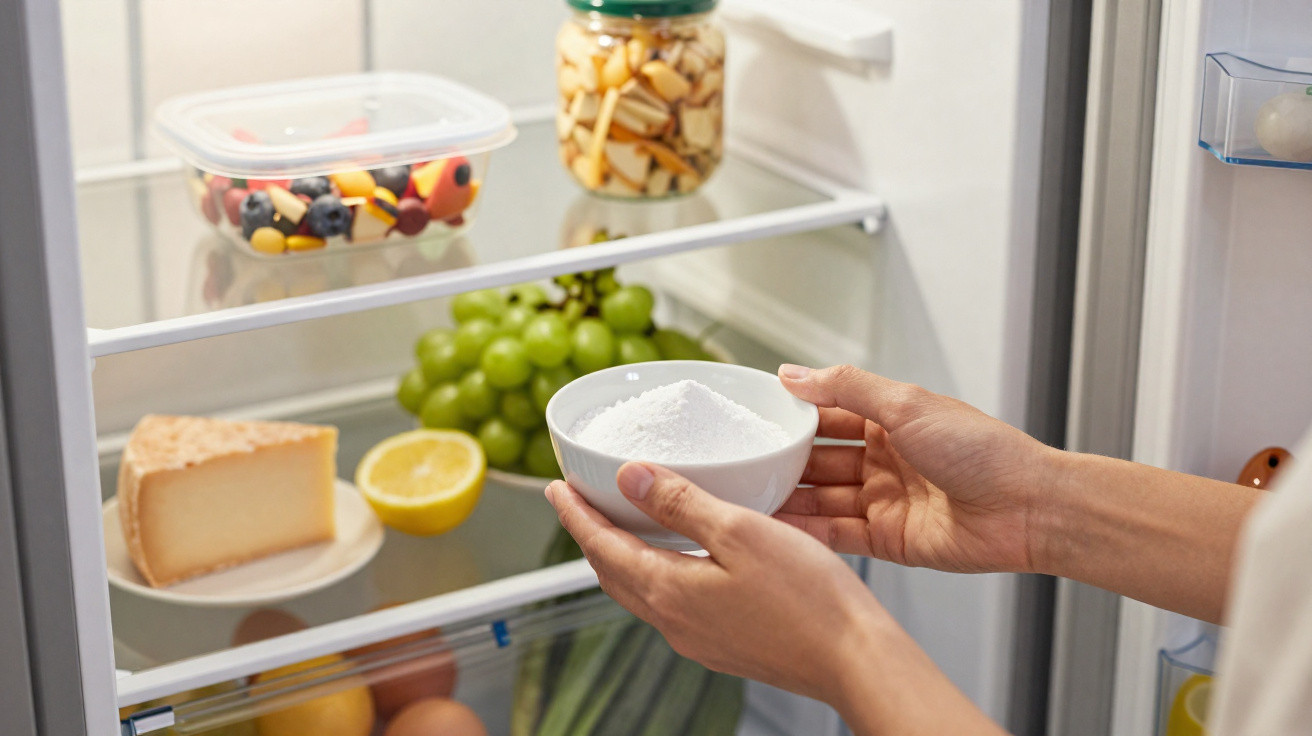
The surprisingly effective solution is this: fill a small, shallow bowl with baking soda and place it on a middle shelf in your fridge.
No lid and no expensive gadget are required - simply leave a wide layer of powder exposed to the cool air.
Baking soda, also called sodium bicarbonate, works like a sponge for acidic and certain basic odour molecules.
As air circulates, these molecules come into contact with the soda crystals and are neutralised, rather than continuing to linger around your cheese drawer for days.
Many people who say they “tried baking soda” once merely put an unopened box at the back of the fridge and forgot about it.
They then concluded that it was ineffective.
A wider exposed surface makes an enormous difference.
Think of drying laundry: a sheet scrunched into a ball will not dry properly, whereas one spread out on a washing line can dry within an hour. Baking soda works similarly. When it is spread in a bowl, much more of it can contact the air, which increases its deodorising action.
That is the difference between a fridge that smells “less bad” and one with almost no smell at all.
Chemically, many fridge odours are mildly acidic, including those produced by milk going off, ageing fruit and oxidising sauces.
Because baking soda is mildly alkaline, volatile acids react when they meet it, becoming less smelly or entirely neutral compounds.
The cold, humid conditions in a fridge help keep the soda slightly active, especially when opening the door causes temperature changes.
Rather than competing with odours using lemon slices, coffee grounds or scented gels that add another aroma, this powder quietly removes odours at their source. That’s why, despite all the trendy hacks online, a simple bowl of baking soda still wins in real life.
How to set up baking soda in your fridge so it works
Begin with a clean base.
Quickly wipe the fridge with warm water and a drop of washing-up liquid, then dry the shelves. There is no need for an intensive cleaning marathon; simply remove spills and obvious offenders.
Put at least 120 ml of baking soda into a small bowl or ramekin.
Set it on a middle or upper shelf rather than in the door, where air circulation is better. Keep it uncovered and allow it to do its job quietly.
This is the part people often overlook: baking soda eventually becomes “used up”.
It will not stop working suddenly overnight, but after several weeks it becomes saturated with molecules and loses effectiveness.
Let’s be honest: nobody really does this every single day.
However, replacing the bowl every 1–2 months - or sooner after particularly “smelly” weeks involving fish dinners, intensive meal preparation or plenty of leftovers - helps the fridge remain consistently neutral.
No fragrance, no strange blend of smells, just… nothing.
“Once I started using an open bowl of baking soda and swapping it every month, my fridge stopped smelling like ‘old restaurant’ and started smelling like… cold air,” laughs Ana, a busy mom of three who batch-cooks every Sunday.
- Use a shallow, wide container
More exposed surface means more contact with odours and faster neutralisation. - Keep it away from uncovered, strongly scented food
You want the odour to reach the air, not for a clump of soda to stick to your cheese. - Replace it regularly
Change it every 30–60 days, or following a major spill or power cut. - Label the bowl with the date
A small piece of masking tape helps you stay on track and prevents the soda from sitting there for months. - Do not use the “old” baking soda in food.
A fresh fridge changes more than its smell
A fridge with a neutral smell has a subtle effect: it makes you trust your food again.
You no longer question whether chicken has gone off simply because the air smells unpleasant. Instead, you rely on genuine signs such as colour, texture and actual use-by dates.
You may also be more inclined to use the food you already have. When opening the door does not come with a waft of “ugh”, leftovers seem like ingredients rather than a punishment. This can mean less waste, fewer guilt-inducing items thrown in the bin and more deliberate cooking.
| Key point | Detail | Value for the reader |
|---|---|---|
| Open bowl of baking soda | Wide, uncovered surface on a central shelf | Maximises odour neutralisation without gadgets |
| Regular replacement | Swap every 1–2 months or after intense smells | Keeps the deodorising effect strong over time |
| Simple cleaning + soda | Quick wipe of shelves, then let soda handle the rest | Easy routine that actually sticks in real life |
FAQ:
Question 1 Can I just leave the baking soda in the cardboard box?
Yes, but it will not work as effectively. The opening in the box is small, so less air reaches the powder. For persistent odours, move it to a shallow bowl and leave it fully exposed.Question 2 How long does a bowl of baking soda last in the fridge?
On average, 30–60 days. If you regularly cook strongly scented foods such as fish, garlic or cabbage, replacing it monthly helps keep the fridge consistently neutral.Question 3 Is baking soda safe to use near food?
Yes. Baking soda is food-safe. Do not scatter it directly over food unless a recipe requires it, and do not cook with soda that has been sitting in your fridge absorbing odours.Question 4 What if my fridge still smells even with baking soda?
There is probably a hidden cause, such as a leak, liquid spilled beneath a drawer or spoiled food at the back. Clean these areas first, dry them thoroughly and then add a fresh bowl of soda.Question 5 Are there any alternatives if I do not have baking soda?
Activated charcoal or coffee grounds can be used temporarily, but they often introduce their own scent. For a neutral, food-safe and low-cost option, baking soda remains the most dependable long-term choice.










Comments
No comments yet. Be the first to comment!
Leave a Comment