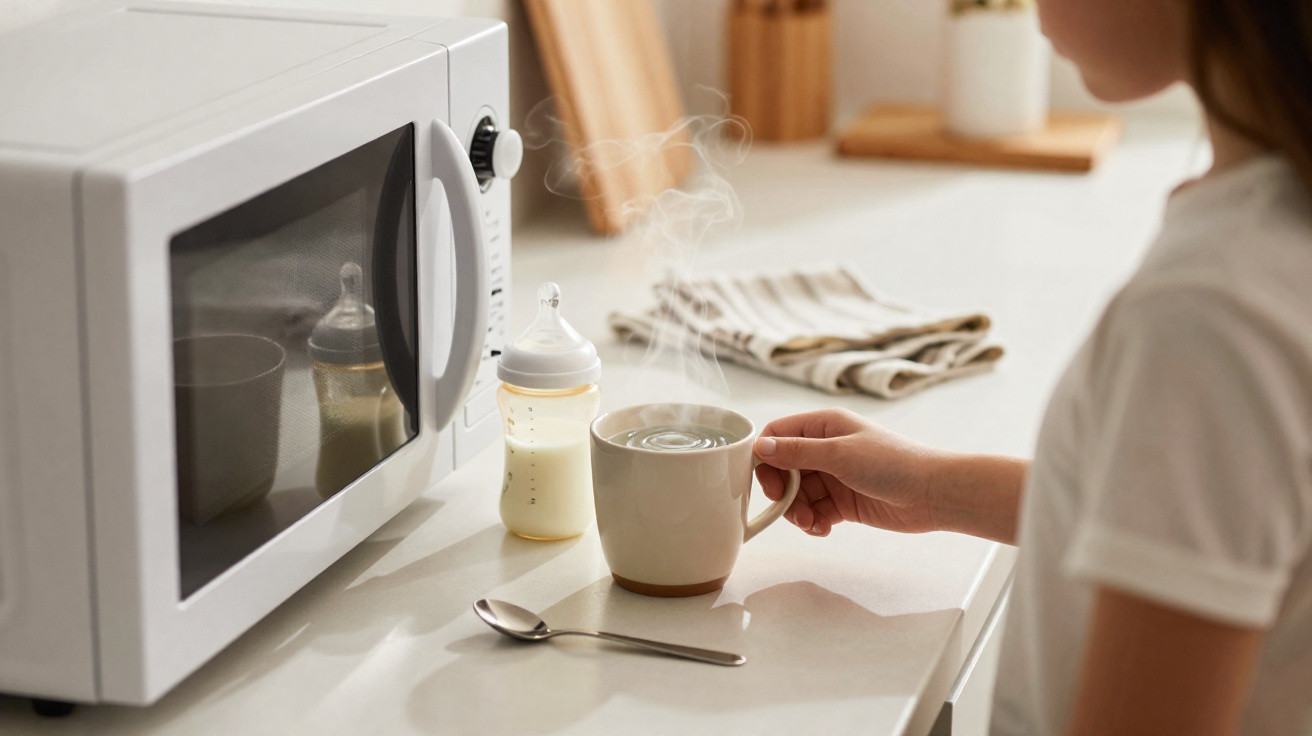
That seemingly harmless mug of water or milk turning in your microwave could conceal a risk that you cannot see, hear or smell.
Millions of people press the microwave button automatically, particularly when time is short. However, food-safety bodies caution that microwaving liquids such as water, ordinary milk or baby milk can lead to severe scalds, unexpected “explosions” and concealed hot spots that are easily overlooked.
Microwaves: a convenient kitchen shortcut with a hidden risk
The microwave oven is now a standard feature of modern kitchens. In certain countries, microwave ownership almost matches the number of households, while annual sales continue to grow. The underlying technology originated in a wartime development: high-frequency waves created for radar.
Today, these waves act on water molecules in food and drink, causing them to vibrate and produce heat from within. This makes heating quick, but it is not always easy to control or predict, particularly with liquids.
Microwave heating is fast and convenient, but liquids can heat unevenly and quietly pass the point where they are safe to handle or drink.
The US Food and Drug Administration (FDA) has repeatedly highlighted the hazards of heating water and milk in microwave ovens, including cases of serious scalding.
Superheating: water that is hotter than it appears
When water boils on the hob, it gives obvious signs: bubbling, steam and sound. In a microwave, the process can be far quieter, which is exactly what makes it hazardous.
What happens inside the mug
Under ordinary conditions, water boils at roughly 100°C (212°F). Yet water heated in a microwave in a spotless mug with very smooth sides and no “impurities” may become superheated. In other words, it can rise above its usual boiling temperature without producing bubbles.
It can look almost completely still, with no rolling boil or obvious warning. The danger may only become apparent when you pick it up.
A tiny disturbance – lifting the mug, adding sugar or instant coffee, or stirring – can trigger a sudden, violent eruption of boiling water.
The FDA warns that these immediate eruptions have caused severe burns to people’s hands and faces. Those affected often report “no warning”, as the liquid’s surface appeared almost motionless before it burst out of the cup.
Why microwave heating increases the likelihood
- Microwaves heat internally, creating both hot spots and cooler areas.
- Parts of the liquid may silently reach very high temperatures.
- A smooth mug or glass provides few nucleation points where bubbles can develop.
- Without visible bubbling, it is difficult to know how close the liquid is to erupting.
A saucepan on the hob, by comparison, warms liquid through its base and sides. Regular bubbles provide visible signs that the liquid is becoming dangerously hot.
Milk and baby bottles: an important microwave warning
Milk reacts in a similar way to water in a microwave, but it brings an additional problem: uneven heating.
Some parts of the milk may become far hotter than others, particularly in deep containers or feeding bottles. Shaking or swirling can help, but it may not fully eliminate the risk.
Health agencies strongly advise against microwaving breast milk or infant formula, due to uneven heating and invisible hot spots that can burn a baby’s mouth and throat.
A bottle can feel merely warm on the outside, rather than excessively hot. Yet a small area of liquid inside may reach a temperature capable of scalding sensitive tissue within seconds.
Safer methods for warming baby milk
Paediatricians and regulators generally advise:
- Placing the bottle in a bowl of warm water.
- Using a dedicated bottle warmer with built-in temperature control.
- Swirling gently and checking a few drops on the inside of your wrist before feeding.
Taking these extra few minutes removes a significant risk that is often not recognised until an accident occurs.
Reducing risks when heating liquids in a microwave
Manufacturers and safety organisations set out practical precautions for people who still decide to microwave water, tea, coffee or milk.
| Step | What to do | Why it helps |
|---|---|---|
| Before heating | Stir the liquid and do not fill the mug right to the top. | Helps distribute heat and lowers the likelihood of overflow. |
| During heating | Use shorter heating bursts, stopping to stir midway through. | Reduces superheating and disrupts hot spots. |
| After heating | Leave the mug to stand briefly before handling it or drinking. | Gives the temperature time to settle and intense pockets of heat to disperse. |
| Before drinking | Stir once more, then carefully try a small sip or drop. | Provides a more reliable indication of the actual temperature. |
The safest approach is to follow the microwave’s instruction manual, especially sections on heating liquids and baby food.
The unusual question of a metal spoon
Many people were taught one firm microwave rule: never place metal inside. That remains sensible advice in many cases, since exposed metal edges can create sparks and, in extreme circumstances, fires.
However, some manufacturers make a more qualified observation. In particular circumstances, placing a metal teaspoon fully within the liquid and away from the microwave’s walls and door may help make the temperature more even and marginally reduce superheating.
The theory is that the spoon works as a type of “heat sink” while also providing points where bubbles can form. This is not a general recommendation, though, and putting metal in a microwave always involves some risk if its placement or distance is misjudged.
If a manufacturer suggests using a spoon, they also stress strict conditions: fully submerged, centred, and kept at least a couple of centimetres from the oven’s walls.
For many people, the possible advantages may not justify the uncertainty, particularly when safer options are available, including shorter heating periods and regular stirring.
Everyday situations in which things can go wrong
The hurried coffee break
Picture yourself microwaving a mug of water for instant coffee. The surface seems still, so you remove it promptly and open the sachet. The moment the granules land in the water, it erupts and throws scalding liquid over your hand and face.
This example illustrates how a very small action after heating can prompt a sudden boil. Keeping your face clear of the mug and allowing it to stand briefly can make a substantial difference.
The late-night baby feed
A tired parent in a hurry puts a bottle of formula in the microwave “just for a few seconds”. The bottle feels warm and manageable externally, but one pocket of milk inside is much hotter. The baby’s first sip burns their mouth before the parent can respond.
Even without a dramatic incident, repeatedly overheating breast milk can gradually harm its nutrients. This is a further reason why many health professionals favour gentler warming techniques.
Key terms and why they matter
Two scientific concepts explain these hazards in straightforward terms:
- Superheating: a liquid exceeds its normal boiling point without bubbling. It appears calm, but can erupt at any moment.
- Nucleation sites: small scratches, particles or rough areas where bubbles can develop. A completely smooth mug has fewer of these sites, making superheating more likely.
Practically speaking, an older mug with minor scratches may respond more predictably in a microwave than a brand-new, exceptionally smooth glass cup.
Safer habits for your everyday routine
Microwaves are here to stay, and few people would want to give up such a practical appliance. The key is changing the way they are used. Handle very hot liquids with the same care you would use around an open flame on the hob.
Consult the instruction manual, particularly any small print relating to liquids and children’s food. Choose gentle warming methods for baby bottles. Make shorter heating intervals, repeated stirring and a short pause before the first sip part of your routine. These modest, almost mundane precautions are precisely what can prevent the burns that are often recognised far too late.




Comments
No comments yet. Be the first to comment!
Leave a Comment