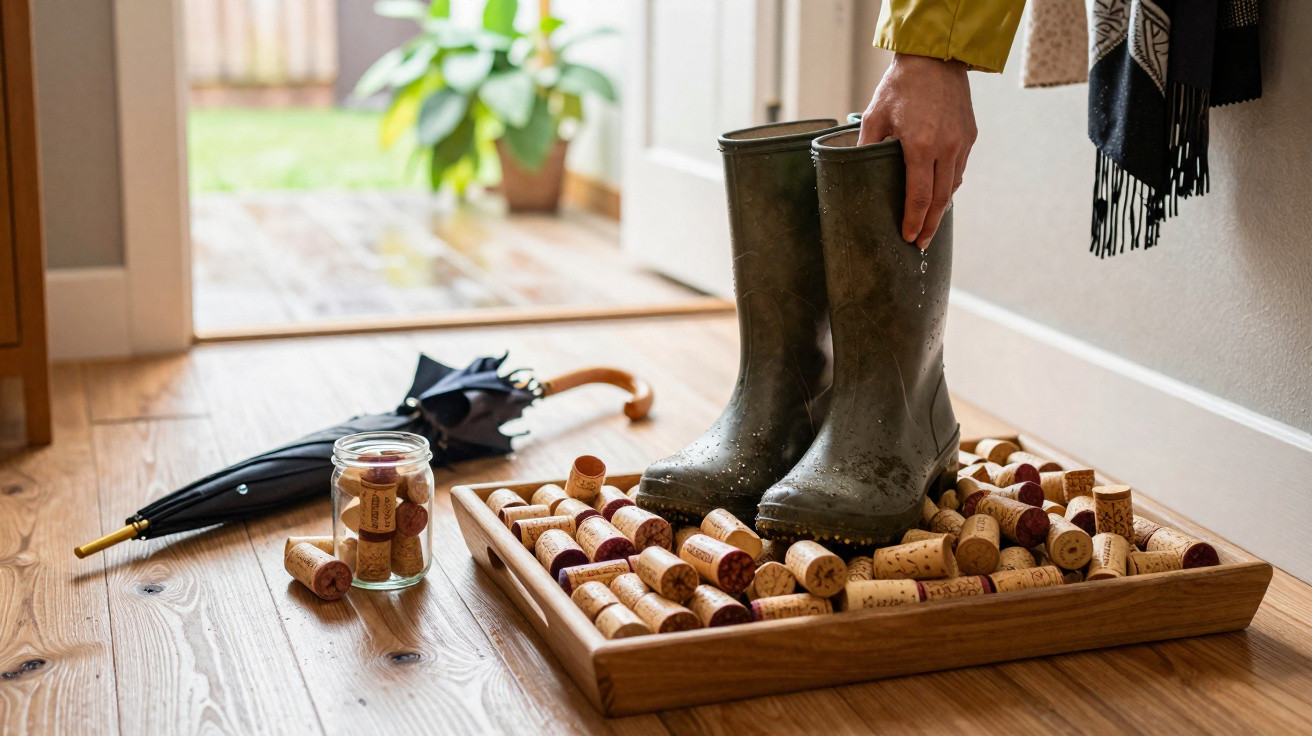
Rainy weather, muddy paths and an entrance hall constantly covered in sodden trainers and weighty boots: it is the domestic equivalent of a traffic queue.
At many front doors, the picture is familiar: damp shoes in heaps, water marks across the floor and an endless mopping routine. Furniture retailers may offer oversized shoe cupboards and storage benches, but a much easier answer can begin as soon as you uncork a bottle of wine.
A modest cork with a clever answer to an everyday problem
The wine cork that would normally go straight into the bin can become a practical cork boot tray made solely from cork stoppers. Rather than placing footwear directly on the floor, shoes sit on a cork grid fitted inside a shallow tray. Mud and water gather underneath, the hallway immediately appears tidier, and the floor is better protected through another winter.
This simple DIY turns kitchen “waste” into a raised, breathable platform that helps wet shoes dry faster and keeps dirt contained.
With shoes raised slightly above the base, air is able to move beneath the soles. This circulation is important: it reduces the stale odour often left in wet trainers and helps them dry sooner after heavy rain or a muddy walk with the dog. All the mess remains inside the tray, which can be taken to the sink or outdoors for a fast rinse.
Cork is remarkably appropriate for this task. It is lightweight but hard-wearing, gently cushioned, moisture-resistant and naturally slip-resistant. Compared with plastic mats, it brings a warmer and more organic appearance to an entrance hall. As a renewable material taken from the bark of cork oak trees, it also meets the increasing demand for reusable, lower-impact everyday solutions.
Why cork is ideal for a shoe tray
In theory, cork can seem almost unrealistically useful. In reality, it satisfies plenty of needs in homes dealing with wet footwear.
- Moisture resistance: Cork is not quick to absorb water, meaning the stoppers will not become saturated sponges.
- Thermal insulation: Raising cold, damp soles above a tiled floor reduces heat loss and makes shoes more pleasant to put on again.
- Noise reduction: Its soft finish helps to dampen the clacking sound of heels and boots.
- Elasticity: Cork gives slightly under pressure, creating a surface that is both secure and forgiving.
- Renewable resource: Cork oak bark grows back after it has been harvested, giving cork a more environmentally friendly profile than many synthetic mats.
Cork combines practicality, comfort and gentle aesthetics, turning a messy corner of the home into something almost curated.
For households with children, it can serve as a gentle prompt for better habits. A defined tray with a raised surface creates an easy instruction: shoes belong here rather than scattered around the hallway. Such small adjustments can make hectic mornings run more smoothly.
Preparing the right materials
Neither specialist skills nor a workshop are necessary. Most households will already have at least half the items needed. The main task is gathering sufficient corks, which can become a shared effort: friends, neighbours and nearby restaurants may all have containers full of them.
Essential materials for a cork boot tray
| Item | Role |
|---|---|
| Water-resistant tray or shallow box | Holds the water, mud and corks |
| Natural wine corks | Create the raised surface for footwear |
| Strong glue (hot glue gun or wood glue) | Secures the corks to the tray |
| Serrated knife (optional) | Trims corks to fit where required |
A commercially made boot tray, plastic serving tray or even an unused metal baking tray can be used as the base. It simply needs to withstand water and mud while being wide enough to hold at least two or three pairs of shoes.
Wash the corks and allow them to dry thoroughly before attaching them. Particularly old and dry corks may be brittle, causing them to crumble when cut. Crafters often use a useful method: boil the corks briefly in water and leave them to cool. This softens them, making them easier to shape and cut neatly without splitting.
Making the cork boot tray: from loose stoppers to a tidier hallway
When everything is prepared, arrange the corks in the tray first without using glue. This initial trial arrangement lets you establish the number required and decide which positioning is most effective.
Layout options, step by step
- When the corks are mostly the same size, position them upright like short columns to create a textured top layer.
- If the corks vary in shape and length, place them on their sides in close rows, similar to bricks in a wall.
- Slice several corks lengthways or into halves to fill difficult spaces around the edges.
Once you have selected the arrangement, secure each cork individually. Put glue on the bottom or side that meets the tray, press it into position firmly and hold it for a few seconds. Complete the job in sections to maintain neat alignment. After the full surface is covered, allow the tray to dry fully before adding footwear.
Taking time with the dry layout stage saves frustration later and gives a cleaner, more uniform result.
Giving a functional tray some personality
Although controlling mud is the primary purpose, a cork tray can also introduce a little character. Natural cork ranges from pale beige to rich brown, creating a subtle design on its own. You could alternate different tones for a chequerboard appearance, or line up branded corks so their logos produce a graphic pattern.
Fabric dyes or wood stains may also be applied sparingly to selected corks to add colour accents: a navy stripe, a group of forest green corks or muted red shades that reflect a rug or coat stand. Alternatively, fit the tray with small castors and a handle to create a sliding panel that can be stored neatly beneath a bench when it is not needed.
Formats to suit different homes
- Family-sized tray: A broad rectangle for three to four pairs, particularly suitable by the principal entrance.
- Individual pads: Compact cork squares for one pair of shoes each, which are easy to move from room to room.
- Narrow corridor strip: A long, slim tray placed along a wall for city flats with limited space.
These alternatives make it possible to tailor the idea to a range of living arrangements, from suburban homes with utility rooms to compact urban studios where every centimetre matters.
Everyday use, cleaning and minor risks
In use, the tray needs very little maintenance. After a wet day, allow the water to gather, then tip it out outdoors or in the shower. If there is substantial mud, remove the dry dirt by shaking first and then clean the tray with a damp cloth. The corks will seldom need anything beyond a quick brushing.
A few considerations are worth remembering. Cork does not cope well with water left standing for extended periods, particularly where the tray is kept in a cold area without ventilation. A puddle left for several days may encourage mildew. Emptying it regularly and occasionally airing it in a sunny place will help avoid this. Homes with pets should also ensure inquisitive dogs do not chew the corks, as they may present a choking risk.
Good ventilation and simple weekly checks keep the tray hygienic and extend the life of both cork and glue.
Beyond the entrance hall: more uses for cork trays
This same idea can be useful in several other areas of the home. A smaller cork tray in the bathroom can hold damp flip-flops or bath toys, preventing puddles from spreading over the floor. In a shed, gardeners can use a cork boot tray to catch soil from wellington boots or to dry plant pots after they have been watered.
During winter, placing a second tray beside a radiator provides a drying area for boots soaked with snow and children’s shoes. In shared homes or student flats with little furniture, an unobtrusive cork tray at the entrance can help shield rented floors from repeated water damage, which may prove expensive when the tenancy ends.
From waste to routine: the subtle value of one simple object
Making a shoe tray from corks may initially appear to be a minor, almost insignificant project. However, it can change several routines at the same time: less waste, reduced cleaning, more orderly hallways and a modest design detail created from items already at hand. Households that begin saving corks often find themselves reconsidering other disposable materials as well, including jars, tins and fabric offcuts.
For anyone interested in sustainability but uncertain about a first step, this affordable and low-risk project can be an appealing introduction. A wet weekend, a glue gun, a tray and a collection of corks are all that is needed to try it. The next storm will reveal whether the hallway seems more peaceful - and whether that “kitchen waste” has at last earned a lasting spot by the front door.





Comments
No comments yet. Be the first to comment!
Leave a Comment