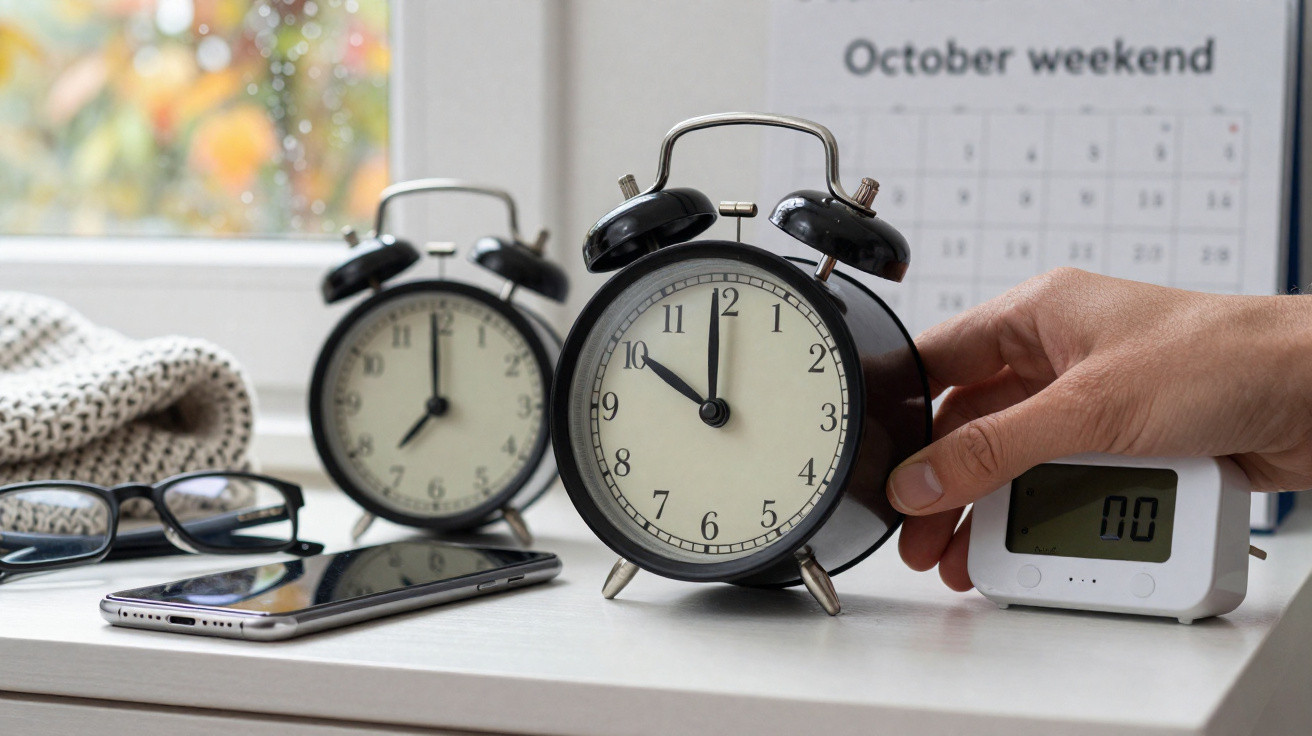
The clocks going back can catch people out every autumn, especially when the change arrives before Halloween. In 2026, the move from British Summer Time (BST) to Greenwich Mean Time (GMT) takes place overnight between Saturday 24 and Sunday 25 October - the earliest date possible under the UK’s usual rule.
The reason is simply the calendar. UK clocks change on the last Sunday in October, and this year that Sunday is 25 October. It may feel early, but there is no special change to the rules.
The date to put in your diary
Clocks go back by one hour in the early hours of Sunday 25 October 2026.
At 2am BST, the time goes back to 1am GMT. The hour between 1am and 2am therefore happens twice: first in BST, then again in GMT.
Most smartphones, computers, smart speakers and internet-connected TV boxes should update themselves. It is still worth checking devices that are not connected to the internet, including:
- analogue watches and clocks;
- oven, microwave and car clocks;
- heating and hot-water timers;
- plug-in timer switches;
- some alarm clocks;
- cameras, fitness trackers and older digital devices.
The clocks go back on Sunday 25 October 2026: 2am BST becomes 1am GMT.
Why it is so early in 2026
There is no one-off decision behind this year’s earlier-looking change. The UK returns to GMT on the last Sunday in October each year.
October 2026 begins on a Thursday, so its Sundays fall on the 4th, 11th, 18th and 25th. That makes 25 October the final Sunday of the month - and the earliest date on which the autumn clock change can happen.
The last Sunday in October can fall anywhere between the 25th and the 31st. In 2027, for example, the clocks will not go back until 31 October.
That is why it is more reliable to remember the rule than to assume the change will always happen around Halloween or during half-term.
What changes when BST ends
The autumn change is often described as “gaining an hour”. More precisely, the clock is put back by one hour and the UK returns to GMT for the winter.
The amount of daylight does not suddenly change overnight. What changes is where the daylight falls on the clock: mornings become lighter earlier, while darkness arrives earlier in the afternoon and evening.
For many households, the practical effects include:
- sunrise appearing an hour earlier on the clock;
- sunset appearing an hour earlier on the clock;
- brighter-feeling school runs and commutes in the morning;
- darker dog walks, exercise and journeys home;
- a need to check some appointments, alarms and timers.
The next clock change will be in spring, when BST begins again on the last Sunday in March 2027.
A quick way to remember which way the clocks go
The familiar reminder is: “spring forward, fall back”. “Autumn” is more usual in the UK than “fall”, but the phrase is still a useful prompt.
In October, clocks go back one hour. In March, they go forward one hour.
Check these things before bed on Saturday
- Set manual clocks back by one hour, unless you would rather do it after waking.
- Check whether your alarm clock updates automatically. Do not assume an older bedside alarm will do so.
- Look at heating and hot-water timers, especially if they are not controlled by a connected system.
- Check Sunday travel, work shifts, deliveries and airport plans directly with the relevant operator or employer.
- If you are arranging an early meeting, state the full date and time clearly - particularly around 1am and 2am.
For most homes, preparation is straightforward: check alarms, timers and any early-Sunday plans.
Travel, work and the repeated hour
The repeated hour matters most to people travelling or working overnight. A train, coach, flight or ferry timetable may include specific instructions for the changeover, so use your booking confirmation and live travel information rather than guessing.
A journey listed as “1.30am” on 25 October is not always self-explanatory. It could mean 1.30am BST before the clocks change, or 1.30am GMT afterwards. Operators normally plan for this, but passengers should check the details supplied for their service.
If you work a night shift, follow your employer’s arrangements for recorded hours and pay. The clock change can make a shift appear longer than usual when measured by local time.
For online meetings with people abroad, check the relevant time zone rather than simply adding or subtracting an hour. Not every country changes its clocks, and those that do may change on a different date.
Making the adjustment easier at home
An extra hour on the clock does not automatically mean better sleep. Some people welcome the longer night, while others take a few days to adjust to darker evenings.
Keeping a fairly regular bedtime and wake-up time can make the change less disruptive. Morning daylight, where practical, may also help reinforce your usual routine.
Use the weekend to prepare for darker afternoons and evenings:
- test outdoor lights and replace damaged or failed bulbs;
- put coats, umbrellas and reflective items where they are easy to find;
- check bicycle lights and batteries before darker commutes;
- review lamp timers so rooms are not dark when you get home;
- plan a daytime walk if shorter afternoons affect your usual activity.
If you take prescribed medicine at fixed times, use a reminder and ask a pharmacist, GP or prescriber if you are unsure how the clock change affects your own schedule. Do not alter prescribed treatment on the basis of general advice about the clocks changing.
Why the clock change still exists
The UK has used seasonal clock changes for decades. BST moves an hour of daylight later by the clock during the summer months, while GMT is used through the winter.
Whether the arrangement should continue remains a subject of debate. There have been proposals in Europe to end twice-yearly clock changes, but no change has been introduced in the UK’s current arrangements.
For now, the practical rule remains the same: clocks go forward on the last Sunday in March and back on the last Sunday in October.
Common mistakes to avoid
The most common error is turning clocks in the wrong direction. In October, set them back, not forward.
Other easy mistakes include:
- assuming every device updates itself;
- changing a clock that has already updated automatically, leaving it an hour wrong;
- forgetting heating controls and plug-in timers;
- setting an alarm without checking the date;
- treating an overseas video call as though every country changes time that weekend.
Take extra care on Sunday morning if you are driving while tired or in changing light. Pedestrians, cyclists and children can be harder to see at dawn and dusk, particularly in wet October weather. Check your lights, allow extra time and do not rely on an unfamiliar car clock.
The practical takeaway
Put Sunday 25 October 2026 in your calendar. Before bed on Saturday, confirm your alarm, check essential timers and look again at any early travel or shift plans.
The change feels early because it is: 25 October is the earliest date the last Sunday in October can fall. Once you know the rule, it is simply one hour back, lighter mornings by the clock and a prompt to get ready for darker evenings.

















Comments
No comments yet. Be the first to comment!
Leave a Comment