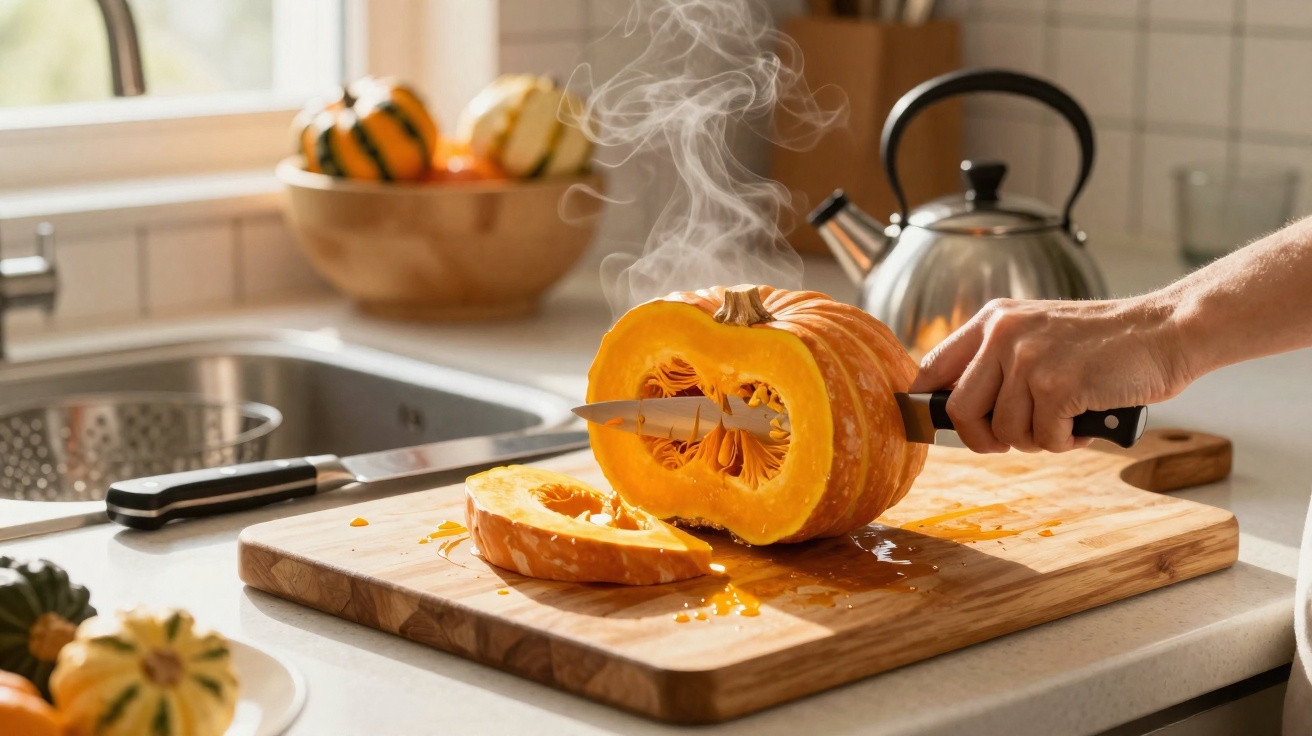
Social media users and home cooks have quietly begun passing on an intriguing heat-based technique that makes rock-hard pumpkin skin easier to tackle with an ordinary kitchen knife. With pumpkin season gathering pace in the US and UK, the straightforward approach is gaining attention, particularly from people fed up with battling oversized gourds and anxious about blades slipping.
Why pumpkins can be so hard to cut
What gives squash skin its strength
The shiny outer coating of pumpkins and winter squash serves an important purpose. It protects the sweet, moist flesh and seeds from insects, knocks during transport and gradual moisture loss in storage. Their skins contain high levels of cellulose and lignin, plant compounds that create tough, fibrous structures. As a squash ripens and remains in storage, those structures become more reinforced, so a longer-stored squash generally develops a harder skin.
For growers, that toughness helps preserve the harvest. For home cooks, however, it can feel rather like attempting to crack open a bowling ball on an unsteady chopping board.
Why cutting a cold pumpkin is riskier
Taking a large knife straight to an uncut pumpkin may seem bold, but it brings genuine hazards. Breaking through the skin requires considerable pressure, leading many people to lean in with their body weight. Its rounded form can shift, the blade may snag on tough fibres, and the natural reaction is to grip tighter and apply still more force.
When force goes up and control goes down, the danger of the knife slipping rises fast.
Accident and emergency data from the US and Europe indicate that hand and finger injuries increase around Halloween and throughout the height of pumpkin season. A significant number result from people trying to chop whole pumpkins on unstable boards, particularly when using blunt knives.
The hardest squash varieties to prepare
Squash varieties do not all respond alike: some cut with little effort, while others are much more resistant. The toughest skins are most often found on:
- Large pumpkins intended for carving or making generous quantities of soup.
- Spaghetti squash, which becomes especially firm at full maturity.
- Large butternut and other dense winter squashes, particularly after they have been stored for several weeks.
These are precisely the situations in which a minor adjustment in technique can make a potentially hazardous task far more manageable.
The hot water trick people are discussing
The straightforward science behind the method
The hot water trick is based on a simple principle: heat makes plant fibres softer. Pouring boiling water over the skin of a pumpkin or squash gently heats its outer layer. This warmth loosens part of the rigid structure and adds a little moisture to the surface. The aim is not to cook the vegetable, but to soften its ‘shell’ enough for the knife to enter without resistance.
Think of it less as pre-cooking and more as giving your squash a brief, targeted hot shower to loosen its armor.
As the heat penetrates only the surface, the flesh remains uncooked and suitable for roasting, soups or stews, exactly as the recipe calls for.
How to use boiling water safely, step by step
Although the technique sounds remarkably simple, several practical points help it work effectively:
- Keep the squash stable: Set the pumpkin or squash in a clean sink or deep roasting tin, where it cannot roll about.
- Bring water to the boil: Fill a kettle or large saucepan and heat the water until it is at a rolling boil.
- Pour with care: Slowly pour the boiling water over the skin. If necessary, use tongs or a towel to turn the squash so that every side receives a thorough splash.
- Allow the heat to act: Let the squash sit in the hot water for one to two minutes. A lengthy soak is unnecessary.
- Dry, then cut: Use a towel or oven gloves to lift it out, dry the skin well, place it on a secure board and begin slicing.
Most cooks notice the change with the first cut. The knife point enters sooner, allowing steady, controlled pressure instead of sheer force.
A microwave shortcut for busy cooks
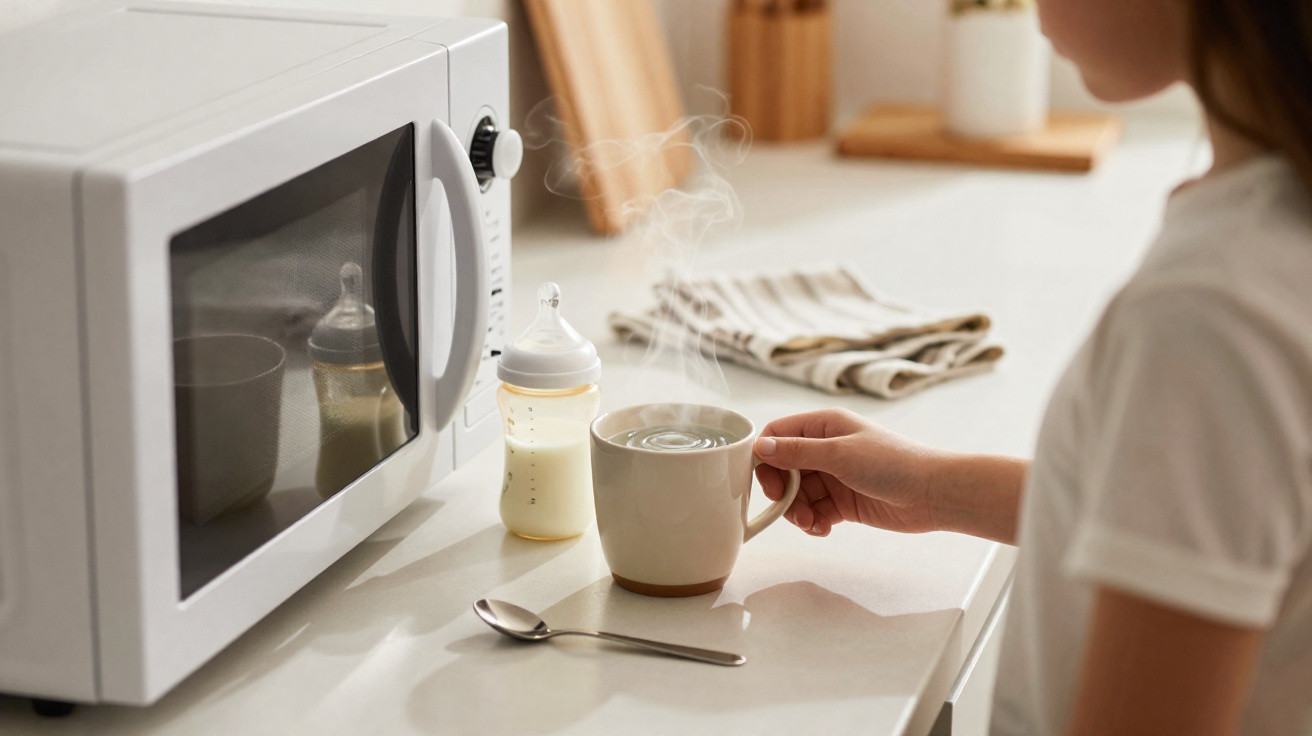
For student flats and compact kitchens, the microwave option is attractive because it is quick. It uses the same basic approach: a short burst of strong heat to make the skin more yielding.
- Prick the squash several times with a knife tip or fork to let steam escape.
- Put it on a microwave-safe plate.
- Microwave on full power for 1 to 3 minutes, according to the squash size and your appliance’s power.
Steam forms beneath the skin and loosens the outer layer. After removing the squash, leave it briefly before cutting it while it is still warm. With very large pumpkins, several short cycles are more effective than one extended blast, which may begin to cook the flesh too much for recipes that require roasting.
The practical benefits of the hot water trick
Better knife safety at home
Professional chefs and kitchen-safety campaigners consistently stress two points: use sharp knives and keep food stable. The hot water trick helps with both. Since the skin puts up less resistance, a properly sharpened chef’s knife can be guided through it smoothly and deliberately. There is no longer a need to force the blade down or wrench it from side to side.
Less force on the blade means fewer slips, fewer near-misses and fewer last-minute hospital visits during pumpkin season.
It also promotes sound preparation habits: drying the skin to prevent sliding, securing the squash properly and deciding where to cut rather than striking at it unpredictably.
Saving time, effort and food waste
Softer skin cuts down preparation time, an advantage when making a large pot of soup, filling roasting tins for meal preparation or catering for guests. Rather than spending ten minutes struggling with one squash, you can prepare several much more efficiently.
There is a further advantage that many home cooks experience without often mentioning: reduced frustration. If preparation feels achievable, people are more likely to buy whole vegetables rather than rely on pricier pre-cut packs, which are commonly sold in plastic. This can mean less packaging, greater control over chunk size and fresher-tasting food.
Cutting cold compared with the hot water trick
| Aspect | Cutting cold | With hot water trick |
|---|---|---|
| Force needed | High, especially on large pumpkins | Moderate, manageable with a steady motion |
| Risk of slipping | Frequent, especially on smooth boards | Lower, as the blade enters more easily |
| Prep time | Longer, with pauses to reposition the squash | Short preheating, then rapid cutting |
| Physical effort | Tiring on hands and wrists | Reduced strain, even for larger batches |
Which squash benefit most from the hot water trick
Best choices for boiling water
This method can be used with almost any winter squash that has firm flesh and a thick skin. It is particularly useful for:
- Carving pumpkins purchased around Halloween, which are often bred with thick walls.
- Hubbard and kabocha squash, both recognised for their tough outer shells.
- Large butternut squash with mature, deeply coloured skin.
- Spaghetti squash that feels notably dense and heavy for its size.
These types may spend weeks in shops or cupboards, during which their skins become even tougher. A quick pour of hot water brings them back within the range of everyday kitchen preparation.
Squash with skins you can eat
Certain varieties, including red kuri, often known as onion squash, and smaller butternut squash, have thinner skins that become soft and enjoyable once roasted. Many cooks simply leave those skins on, particularly when the vegetables are organic or bought from trusted suppliers.
Even so, making the initial cut through an entire squash can still be difficult. A brief hot water treatment does not take away the flavour or textural advantages of the skin; it merely makes it safer to divide the squash into halves or wedges before roasting. After cooking, you can choose to eat the skin, blend the whole squash into soup or scoop out the flesh.
Extra techniques from professional kitchens
Equipment that genuinely helps
The hot water trick is most effective alongside reliable basic tools. Professional cooks commonly use:
- A heavy chef’s knife with a blade of at least 20 cm, kept regularly sharpened.
- A Y-shaped peeler, which follows curves more easily than a straight peeler.
- A non-slip chopping board or a damp cloth underneath a wooden board.
Many chefs give their knives a brief sharpen whenever they are about to prepare dense vegetables. Just a few seconds with a honing steel refreshes the edge and eases the strain on the hands.
Make a flat base for better stability
A single simple step can transform the task: create a level surface before making any substantial cuts. Remove a thin slice from the base or side of the squash so it stands securely without rocking. Once the squash is anchored, the knife can travel down through its centre in a straight, controlled movement.
A flat base turns a rolling hazard into a stable object, which supports quick, safe cuts.
After cutting it in half, remove the seeds, place the cut face down and continue with wedges or cubes without having to chase pieces around the board.
Using the oven as an alternative shortcut
If a recipe does not require tidy cubes, the oven provides another option. Cut the squash in half, remove the seeds, brush it with oil and roast it cut-side down until tender. The flesh can then be lifted out easily with a spoon. This approach works well for purées, silky soups and baby food, where the texture can vary and crisp, caramelised edges are not needed on every piece.
Nutrition, storage and sensible batch cooking
Why pumpkin belongs in more weekly meals
When cutting no longer feels like a struggle, pumpkin and squash become easy additions to weekday meals. They offer a valuable combination of slow-release carbohydrates, fibre, beta-carotene and potassium. Roasted cubes keep well in the fridge for several days and can be added to salads, grain bowls, curries or frittatas.
Many nutritionists recommend roasting a full tray at the weekend and dividing it into portions for speedy meals later on. The hot water trick makes that kind of batch preparation more accessible, especially for anyone without heavy-duty knives.
Safety points and minor risks to consider
As with every kitchen technique, this one has boundaries. Handling boiling water creates a risk of burns, making steady hands and an uncluttered workspace essential. Keep children and pets away while using the kettle. Glass dishes need to be heat-safe, otherwise sudden temperature changes can cause them to crack. Following microwaving, steam may escape through the holes, so keep your fingers clear when taking out the squash.
When used carefully, this technique changes an awkward and mildly risky job into an ordinary preparation step. Once the first cut no longer feels daunting, you might even be tempted to bring home that unusual-looking squash from the market simply to discover the flavour inside.





Comments
No comments yet. Be the first to comment!
Leave a Comment