The odour reached me before I had even turned on the light: last night’s fish, a lingering trace of garlic and a greasy haze of “something fried” that seemed determined to remain above the sink. The window was slightly open, the rubbish had been taken out and the extractor hood had tried its best… but the kitchen still carried dinner’s ghost.
I used a little shop-bought air freshener, with that piercing artificial aroma that always seems like perfume sprayed onto unwashed clothes. Within five minutes, the lemon-chemical mist had disappeared and the fish smell had returned, as self-satisfied as ever.
A single lemon sat rolling around in the fruit bowl by the hob. Then I remembered advice from a neighbour: “Boil lemon slices in a pot. Just do it.”
I nearly laughed, but picked up a knife instead.
Why kitchen odours remain after the washing-up is done
Certain odours do more than drift through the air: they stick around. Oil released during frying settles on cupboards, curtains and even the ceiling. Minute traces of fish, garlic, onion and burnt food work their way into textiles and lodge in every small crevice. You open a window, light a candle or spray a fake citrus fragrance. The smell behaves for an hour, before returning as though nothing had changed.
That is the understated irritation of a kitchen that gets properly used. You cook, eat together and wash the dishes, yet the room still recounts the previous evening’s meal. Your nose remembers the proof.
Picture a Sunday lunch that got slightly out of hand. Perhaps a pan started smoking when your phone distracted you. Or maybe a tray of roasted vegetables received a generous scattering of garlic: wonderful at lunchtime and… a little overpowering by 10 p.m.
You may have opened the fridge the following morning to get milk for coffee, only to discover that the whole kitchen had taken on a faint, stale chip-shop smell. You wiped down the worktops, emptied the rubbish again despite it being almost empty, and eyed the sponge with suspicion.
The odour was unmoved. It had already made itself at home, like persistent visitors who “just stay for one more drink”.
There is a straightforward explanation. Most cooking odours consist of volatile organic compounds: tiny molecules that spread quickly and readily adhere to surfaces. When we use an air freshener, we usually mask those molecules beneath a more powerful scent. As soon as that top note fades, the original odour quietly returns.
Proper odour removal requires chemistry and contact. Rather than simply overpowering the molecules with fragrance, you need something that can capture, neutralise or break them down. This is where an ordinary pot of boiling lemon water can quietly make a difference.
How boiling lemon slices in a pot refreshes the kitchen
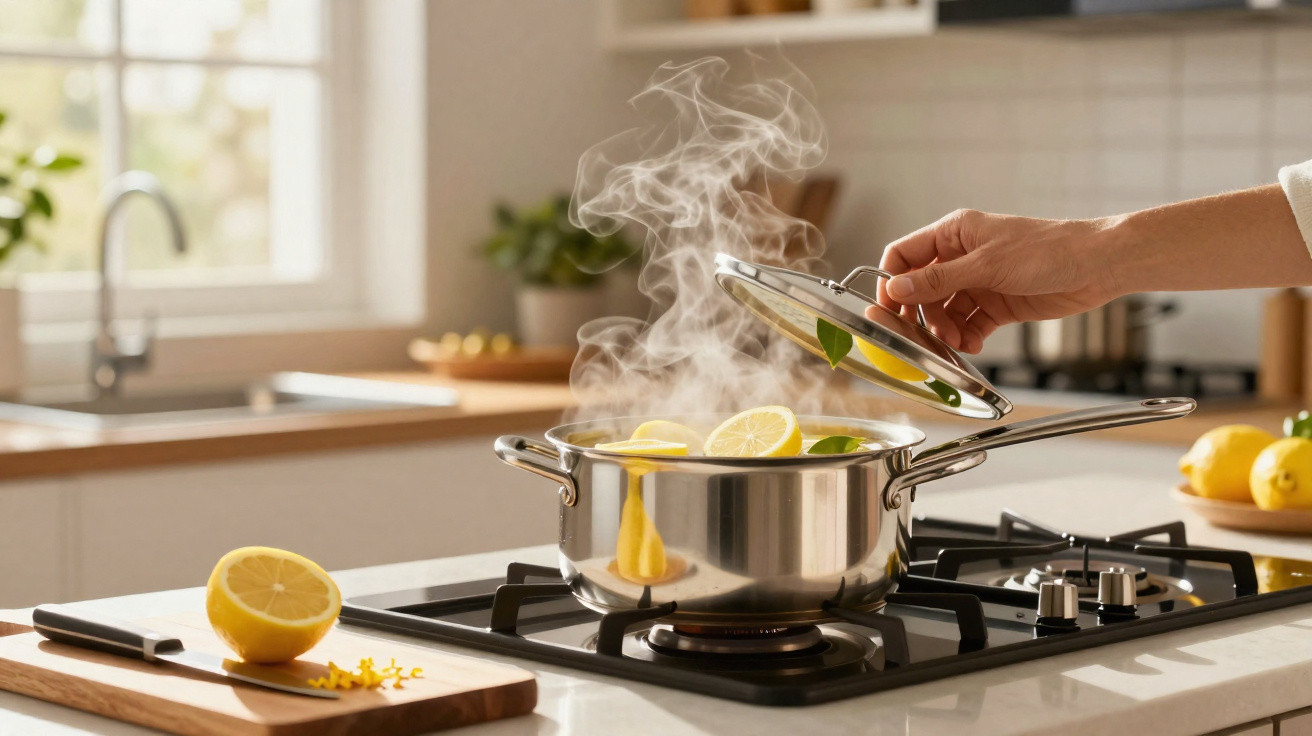
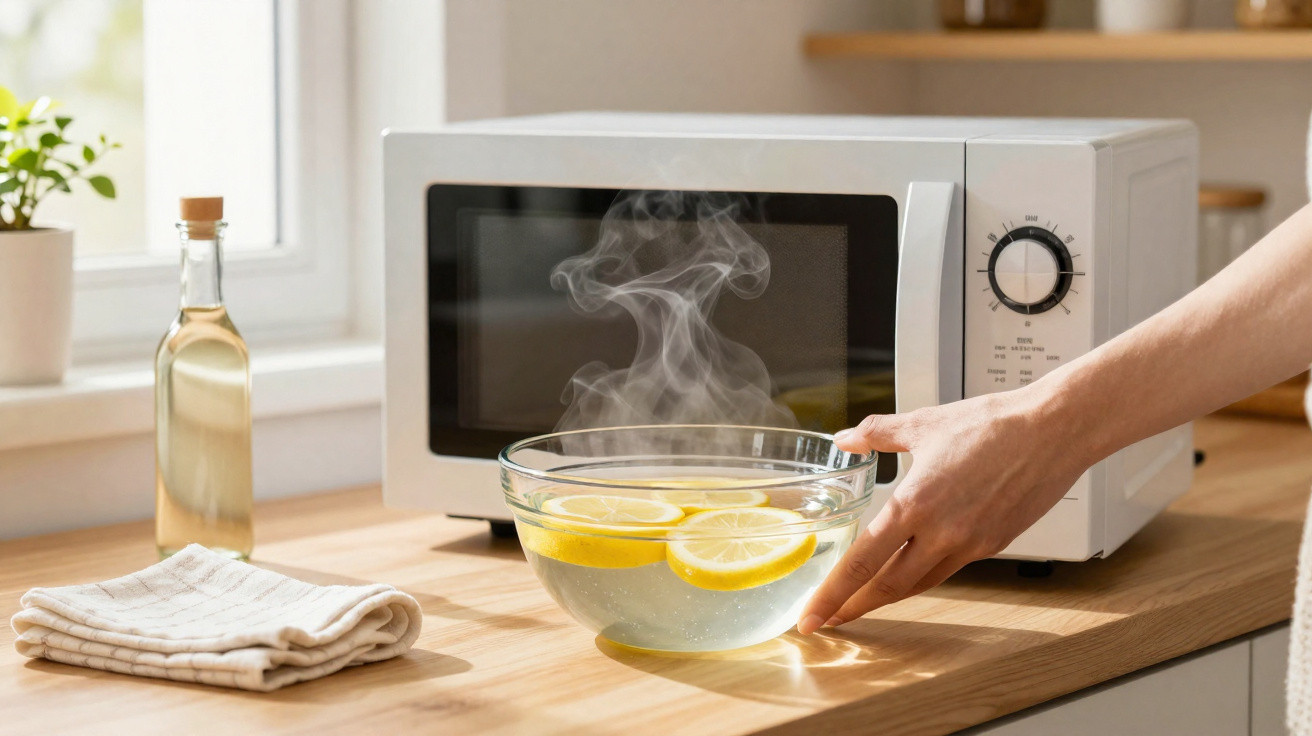
The approach could hardly be simpler. Fill a small saucepan with water, cut one or two lemons into rounds, add them to the water and bring it gently to the boil. As steam begins to rise, turn down the heat and allow it to simmer for 15 to 30 minutes.
While the pan bubbles softly on the hob, fragrant steam escapes and gradually spreads around the room. There is no harsh spray and no electric diffuser ticking away; only citrus-scented vapour reaching into corners you rarely consider. It feels more like a small kitchen ritual than another household task.
The effect is not purely psychological, although your brain certainly plays a part. We naturally connect lemon with freshness and cleanliness because its fragrance appears in so many cleaning products and laundry detergents. Yet steam from real lemons is not merely an imitation of those products.
Heat draws essential oils from the peel and citric acid from the fruit. Rather than overwhelming the room, the vapour slowly combines with existing odour molecules, helping to soften, dilute and partly neutralise them. After half an hour, the kitchen should not smell like a perfume counter. Instead, it smells like… very little, apart from a light, genuine citrus note.
Chemically, lemons offer several useful properties. Citric acid may help to break down some compounds that cause odours. Essential oils in the peel, particularly limonene, attach to greasy particles and can make them easier to remove when they eventually settle. The warm moisture can also help lift clinging smells from fabrics, wood and grout, carrying them into the air where they disperse.
There is also a simple reality: heat plus time plus a little acidity beats a quick aerosol burst almost every day. A spray is like a loud, brief song, while a simmering saucepan acts as background music that alters the atmosphere of the entire room.
Lemon slices as a natural odour trap in your kitchen
For the method to work at its best, make it part of cooking rather than treating it as an emergency solution. As you are finishing frying fish or searing steak, half-fill a saucepan with water, slice a lemon - precision is unnecessary - and place it on a back burner. Let it come to the boil while you serve the meal.
When it begins bubbling, turn it down to a low simmer and keep the lid off. The steam needs space to travel. Leave it going for at least 20 minutes, or for up to an hour if the odour is particularly strong. You do not need to watch it constantly; simply monitor the water level to ensure the saucepan does not boil dry.
If you have ever promised yourself, “I’ll deep-clean the kitchen this weekend,” then been too exhausted to do anything beyond rinsing the pan, you are in good company. Honestly, no one manages that every day. Life is not arranged that way.
That is what makes this lemon-saucepan method so practical. It takes little effort, costs very little and remains useful even on the evenings when you have no energy left. The main error is switching off the heat after five minutes, then declaring that “it doesn’t work”. Another is using old, dried-out lemons with hardly any fragrance. Fresh, juicy slices plus a little patience make all the difference.
There is a mental benefit too. Seeing the pot simmer quietly can feel like drawing a line under the day. The kitchen ceases to feel like dinner’s battleground and becomes a peaceful, practical room again. People who use this method often say much the same thing:
“Boiling lemons doesn’t just clear the smell, it clears my head,” confessed Clara, a mother of two who started doing it after every big Sunday meal. “It’s like telling my brain: okay, the day is done now.”
To increase its effectiveness, try a few additions:
- Put a handful of baking soda in the saucepan for extra odour absorption.
- Add several cloves or a cinnamon stick for a warmer, cosier fragrance.
- Wipe surrounding surfaces immediately after simmering, while grease is softer.
- Let the saucepan cool, then use the lemon water to clean the sink.
- Use the method on days involving lots of cooking, rather than allowing odours to accumulate.
A small kitchen routine with a satisfying effect
After boiling lemon slices in a pot a few times, your habits may begin to change. You may reach for a lemon before picking up an aerosol can. You may find that your kitchen is less likely to carry the previous night’s mishaps into the following morning. The room feels brighter, calmer and less full of “stuff that happened here”.
You might even link the gentle hiss of simmering lemon water with a brief pocket of calm. The dishes are drying, the worktops are reasonably clean, and the children are finally asleep or the guests have left. The saucepan finishes its quiet job without requiring your attention.
This is not a miracle cure. If your curtains have absorbed years of fry-up fumes, or your extractor hood filter has not been washed since last spring, one lemon will not solve the problem. That is part of this trick’s appeal: it makes no claim to be miraculous. It is simply an easy, repeatable step that moves your kitchen from “stale” towards “fresh enough to breathe in deeply”.
You can still use favourite candles for atmosphere and cleaning products for demanding jobs. The lemon saucepan occupies that gentle, everyday middle ground between them.
With time, it becomes less about concealing odours and more about taking the room back once you have used it properly. It is a tiny, almost traditional gesture in a world of high-tech purifiers and smart diffusers. Boiling lemon slices in a pot will not transform your life, but on a long weeknight, when the air feels heavy and the day has dragged on, it could improve your evening.
And perhaps, when someone next walks into your kitchen and says, “Wow, it smells so fresh in here,” you will smile quietly, thinking of that little saucepan doing its work in the background.
| Key point | Detail | Value for the reader |
|---|---|---|
| Natural odour neutralisation | Simmering lemon slices produces steam containing citric acid and essential oils, which can help dilute and soften intense cooking odours. | It reduces the need for synthetic sprays while leaving the kitchen smelling truly fresher. |
| Simple, low-effort method | A single saucepan, water and a couple of lemons simmer for 20–30 minutes while you finish the evening. | It is an easy practice to fit into busy routines without adding cleaning time. |
| Gentle daily reset | It turns the kitchen after a meal into a calmer space and works well alongside light surface cleaning. | It creates a small ritual that enhances comfort and atmosphere at home. |












Comments
No comments yet. Be the first to comment!
Leave a Comment