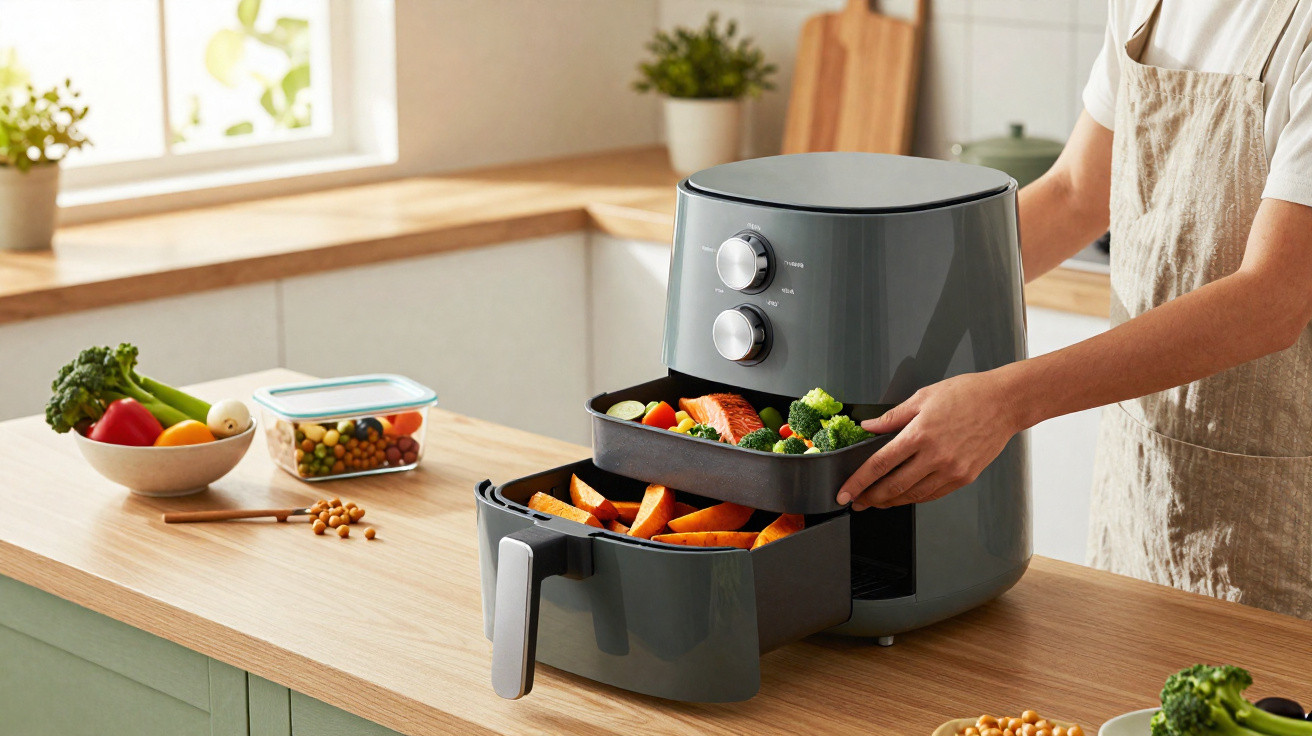
A quiet change is beginning in the corner of the kitchen, where a compact appliance promises to shake up long-established cooking habits.
Responding to new environmental rules and increasingly health-conscious consumers, Philips has introduced an Airfryer in Europe that aims to redefine what “cooking better” means, bringing together less fat, fewer chemicals and greater convenience in one appliance.
An Airfryer designed for today’s kitchen and 2030
The new Airfryer Vertical Duo Series 4000 arrives with a clear claim: it is the brand’s first model to be completely PFAS-free. These chemicals have been linked to environmental impacts and are set to face future restrictions in the European Union.
Rather than using conventional coatings containing fluorinated compounds, the appliance has highly durable ceramic baskets, designed to withstand intensive use without releasing unwanted residues into food.
The Airfryer Vertical Duo Series 4000 brings together two powerful trends: healthier meals and fewer chemical compounds in the kitchen.
This move anticipates regulations expected over the next decade and puts pressure on the wider small-appliance market, which is likely to move towards safer, more recyclable surfaces.
A vertical design that uses less space and cooks more food
One of its most striking features is the vertical format, with two stacked baskets. Instead of relying on one wide drawer, the appliance divides its capacity between ‘levels’, freeing up to 40% of space compared with similarly sized horizontal air fryers.
With a total capacity of 10 litres, the Vertical Duo Series 4000 is aimed at families, compact flats, students and people cooking for two who still prefer to make everything at once.
Two baskets, two dishes, one cooking session
The principle is straightforward: the upper and lower baskets operate as independent zones, allowing different times and temperatures to be combined so that both dishes are ready together.
- Crisp vegetables on top, succulent fish below;
- Grilled chicken in one basket, roasted potatoes in the other;
- Individual dessert portions while the main course finishes browning.
For people with busy routines, the benefit is not limited to appearance or worktop space. The idea is to cut down on pans, avoid running the oven unnecessarily and eliminate the familiar juggling of cooking times in the kitchen.
The appliance has been conceived as a “mini cooking centre”, capable of replacing some traditional oven use for small and medium batches.
Six programmes, thirteen modes and extensive automation
Behind its simple control panel, the Vertical Duo Series 4000 offers 6 presets and 13 cooking modes. Its purpose is to help users achieve restaurant-style results without requiring advanced technical knowledge.
It includes functions for air frying, grilling, baking, reheating and even dehydrating fruit and herbs. One highlight is the RapidAir system, which promises crisp fried foods with up to 90% less fat than deep frying.
- The ‘chips’ mode prioritises a crisp exterior and soft centre;
- The synchronisation function ensures both baskets finish at the same time;
- Transparent basket windows prevent the need to keep opening them to check progress.
Its power is also noteworthy: 2750 W in a body just 23.3 cm wide. It occupies roughly the space of an electric kettle, while offering heating capacity closer to that of an oven.
Vertical air circulation for even cooking
Applied along the vertical axis, RapidAir heating technology directs hot air to both baskets at the same time, aiming to reduce cold spots and abrupt temperature fluctuations.
In practice, this means more evenly grilled food, baked dishes that do not burn on one side and dry out on the other, and shorter preparation times for foods that previously relied on a preheated oven.
Less time with the oven on and greater energy efficiency are likely to become decisive arguments when buying household appliances in the coming years.
Healthy cooking without sacrificing the pleasure of eating
Philips uses a recipe for chicken-stuffed potatoes to demonstrate the appliance’s potential. The method combines slow cooking for the potatoes, preparation of smoked marinated chicken and a final cheese gratin topping.
The key detail lies in using both baskets: while the potatoes cook at a higher temperature until soft inside and crisp outside, the chicken occupies the other level, developing the right texture to be shredded without drying out too much.
The same approach can be replicated with other combinations:
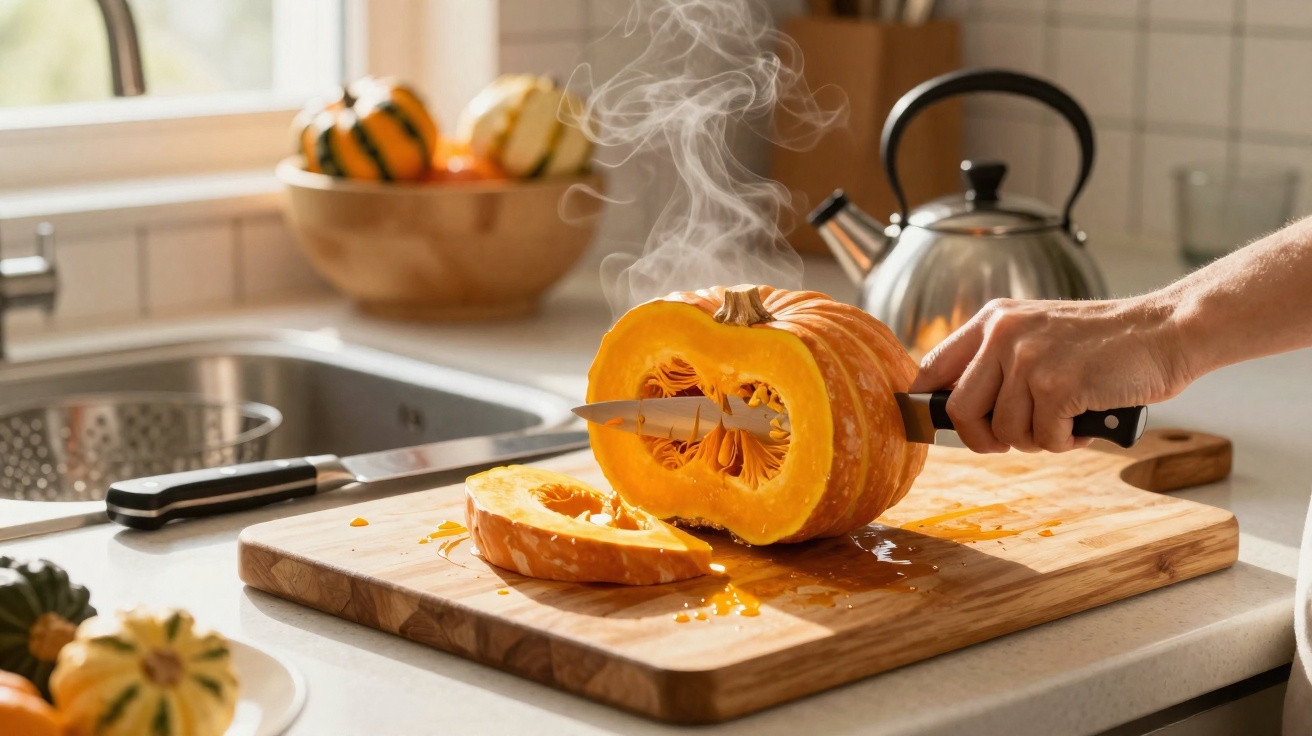
- Roasted squash on top and seasoned minced meat below;
- Garlic vegetables in the upper basket, marinated chicken thighs in the lower one;
- Herb-seasoned tilapia on the upper level, with roasted cassava or sweet potato underneath.
Effects on health, the environment and everyday household routines
From a health perspective, a PFAS-free Airfryer appeals to consumers who already read labels, avoid excessive fat and are beginning to consider the materials coating their pans and baking tins.
PFAS are compounds used to create non-stick and stain-resistant surfaces. They are nicknamed ‘forever chemicals’ because they break down slowly in the environment. Replacing them with ceramic creates room for a kitchen less dependent on these materials.
| Aspect | Traditional models | Vertical Duo Series 4000 |
|---|---|---|
| Internal coating | PFAS-containing non-stick coating in many cases | PFAS-free ceramic |
| Format | Horizontal, 1 basket | Vertical, 2 stacked baskets |
| Fat use | Less than conventional frying | Up to 90% less fat than deep frying |
| Energy efficiency | Varies according to the oven and model | Rapid heating and simultaneous cooking on two levels |
How this type of Airfryer changes meal organisation
For those who usually cook only at weekends and freeze prepared meals, the pair of baskets can help speed up production. While one compartment roasts proteins, the other handles side dishes in successive cycles, with fewer dishes to wash.
In smaller homes, the appliance can replace the conventional oven on many days for portions serving 2 to 4 people. This saves energy, reduces heat in the kitchen and shortens the wait before food reaches the table.
The trend is for air fryers to evolve from a “fashionable appliance” into a central part of the streamlined kitchen, with an emphasis on meal planning.
What consumers should consider before choosing a model like this
Despite these advances, an Airfryer alone does not solve the issue of healthy eating. The final result depends on the ingredients and how often it is used. Processed breaded foods remain ultra-processed, even when prepared with less oil.
Several points deserve attention for anyone considering a two-zone model:
- Assess whether there is room on the worktop or on an auxiliary trolley for everyday use;
- Check energy consumption in Watts against the household’s usual electricity use and bill;
- Consider whether the total 10-litre capacity suits the size of the household;
- Understand the cooking modes, so use is not limited to chips and nuggets.
A common scenario involves couples who cook little during the week but begin using the air fryer to grill vegetables, make quick fish, reheat pizza more pleasantly than in a microwave, and try roasted vegetable recipes for children. The benefit comes from the sum of small changes over the months.
Another useful approach is to see the Airfryer as a tool not only for reducing oil use but also for organising routines: preparing chopped, partially roasted vegetables for the week, toasting grains and seeds, dehydrating fruit for snacks, and making better use of leftover rice, chicken or vegetables in gratin-style dishes.
When one appliance can cook two dishes at the same time with less fat and without PFAS, the impact extends to health, energy bills and the everyday relationship with cooking.








Comments
No comments yet. Be the first to comment!
Leave a Comment