Your copper pans are not beyond saving. They are simply showing their age through a grey-brown layer that seems hard to shift, feels powdery and hides the lustre you once admired. A French coppersmith I met insists that the remedy is probably already in your kitchen - and carries the scent of lemon and vinegar.
Everywhere were pans: broad, hammered and saucepans with elongated brass handles, all set beneath a skylight that made the copper glow rosy. Luc Martin, a third-generation coppersmith with forearms like twisted rope, picked up a tarnished sauté pan as gently as though it were a dozing cat. Rather than using an expensive polish, he chose a lemon, a dish of salt and the sort of cloth normally reserved for a drinking glass. As he worked, he spoke of grandmothers, market stalls and the surprising forgiveness of copper.
Then, unexpectedly, he headed for the pantry.
Understanding copper tarnish without alarm
Tarnish is not grime. It is a fine oxidised coating created when copper comes into contact with air, heat and the traces of sulphur found around a kitchen. It appears as a cloudy, dark veil over copper’s rich orange tone, and can look permanent. It is not. Copper readily regains its brightness with a little acid and gentle rubbing, much like a good table conversation coming to life.
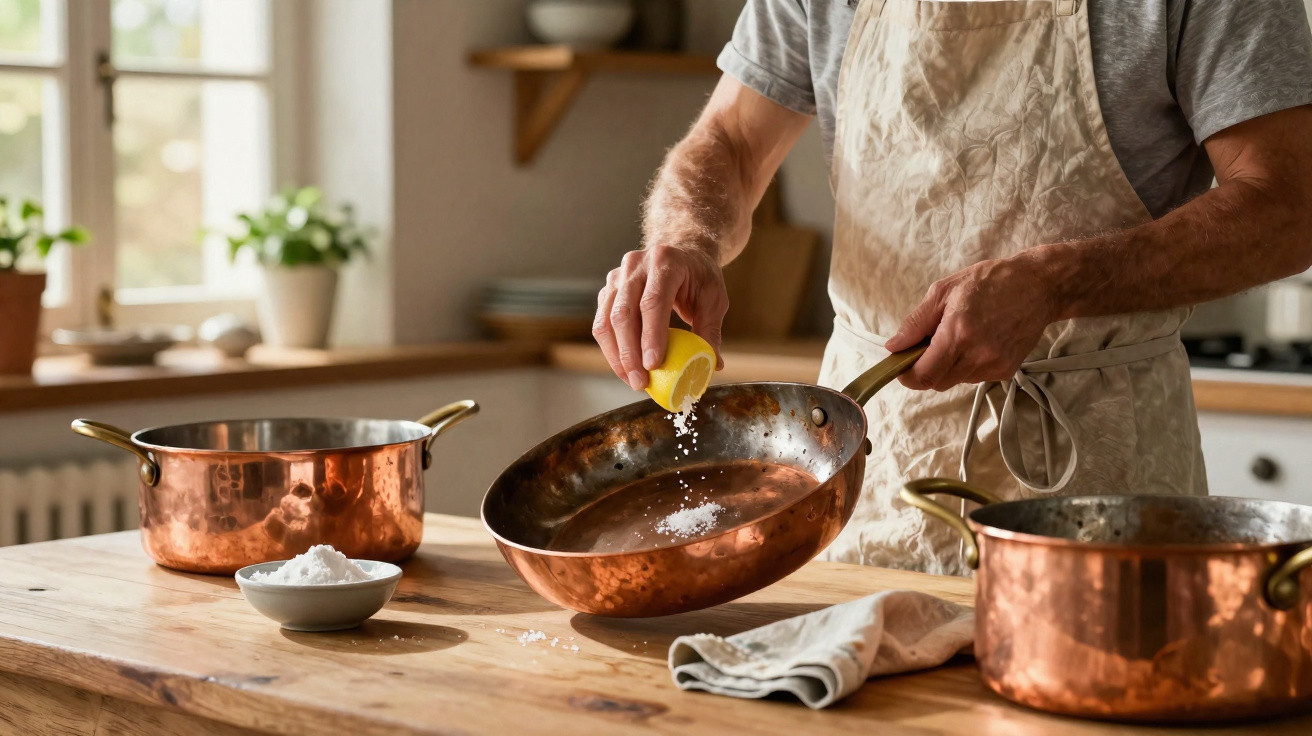
Luc showed me a flea-market pan that appeared to have been recovered from a wreck. Its base was almost black and its rim had faded to weary brown. He halved a lemon, pressed its cut side into a saucer of fine salt and rubbed the surface in small, firm circles. The grains made a soft sound against the metal. After two minutes, a coin-sized patch shone through the grey. One minute later, half the pan looked new again, its edge flashing in the light like a cymbal. There were no machines or severe chemicals involved - only everyday kitchen ingredients and patience.
That small transformation has straightforward chemistry behind it. Acid breaks down copper oxide, while salt provides mild abrasion, and the rubbing action releases the film so it can be washed away. Vinegar works in much the same fashion. Baking soda is not a copper polish; instead, it neutralises residual acid afterwards, helping to avoid streaks and uneven marks. Where copper is lined with tin, handle the inside as delicately as a dove’s wing: tin is soft, and vigorous scrubbing can wear it thin. Brass handles respond well to the same method, although they may take a little longer.
The lemon and salt method for copper pans
Begin with the basics. Wash away grease using warm water and a drop of mild washing-up liquid, then dry the pan thoroughly. Slice a lemon in two and place ordinary table salt in a small bowl. Dip the cut lemon into the salt and work it over the copper in small circles, topping up the salt regularly. Pay attention to the rim and the rivet heads. For persistent patches, make a paste instead: combine 3 tablespoons of white vinegar, 1 tablespoon of fine salt and enough flour to form a loose, spreadable mixture. Apply it evenly, leave it for 10 minutes, then rub and rinse. With lemon and salt, you can restore a pan in under five minutes.
Wash the pan under warm running water, then remove remaining acid with a brief rinse in baking-soda water - 1 teaspoon of baking soda in a cup of water. Towel-dry it straight away with a soft cloth; leaving it to dry naturally can create water marks. Polish it with a clean microfibre cloth to bring back the shine. If the exterior of your pan has a glossy clear layer, this is lacquer rather than polish; many modern pans have it applied at the factory. Although lacquer prevents tarnish, it also prevents cleaning. Should it begin to peel, remove it first according to the manufacturer’s instructions.
Typical errors include leaving copper submerged in vinegar for half an hour, reaching for steel wool when time is short, or treating a tinned interior as though it were cast iron. Each approach can leave damage behind. Work patiently, inspect the surface as you go and stop once the dullness has disappeared. Never use steel wool on a tinned interior. Water marks occur when rinse water dries on warm metal, so wipe the pan as you work to prevent them. Realistically, this is not a daily task. In a frequently used kitchen, a brief lemon-and-salt polish once a month is enough.
“Copper is like a violin,” Luc said, pressing the cloth along the rim. “If you play it, it sings. If you tuck it away, it goes quiet.”
- Quick kit: half a lemon, a small dish of fine salt, white vinegar, plain flour, baking soda, a soft sponge and a microfibre cloth.
- Time guide: light tarnish, 3–5 minutes; heavy tarnish, 10–15 with paste.
- Use zones: use lemon + salt on the exterior; use only warm water and mild soap on a tinned interior.
- Warning signs: pitted copper, peeling tin or unidentified lacquer may require professional attention.
Rinse and dry straight away to prevent fresh marks from developing.
Maintaining copper’s glow without fuss
Copper performs exceptionally in the kitchen even when its appearance is a little sombre. That is its understated secret. Heat and steam will make the patina change over time, while polishing simply resets it. Wipe the pan after cooking, store or hang it where air can circulate, and give it a minute with lemon and salt when its appeal begins to fade. Most of us know the feeling of seeing a pan catch the sun and deciding it deserves a little care.
A shine restored by your own hands can change the way you cook. There is no need to pursue a mirror finish every week. Treat the interior as carefully as porcelain, and polish the exterior before visitors arrive or whenever you want a modest satisfying task. A tin lining that is smooth but dull grey remains in good condition. However, if copper becomes visible or food sticks in isolated areas, it is time for re-tinning - an occasional, once-in-years service for heirloom pieces worth preserving.
| Key point | Detail | Benefit for the reader |
|---|---|---|
| Lemon + salt = fast polish | Acid loosens oxides, while salt provides gentle abrasion | A quick, inexpensive shine using ingredients already in your kitchen |
| Protect the tin lining | Avoid abrasives inside; clean only with warm water and mild soap | Helps the pan last longer and maintains its cooking performance |
| Finish by rinsing, neutralising and drying | Use a warm rinse, baking-soda water, then towel-dry and buff immediately | Prevents streaks and restores a rich, even glow |








Comments
No comments yet. Be the first to comment!
Leave a Comment