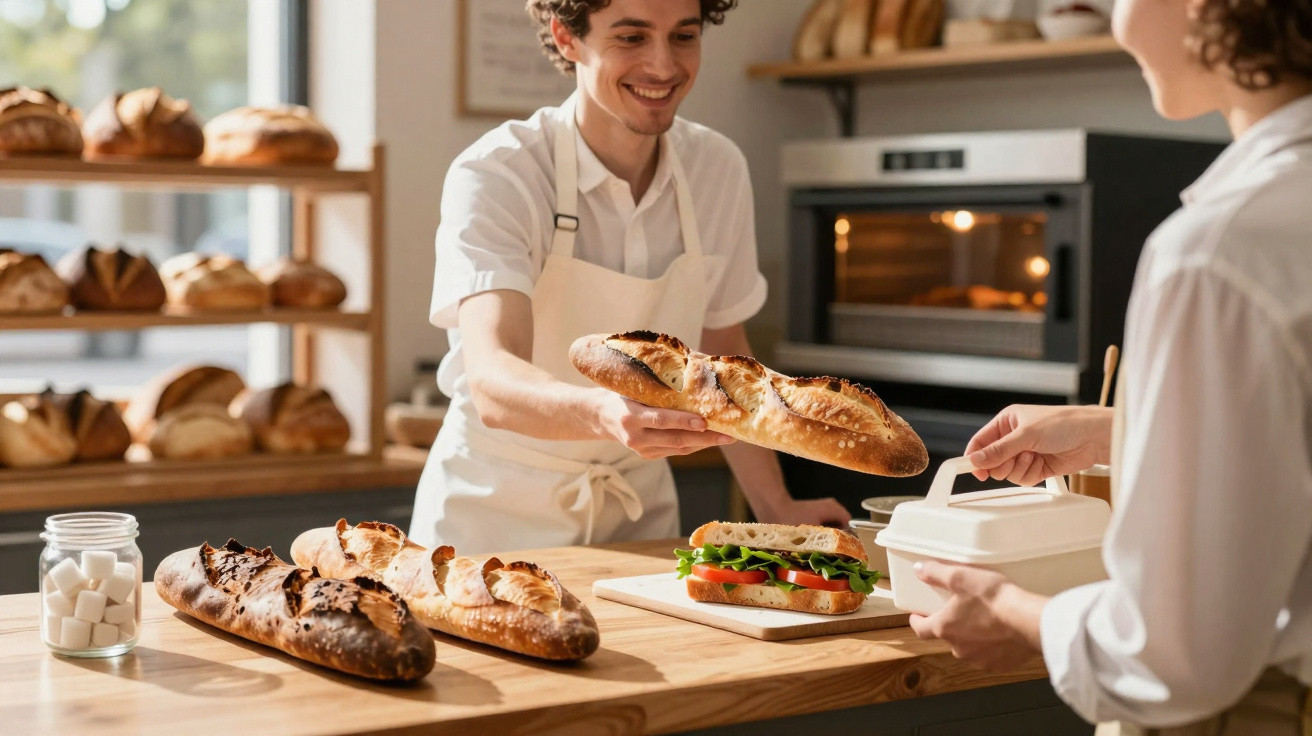
Many people reach for the cheapest baguette at the bakery without realising how much that choice can affect the rest of their day.
A quick stop at the counter is often routine: “One baguette, please.” Yet the apparently minor choice between a standard industrial baguette and a traditional artisan baguette involves more than flavour. A nutrition doctor explains why the difference can influence your blood sugar, energy levels and even afternoon hunger.
Why your choice of baguette affects your day
At first glance, the two loaves look much the same: both are long, with a pale crumb and crisp crust. Their calorie content is similarly close. Half a baguette provides roughly 250 kilocalories, whether it has been made traditionally or produced using a rapid process.
What matters most happens inside the body. Rather than the calorie count, the key issue is how quickly its carbohydrates are converted into blood sugar. This is measured by the glycaemic index.
“For health, it matters less how much bread you eat than how rapidly it drives up your blood sugar.”
Nutrition doctor Laurence Plumey regularly stresses on social media that choosing the wrong bread at lunchtime can cause an energy spike followed by a crash, bringing tiredness, cravings and the urge to reach for an afternoon snack.
Traditional baguette and standard baguette: similar calories, very different effects
Both artisan traditional bread and ordinary baguettes are made with wheat flour, water, salt and yeast. They mainly supply carbohydrates, alongside some protein and very little fat. On paper, that may seem unremarkable.
The crucial factor, however, is how the dough is handled. In France, a traditional baguette is subject to strict requirements: no additives, no frozen dough, longer proving times, and preparation and baking on site. Its dough is left to develop for considerably longer, allowing the yeast to work gradually and the flavour and structure to form.
A standard industrial baguette made through a rapid process is not subject to these restrictions. The flour is more heavily refined, while baking aids and enzymes are added to make the dough rise quickly. The result is fast to produce, easy to process by machine and inexpensive, but considerably more problematic for metabolism.
Standard baguette: the body treats it almost like pure sugar
Heavily refined flour, short proving times and additives create a bread with a high glycaemic index. Figures of around 78 are not unusual. In practical terms, this means that the starch is broken down into glucose very quickly in the digestive system, sending sugar into the bloodstream almost immediately.
This has several consequences:
- Blood sugar rises sharply and rapidly.
- The pancreas releases a large amount of insulin.
- Before long, blood sugar drops again, often even below its starting level.
- Tiredness, poor concentration and cravings set in.
Plumey puts it broadly like this: metabolically, eating this type of baguette is almost like eating sugar, simply with a little crust around it. It is especially problematic when the bread is eaten on its own, perhaps with only a small amount of filling. Without fibre, protein or fat, the sugar passes through even faster.
Traditional baguette: slower sugar release and longer-lasting fullness
An artisan traditional baguette has a different profile. Thanks to longer fermentation and the absence of additives, its glycaemic index is substantially lower, at around 57. Blood sugar rises more moderately and the overall curve remains flatter.
“A traditional baguette will not necessarily make you slimmer – but it keeps blood sugar steadier and hunger at bay for longer.”
The body does not have to manage a surge of sugar, insulin does not rise as dramatically, and fullness lasts longer. For many people, this has a tangible effect: fewer sweet cravings in the afternoon and more stable energy levels.
There is also a practical benefit. The crust is usually markedly crispier and the crumb lighter. The bread retains its flavour and softness for longer, reducing the familiar cardboard-like texture around the edges the following day. That means less leftover bread ends up in the bin.
Ideal when out and about: a better sandwich with traditional baguette
For a quick lunch in particular, the type of bread matters. A filled standard baguette can produce the same blood-sugar hangover as a sweet pastry, despite seeming healthy. A traditional baguette is a much better option, especially when the filling is chosen well.
How a sandwich affects the glycaemic index
Pairing bread with fibre-rich ingredients and protein noticeably slows sugar absorption. Vegetables provide fibre, while protein from eggs, fish or meat delays the digestion of starch. Healthy fats from oil or nuts also help blood sugar rise more gradually.
Practical ideas for an everyday sandwich include:
- Traditional baguette with chicken breast, colourful raw vegetables and a drizzle of olive oil
- Traditional baguette with hard-boiled eggs, tomatoes and salad leaves
- Traditional baguette with tuna, cucumber slices and grated carrots
In each version, the combination of bread, protein and vegetables significantly moderates the rush of sugar. The result is longer-lasting fullness and less need for afternoon snacks.
Nutrition: what a traditional baguette contains
The nutrition table provides useful context. The following figures apply to 100 g of a classic traditional baguette:
| Nutrient | Amount per 100 g |
|---|---|
| Energy | 279 kcal |
| Protein | 8.15 g |
| Carbohydrates | 56.60 g |
| of which sugars | 2.10 g |
| Fat | 1.00 g |
| Fibre | 3.8 g |
| Water | 28.6 g |
| Sodium | 530 mg |
| Salt | 1.3 g |
| Iron | 1.20 mg |
| Magnesium | 24 mg |
| Zinc | 0.65 mg |
| Vitamin C | 0.5 mg |
| Vitamin E | 0.20 mg |
| Manganese | 0.58 mg |
White bread is not especially impressive for vitamins and minerals, but artisan production preserves its structure and fibre better than many highly processed baked goods.
Who may particularly benefit from a traditional baguette
People with insulin resistance, an increased risk of type 2 diabetes or pronounced blood-sugar fluctuations can noticeably benefit from bread with a lower glycaemic index. Anyone aiming to maintain performance and concentration during daily life is also better served by a slower-acting carbohydrate source.
For children taking a filled sandwich to school or nursery, the choice of bread base can be important: steadier blood sugar can reduce dips in performance and restlessness in the classroom.
Practical tips at the bakery counter
Many bakery counters display several types of baguette side by side, with only slight visual differences. These pointers can help you choose:
- Ask specifically for an artisan-made option without additives.
- Look for a well-developed crust with a light dusting of flour and irregular air pockets in the crumb.
- Choose a slightly smaller, high-quality baguette rather than a large one made using a rapid process.
- Use the bread chiefly as the base of a substantial filled sandwich, rather than as a filling side dish on its own.
Not every bread with an appealing name automatically meets the criteria of a genuine traditional baguette. A quick look at the information displayed, the product description or a conversation with the baker can clarify matters.
Why wholegrain remains the better long-term choice
As well as a traditional baguette compares, wholegrain products are often an even better choice for everyday eating. Wholegrain breads contain considerably more fibre, vitamins and minerals, keep you full for longer and often have an even gentler effect on blood sugar.
A practical approach could be this: choose a high-quality traditional baguette for a special weekend sandwich or a quick snack when out, and opt for wholegrain varieties for the rest of the week. This way, there is no need to give up enjoyment while still doing your metabolism a favour.
The seemingly ordinary question at the counter of which baguette you would like can therefore influence concentration, cravings and wellbeing. Once you have noticed the difference, you are likely to make a more considered choice on your next visit to the bakery.















Comments
No comments yet. Be the first to comment!
Leave a Comment