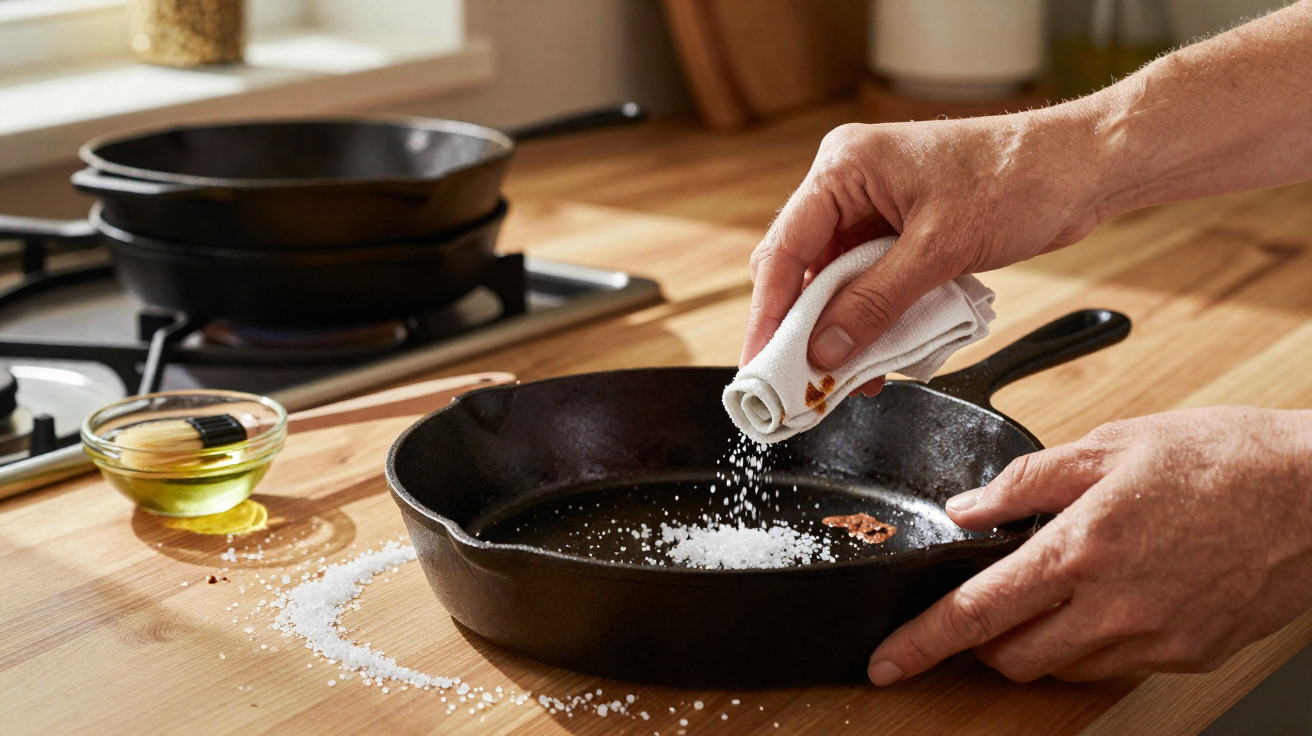
The pan is still warm when the panic starts. A few minutes earlier, the potatoes were golden and crisp; now, a stubborn burnt ring is stuck fast to the black cast-iron surface. You turn on the hot water, pick up a sponge, and regret it almost immediately. The harder you scrub, the more it seems as though you are stripping away the very soul of the pan.
You pause, looking at the mess and the seasoning layer you have spent months developing.
Then somebody at the table says, “Just use salt.”
Your eyes land on the coarse salt on the worktop, and the situation suddenly feels different. It is less of a kitchen disaster and more like a small chemistry experiment in which you have unexpectedly been cast.
And that is where the magic starts.
Why salt becomes an effective scrub for cast iron
Sprinkling coarse salt into a cast-iron pan while it is still warm changes the entire feel of the task. That shiny, burnt-on layer no longer seems impossible to shift. The grains move beneath your fingers or paper towel, working into the food that has stuck fast.
The clever part is that salt is abrasive enough to lift food but gentle enough not to score the pan. Cast iron is more robust than it appears. It copes with salt far better than sharp metal tools or aggressive commercial scourers packed with unfamiliar chemicals.
At this stage, you are not battling the pan. You are helping it recover.
Imagine a Sunday morning with bacon on the menu. The fat sizzles, the kitchen smells wonderful, then the final rashers stick as though they have signed a tenancy agreement. You pour away most of the grease, look at the brown, tacky residue fused to the surface, and feel that first pang of cleaning dread.
Then you take a handful of kosher salt and scatter it across the pan. It lands on the warm iron with a gentle crackle, absorbs the remaining fat, and quickly becomes a gritty paste that you can move around. After two minutes of light circular rubbing, the base changes from rough back to smooth.
What began as an “I ruined my pan” moment quietly becomes “Oh, that was actually easy.”
There is sound reasoning behind this straightforward technique. Coarse salt works as a natural micro-abrasive: every grain targets the food rather than the iron. Residual cooking fat turns the salt into a loose paste, distributing the abrasion evenly and allowing it to glide instead of scratch.
Salt also draws moisture from burnt-on residue. Food that is dry and brittle releases more easily than food that remains soft and sticky. In other words, salt does more than scour: it helps loosen the bond between burnt debris and the seasoned coating.
You are using physics and a little chemistry with something already sitting in your cupboard.
How to clean cast iron with salt without damaging the seasoning
The process is almost ridiculously easy. With the pan still warm, but not dangerously hot, pour away any excess oil and leave only a light film behind. Cover the base generously with coarse or kosher salt.
Fold up a piece of kitchen roll, or use a clean tea towel, then rub in small circles. Initially, you will feel the resistance; as the food loosens, the movement becomes easier.
For a particularly stubborn mess, use half a potato or the flat edge of a wooden spatula to move the salt around. Once the pan feels smooth, discard the dirty salt, rinse it briefly with hot water, dry it completely over a low heat, and rub a very small amount of oil onto the surface. That is all it takes.
This is the point where many people unknowingly undermine their cast iron. They panic, reach for steel wool or strong washing-up liquids, or leave the pan to “soak a bit” in the sink. Each of these can remove seasoning or promote rust more quickly than expected.
Salt succeeds because it treats the coating you have built with care while still providing enough abrasion to tackle last night’s meal. It sits between being overly precious with your pan and treating it too harshly.
Honestly, hardly anyone follows this routine every single day. On some evenings, the pan remains untouched on the hob. Salt cleaning is forgiving in that respect: even when you leave it late, it will often still do the job.
Cooks who rely on salt can sound almost evangelical about the method. There is a reassuring confidence in knowing that the pan can usually be brought back.
“Salt is my reset button,” says an older home cook I met at a flea-market cooking demo. “I’ve rescued so many beat-up pans with nothing but coarse salt, a rag, and patience.”
For a practical reminder when you are facing a crusty frying pan at 10:30 p.m. and simply want to get to bed, keep this quick checklist in mind:
- Choose coarse or kosher salt rather than fine table salt
- Use a warm pan, not one that is blazing hot
- Rub lightly in circles; do not grind as though you are sanding wood
- Rinse briefly, then dry it thoroughly over a low heat
- End with a whisper-thin layer of oil, almost completely wiped away
This small ritual can often be the difference between a pan you dread using and one you reach for every day.
What cleaning cast iron with salt reveals about our tools
The salt-on-cast-iron method is more than a simple kitchen tip. It is a modest lesson in making use of what is already available instead of purchasing another specialist product to clutter a cupboard. There is something unexpectedly comforting about dealing with a stubborn problem using a handful of cheap, familiar crystals.
A well-seasoned cast-iron pan can feel almost like a relationship. The more regularly you cook with it, the more it adjusts to you: your favourite meals, your routines, and even your weekday laziness. Using salt to clean it preserves that shared history rather than erasing it after every meal.
We have all had the moment when an old pan seems beyond saving. There may be a thick layer of blackened food and perhaps a little orange rust, and suddenly you are searching for a replacement frying pan on your phone. Yet that very same pan can return smoother and darker than before with warm water, coarse salt, and a few unhurried minutes of scrubbing.
Salt does not merely clear away the evidence of a dinner gone wrong. It reveals the durable, dependable layer underneath, which has gradually formed over months or years. That resilience feels quietly reassuring in a world where so many things are made to be replaced rather than restored.
The next time something sticks itself firmly to your cast iron, you may pick up the salt shaker with less anxiety. Feel the resistance beneath your hand. Hear the soft scrape of crystal on metal. Watch how rapidly “ruined” can become “repaired”.
That small shift in habit can transform washing up from a fight into a reset: a simple, almost old-fashioned way to finish the day. Your pan does not require perfection. It only needs warm water, a little salt, some attention, and the quiet belief that something stuck does not have to remain that way.
| Key point | Detail | Value for the reader |
|---|---|---|
| Salt is a gentle abrasive | Coarse grains lift food without scratching seasoned iron | Protects the non-stick surface while still removing residue |
| Works best on a warm pan | Heat softens stuck food and combines with leftover fat | Makes cleaning faster with less effort and no harsh tools |
| Supports long-term seasoning | Removes debris while keeping and even enhancing the oil layer | Pan becomes more non-stick and easier to use over time |
FAQ:
Question 1 Can I use ordinary table salt rather than coarse salt? Yes, although coarse or kosher salt is more effective. Its larger crystals offer greater scrubbing action and are easier to move around the pan before they dissolve too quickly.
Question 2 Do I still need soap when I clean with salt? Usually, no. Salt and hot water will deal with everyday stuck-on food. A small amount of mild soap is acceptable occasionally, but it does not need to be part of your usual routine.
Question 3 Will salt harm the seasoning on my cast iron? When used gently, salt can actually help preserve seasoning. It removes surface residue while keeping the baked-on oil layer in place, particularly when you finish with a light wipe of fresh oil.
Question 4 Can I use salt to clean a rusty cast-iron pan? Salt can form part of the process. For light rust, salt used with a halved potato works well. More serious rust may require a fuller restoration before the pan is re-seasoned.
Question 5 How often should I use salt to clean my pan? Use this salt method when food is clearly stuck or the surface feels rough. After easy, low-stick cooking, a quick rinse, thorough drying, and oiling will do; keep salt for tougher messes.













Comments
No comments yet. Be the first to comment!
Leave a Comment