As cleaning products become more expensive and greener routines gain appeal, a traditional cooking leaf is taking on another purpose. With a few bay leaves and a little gentle heat, an oven can smell noticeably different. The tip is spreading because it is affordable, straightforward and easy to fit into everyday routines.
Why bay leaves in the oven are becoming popular
Throughout France, lower-impact cleaning approaches continue to grow in popularity. Households are looking to reduce chemical fumes.
They are also after options that do not require an hour of strenuous scrubbing after work. Bay leaves offer both benefits.
Their strong, resin-like fragrance comes from compounds including 1,8-cineole and eugenol, which are also used in flavourings and perfumes. When warmed, these oils are released. Inside a closed oven, the fragrance quickly circulates and helps counter stale, greasy smells.
This approach is not a substitute for a thorough clean. It can, however, freshen the oven between roasts, prevent lingering odours from carrying into the next dish and leave a subtle herbal scent rather than a sugary or artificial one. Many readers say it encourages them to cook more fish and roast vegetables during the week, as the smell afterwards does not linger.
Quick reset: a handful of bay leaves and 20 minutes of low heat can lift greasy odors and give your oven a neutral, herbal scent.
How to use bay leaves in your oven at home
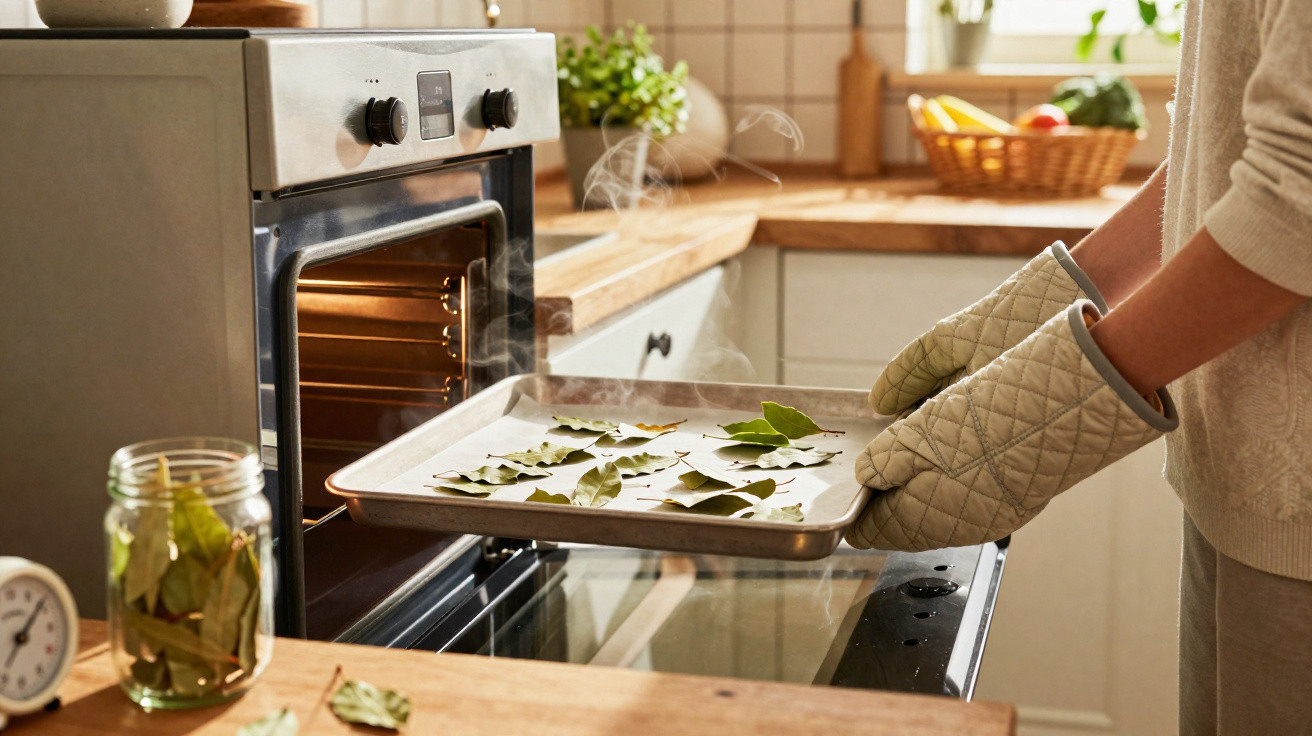
- Cover a baking tray with baking parchment.
- Spread 6–10 bay leaves, either dried or fresh, in one layer.
- Set the oven to around 150 °C (300 °F).
- Put the tray inside for 15–20 minutes, keeping the door shut.
- Turn the oven off, leave the tray in place for another 5 minutes, then open the door to air it out.
Fresh leaves create a greener and slightly more intense fragrance. Dried leaves produce a warmer, woodier aroma. Either variety is suitable. In fan ovens, the scent will circulate more quickly. If your oven produces smoke at a low temperature, first wipe away visible grease or run a brief warm-up to remove residue before adding the leaves.
Bay leaf safety points not to miss
- Do not go above 170 °C (340 °F), as leaves may scorch near heating elements.
- Always place leaves on a tray; never put them close to exposed elements or flames.
- Never use this technique during a self-cleaning cycle.
- Confirm the type of bay: use only true bay laurel (Laurus nobilis). Do not use toxic cherry laurel (Prunus laurocerasus).
- Air the room after the cycle if anyone in the home is sensitive to fragrance.
Stick with true culinary bay (Laurus nobilis). Avoid garden look-alikes like cherry laurel, which can be toxic when heated.
What occurs inside the oven
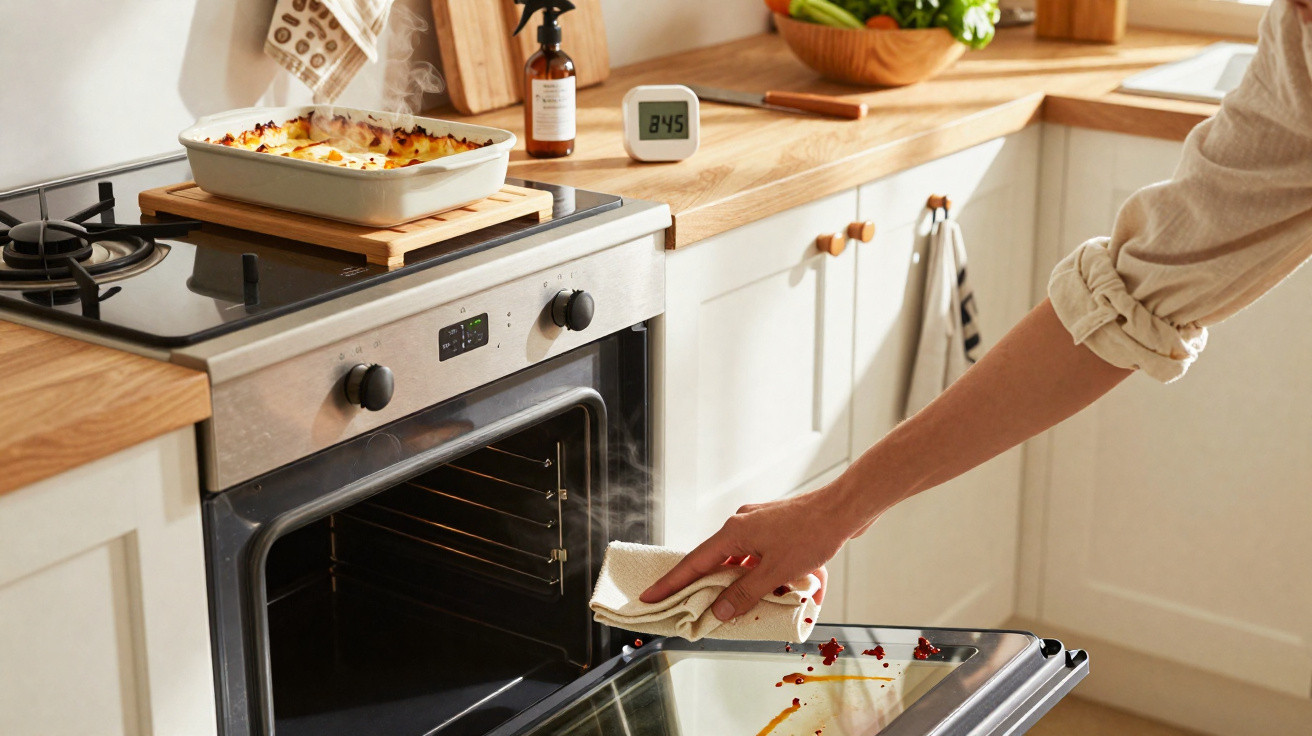
Gentle heat warms the bay leaves, causing their volatile oils to disperse. These aromatic compounds interact with odour molecules attached to the oven cavity and shelves. This will not “sterilize” the oven. It does alter its smell profile, which is useful because many unpleasant odours remain in grease layers and porous materials. Wiping surfaces with warm water and a teaspoon of washing-up liquid before the bay-leaf cycle can make a major difference. Less grease leaves fewer persistent smells behind.
Studies have examined bay’s antimicrobial properties on food and surfaces. Findings differ according to the concentration and extract used. An oven is not a laboratory bench. Consider the bay-leaf approach primarily a deodorising method, with the added benefit of a fresher feeling when you open the door to preheat.
Beyond the oven: useful jobs around the home
Bay leaves can also help in other situations where controlling smells is the priority. Place a few in a linen drawer. Add two to a simmering pan with lemon peel to freshen the kitchen after frying. Some homes put leaves near windows and skirting boards to discourage insects; reports are mixed, although their fragrance can make a room seem tidier.
What the evidence shows
Bay’s principal compounds demonstrate antiseptic activity in laboratory conditions. That does not mean proper cleaning can be avoided, nor that a few heated leaves provide medical benefits. Suggestions concerning blood sugar or joint pain relate to diet and clinical treatment, not heated leaves used for odour control. If you use bay in food or tea for wellbeing, consult a professional, particularly if you take diabetes medicine or anticoagulants.
Think of bay leaves in the oven as a scent and mood tool. Keep soap, water, and periodic deep cleans in the plan.
How it compares with other inexpensive solutions
| Method | Best for | Cost per use | Effort | Precautions |
|---|---|---|---|---|
| Bay leaves, low heat | Neutralising stale, fatty odours | Very low | Minimal | Keep below 170 °C; use culinary bay only |
| Bicarbonate of soda paste | Loosening baked-on grease | Low | Medium | Rinse thoroughly; avoid discolouring aluminium |
| Vinegar steam bowl | Softening grime and reducing odours | Low | Low | Avoid splashes from hot liquid; ventilate for sensitive noses |
| Lemon water steam | A fresh citrus fragrance and light degreasing | Low | Low | Watch for seeds; clean up spills |
| Activated charcoal tray | Ongoing odour absorption | Medium | Minimal | Replace once saturated; keep away from food |
Questions people often ask
Fresh or dried bay leaves?
Dried leaves are easy to use and give dependable results. Fresh leaves provide a greener burst of fragrance and can be stored longer if you dry any surplus. If you grow a bay tree, cut a branch, wash it, pat it dry and hang it up for a week. Store the leaves in a jar away from light and heat.
Will the aroma affect food afterwards?
Not in any noticeable way. The fragrance fades once the oven has been ventilated. If you are about to bake meringues or delicate pastries, run the empty oven for 10 minutes after the bay cycle to clear the air.
Can the leaves be used again?
After heating, most of their oils will have been released. Compost the leaves or add them to dry potpourri. For a more powerful treatment next time, combine bay with a strip of orange peel or a cinnamon stick.
A practical routine that is easy to maintain
Make the bay cycle part of the weekly routine: after a Sunday roast, remove large drips, wipe the oven with warm soapy water, then run the bay leaves for 15 minutes on Monday evening. This pattern reduces smells and means deep cleans can be less frequent. It also helps avoid the urge to use the power-hungry self-cleaning setting, which heats up the kitchen.
For a more organised plan, use bay leaves alongside quarterly deep cleans with a bicarbonate of soda paste. A plastic scraper can speed up the removal of heavy grease. Replace any cracked door seals, as they hold odours and allow heat to escape. Small measures such as these can often work better than costly sprays.
Who should avoid this method
Homes where people have fragrance sensitivities may be better served by odour absorbers such as activated charcoal instead of scented options. Deal with any known electrical fault in the oven before trying this. If you have pet birds, do not use scented heat cycles anywhere close to them, since their respiratory systems are delicate.
Short on time, short on budget: bay leaves give you a cleaner-smelling oven in a single, calm step.
Additional ideas to try
For a more substantial clean, begin with a “steam-soften” cycle: put a pan of hot water and a splash of vinegar in the oven at 120 °C (250 °F) for 20 minutes, allow it to cool, wipe the surfaces, then complete the process with the bay cycle. This two-part approach tackles grime while refreshing the scent. If you entertain frequently, keep a small jar of leaves close to the oven. It acts as a visual reminder, and small reminders help establish habits.
Wondering about the cost? One supermarket packet of bay leaves can often provide months of oven refreshes. A bay tree at home can produce leaves for years with a sunny balcony and occasional light pruning. Clearly label the plant to prevent species being confused, especially when neighbours exchange cuttings.





Comments
No comments yet. Be the first to comment!
Leave a Comment