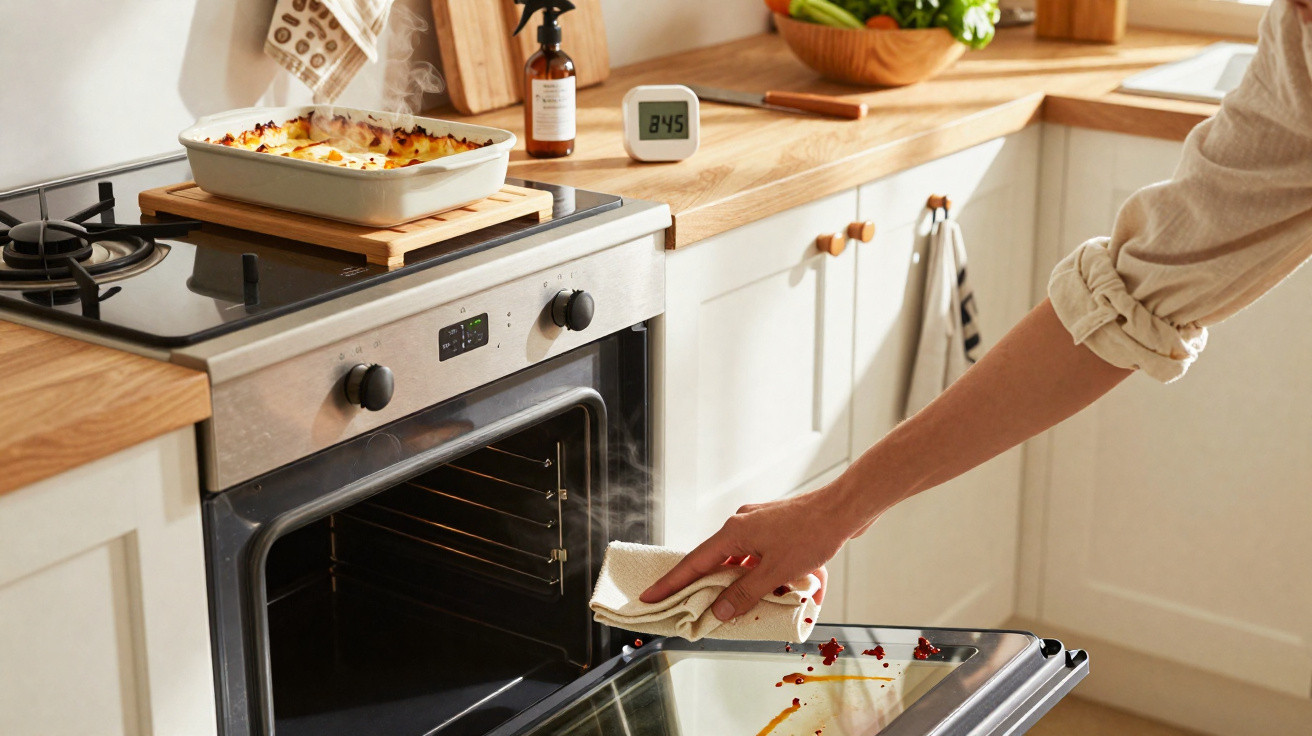
The timer beeps, the kitchen smells of lasagne and something suspiciously sizzles deep inside the oven. When you open the door, you are met not only by heat but also by that slightly burnt smell of old cheese and grease that stubbornly hangs in the air. One glance at the glass reveals splatters, streaks and brown spots that seem determined to stay forever. You make a private promise: “I’ll give the oven a proper clean at the weekend.”
Then the weekend arrives: visitors are round, the weather is good and everyday life is busy. Meanwhile, the oven keeps running, gets used and becomes a little dirtier every time – almost without notice, until it feels embarrassing when someone else opens the door. There is a straightforward reason ovens become filthy so quickly, and one habit that virtually prevents it.
Why your oven gets grimy faster than you would like
Anyone who cooks often knows that gradual point at which the oven tips over. At first, there are just a few harmless splashes; then stubborn shadows appear on the glass, followed eventually by a crust on the base that will not shift without some swearing. It rarely happens in one dramatic moment, but rather through tiny, inconspicuous stages. A little grease here, a few drops of cheese there – together, they amount to a stealthy act of sabotage against your kitchen.
We often convince ourselves that the oven is “still fine”, because you can only really see the grime when the light is on. And who switches it on every time? The truth is that an oven does not suddenly become dirty – it does not neglect itself; we allow it to deteriorate.
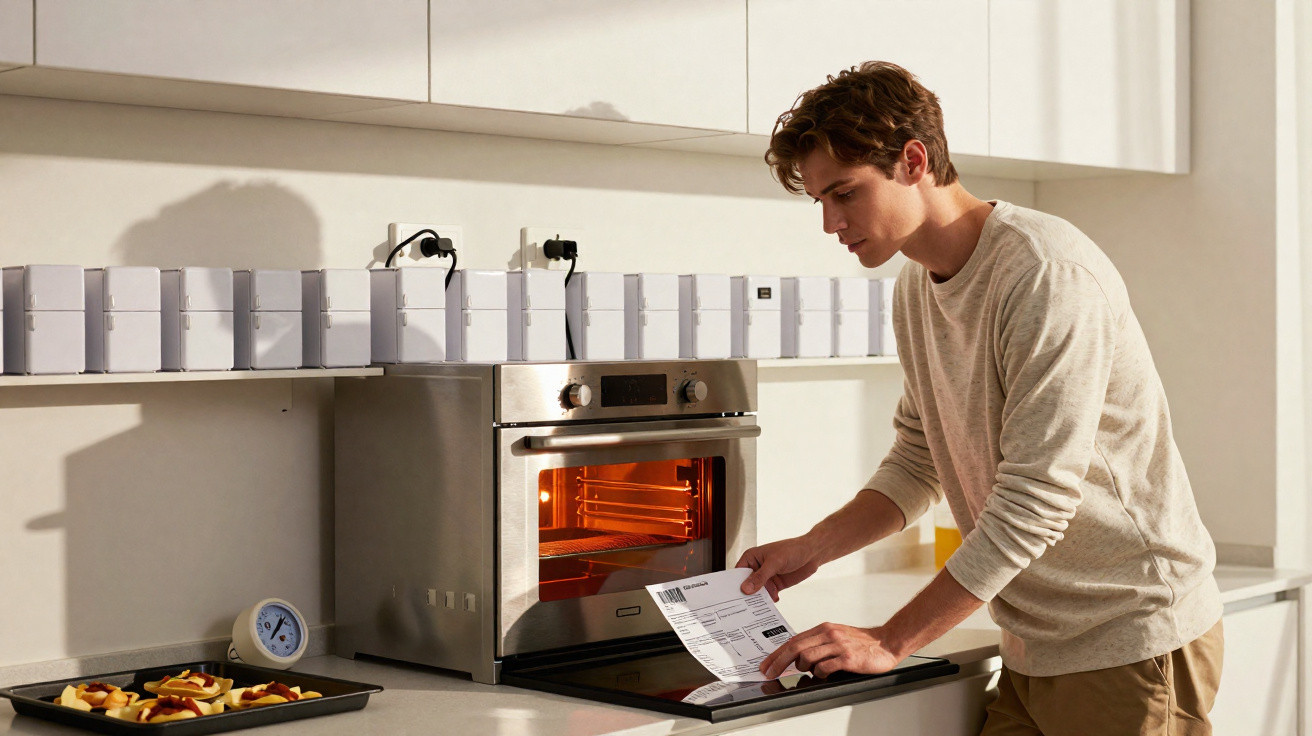
A typical evening might involve a frozen pizza shoved in quickly, perhaps followed by a few chips. The tomato sauce bubbles, a piece of topping slides down into the depths and cheese drips past the rack straight onto the base. It smokes briefly, so you quickly close the oven door to stop the smoke alarm going off. Then what happens? You eat the pizza, watch Netflix and check WhatsApp. The little burnt mark in the oven has been forgotten before the credits even roll.
These are exactly the sorts of scenes that accumulate. A Sunday roast releases more fat than expected. Muffin batter runs down the outside of the tin. Topped vegetables cheerfully splatter in every direction. They are individual mishaps that “just happen” each time. Surveys suggest that many people only wipe out their oven thoroughly every few months, while some do it just once a year. By then, every splash has gained another layer of history – like tree rings, only made of grease.
From a physical perspective, an oven is a grime magnet on fast-forward. At high temperatures, sugars caramelise, fats break down and proteins burn on. Anything that has baked on once is heated again at the next use, becoming firmer and darker. The marks do not simply become “old”; they become chemically more complex and therefore harder to remove. Each fresh layer sticks more effectively to the one beneath it.
The oven heats from below and often from the back. Any grease that splashes there is effectively baked again every time you use it. Air circulates and carries tiny particles that settle on the walls and glass. An oven that is not regularly stopped creates its own patina. Not the desirable kind found on a cast-iron pan, but a sticky black cloud made up of old meals.
The one oven-cleaning habit that changes everything
The saving habit sounds almost insultingly simple: always wipe the oven during the “warm moment”. In other words, do not leave it for hours or until “the weekend”; do it as soon as it has cooled down but is still warm to the touch. Use a damp cloth, a squirt of washing-up liquid or a little vinegar solution, and wipe over the base, glass and the worst splashes on the sides. It takes two minutes at most.
During this window, fresh dirt comes away almost by itself. Grease is still soft, sugar has not yet turned rock-hard and crusts are not yet unbeatable. Anyone who starts viewing the oven as a task to tick off after every major use – as routinely as emptying the dishwasher – changes the whole system. Dirt no longer gets the chance to organise itself into layers. The oven stays remarkably clean for months, without you ever having to force yourself into a major cleaning session.
Most people wait for the “right moment” to clean the oven: the point when it seems truly worthwhile because it already looks dreadful. Let’s be honest: nobody scrubs the entire oven interior with specialist cleaner and rubber gloves after every bake. Yet this all-or-nothing mindset is precisely what creates the problem.
There is another familiar enemy: aluminium foil on the oven base. Many people put it there so that “nothing gets on it”. In reality, it can warp, obstruct air circulation and damage the appliance. Disposable baking parchment or single-use trays are another option, but they simply end up in the bin. What is needed is a sustainable, small routine rather than one grand heroic effort. Wiping the oven while it is warm is exactly that quiet, unremarkable solution.
“The decisive difference between an oven that is chronically filthy and one that looks good for years is not a miracle product – it is a two-minute behaviour after every second use.”
If you want to make the habit stick, a few clear prompts can help:
- Keep a dedicated soft “oven cloth” that is used for this purpose only.
- Air the kitchen briefly after cooking; by the time you return, the oven will usually be at the ideal temperature for wiping.
- Do not aim for perfect; aim for “visibly better” – that is enough to prevent layers building up.
- For bakes and pizzas, always place a reusable baking tray or oven mat underneath to catch drips.
- Think of the habit as brushing your teeth: brief and slightly annoying, but the one thing that makes everything easier in the long term.
When the oven becomes a reflection of your kitchen
An oven says a great deal about a household. Not about whether somebody is tidy in the “Instagram sense”, but about how small everyday inconveniences are handled. Do you let them grow until they overwhelm you, or deal with them while they are still small? Wiping an oven when it is warm is not a hygiene obsession. It is a quiet commitment to creating comfort before everything escalates.
Interestingly, people who establish this two-minute habit often change how they approach other things as well. Suddenly, the hob gets a quick wipe before marks dry on. The worktop is cleared instead of becoming piled with clutter. None of this takes much more time, yet it feels considerably easier than embarking on a cleaning marathon every quarter. The oven changes from the troublesome child into a quiet ally.
Ultimately, this is about more than cleanliness: it is about a calmer kitchen life. Less smoke when you preheat. Fewer awkward moments when friends offer to help and spontaneously open the oven door. More desire to cook, instead of being put off by the thought of a sticky interior. Once you have experienced how relaxed it feels to have an oven that stays reasonably clean, you will not want to return to the era of baked-on surprises.
| Key point | Detail | Benefit for the reader |
|---|---|---|
| Ovens become dirty gradually | Numerous small splashes and drips bake on more firmly with every use | A clearer understanding of why everything seems to look so dirty “suddenly” |
| The “warm moment” is crucial | A quick wipe while the oven is still warm to the touch removes fresh dirt with almost no effort | Saves energy, time and harsh cleaners |
| A mini-routine rather than a deep clean | A two-minute habit after major uses, combined with a drip tray or oven mat | The oven remains clean in the long term without major cleaning sessions |







Comments
No comments yet. Be the first to comment!
Leave a Comment