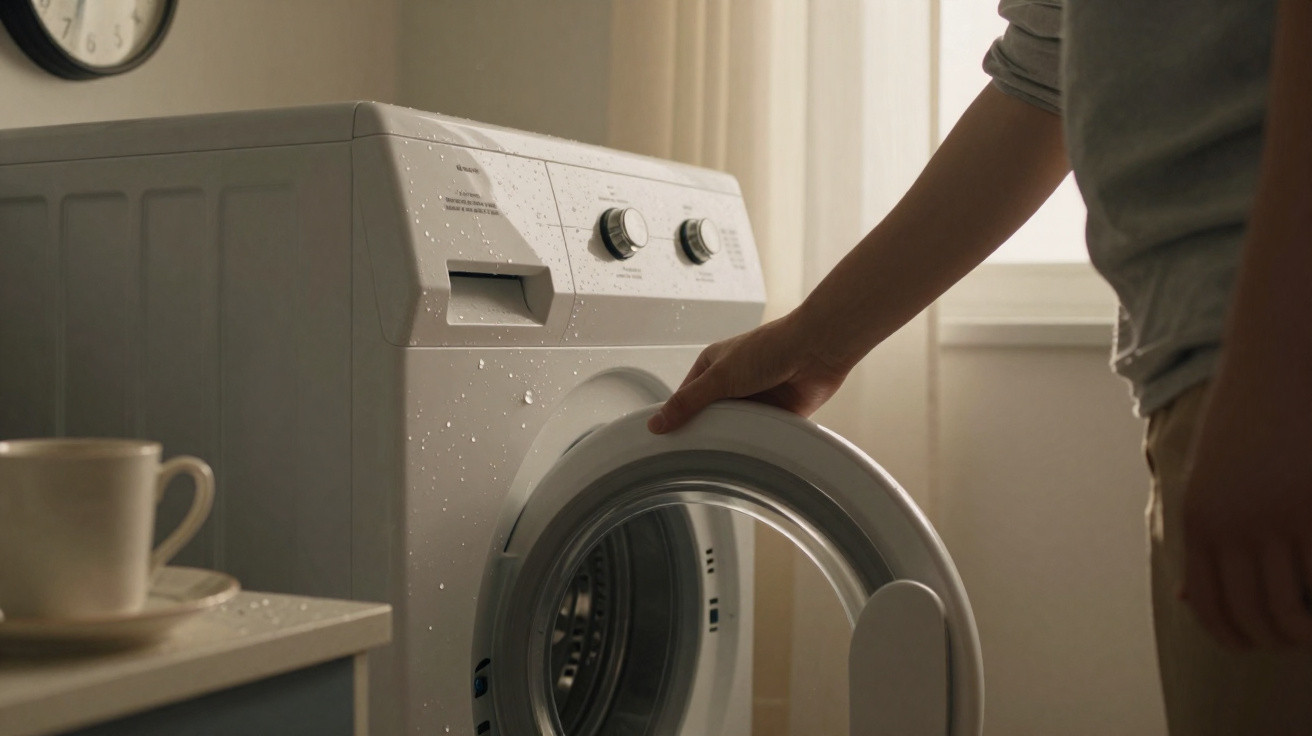
Your plates and glasses, however, may not agree.
Many people open the dishwasher as soon as its cycle finishes. Steam pours out, the kitchen briefly becomes misty, and it is easy to assume the task is complete. However, this automatic reaction can influence hygiene, energy consumption and even your appliance’s lifespan. Engineers now suggest that waiting briefly after the beep is more important than it may seem.
Why you should not open the dishwasher immediately
As soon as a programme ends, the dishwasher interior remains very hot and humid. Everything inside, including plates and cutlery, is still considerably warmer than the surrounding room. Although this steamy environment may appear harmless, the moment you open the door determines what happens next to every glass and fork.
The condensation effect that ruins a “perfect” wash
Opening the door immediately releases a cloud of hot, humid air into the much cooler kitchen. As the vapour rapidly cools, it changes back into fine droplets of water.
Those droplets settle on the first cold surfaces they hit – glassware, cutlery, cabinet fronts – leaving spots, streaks and a damp film.
Therefore, even when the dishwasher has washed and rinsed everything properly, the abrupt fall in temperature can lead to:
- Water spots on glass and stainless steel
- Streaks on cutlery and plates
- Moisture build-up on nearby cupboards and worktops
Repeated exposure to this escaping steam may eventually harm surrounding kitchen furniture. Laminate worktops and chipboard cabinets are especially prone to swelling at their edges and joints. Rather than remaining contained in the dishwasher, steam moves into your kitchen fittings.
Why a 30–60 minute wait changes the result
Keeping the door shut for between half an hour and an hour lets the appliance carry out a subtle but useful process: steam can condense on its internal walls rather than on the dishes.
Throughout this period, the dishwasher cools gradually. Moisture flows down the sides and bottom of the tub before draining away. Plates, bowls and glasses then dry under more stable conditions, without such a sharp contrast in temperature.
The wait does not just dry; it manages heat and moisture so your dishes cool gently and finish the cycle the way designers intended.
People who adopt this additional step often find there are fewer marks on glasses, less need for hand-drying and less steam clouding the kitchen. It is an easy adjustment that can make a visible difference to anyone wanting their crockery to look its best when visitors arrive.
Hygiene, not just looks: what happens to germs
Dishwashers can reach temperatures capable of killing many everyday bacteria, particularly when using intensive or “hygiene” programmes. Yet the process does not end when the spray arms stop moving. The drying stage also has implications for microbes.
Moisture, microbes and that “damp” smell
Bacteria grow more readily on warm, damp surfaces than on dry, cooler ones. Opening the appliance straight away can leave plates and glasses coated with a light film of water, allowing moisture to remain in crevices and on surfaces.
Waiting 30–60 minutes encourages more thorough drying. With less residual dampness, bacteria and mould spores that later enter from the air find conditions less favourable. This is one reason people often notice fewer musty odours when they allow the closed tub to complete a longer drying phase.
Dry dishes are not only about appearance; lower moisture levels make it harder for unwanted microbes to establish themselves between washes.
This does not make a dishwasher a medical-grade steriliser. It can, though, help ensure that supposedly clean plates emerge genuinely fresh rather than taking on an odour from a damp interior.
Protecting delicate items and the machine itself
Heat shock is not only an issue for people who collect glassware. Fine porcelain, thin glasses and double-walled mugs can all react poorly to sudden temperature changes. Opening the door the instant a cycle ends exposes very hot items to much cooler room air, potentially encouraging minute stress cracks over time.
The dishwasher’s components can also benefit from slower cooling. Rubber seals, plastic racks and sensor housings are better served by a gradual reduction in temperature than by repeated surges of hot steam escaping past them. Engineers specialising in domestic appliances often note that controlled cooling places less mechanical strain on seals and joints.
Across many cycles, this may result in fewer leaks, fewer brittle components and a longer working life for a costly appliance.
What modern dishwashers already do for you
Appliance manufacturers have recognised the difference that timing can make. Many newer mid-range and premium dishwashers include drying functions intended to make this transition gentler, without requiring you to watch the appliance and wait for the right moment.
Automatic door-opening systems
Automatic door opening is one function appearing increasingly across new ranges. Once the programme is complete, the dishwasher releases the door by a couple of centimetres. Importantly, it does not do so as soon as the wash ends.
Sensors within the appliance monitor humidity and temperature, opening the door only when the interior has cooled sufficiently. This enables steam to leave gradually instead of escaping in one forceful burst. The dishwasher stays warm enough for drying to continue, but not hot enough to mist up the kitchen or leave dishes wet again.
On models equipped with this option, manufacturers generally adjust the timing to suit individual programmes. Eco programmes, intensive washes and quick cycles can each follow slightly different cooling patterns before the door opens a little.
| Action | Result for dishes | Impact on kitchen | Effect on dishwasher lifespan |
|---|---|---|---|
| Open immediately | Spots, streaks, damp surfaces | Steam on cabinets and worktops | More stress on seals and plastics |
| Wait 30–60 minutes | Drier, shinier, more hygienic load | Less steam damage to furniture | Gentler cooling, potential longer life |
| Automatic delayed opening | Optimised drying, fewer water marks | Controlled steam release | Process matched to design limits |
Everyday habits that boost drying and performance
Waiting after the beep is most effective when the rest of your dishwasher routine also promotes efficient washing and drying. Minor decisions before starting a programme can have a greater effect than many owners expect.
Loading patterns that actually help drying
How you arrange plates and glasses affects the way water drains away. Packing the dishwasher too tightly holds droplets in narrow spaces and corners, where they can remain long after the programme is over.
- Keep space between plates to allow water and air to circulate freely.
- Position cups and bowls at an angle so water drains away instead of collecting.
- Do not stack plastic containers inside one another, as they retain moisture.
- Make sure the spray arms can rotate freely and are not obstructed by tall items.
Dishwasher racks are designed around particular spray patterns. If large trays or chopping boards prevent an arm from turning, some areas will remain colder and wetter. Even a 60 minute wait cannot remedy this.
Cleaning and detergent choices
Blocked filters, greasy seals and limescale deposits can all reduce the effectiveness of washing and drying. A monthly deep clean – removing the filter, checking the spray arms and wiping the seals – helps water circulate as designed and prevents residue from accumulating.
The choice of detergent matters as well. Many modern tablets contain rinse aids that reduce surface tension, allowing water to run off in sheets rather than remain as droplets. This can make the 30–60 minute pause much more effective because there is less water to evaporate from the outset.
A clean machine plus a short wait after the beep usually beats fancy “extra-dry” settings for day-to-day loads.
What if you leave dishes much longer than an hour?
In many homes, dishes remain in the dishwasher overnight. Provided the filters are clean and the load has been washed properly, this will not normally harm the appliance. Once the main cooling period has passed, the internal temperature matches that of the room and the components settle into a neutral state.
The possible disadvantage is trapped humidity. Some loads can develop a slight stale smell inside a sealed, humid appliance. After the initial 30–60 minute wait, leaving the door slightly ajar prevents this. It allows the final traces of moisture to escape while continuing to shield furniture from direct steam.
Energy, off-peak tariffs and timing your unload
The 30–60 minute rule works particularly well with overnight or off-peak operation, which is becoming more widespread in homes using time-of-use energy tariffs. Running the dishwasher later in the evening and emptying it in the morning naturally allows for an extended cooling period.
For quick daytime programmes, think of the wait as useful breathing space: start the dishwasher before a school run or workout, disregard the beep, and return once the dishes have cooled and dried. Rather than waiting nearby to open the door at once, the pause becomes part of your normal schedule.
If you are purchasing a new dishwasher, check which drying functions are included, how long its automatic door-opening delay lasts and whether that setting can be changed. Choosing features that suit your routine can often save time and energy, while helping to keep cupboards, dishes and the appliance itself in better condition over the long term.






Comments
No comments yet. Be the first to comment!
Leave a Comment