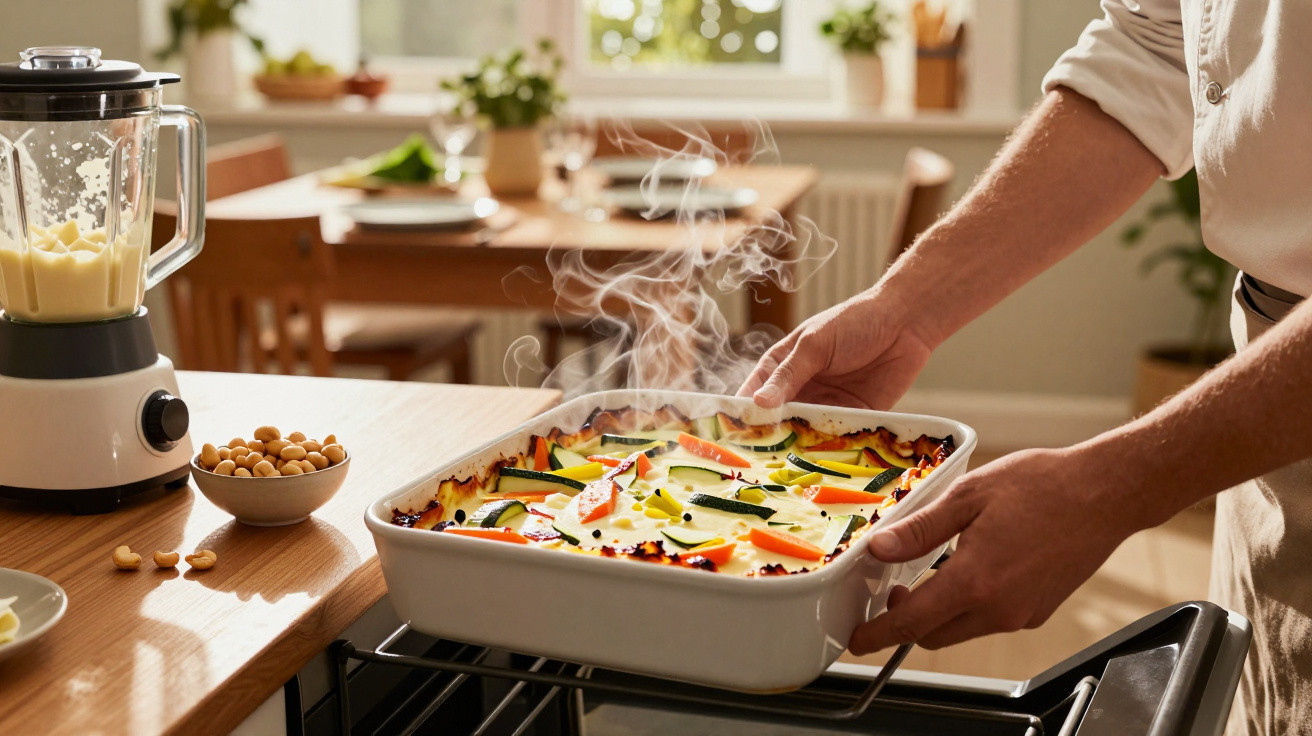
A deeply golden, melt-in-the-mouth and comforting gratin without butter or cream? This article uncovers the trick used in this country.
The recipe website cited by the original article sets out how to make a particularly creamy vegetable gratin while using less butter and cream. Drawing on a straightforward technique common in home cooking, this culinary outlet explains how an everyday cupboard ingredient can alter the consistency of an oven-baked dish without significantly changing its flavour.
A creamy vegetable gratin without dairy: the promise of this trick
Vegetable gratin is one of Europe’s most frequently cooked dishes, whether it is made with courgettes, broccoli, cauliflower or a selection of seasonal vegetables. Traditionally, generous amounts of butter and cream are added to give it a coating, silky consistency. The food website’s article, published in early 2024, highlights an alternative approach.
According to the outlet, the featured ingredient can:
- bind the vegetables and their cooking juices;
- create a more even texture, similar to a light sauce;
- reduce the amount of dairy-based fat required;
- retain a neutral flavour without an overly pronounced aroma.
“The trick relies on a very simple product, already found in most cupboards and usually used for other preparations.”
The purpose is not to create a strictly “light” gratin, but to make the recipe lighter while retaining the pleasure of a creamy texture. The cooking website notes that many households now want to cut back on cream, butter or cheese for health or intolerance-related reasons, without giving up oven-baked gratins.
No butter or cream: how the secret ingredient works in a gratin
The article says that this ingredient acts as a binding agent. By soaking up some of the moisture released by the vegetables during cooking, it prevents the dish from sitting in clear liquid. Instead, it produces a smoother, more velvety consistency that coats every piece of vegetable.
In the method described by the culinary outlet, the ingredient is:
- used sparingly before the dish goes into the oven;
- spread evenly between the layers of vegetables;
- optionally combined with a little milk or plant-based drink, depending on dietary needs;
- finished with a small amount of grated cheese for browning, where the household’s diet allows it.
According to the website, the finished result is close to a classic gratin: a golden top, a tender centre and a structure that holds together well when served, including with particularly watery vegetables such as courgettes or tomatoes.
“The ingredient thickens the sauce directly in the dish, reducing the need to make a separate béchamel or seasoned cream.”
A solution for family meals and specific diets
The culinary outlet points out that this method is especially suitable for:
- people monitoring their saturated fat intake;
- households in which someone is lactose intolerant and prefers to limit dairy products;
- time-pressed cooks looking to cut down the number of steps;
- anyone wishing to use up leftover vegetables without making the dish too heavy.
For a French audience, this approach recalls the everyday use of a neutral thickener in family cooking, where it is already used in soups, sauces and certain desserts. Used in a gratin, it effectively becomes a “quick béchamel” made directly in the baking dish.
Practical advice for a creamier vegetable gratin
The article does more than describe the ingredient’s function. It also provides several technical recommendations on cooking vegetables, seasoning them and controlling moisture in the dish.
| Element | Role in creaminess |
|---|---|
| Pre-cooking the vegetables | Reduces the water released in the oven and improves the texture |
| Evenly sized cuts | Ensures uniform cooking and reduces dry patches |
| Seasoning | Boosts flavour, particularly when cream is omitted |
| Binding ingredient | Thickens the juices and creates a creamy texture |
| Oven temperature | Produces a golden gratin without drying out the dish |
For example, the website advises:
- lightly salting the vegetables beforehand, then patting them dry to limit excess water;
- avoiding too much binding ingredient, which could result in a pasty texture;
- using herbs or spices such as thyme, oregano or mild curry powder to compensate for the lack of flavoured cream;
- adapting the cooking time, which is often a little longer when a lighter liquid is used instead of cream.
“A small quantity of thickener is enough to transform the dish’s texture; the key factors remain the quality of the vegetables and control of the cooking.”
What this trick changes for readers in France
For households in France, this approach follows the same line as recipes intended to lighten the traditional gratinade, which is often rich in full-fat cream and cheese. In everyday cooking, many cooks already use a thickener to:
- thicken vegetable soup without adding cream;
- stabilise a sauce in an oven-baked dish;
- add body to a slow-cooked meal.
Applied to gratin, the technique presented by the source outlet offers an alternative to traditional béchamel. In France, béchamel is generally made from butter and flour, loosened with milk. The trick highlighted by this recipe website makes it possible to reduce at least one of these components while preserving a bound texture.
For people following a particular diet - vegetarian, low-lactose or simply lighter for medical reasons - this type of method can have a place in daily meals. However, anyone with a medical condition or significant dietary restriction is still advised to seek the opinion of a healthcare professional before making major changes to their diet.
A trick to adapt to French eating habits
A French reader can easily adapt this culinary outlet’s recommendations to familiar ingredients: seasonal vegetables bought at a market, fresh herbs and small quantities of regional cheeses. The binding ingredient featured in the article simply complements these elements.
Some households already choose, for instance, to replace part of the cream with a mixture of milk and a neutral thickener, or to make a gratin without béchamel and rely on this product to give structure to the cooking juices. The principle described by the website reflects these existing practices while giving them a more precise method.
“The central idea remains to achieve a generous, creamy gratin when eaten, without systematically relying on the butter-and-cream combination.”
Making gratins lighter without losing enjoyment: additional options
Beyond the single ingredient featured by the source outlet, several other ways can make a vegetable gratin lighter while maintaining its appeal:
- choose a varied mix of vegetables, combining squash, leek and carrot, for example, to create a naturally soft texture;
- use aromatics such as garlic, onion, shallot and fresh herbs to build flavour without extra fat;
- use a small quantity of strongly flavoured cheese instead of a thick layer of a very mild cheese;
- replace some of the cream with well-reduced stock, thickened with a neutral ingredient.
A further benefit of the technique described by the culinary website is that it works well with advance preparation. The dish can be assembled, the ingredient added, then kept in the fridge before being baked at the last minute. The thickener does its work during cooking, making this particularly convenient on busy weeknights.
This method also provides a way to use leftovers of roasted vegetables, pot-au-feu or ratatouille. By mixing them with this well-known ingredient in a gratin dish, it is possible to create a new, creamier recipe without needing a large quantity of cream or butter. For households paying attention both to their budget and to the nutritional quality of their meals, the method detailed by the source outlet therefore offers a practical option that can be readily adapted in France.
















Comments
No comments yet. Be the first to comment!
Leave a Comment