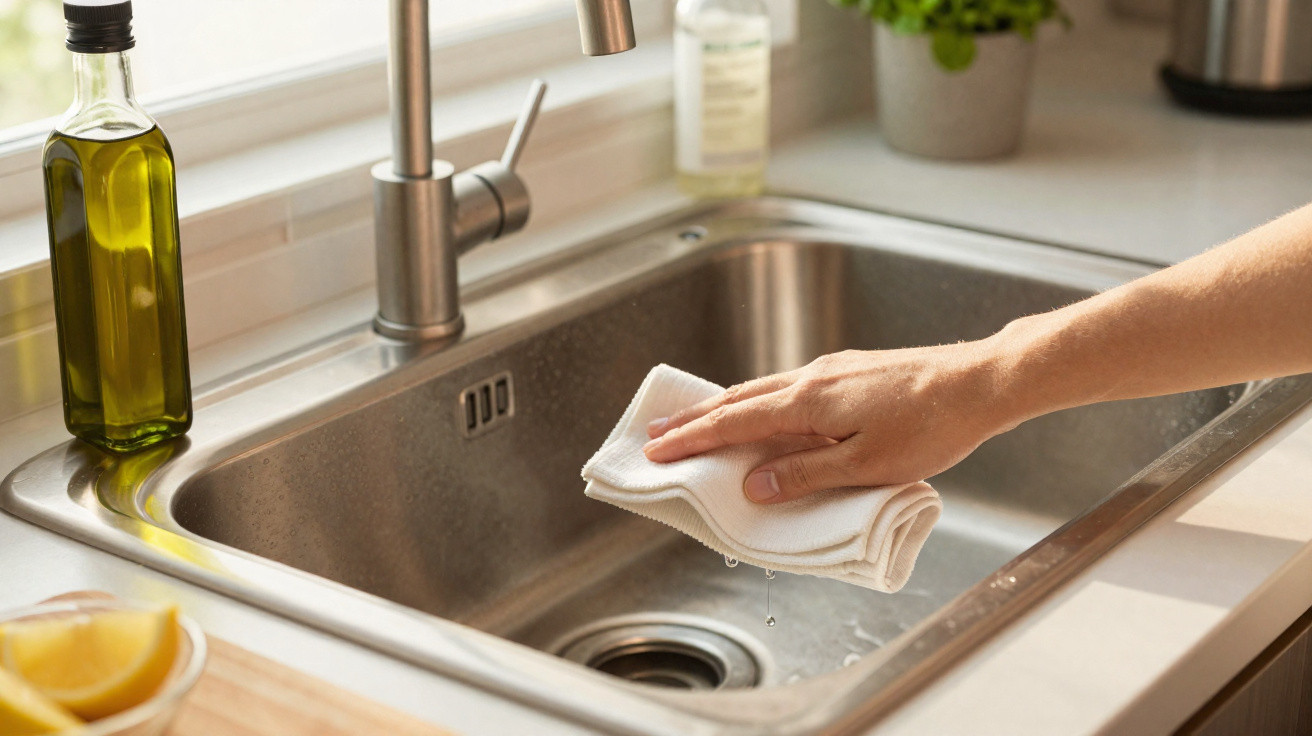
There is a particular polished glow in kitchen showrooms that can seem out of reach at home. My stainless steel sink had traded its sparkle for fingerprints, speckles of limescale and the muted haze caused by hard water. Then I tried a slightly cheeky cupboard staple.
Every streak seemed more obvious, and each water mark practically announced itself. The sink was technically clean, but it looked worn out, rather like a shop window at the end of the day. I wiped it, polished it and muttered to myself, but it remained stubbornly lacklustre. Then the olive oil bottle on the worktop caught my eye, as only an everyday kitchen essential can. It sounded absurd, but I could not resist trying it. I added a tiny amount to a soft cloth, moved it slowly along the grain, and watched the steel brighten as though another light had been switched on. A salad ingredient had saved the day.
Why olive oil gave my stainless steel sink a showroom shine
It is a modest trick using an entirely ordinary product. Stainless steel has a subtly brushed finish, and that texture can hold onto grease and water spotting unevenly. Olive oil moves across it, settling into fine scratches and smoothing out that visual clutter. Light then reflects more consistently, turning a dull surface glossy without using aggressive abrasives. The effect is not harsh glare but a soft glow. It is the difference between a “nice kitchen” and one that looks as though it has just been professionally cleaned. The real trick is not the oil itself, but the way it alters how the steel reflects light.
When I first tested it, I polished only the inside of the bowl. The rim and draining board remained untouched, creating a clear before-and-after line. My partner came in and asked, “Did you buy a new sink?” I laughed before finishing the rest with slow, satisfying strokes. British kettles have witnessed far more questionable experiments. In this case, the difference was instant and unexpectedly soothing. One cloth and one pantry essential produced a gentle, costly-looking sheen. I kept returning to look at it, which may be smug, but it is true.
There is also a practical explanation. Oil repels water, so a barely-there layer buffed into the steel makes splashes less likely to cling and slows the appearance of marks. Following the direction of the metal grain is important: it keeps reflections even and prevents swirled streaks. You are not covering the sink in oil; you are smoothing the minute, unseen scuffs that scatter light. Too much oil leaves smears, while the smallest amount creates a showroom shine visible from across the room. It is less a chemistry experiment and more an optical trick that works within seconds.
How to polish a stainless steel sink without greasy streaks
Always begin with a clean sink. Wash it in warm water with a small drop of washing-up liquid, then dry it thoroughly using a microfibre cloth. Put a tiny pea-sized drop of olive oil onto the cloth rather than directly onto the steel. Begin in the rear corner, using slow, straight movements that follow the grain. Leave the base of the tap and the overflow edge until last, as these areas show smears most readily. Turn the cloth to a fresh, dry section, then buff away all residue until the sink feels dry when touched. The aim is a glow rather than an oily coating. If oil remains visible, you have applied too much.
We have all faced the moment when visitors are due shortly and the sink resembles a splash zone. This is exactly the kind of quick solution for that situation. In reality, hardly anyone will do it daily; use it whenever the kitchen needs a lift. Typical errors include pouring the oil straight onto the steel, choosing lint-shedding kitchen roll, working in circles, or skipping the drying stage. Streaks on the tap usually mean there is too much product, so give it another wipe with a clean cloth. If the sink has a specialist protective finish, test the method on a small area beneath the rim first.
Olive oil is food-safe, making it an approachable option for the kitchen. However, too much residue can attract dust or make handles feel slippery, which is why the “less is more” approach avoids sticky disappointment. The smallest quantity has the greatest effect. If you are concerned that the oil may turn rancid, bear in mind that it is buffed into an exceptionally thin film and the sink is washed several times every day.
“Think of it like polishing shoes,” a colleague said. “You don’t slather; you buff until there’s nothing left to see, only shine.”
- Follow the grain rather than rubbing in circles.
- Choose a microfibre cloth instead of paper towel.
- Buff until the finish feels dry rather than slippery.
- One dot of oil will cover the whole sink.
- Keep oil away from handles and the floor to reduce slip risks.
What happened after a week using the olive oil trick
By the third day, water was still beading on the draining board as it does on a freshly polished car bonnet. The bowl collected everyday evidence of use, including coffee rings and pasta starch, but it rinsed clean more quickly and easily. I polished it twice that week, not because it was necessary, but because the process took 30 seconds and made an orderly kitchen look satisfyingly bright. On hectic evenings, I simply buffed the tap and rim. That narrow section is the first part people notice, rather like the crisp collar of an otherwise plain shirt. It is a small routine with a sizeable effect on the mood.
There are alternatives worth considering too. Mineral oil and baby oil provide a similar result and do not oxidise as fast. Some people also rely on a small amount of glycerine. In a warm home, olive oil may eventually develop an off smell on wood or porous materials, so I reserve it for steel. Since the sink is washed so often, nothing has the chance to linger. If hard water marks are the main issue, wipe the surface with white vinegar before drying it; the oil finish can then complete the job. You can adapt the approach to suit your home without turning the kitchen into a laboratory.
Another unexpected benefit was that fingerprints became far less annoying. They still appeared, but a light pass with the cloth removed them instead of requiring a full scrubbing session. The treatment also made old scratches, including those left by a heavy baking tray, appear softer. They had not disappeared, merely become less noticeable. A streak-free finish is not about flawless steel; it is about making everyday marks easier to live with. If you like a neat, relaxed-looking kitchen, this method earns its place in the cupboard without requiring extra bottles beneath the sink.
There is a quiet satisfaction in discovering a solution that has been in front of you all along. Olive oil will not renovate a kitchen, but it can change the feel of the room in less than a minute. The steel looks looked after, and you feel more in control. It is a small, slightly cheeky habit that plays with the light and lifts the mood. Pass it on to the friend who enjoys practical magic, or save it as your own finishing touch when the light falls just right. The sink did not need replacing; it simply needed gentler attention.
| Key point | Detail | Benefit for the reader |
|---|---|---|
| Clean, dry, then oil | Wash with washing-up liquid, dry completely, then apply a dot of olive oil along the grain | Quicker shine with fewer streaks |
| Less is more | Buff until the surface feels dry rather than slippery | A showroom look without greasy residue |
| Useful additions | Use vinegar first for hard water marks, or baby oil as a lower-odour alternative | Lets you tailor the trick to your home and routine |








Comments
No comments yet. Be the first to comment!
Leave a Comment