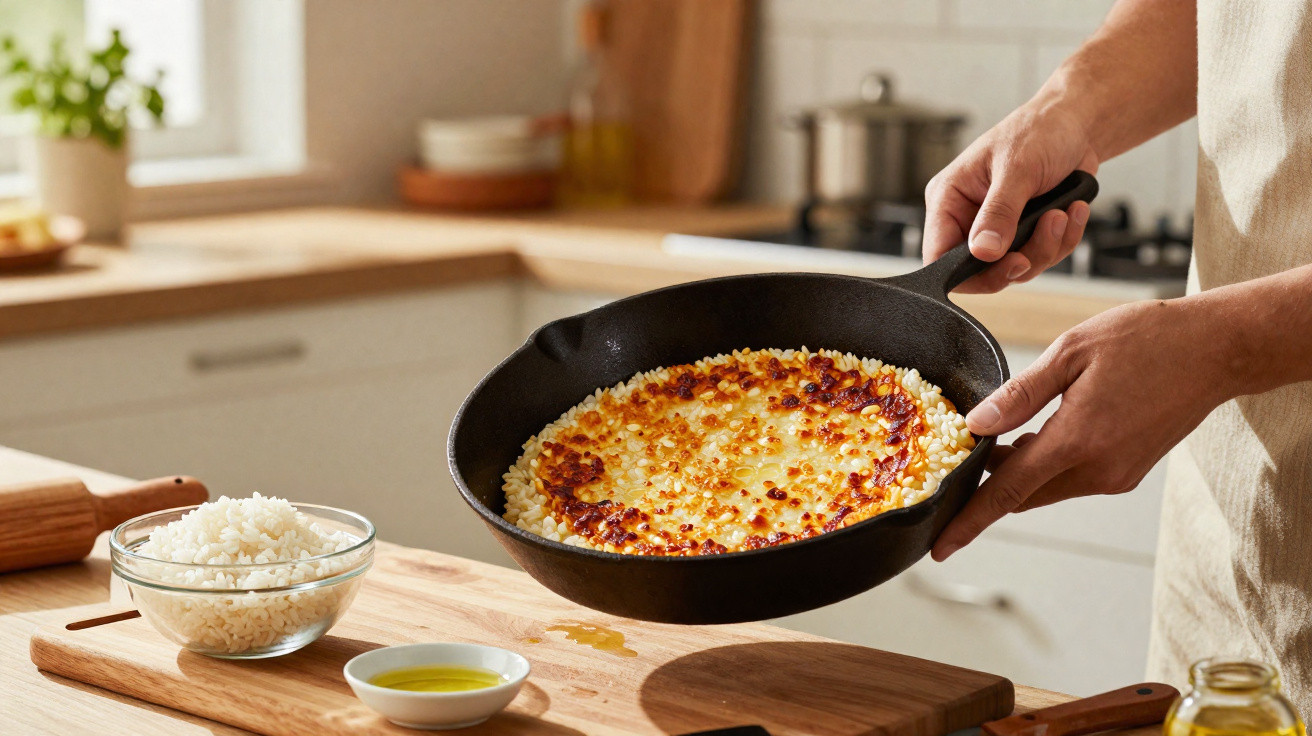
The frying pan was still on the hob, and the only light in the kitchen came from above the sink. You had told yourself you would not order a takeaway again, so the leftover rice from yesterday was The Plan. But there it was in its plastic tub: slightly forlorn, slightly cold, as though it knew perfectly well that nobody was excited by it. You prod it with a spoon and ask yourself whether reheated rice has ever genuinely made anyone happy.
Then there is a quiet hiss. Oil warming in the pan, the aroma of grains beginning to toast. All at once, the rice on the worktop no longer resembles a leftover.
It looks full of possibility.
This is no longer “leftover rice” - it is a crunchy obsession
When you first come across crispy rice on TikTok, it seems far too basic to deserve trend status. Chilled rice, a hot pan and a little oil. That is all. Yet, after millions of views, people are lifting golden fragments from frying pans as though they have uncovered hidden treasure at the back of the fridge. There is something strangely mesmerising about those clips.
Spatulas flatten rice into slim cakes, the rims turn brown and steam rises like tiny echoes of yesterday’s supper. Then comes the crunch: loud, unapologetic and aimed straight at the microphone.
Keep scrolling and the crispy rice technique appears in every possible setting. It turns up on ramen nights, beneath avocado and salmon in a makeshift sushi-bar arrangement. It sits alongside fried eggs, below chilli crisp, and serves as the base for what some creators confidently call “breakfast nachos”. In one viral video, an ordinary bowl of white rice becomes a crackling platform for spicy tuna and attracts more than three million views over a weekend.
In another, a creator’s Korean grandmother laughs and says, “We’ve always done this,” while tapping the pan, sharing an intergenerational in-joke.
There is a reason it feels so satisfying. Crispy rice is all about transformation: the kind of kitchen magic that leaves you feeling inventive rather than guilty about leftovers. In texture terms, it delivers a primal pleasure - tender below and spectacularly crisp above. From a budget perspective, it turns last night’s side dish into an entirely different meal. Mentally, it changes the way waste feels. That forgotten tub at the back of the fridge stops being evidence of a meal plan gone wrong. Instead, it becomes the starting point for a snack you genuinely want.
How the viral crispy rice technique actually works
The viral approach begins with an ingredient most people already have: cold, day-old rice. That coldness matters. It firms the grains, dries them slightly and keeps them separate rather than sticky. Warm a pan over a medium heat, add a thin layer of neutral oil, then distribute the rice across it. Do not pile it up. Create a slim, level layer, as though you were spreading gravel over a miniature road.
Then comes the most difficult stage of the recipe: doing almost nothing.
Press it lightly with a spatula, then leave it alone while it quietly transforms.
This is the point where many people run into trouble. They stir constantly. They overload the pan. They turn the heat to high, convinced that extra heat creates extra crunch, before ending up with a smoky kitchen and chewy rice. Here is the sympathetic truth: you are not a bad cook; you are simply impatient. Crispness comes from time and contact, not theatrics. Keep the heat at medium, allow five to ten minutes, and occasionally check the edges for colour. When you finally slide a spatula underneath and feel one cohesive golden sheet rise from the pan, it brings a small surge of triumph.
Let’s be honest: nobody really does this every single day.
Yet on the days you do, it is easy to understand why it became popular.
Eventually, it becomes more than a kitchen shortcut and starts to feel like a philosophy. One food creator told me:
“I used to throw out leftover rice without thinking. Now I plan extra, just so I can fry it the next day. It feels like cheating the system in the best way.”
Then there are the toppings, which is where people become delightfully unrestrained:
- Avocado slices, chilli crisp and a fried egg for a 5-minute brunch plate
- Spicy tuna and spring onions for DIY crispy rice sushi squares
- Kimchi, grated cheese and a drizzle of mayonnaise for a late-night “I’m not proud but I’m happy” snack
- Leftover roasted vegetables, soy sauce and sesame seeds for an effortless next-day lunch
- Peanut butter and honey over lightly crisped coconut rice for an accidental dessert that genuinely works
From shortcut to routine: why people cannot quit crispy rice
After making it a few times, the method settles into your mind like muscle memory. You deliberately cook a little more rice than you need. You place leftovers in a shallow container so they cool quickly and stay separate. The following day, you do not groan when you see that container. Instead, you can already imagine the sizzle. You begin wondering what in the fridge would be better served on a crunchy base.
That movement between soft and crisp, familiar and fresh, becomes part of the weekly routine.
There is a subtle emotional change, too. Leftovers usually suggest compromise: the less appealing option when you lack the energy to make something “proper”. Giving rice an audible crunch reverses that feeling. It is playful, even slightly defiant, like bringing a street-food snack into an ordinary Tuesday. You may still eat it leaning over the sink with your phone in hand, but the occasion suddenly feels deliberate. You picked this. You turned “ugh, leftovers” into “oh, this again, yes please.”
That small sense of control, right there in your frying pan, matters.
The trend is continuing to develop. Some people crisp their rice in the oven on a baking tray until the edges brown. Others choose a non-stick frying pan with almost no oil for a lighter crunch. A handful of ambitious cooks pursue the rich, caramelised “socarrat” associated with paella or the nutty “nurungji” found in Korean kitchens, bringing tradition into the trend. Whether you describe it as a shortcut, a recipe or a ritual, one straightforward idea lies beneath it: it is about finding more satisfaction in ingredients you already own.
It does not fix everything.
But it can make “What’s for dinner?” feel a little less tiring.
The next time you open a container of cold rice, you face a small choice. You could microwave it, eat it without much thought and forget it ten minutes later. Or you could reach for a pan, listen for that first gentle hiss and make the most of the moment. Some people will always regard it as “just leftovers”, not worth filming or sharing. Others will continue fanning crispy rice towards the camera, chasing comments and creating tiny worlds of crunch in a 30-second clip.
Somewhere between those two groups is you, paying attention to your own appetite.
There is space for experimenting here, for errors, burnt edges and unusual topping pairings you will never confess to anyone. There is also room to pass the idea along, just as that Korean grandmother laughed with her granddaughter, or as you might casually tell a friend, “Oh, you haven’t tried crisping your rice yet?” Recipes once travelled through notebooks and telephone calls. Now they move with a scroll. The pleasure of a simple trick improving your day remains exactly the same.
Maybe the truly viral element is not the rice.
Maybe it is the quiet permission to make something old into something you actually want.
| Key point | Detail | Value for the reader |
|---|---|---|
| Use cold, day-old rice | Chilled grains are drier and separate easily, helping them crisp rather than become mushy. | Gives you restaurant-level texture from basic leftovers. |
| Cook in a thin, even layer | Spread the rice out and press it gently; avoid stirring so a golden crust can develop. | Delivers that addictive crunch with minimal effort. |
| Personalise with toppings | Add eggs, fish, vegetables, sauces or even sweet toppings. | Turns one simple technique into endless quick meals and snacks. |
FAQ:
- Question 1 Can I use freshly cooked rice for crispy rice? Yes, although you should let it cool and dry first. Spread it over a tray for 20–30 minutes, or refrigerate it uncovered so the surface starches can firm up.
- Question 2 Which rice works best? Medium- or long-grain white rice is easiest to crisp, though jasmine, basmati and even short-grain sushi rice can work when thoroughly chilled.
- Question 3 How much oil do I need? You only need a thin, even coating across the pan. Allow 1–2 tablespoons for a standard frying pan; too much oil makes the rice greasy rather than crackly.
- Question 4 How can I stop the rice sticking? Choose a properly heated non-stick or well-seasoned pan, avoid moving the rice too often, and wait for a crust to develop before attempting to turn or lift it.
- Question 5 Can crispy rice be reheated later? Yes. Return it to a dry frying pan over medium heat, or place it in a hot oven or air fryer for a few minutes to restore its crunch.







Comments
No comments yet. Be the first to comment!
Leave a Comment