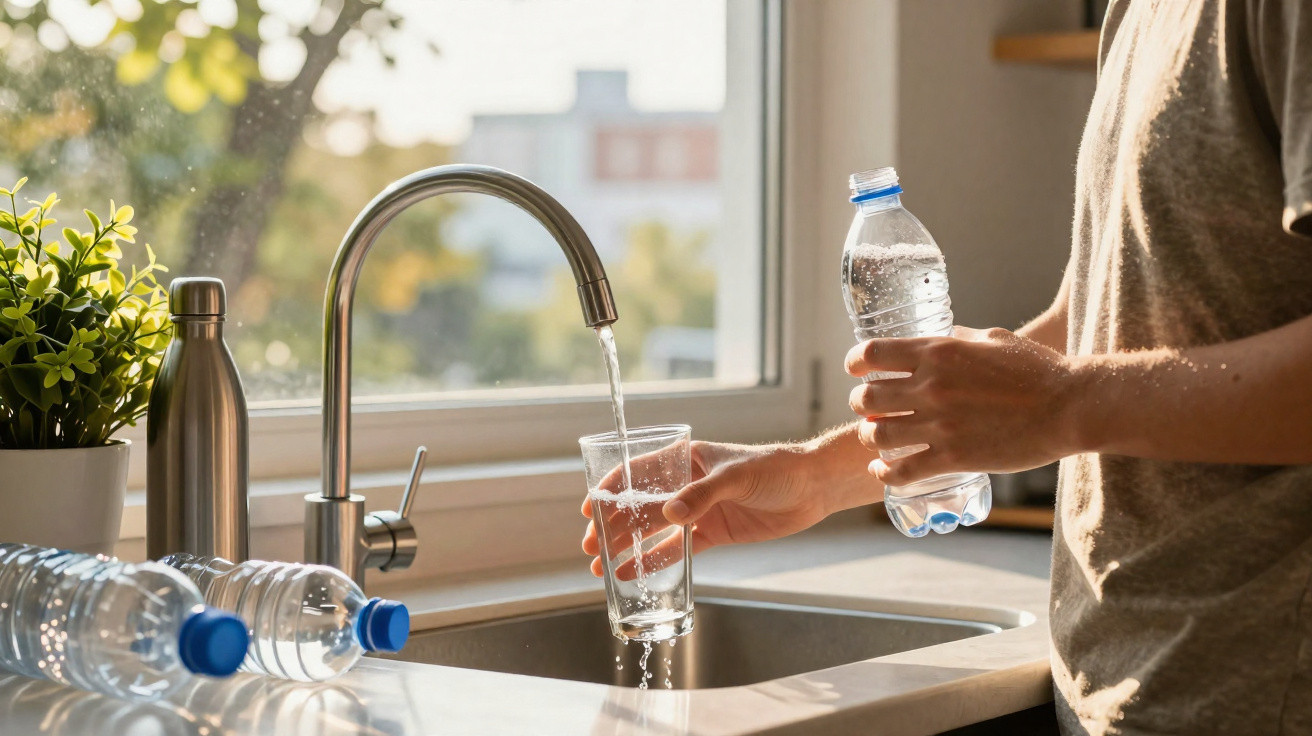
Growing distrust in tap water has helped make bottled water a worldwide everyday product, including in countries whose public water networks are among the most thoroughly tested.
Advertising has presented bottled water as cleaner, healthier and easier to use, yet scientific evidence paints a different picture.
The idea of purity is fundamental to bottled water's attraction. However, research indicates that it can carry its own health and environmental hazards.
A 2025 study indicated that bottled water may be less safe than many consumers believe. Water sold in refillable containers and plastic bottles was found to contain high levels of bacterial contamination.
These results contribute to increasing evidence that tap water is safe in many areas and is frequently subject to tighter regulation and more dependable monitoring than bottled alternatives.
Tap water standards and bottled water regulation
Across most developed nations, tap water must satisfy more demanding legal and testing requirements than bottled water. Public water supplies undergo daily checks for bacteria, heavy metals and pesticides.
In the UK, the Drinking Water Inspectorate makes its findings publicly available. In the US, suppliers must comply with the National Primary Drinking Water Regulations, which are overseen by the Environmental Protection Agency. Throughout Europe, water standards are set by the EU Drinking Water Directive.
Bottled water, on the other hand, is regulated as a packaged food item. It is inspected less often, while producers do not have to release detailed information about its quality.
Studies have found contaminants in bottled water, including bacteria, chemical residues and microplastics. One 2024 study found tens of thousands of plastic particles per litre in certain products.
Further research indicates that bottled water often has greater concentrations of microplastics than tap water. These particles have potential associations with inflammation, hormone disruption and their accumulation in human organs.
Plastic bottles may also release chemicals including antimony, phthalates and bisphenol analogues. Antimony is a catalyst used in the production of PET bottles, while PET is the plastic most commonly used for single-use beverages. Phthalates are plasticisers that make plastics flexible.
Bisphenol analogues, including BPS and BPF, are closely related to BPA, which is used to harden certain plastics and line food and drink tins. These compounds can enter the water, particularly if bottles are stored in hot places such as cars, delivery vans or direct sunlight.
Scientists are concerned because some of these chemicals may act as endocrine disruptors, potentially affecting the body's hormone systems.
Greater exposure to particular phthalates and bisphenols has been associated with reproductive health, metabolic and developmental effects. However, the quantities detected in bottled water are usually low, and the long-term dangers remain uncertain.
Researchers are investigating what ongoing, repeated exposure could mean over time, especially as global bottled water consumption keeps increasing.
Bottled water, bacteria and minerals
Bottled water is not sterile. Microorganisms can multiply rapidly after a bottle has been opened. A partly consumed bottle left inside a warm car may provide ideal conditions for microbial growth. Reusing single-use bottles can also introduce bacteria from saliva and the surrounding environment.
Tap water usually contains useful minerals, as public health research has well documented. Some UK and overseas supplies have fluoride added to help prevent tooth decay. Mineral levels in bottled water differ greatly, and studies indicate that children who drink it more often experience higher rates of dental caries.
How green is your bottle?
High bottled water consumption also places a considerable burden on the environment. Worldwide demand is so vast that roughly one million plastic bottles are bought every minute.
Aquaporin, a Danish water technology company, estimates that making one litre of bottled water may use up to two thousand times more energy than delivering one litre of tap water. Its carbon footprint is also larger, averaging about eighty grams of carbon dioxide per litre when bottling, transportation and cooling are taken into account.
The discussion around bottled water is inseparable from the broader strains on global water resources. Ensuring access to clean drinking water is still an urgent worldwide issue.
Climate change, fast urbanisation, industrial contamination and population growth are putting freshwater supplies under pressure. UNESCO says that more than two billion people already live in areas facing high water stress.
To provide alternatives to bottled water, I am collaborating with a research team on Solar2Water, a portable device powered by solar energy that produces clean drinking water straight from the air.
Rather than depending on extensive pipelines or major treatment plants, the decentralised system makes water where it is needed. Local production can lower dependence on single-use plastic and reduce pressure on municipal networks.
With infrastructure facing increasing demands, decentralised systems that generate clean drinking water at the point of use can work alongside established networks. They improve resilience during climate shocks, lessen reliance on single-use plastics and offer choices for communities whose confidence in tap water has been undermined.
Bottled water is still vital in emergencies and in places where tap water is genuinely unsafe. In most developed countries, however, it is not cleaner or safer than tap water.
As climate change and pollution alter access to water, it is more important than ever to understand the genuine differences between bottled and tap water.
Muhammad Wakil Shahzad, Professor and Chair of Advanced Energy and Sustainability, Department of Mechanical Engineering, Northumbria University, Newcastle
This article is republished from The Conversation under a Creative Commons licence. Read the original article.










Comments
No comments yet. Be the first to comment!
Leave a Comment