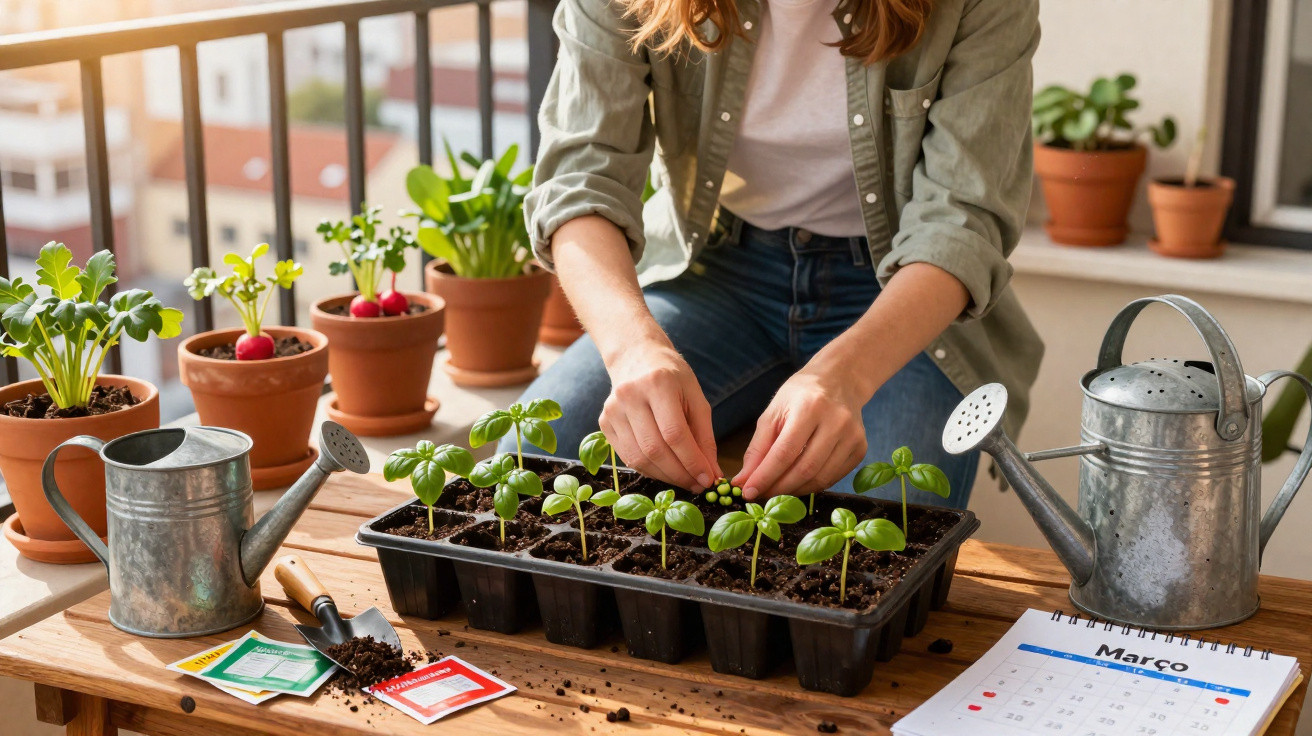
When late frosts still hover in the forecast and evenings begin to brighten, a subtle race begins in the garden.
Throughout the UK and much of the northern US, March is the point at which casual hopes must become serious plans for a summer harvest. Although the ground remains cold and the weather unsettled, choices made at the potting bench now determine whether July brings plates piled high with homegrown flavour or a desperate trip for disappointing supermarket tomatoes.
The spring window that shapes your summer harvest
March can seem premature. Lawns are saturated, winds are sharp and barbecues feel far away. Yet, for plenty of vegetables, waiting for “proper warmth” means starting too late. Their growing cycle is lengthy, so they require an early start before summer temperatures arrive.
For heat‑loving crops, the real growing season starts indoors in March, long before T‑shirts and sun cream.
As the days lengthen, plants react quickly. Soil life stirs, and roots begin growing. Taking advantage of this natural momentum can extend harvesting from late spring into early autumn. Miss it, and the growing season becomes squeezed, leaving plants to catch up in July rather than produce food.
There is a cost benefit too. Growing plants from seed costs less than purchasing trays of established seedlings in May. It also gives you access to superior varieties, including heritage and regional types that seldom reach ordinary garden centres.
Warmth-lovers: seedlings that need to begin under cover
Vegetables originating in warmer climates do not cope well with a British or northern US spring. Tomatoes, aubergines and peppers all struggle in chilly ground, so they need protection before going into the garden.
Tomatoes, peppers and aubergines: why March is non‑negotiable
These familiar Mediterranean vegetables need plenty of time to develop. It can take four to five months from seed to the first ripe crop, and even longer during overcast summers. Sowing in March is therefore not simply eager gardening; it is essential timing.
Tomatoes, peppers and aubergines sown after March often spend the summer flowering instead of filling your kitchen bowls.
A costly greenhouse is unnecessary. A sunny windowsill, compact balcony greenhouse or unheated conservatory can be enough, provided temperatures stay close to 18–21°C (65–70°F). Use seed compost that is fine-textured, free-draining and only lightly moist.
- Sow into small pots or modules that have drainage holes.
- Apply only a light covering of compost or vermiculite rather than a deep layer.
- Keep the compost surface moist but never saturated.
- Give seedlings as much available light as possible after they emerge.
At the earliest stage, many gardeners make the same error: sowing in conditions that are too cold. Seed trays on a cold windowsill over a draughty radiator seldom achieve the germination temperatures these crops require. An inexpensive heat mat, a warm airing cupboard for the initial few days or a reliably heated room can be the difference between thin, feeble seedlings and a thick covering of vigorous young plants.
Basil: the small seed that changes summer meals
Basil is commonly regarded as an extra, bought at the last minute as a supermarket pot. Start it indoors in March and it becomes a productive, enduring partner for tomatoes, courgettes and summer salads.
The seeds are nearly dust-fine, needing warmth and light to thrive. Sprinkle them sparingly across damp compost and press them in gently instead of covering them. A transparent lid or propagator cover maintains the humidity needed during germination.
Basil started early can be planted around tomatoes later, helping to confuse pests and perfuming the garden with a greenhouse scent every time you brush past.
When seedlings have formed a few true leaves, transplant them into separate pots. Pinching out the growing tips regularly creates bushier plants and postpones flowering, extending the pesto season well beyond July.
Hardier crops: sow straight into waking soil
While tender plants remain protected indoors, other vegetables are ready for fresh air and open ground. These crops favour the cool conditions of early spring over the intense warmth of late summer.
Radishes and carrots: the earliest crisp harvests
Once soil is no longer sodden and will crumble in your hand, make shallow drills and begin sowing. Radishes are notably quick, and in favourable conditions the first crisp roots can be lifted scarcely a month after sowing.
Carrots need more time, although they also prefer cooler ground. Give them a finely prepared, stone-free seedbed so their roots can grow downwards without obstruction.
Careful spacing at sowing time saves you the tedious job of thinning and gives each root room to grow well.
A useful approach is to add a small pinch of radish seed to carrot rows. Radishes emerge first, showing where the row is and providing slight shade while carrots establish slowly. When the carrots need more room, the radishes should already have been harvested.
Peas and spinach: growing well before hot weather
Peas and spinach truly dislike hot, dry summers. As cool-season vegetables, they perform best in the fresh conditions of March and April. Sowing directly now provides what they need: damp ground and fairly mild temperatures.
Plant pea seeds in pairs a few centimetres deep along a row, then offer support of some sort, even simple twiggy branches. Spinach benefits from fertile soil that holds moisture. Sowing short rows at fortnightly intervals provides a regular supply of leaves instead of one unmanageable glut.
| Crop | Best March strategy | Key risk if you wait |
|---|---|---|
| Tomatoes | Sow indoors in warmth with bright light | Fruit develops late and ripens as autumn cold arrives |
| Peppers & aubergines | Sow indoors with consistent warmth | Plants remain flowering when nights begin to cool |
| Basil | Sow indoors on the compost surface | Brief harvesting period and weak supermarket plants |
| Radishes | Sow directly in light, shallow drills | Roots become woody once summer heat arrives |
| Carrots | Sow directly and thinly into fine soil | Restricted growth and greater pest pressure |
| Peas & spinach | Sow directly now for cool-season growth | Bolting and weak yields in hot conditions |
Why March goes wrong for so many gardeners
Even with these advantages, March is still the month gardeners most often misunderstand. Many beginners wait until Easter or the first warm spell, following bank holiday barbecue habits rather than plant biology.
The common mistake is not sowing too early, but sowing the right things in the wrong place at this time of year.
Tomatoes and courgettes sown outside in March are very likely to sulk or die. Peas and spinach started in a hot conservatory may germinate, only to fail in drying compost. Success rather than disappointment depends on matching each crop to the conditions it prefers during this in-between season.
Sowing everything simultaneously is another common mistake. March suits succession sowing: a small radish batch every 10–14 days, a couple of lettuce trays at a time, or several additional pea rows later in the month. This spreads the work and lengthens the harvest period.
Long-term gains: saving money and building resilience
Starting seeds in March is more than a pleasure for hobby gardeners. As food prices vary, it can support household budgets and strengthen local resilience.
One packet of tomato seed often costs less than a single pot-grown plant in May, while producing a dozen or more strong seedlings. Selecting open-pollinated or heritage varieties also allows seed saving in later years, cutting reliance on commercial supply chains.
There is a chemical consideration as well. Home seed-growing reduces the need to buy plants imported from intensive systems that may depend on substantial fertiliser and pesticide inputs. You control the potting mix, feeding and watering routine yourself.
Practical scenarios: balcony, terrace and small garden
This March schedule is not only for gardeners with a large allotment. The same seasonal approach works on a balcony, simply on a smaller scale.
For example, in a fifth-floor flat, cherry tomatoes and basil can be sown on the kitchen windowsill before being transferred to containers when night temperatures remain dependably above 10°C (50°F). A long planter can hold radishes followed by baby carrots, making the most of restricted space.
In a very small terraced garden, peas can climb netting fixed against a fence, with spinach occupying the shaded strip below. An old table covered by an inexpensive plastic mini-greenhouse can serve as a seedling nursery throughout March and April.
Key terms and risks worth understanding
Two phrases regularly confuse first-time March growers: “last frost date” and “hardening off”. The last frost date is the average final spring night on which temperatures fall below freezing. Timetables for tender plants count backwards from this date, allowing enough indoor time for seedlings to become sturdy before facing outdoor cold.
Hardening off means gradually adapting indoor-grown seedlings to outside conditions. Moving March-sown tomatoes directly from a warm kitchen to an exposed garden can shock them. Taking them outdoors briefly each day for a week, while steadily increasing their time and exposure, strengthens them and limits losses.
This month’s principal risks are damping-off disease caused by overly wet compost, leggy seedlings resulting from insufficient light, and slugs attacking the first outdoor sowings. Ensuring good airflow around trays, placing seedlings close to windows and using a few straightforward physical slug barriers greatly reduces these threats.
With modest care, March becomes less of a gamble and more of a quiet plan. Each seed carefully sown now-whether indoors or outdoors-creates a sequence of benefits: lower spending on plants in May, fewer bare spaces in June, and much more colour and flavour on the table when summer finally seems to have arrived.






Comments
No comments yet. Be the first to comment!
Leave a Comment