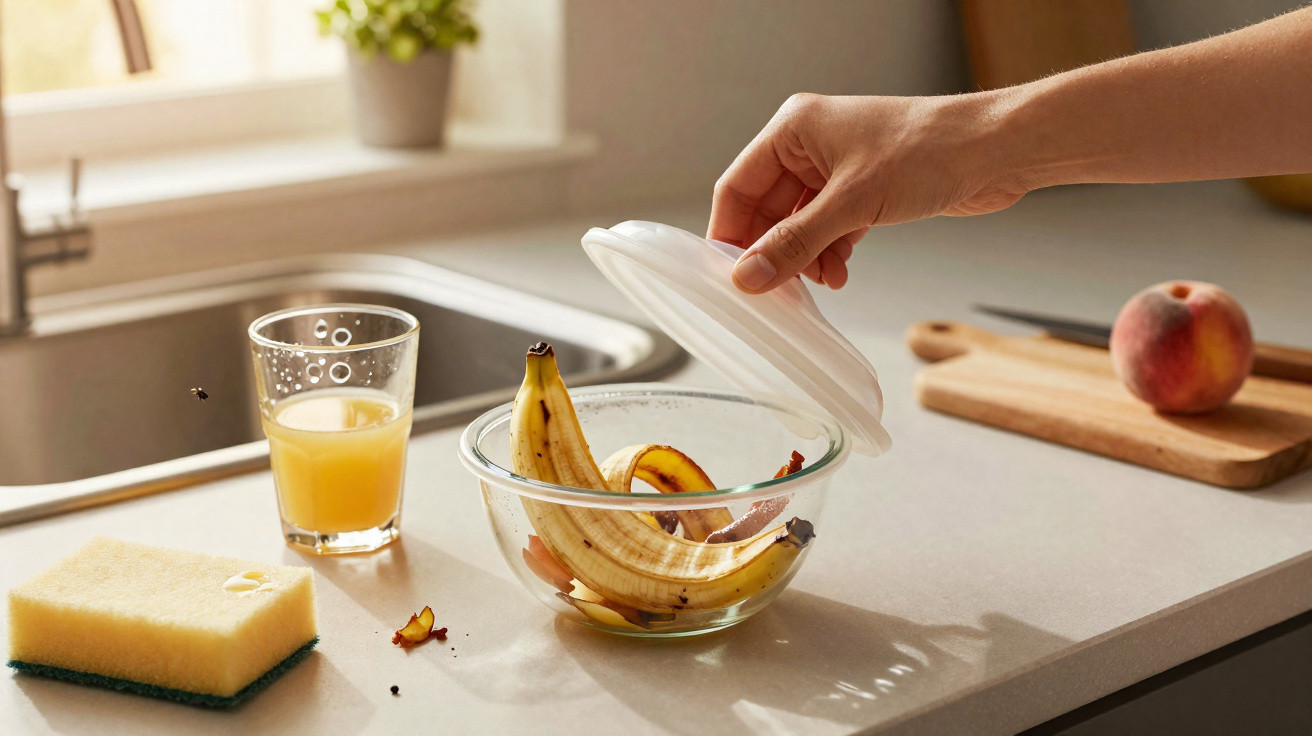
They seem to materialise from nowhere.
At first, there is one drifting lazily around the fruit bowl. Then there are three at the kitchen window. Before you have finished making coffee, they are swooping towards your mug as though they own the place. You blame the bananas, disinfect the worktop and light a scented candle, as if it might drive them off. Yet the air over the sink still hums with tiny wings.
One warm evening, I watched a friend attempt to swat a fruit fly with a tea towel while discussing stress at work. Oddly, the two seemed connected. Something in that kitchen was quietly fuelling disorder. The sink appeared clean, the bin bag was tied up and the fruit was fresh. Still, the flies repeatedly returned to the same unseen place.
A small everyday behaviour can turn a kitchen into a buffet for fruit flies, and most people barely register it.
This small habit summons fruit flies like a dinner bell
Visit almost any home in late summer and the picture is familiar: tidy worktops, an attractive wooden chopping board, a gleaming sink… and an irritating cloud of fruit flies hovering in the light. People blame the supermarket, the temperature or the “curse of ripe bananas”. They seldom consider how they rinse items, then leave them by or in the sink.
The neglected habit is remarkably straightforward: allowing dishes, glasses and utensils coated with food to soak or simply “wait” in the sink or on the worktop for hours. It feels like an innocent delay. There is the sticky wine glass beside the tap, the smoothie blender jug left “for later”, or the colander with tomato seeds and fruit pulp slowly drying next to the drain. To us, it is insignificant. To a fruit fly, it is a five-star all-inclusive resort.
A New York pest-control technician I spoke with says he can foresee a fruit fly issue without spotting a single insect. He asks only one thing: “How long do dirty dishes usually sit in your sink?” People laugh, pause to think, then recall the previous evening’s pasta plates still sitting there at 11 a.m. That’s where fruit flies gain the advantage. An invisible coating from juice, wine, overripe fruit, vinegar or even kombucha residue leaves a scent trail. They can detect fermenting sugars from unexpectedly far away. Nor do they require much: a dried ring of cider in a glass or a trace of peach on a knife will do.
Last August, on a warm Thursday, I visited a young couple with a bright, Instagram-perfect kitchen. There were white cupboards, large plants and a scented candle beside the hob. They felt embarrassed by their “sudden” fruit flies. Their fruit bowl seemed blameless: three apples, two limes and one nearly green banana. Nothing was rotten or visibly mouldy. The compost caddy had a snug-fitting lid. The puzzle only grew.
Then we inspected the sink. To the left was a wine glass, half full of water and left since the previous night “to soak the red stains”. To the right sat a blender jug bearing a dried banana-and-berry smoothie ring, alongside a sieve containing raspberry seeds and pulp. The couple had fallen into the habit of leaving these things until later. They were busy; surely the washing-up could wait?
We stood and watched. In less than two minutes, three fruit flies arrived as if they had reserved a table. They ignored the fruit bowl and the bin. Instead, they settled along the rim of the soaking glass and the blender jug. It felt like seeing thieves on CCTV: suddenly, you can see what had been happening all along when you were not watching.
Why does this particular habit have such an impact? Fruit flies are not attracted only to “rotting fruit” in the obvious way. They are programmed to seek fermentation. Sugary drinks, leftover wine, juice, beer froth, balsamic vinegar, kombucha and even the splash of apple cider left in a salad bowl can begin fermenting quickly at room temperature. In a warm, humid kitchen especially, the microscopic transformation in these remnants acts like a neon sign written in fruit-fly language.
Leaving dishes “to soak” inadvertently lengthens that fermentation period. Water does not eliminate the odour; it helps disperse it. A light sugar coating around a glass rim turns into a warm, diluted syrup bath. Fruit flies can lay eggs there, and those eggs may produce larvae in as little as 24–30 hours. That harmless-looking glass left in the sink overnight can therefore become a nursery with startling speed.
The sink zone also offers shelter: no breeze, no direct sunlight and, often, a drain nearby containing organic sludge. While we fixate on the fruit bowl, the real gathering may be taking place in the shade beneath the tap.
How to stop the fruit-fly habit without becoming a cleaning robot
The strongest defence against fruit flies is not an elaborate trap. It is altering what happens in the 10 minutes after eating or drinking. This does not mean a full deep clean, only one precise action: rinse or wash anything that has been in contact with sweet drinks, fruit, wine or vinegar straight away, then allow it to dry away from the sink basin.
In practice, that means no more leaving the smoothie blender until later. Later is when the flies show up. Even a rapid rinse with hot water and a drop of washing-up liquid clears away the invisible sugary layer they are looking for. Afterwards, let the glass, jug or knife drain on a rack or tea towel rather than leaving it in standing water in the sink. The aim is not an immaculate kitchen; it is to remove the buffet at its source.
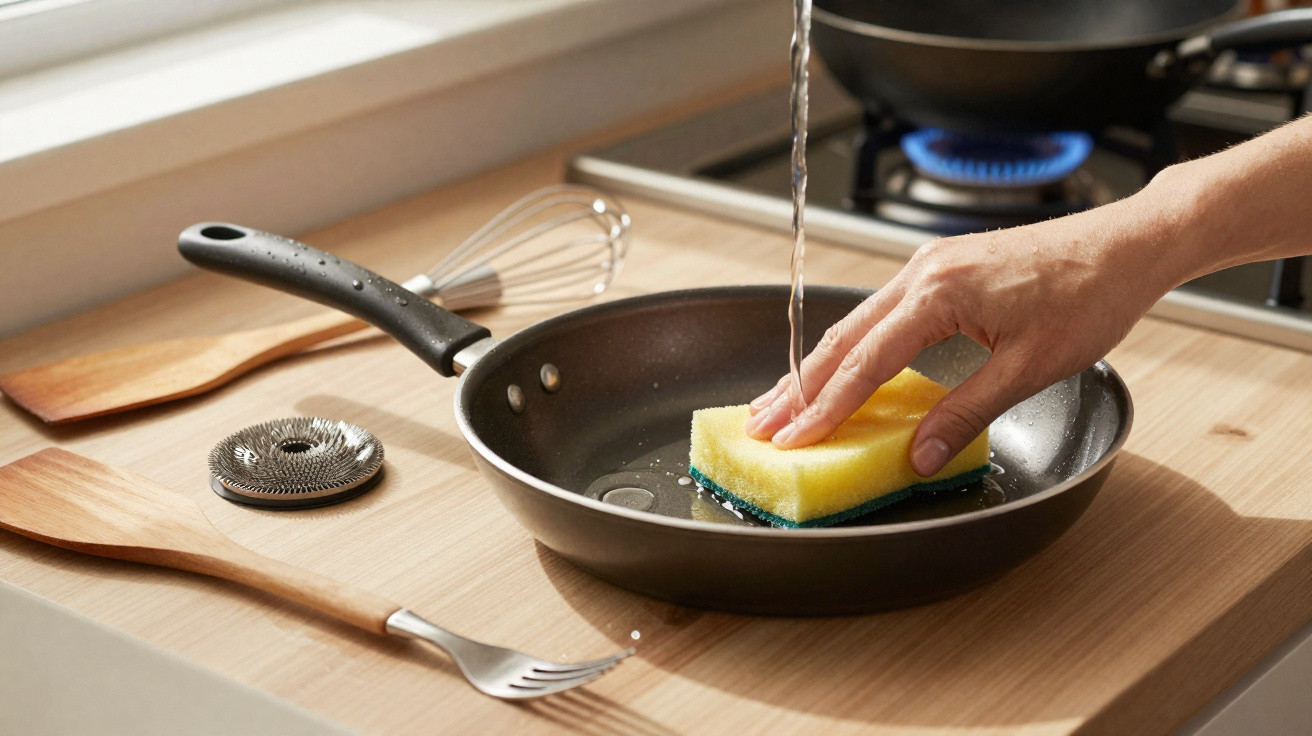
For the first few days, this adjustment can feel irritating. You are exhausted, your programme is about to start or someone has just messaged you. You want to put down the glass and leave it in the sink. This is why practical routines matter. Keep a small sponge and washing-up liquid directly beside the spot where you normally set your glass down. Make rinsing physically simpler than abandoning it.
Let us be honest: nobody does this perfectly every day, from morning until night, without ever slipping. Focus on the important moments instead: after breakfast smoothies, evening wine or beer, and fruit preparation. Those are the major sugar hits. If you occasionally forget, your kitchen will not fall apart. The problem is the ongoing pattern of “later, later, later”, which quietly builds a whole fruit-fly civilisation behind your back.
One pest expert I interviewed expressed it bluntly:
“If you treat your sink like a parking lot for dirty dishes, you’re basically running a breeding farm for fruit flies.”
Harsh, perhaps, but accurate. Long before an infestation begins, our kitchens reveal the story of our routines.
To make an anti-fly routine more manageable, use small checks that soon become automatic:
- Rinse or wash every glass or cup that contained juice, fizzy drinks, wine, beer or kombucha within 10 minutes.
- Empty and rinse blenders, juicers and strainers immediately after use, even when you intend to “wash them properly” later.
- Once daily, wipe the sink basin and the metal ring around the drain to clear sticky splashes.
- Position the draining rack or drying mat a little away from the plughole, rather than inside the sink basin.
- On hot days, run a little hot, soapy water down the drain to disrupt any concealed organic sludge.
None of this turns you into a pristine, magazine-ready person. These actions simply remove the three things fruit flies prize most: sugary traces, standing water and protected corners.
Living with less buzzing: what changes when the habit does
When you stop treating the sink as a waiting area for dirty dishes, something interesting occurs. The kitchen feels fresher, even with crumbs on the worktop and a pan cooling on the hob. That faint sweet-and-sour smell, which you may hardly have noticed, disappears from the air. You open the window and find… nothing. No slow whirl of wings heading directly for your coffee mug.
In practical terms, people who make this single change often find that homemade fruit-fly traps - bowls of vinegar covered with cling film, for example - begin catching the final persistent flies rather than an endless supply of newcomers. An infestation will not disappear overnight, but it stops replenishing itself. After one or two weeks of immediately rinsing “sugar dishes”, many kitchens move from swarms to the odd lone straggler knocking against the window.
There is an emotional change, too. Walking into the kitchen in the morning can influence the mood of the entire day. On a hot Tuesday, nobody wants to begin by dodging flies above the sink while feeling guilty about last night’s glass of rosé. On a cold Sunday, there is something unexpectedly soothing about a mostly clear sink, a drying rack with only a few clean items and a quiet drain. At a deeply human level, we recognise this: nearly everyone has experienced that faintly ashamed thought, “how did my kitchen get like this?”
Once you notice this overlooked behaviour, you begin spotting it everywhere: in other people’s homes, holiday lets and even office kitchens. A sticky mug left beneath the tap on a Friday can make you picture the cloud of fruit flies awaiting you on Monday morning. Raising the subject with a partner or housemate may be delicate, as no one wants to sound like the cleaning police. Presenting it as an easy way to avoid fly traps, chemicals and weekly battles makes the conversation gentler.
Every home will set its own threshold. Some people may still leave plates until the next day while treating wine glasses and smoothie jugs as items that must be rinsed immediately. Others may build the practice into an existing routine, such as rinsing everything while the kettle boils. The benefit is not about perfection. It comes from interrupting the invisible fermentation party before the guests receive their invitation.
| Key point | Detail | Why it matters to the reader |
|---|---|---|
| The real “fly magnet” | Sugary glasses, bowls and utensils left in the sink rather than rinsed | Explains why fruit flies return despite clean worktops |
| The critical timing | Rinse within 10 minutes anything that has contained wine, juice, beer, fruit or vinegar | A straightforward action to adopt without overhauling your whole routine |
| The anti-swarm routine | Keep the sink dry, avoid soaking washing-up, and quickly wipe the basin and drain | Dramatically reduces fruit flies without complicated traps or chemicals |





Comments
No comments yet. Be the first to comment!
Leave a Comment