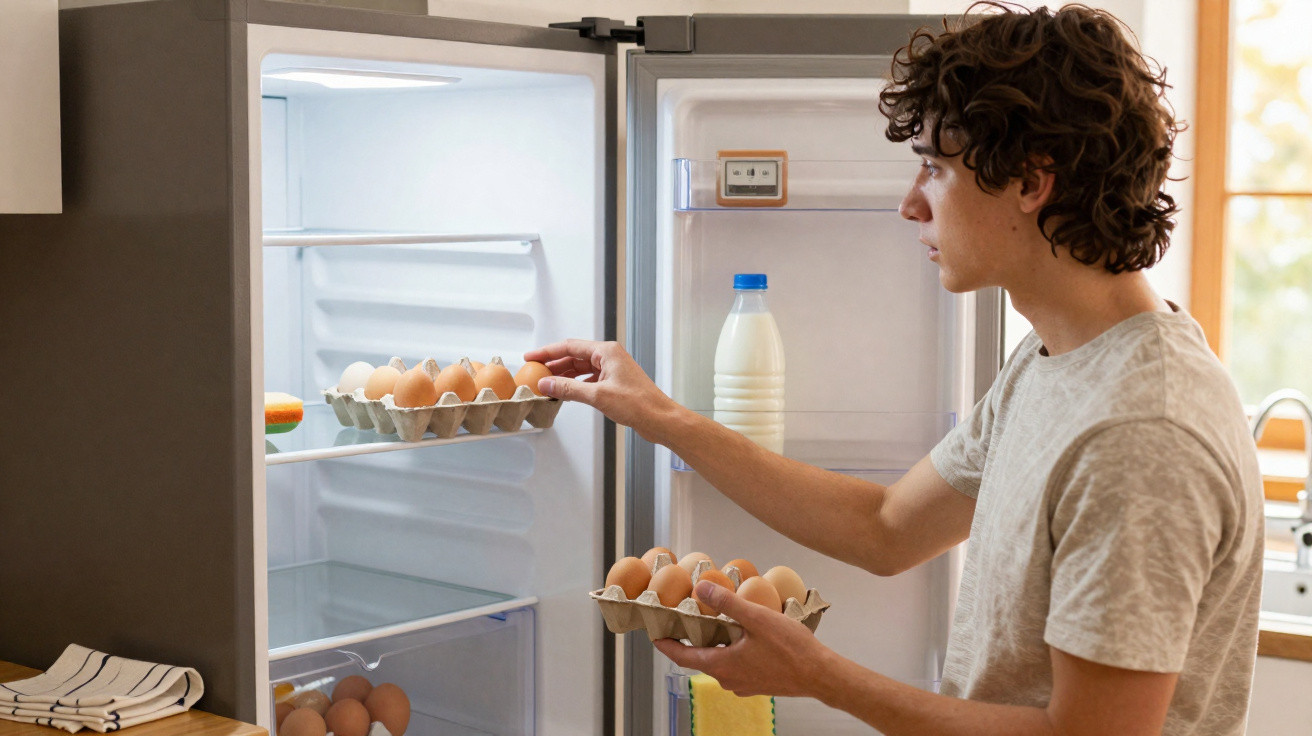
A small detail inside the refrigerator shows just how easily we can be misled.
Anyone who automatically places eggs in the holder on the refrigerator door after shopping is in the majority. The compartment appears to have been made for them, with a shape that fits perfectly – case closed, you might think. Yet fresh eggs are not particularly happy there, and the tray was originally intended for something else.
The familiar compartment in the refrigerator door
Open the refrigerator door and look up or down: in many homes, there is a small plastic tray with semi-circular recesses. Most people instinctively put their eggs there, just as they saw their parents do. The habit is so ingrained that hardly anyone ever questions it.
The reasoning seems completely convincing: rounded recesses, rounded eggs, a perfect match. Some manufacturers even mould or print small egg symbols into the plastic. It is hardly surprising that the ritual has stuck.
However, anyone who considers how a refrigerator works will soon notice that the door is the most unsettled area in the entire appliance. Every time it is opened, warmer air from outside enters. The door compartments are particularly exposed to these temperature changes.
Fresh eggs need a stable environment – and the refrigerator door is one of the least suitable places for them.
Food safety authorities therefore recommend keeping temperatures as consistent as possible. Repeated rises and falls can weaken the protective function of the eggshell and encourage germs to multiply. This is especially likely to happen in the refrigerator door.
Why fresh eggs should stay in their carton
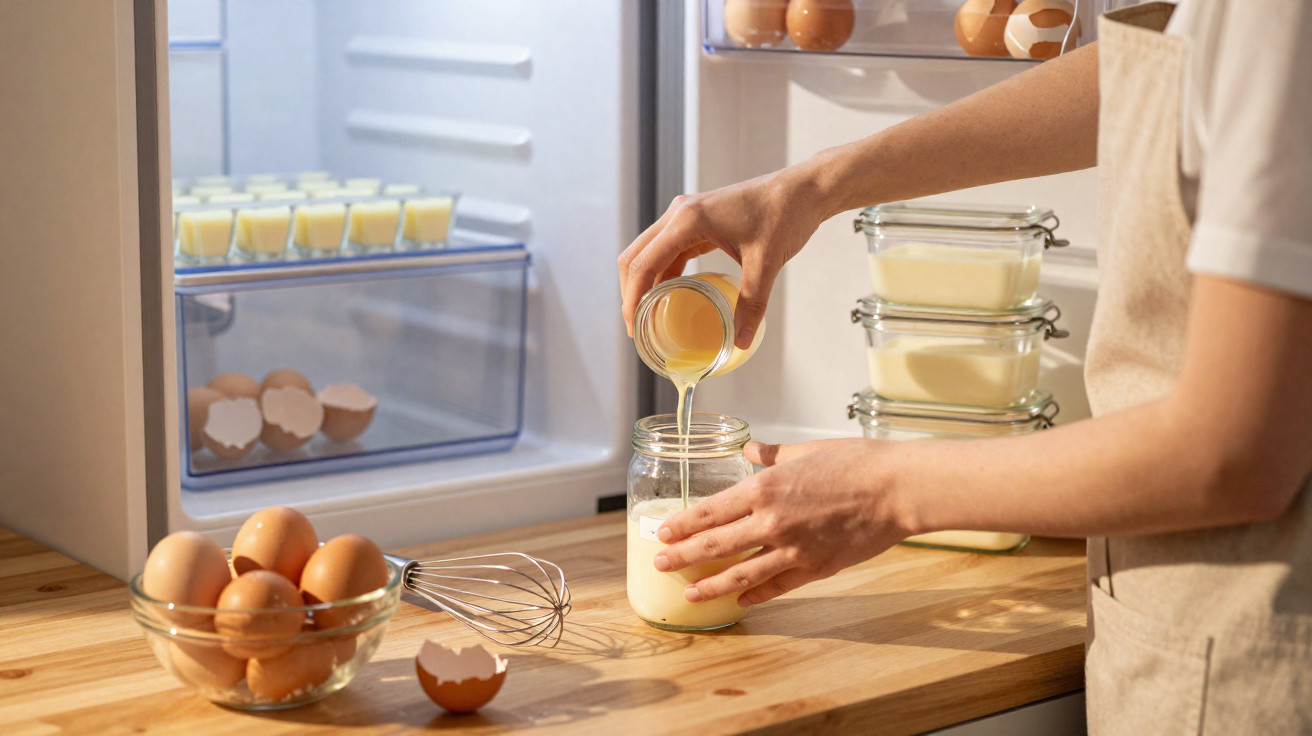
Many experts advise keeping eggs in the cardboard or plastic carton from the supermarket. They should be stored on an internal shelf rather than in the door, ideally around the middle of the refrigerator.
- The carton helps shield them from temperature fluctuations and light.
- The printed best-before date remains easy to check.
- Smells from other foods are less able to penetrate the shell.
There is another benefit: once eggs have been removed from their carton, it is easy to lose track of their age. Keeping them in the original packaging makes it easier to monitor them and use older eggs first.
Changes in temperature can also create condensation on the shell. This moisture can act like a pathway, allowing germs to pass more easily through the porous surface. That is precisely what should be avoided.
What the refrigerator door tray was originally designed for
When asked, manufacturers and kitchen specialists share an interesting detail: the small tray with its recesses really was originally made for eggs – but for eggs that had already been cooked.
The idea dates back to a time when more people boiled large batches of eggs at weekends. They were used for salads, sandwiches, outings or a quick snack between meals. These hard-boiled eggs needed to be readily available without taking up an entire carton.
The door suited these “ready-to-use zones”: open it briefly, take out an egg and close it again. For foods that have already been heated and are relatively stable, this is not a problem. They are far less sensitive to temperature changes than raw eggs.
The small egg tray in the door was originally a parking space for hard-boiled eggs – not the main storage area for fresh eggs.
This is also why many of these trays are quite small. They hold just a few eggs rather than a full large supermarket pack. That fits the concept of temporary storage for snacks or prepared ingredients.
How risky is incorrect egg storage really?
There is no need to panic and clear every egg out of the door immediately: millions of households store them there without something going wrong every day. The level of risk depends greatly on how long they are stored, the actual temperature inside the refrigerator and general kitchen hygiene.
Even so, experts agree that anyone wishing to be on the safe side should choose a more stable spot inside the refrigerator and leave eggs in their carton. This reduces the likelihood of problems with germs such as salmonella.
A few straightforward rules can help in everyday life:
- Keep eggs in their carton on an internal shelf, not in the door.
- Avoid repeatedly taking them out and putting them back.
- Remove only the number of eggs that will actually be used.
- Take cracks in the shell seriously, and use cracked eggs quickly or discard them.
Washing, rubbing and rinsing: a common mistake
Many people believe they are being especially thorough when they wash eggs before putting them away. Unfortunately, the result is the opposite. The shell has an extremely thin natural protective coating that helps prevent germs from entering so easily.
Water, particularly warm water, can loosen this protective film. That leaves the shell more vulnerable. Vigorous rubbing with a sponge may also damage the barrier. Experts therefore advise rinsing eggs briefly only immediately before use, if necessary – and even then, as gently as possible.
Anyone cooking with raw eggs should thoroughly clean their hands, worktop and any utensils used afterwards. Extra care is particularly worthwhile for foods that will not be heated strongly again, such as tiramisu or mayonnaise.
How to organise eggs in the refrigerator properly
Rearranging the layout of your refrigerator can replace the old habit with a more considered system. One sensible way to divide up the space is as follows:
| Area | Suitable storage |
|---|---|
| Top shelf | Leftovers, ready-made dishes, opened yoghurts |
| Middle shelf | Eggs in their carton, cheese, dairy products |
| Bottom shelf | Meat, fish, delicate foods |
| Vegetable drawer | Fruit, vegetables, fresh herbs |
| Door compartments | Drinks, sauces, jam, butter |
Anyone who wishes can use the egg tray in the door for hard-boiled eggs after all. The date can be written directly onto the shell with a pen, making it easy to see at a glance how long they have been there.
Why we rarely question kitchen details
The story behind the egg tray illustrates just how strongly everyday habits shape our routines. Many kitchen features were designed for lifestyles that have changed. The drawer beneath an oven was originally intended as a warming compartment, but it is now often used only for baking trays. In dishwashers, some areas are meant to optimise water distribution, yet they end up becoming collection points for small items.
Manufacturers adapt over time, but not every old design idea disappears from appliances straight away. As a result, the egg tray remains part of many refrigerators, even though its original purpose is now barely known.
Practical tips for everyday life with eggs
Finally, here are several specific suggestions that are easy to follow and can reduce stress in the long term:
- Anyone who bakes frequently can keep a small box of older eggs at the front – ideal for cakes and pancakes.
- For eating raw, such as in desserts, use the freshest eggs possible and keep an eye on the date.
- Store hard-boiled eggs in the refrigerator for no more than a few days, preferably with a label.
- It is better to discard eggs that smell unpleasant or look unusual than try to avoid waste.
If there are children in the household, the topic can even be approached as a game: reorganise the refrigerator together, discuss the “secret” purpose of the egg tray and teach an understanding of food safety along the way. An inconspicuous compartment in the door then becomes a small kitchen revelation – and eggs end up where they are genuinely best stored.











Comments
No comments yet. Be the first to comment!
Leave a Comment