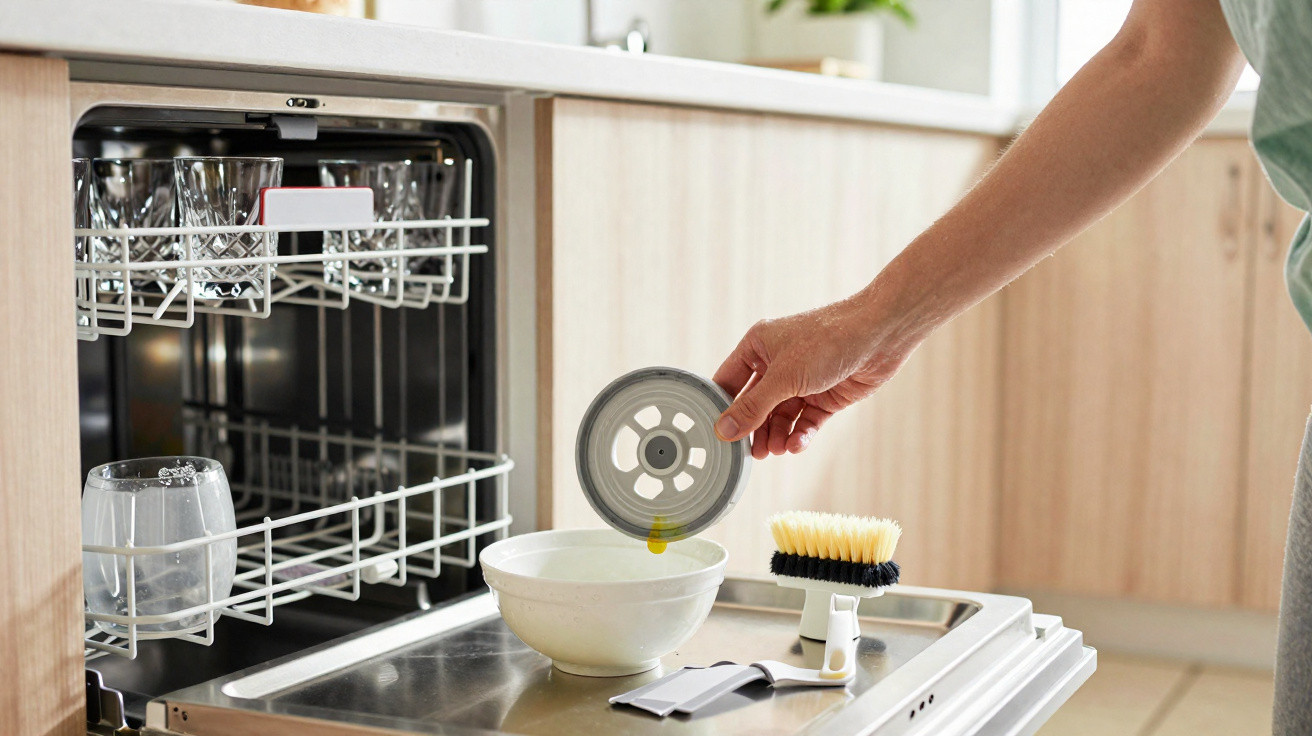
It is one overlooked component, tucked away where you are unlikely to notice it.
It is late, the kitchen is still, and the dishwasher’s final whirr ends with a reassuring click. You open the door, steam rises, and you take out a tumbler. It appears… misty. Not exactly dirty, but muted, like looking through a rainy bus window. Then comes the smell - not dreadful, simply “yesterday”. You run the glass beneath the tap and decide to try another tablet next time. Perhaps a hotter programme. Perhaps less detergent. Yet the following morning, the mugs still feel gritty. Clearly, something is wrong.
Your dishwasher has not stopped working. One small, concealed component has.
The dishwasher filter beneath the lower rack
Pull out the bottom rack and inspect the middle of the dishwasher floor. You will find a circular mesh cup with a twist-lock, plus the flat screen surrounding it. This is the filter system, which catches everything left behind by your dishes - seeds, rice, coffee grounds and the occasional bit of label adhesive. Yes, the filter-the unsung hero under the lower rack. Once it becomes blocked, clean water cannot circulate properly, grease remains behind, and a cloudy coating ends up back on your glasses. The appliance may still “wash”, but it is effectively rinsing with dirty water.
Most of us have experienced the moment when a guest holds a glass to the light and the haze becomes obvious. A reader from Leeds told me she had tested three tablet brands and even used a “glass-care” programme. There was no improvement. She then twisted out the cylindrical filter and found it coated in grey, rubbery biofilm, with small pieces of pasta scattered through it. After five minutes at the sink with a soft brush and hot water, the sparkle returned, the smell disappeared and calm was restored. Cloudy glass rarely means a broken machine - more often, it indicates a clogged filter.
The reasoning is straightforward. The filter holds back solids to protect the pump and prevent them from settling again on your dishes. If it is blocked, spray pressure falls, detergent fails to dissolve correctly, and hot water cannot wash away minerals or grease. Smell-causing bacteria thrive in that warm, damp, food-filled space, forming a slippery coating that can transfer to your glassware. A clean filter means clear water flow. Clear flow means bright glasses and no lingering pong.
Clean the dishwasher filter in five unglamorous but transformative minutes
Pull the lower rack forwards. Turn the round filter anti-clockwise, then lift it out together with the flat screen below it. Knock loose debris into the bin rather than the sink, so that you do not block the pipes. Rinse both pieces under hot water. With washing-up liquid and a soft toothbrush, remove grease from the mesh and seal. If the parts feel slimy, leave them in hot, soapy water for ten minutes before rinsing. Wipe the filter housing inside the dishwasher and look out for shards of glass or seeds. Put the flat screen back first, followed by the round filter, turning it until it sits securely.
A few small habits make the job even easier. Clean it every week when you use the dishwasher daily, or every fortnight for lighter use. In a hard-water area, lightly spray the mesh with white vinegar afterwards, rinse it and dry it; this can help stop mineral deposits forming. Realistically, hardly anyone does this every day. Do not use wire brushes, bleach or abrasive tools that could damage the mesh. Avoid strongly perfumed sprays as well, since the scent can linger. If the filter gasket appears cracked, replace it, because a leaking seal allows grit to pass through.
A regular routine prevents both cloudiness and unpleasant smells. Keep the salt reservoir filled for water softening if your dishwasher has one, and add rinse aid for loads containing plenty of glassware. Never mix vinegar and bleach - use only one cleaning method at a time. If you think your glasses may be “etched” because they feel permanently frosted, try the vinegar test: rub white vinegar over a hazy patch. If it clears, the problem is a deposit. If it remains dull, the glass surface has worn away. To limit future damage, reduce the temperature and select a gentler programme for stemware.
“The dishwasher filter is like the lint trap on a tumble dryer - ignore it and everything else works harder, worse, and smells.” - a veteran appliance engineer in Kent
- Clean the filter weekly when the dishwasher runs every day; clean it fortnightly for light use.
- Choose hot water, mild detergent and a soft brush - never scouring pads.
- When odours persist, run an empty hot cycle with a cup of white vinegar placed on the top rack.
Turn dishwasher filter cleaning into a small habit your future self will appreciate
The most convenient moment is surprisingly simple: while unloading the dishwasher. Before pushing the rack back in, take two minutes to twist out the filter, rinse it, brush it and lock it back into place. This small weekly habit preserves spray power, helps detergent perform properly and prevents the grey film that makes glassware look milky and plates feel rough. Add one monthly “deep breath” for the appliance: run an empty hot cycle, inspect the spray-arm holes with a cocktail stick, and quickly wipe the door seal. Clean the filter once a week and you will rarely have to think about a smelly dishwasher again. If you live with others, share the task as you would putting out the bins - small, clearly defined jobs help keep the kitchen happy.
| Key point | Detail | Benefit for the reader |
|---|---|---|
| Filter first | Rinse and brush the cylindrical and flat mesh filters each week | Prevents hazy glasses and eliminates odours at their source |
| Gentle methods | Hot water, washing-up liquid and a soft brush; a vinegar rinse in hard-water areas | Protects components, prevents damage and reduces service-call costs |
| Quick routine | Do it while unloading; run a monthly empty hot cycle and inspect the spray arms | Delivers consistent results without extra time or products |














Comments
No comments yet. Be the first to comment!
Leave a Comment