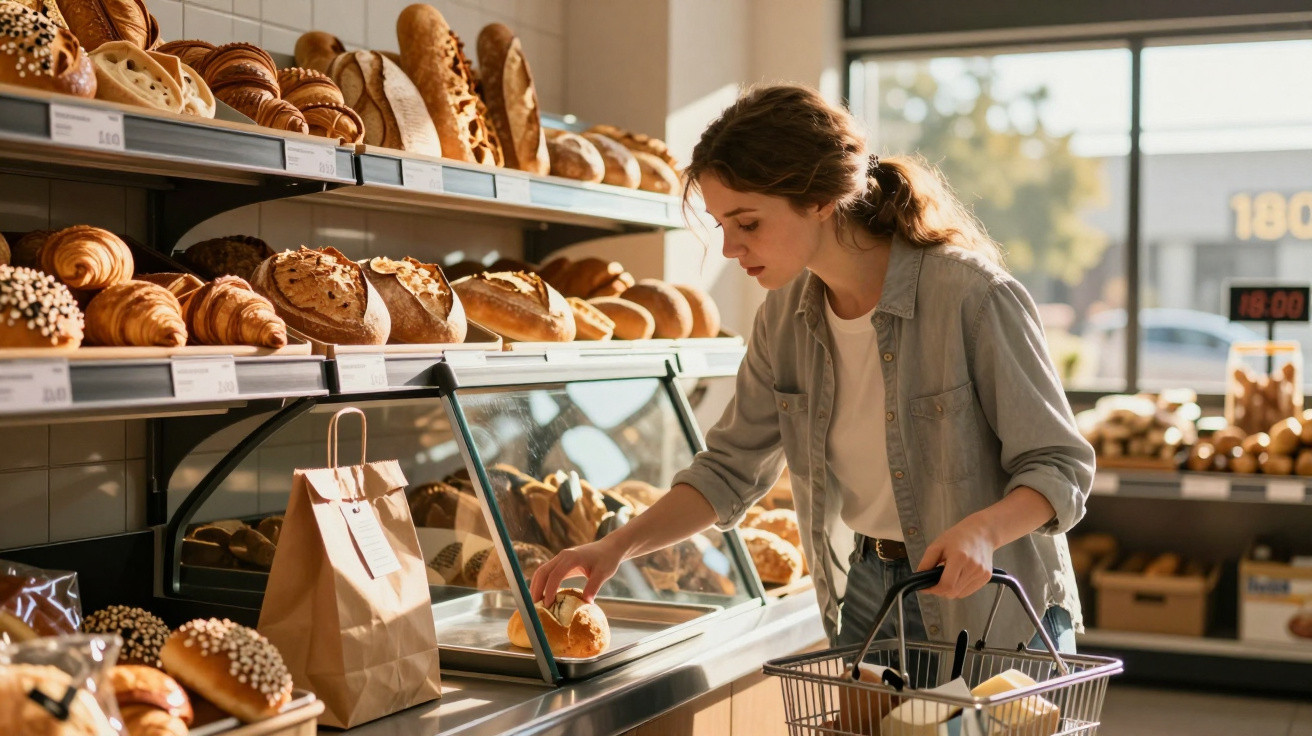
Many shoppers simply visit Lidl’s bakery counter at “some point” – and often end up paying more for bread that has not felt fresh oven heat for quite some time.
Anyone who knows Lidl’s baking schedule can achieve two things at once: pick up genuinely fresh bread and crisp rolls while making noticeable savings. A look behind the scenes reveals when the ovens are actually in use – and why one particular evening time is almost unbeatable for bargain hunters.
How Lidl’s bakery station really works
From the outside, Lidl’s bakery counter resembles a traditional bakery. In reality, it operates through a tightly timed system. Stores do not make products entirely from scratch on site; instead, they use part-baked, frozen dough products.
The usual process works as follows:
- Dough products arrive in frozen storage, generally at around -18°C.
- They have already been part-baked to roughly 80 per cent.
- In store, they are finished at about 200°C for 12 to 14 minutes.
Legal requirements govern how these so-called bakery stations may operate. For shoppers, this means the goods are not produced wholly on site as they would be by an artisan baker, but they are genuinely freshly baked several times each day.
“The bakery department is among Lidl’s most important revenue drivers – which is why the timing of every tray going into the oven is planned particularly carefully.”
As bread and rolls are products bought by almost everyone, Lidl adapts its range to regional tastes. Some areas stock more rustic country loaves, while others offer a greater selection of white baguettes or sweet pastries. At the same time, the discounter says it is seeking to use more high-quality ingredients, including butter with a protected designation of origin and certified organic products.
Lidl baking times: the three busiest periods of the day
An internal view of the logistics shows that Lidl has roughly three major baking waves each day, when most trays are placed in the ovens.
| Time | What happens in the oven? | What does this mean for customers? |
|---|---|---|
| approx. 7:30–8:00 am | First major batch, mainly breakfast rolls and pastries | A good opportunity to find fresh goods, ideal for early risers |
| approx. 11:00–11:30 am | Replenishment for the lunchtime rush, usually peaking at 11:15 am | Many loaves arrive straight from the oven and shelves are well stocked |
| approx. 4:30–5:00 pm | A substantial afternoon batch replenishes shelves for after-work shoppers | Bread often sells quickly because many people shop after work |
There is one small drawback in the morning: at around 8:30 am, sweet pastries and croissants often occupy the ovens. Some basic baguettes may then be little more than briefly reheated leftovers from the previous day. Anyone looking for real freshness can use a listening test.
The simple “ear test” for fresh bread
A tried-and-tested bakery trick also works with discount-store bread:
- Hold the loaf or baguette lightly next to your ear.
- Gently press the crust with the palm of your hand.
- If the crust audibly crackles and snaps, the bread is very fresh.
- If there is no sound and it feels slightly rubbery, it has been sitting for longer.
This test is especially worthwhile in the morning, as loaves left over from the previous day and only briefly refreshed are not uncommon then.
Why 6 pm at Lidl becomes a secret weapon
Those seeking not only freshness but also discounts should shop in the early evening. The reason is the effort to reduce food waste.
In Germany, a specific law requires larger retailers to manage surplus stock better and greatly reduce discarded goods. Lidl therefore plans its baking times specifically alongside markdowns – in other words, price reductions before closing time.
“In many stores, a large baking round at around 5:30 pm coincides with substantial discounts at about 6 pm – this exact window often delivers fresh goods at half price.”
The process generally follows this pattern:
- At around 5:30 pm, a larger batch of bread and rolls begins baking.
- The products reach the shelf shortly afterwards, while still noticeably warm.
- At around 6 pm, anti-waste discounts of roughly 30 to 50 per cent apply to selected parts of the range.
Used cleverly, this can mean putting a still-warm baguette in your basket while other loaves baked in the morning are heavily reduced. Several stores use stickers or digital price displays at this time to make the reductions clearly visible.
Which products offer the best value?
Certain products can be especially appealing towards the end of the day:
- Baguettes and long loaves: often straight from the final batch and ideal for the evening meal.
- Multigrain and speciality breads: frequently baked in the morning, they are substantially cheaper in the evening but still perfectly good to eat.
- Sweet pastries: usually much drier the following day, making a high evening discount an attractive option.
For single people or smaller households, it can be worthwhile freezing reduced bread bought in the evening. Reheating it in a home oven or air fryer restores a fresh-baked feel.
How much does this vary between Lidl stores?
Despite the clear basic pattern, the times are not fixed in stone. The baking plan depends on several factors:
- Store location, such as a city centre, commuter route or residential area
- Local opening hours
- The popularity of individual products
- The day of the week, as Saturday evening often works differently from Monday morning
At a commuter store on an arterial road, the afternoon batch may begin earlier because many shoppers arrive from 3 pm onwards. In residential areas, the focus often shifts towards later in the evening. It is therefore worth consciously watching the shelves two or three times and remembering the rhythm of “your” store.
How to find the perfect local time window
With a little observation, you can narrow down the ideal shopping time precisely:
- Visit once or twice at different times of day.
- Watch for the point when new trays are placed on the shelves.
- Note when discount stickers or reduced prices start appearing.
- Choose the overlap between fresh goods and the first wave of reductions.
Anyone who does this consistently will soon know their own personal “sweet spot” to within ten to fifteen minutes.
Background: why discounters place such importance on baked goods
Bread sells every day, and nearly every shopping plan is built around that fact. For discounters such as Lidl, the bakery station is an important tool for retaining customers. The smell of fresh baking by the entrance and well-filled baskets at the start of the shop both encourage people, according to the experience of retail chains and marketing departments, to spend more time in store and ultimately buy more products.
There is also the price factor: people who buy their bread from a discounter make noticeable savings compared with many traditional bakeries. For this strategy to succeed, however, customers must feel confident about the quality. A wider choice, regional specialities and higher-quality ingredients are therefore key elements of the range.
This creates an opportunity for shoppers: anyone who shops strategically and keeps the baking times in mind can combine low prices with decent product quality. Families that consume a lot of bread, or households with big appetites, can save several euros each week in this way.
Practical tips for maximum benefit
A few strategies can help you get the most from Lidl’s bakery shelf:
- Buy bread to keep in reserve: slice large reduced loaves, freeze them in portions and toast them as needed.
- Test the crust: if it crackles, it has not been long since the bread was baked.
- Read the labels: some stores print baking times or best-before dates directly on the sign.
- Remember the discount time: once you have found out when price reductions begin, you can plan your weekly shop around it.
Bread may be a basic staple, but quality varies greatly. Those who invest a little time in observing the shelves will not only put crispier loaves on the table, but will also ease pressure on the household budget – especially if a visit to the bakery station happens to fall during the evening hours.

















Comments
No comments yet. Be the first to comment!
Leave a Comment