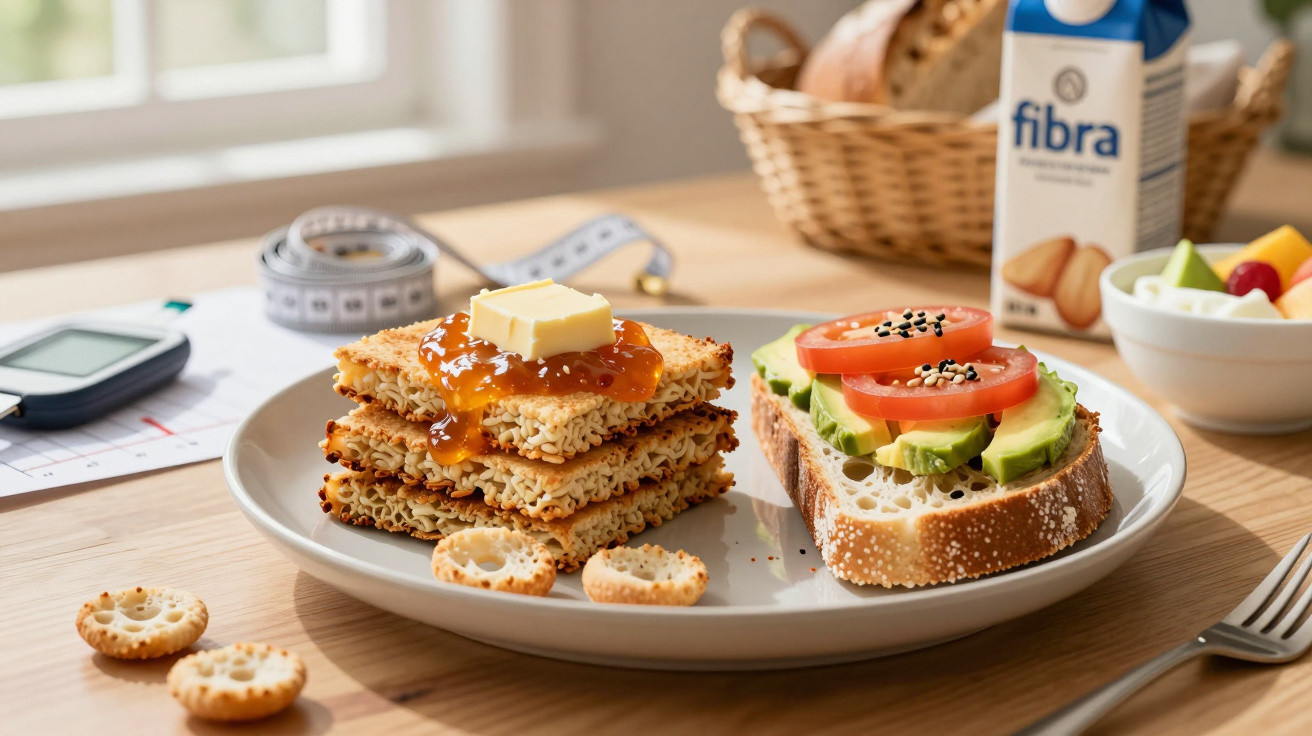
Breakfast is widely regarded as the day’s most important meal, yet it is also where the scales can quietly start to creep up or remain steady. A nutritionist has therefore taken a closer look at two breakfast staples: fresh bread and rusk. Her verdict is surprisingly clear-cut.
What bread and rusk really contain
At first glance, bread and rusk appear very similar: both are wheat-based products and are often eaten with butter, spreads or cheese. However, differences in their composition have a major impact, particularly on fullness and calorie intake.
Fresh bread: few ingredients, major differences
Traditional bread essentially contains four ingredients: flour, water, yeast or sourdough, and salt. Its effect on the body varies considerably according to the type of flour used:
- White bread / baguette: made with refined flour, low in fibre and high on the glycaemic index; it fills you up quickly, but hunger soon returns.
- Wholegrain bread: contains more of the grain’s bran and germ, is rich in fibre, vitamins and minerals, and produces a lower rise in blood sugar.
- Buckwheat bread or rye blends: often especially high in fibre and generally more favourable for blood sugar levels and fullness.
One point matters: a darker-looking loaf is not automatically the healthier option. Colourings such as malt extract can make white bread look brown. Only the term “wholegrain” guarantees that the entire grain has been used.
Rusk: baked twice, calories concentrated twice over
Rusk is essentially bread that has been baked for a second time and dried out. That may sound harmless, but it has consequences: removing the water makes every slice far more calorie-dense. Many products also contain additional ingredients, including:
- fats such as vegetable oils or butter
- sugar or glucose syrup
- emulsifiers and other additives
- in some cases, considerably more salt
“A typical baguette contains around 250 calories per 100 grams – rusk averages roughly 400 calories for the same quantity.”
Dehydration therefore concentrates not just nutrients but energy too. Eating several slices can quickly result in a surprisingly high calorie intake without creating much of a feeling of fullness.
Why rusk can become a hidden calorie trap
The key issue with rusk is not simply its calorie count, but the combination of high density and small volume. One slice seems light and airy, yet it is energy-dense and not particularly filling.
Eating more without noticing
As rusk is so small and crisp, it is easy to add one slice after another to the plate. Three or four pieces may look harmless, but their weight and calorie total are very different from those of one slice of bread.
Many rusk products are also more highly processed. Depending on the brand, the crisp slices can contain additives, flavourings and a substantial amount of salt. The nutritionist highlights another effect: rusk generally has a higher glycaemic index than wholegrain bread, and often than ordinary white bread too. Blood sugar therefore rises more rapidly and then drops more sharply.
“A high glycaemic index often leads to cravings and keeps you full for a much shorter time, making it more likely that you will reach for further snacks later in the morning.”
Why bread is usually the better choice
Fresh bread, particularly wholegrain or buckwheat bread, is considered far less processed. It provides more fibre, which is digested more slowly, helps you stay full for longer and supports digestion.
The expert clearly favours these varieties for anyone aiming to manage their weight. Even simple wheat bread often performs better in everyday eating than rusk, as long as portion sizes remain sensible. The reason is that its greater volume per calorie produces a feeling of fullness sooner.
The real issue is often what goes on top
When thinking about weight management, many people focus first on the type of bread, but the topping has at least as much influence on the final calorie total.
Common toppings and their hidden pitfalls
| Topping (approx. 20 g) | Approximate calories | Comment |
|---|---|---|
| Butter | approx. 150 kcal | Pure fat: adds flavour, but is only limitedly filling on its own. |
| Margarine | 120–150 kcal | Often similarly energy-dense and may contain additives, depending on the variety. |
| Jam | 50–60 kcal | High in sugar and raises blood sugar quickly. |
| Chocolate hazelnut spread | 110–130 kcal | A mixture of sugar and fat that is very energy-dense. |
| Unsweetened peanut butter | 110–120 kcal | High in calories, but supplies protein and is satisfying. |
Even with a good choice of bread, a thick layer of butter plus jam can easily double the calorie content of the entire breakfast. Anyone looking to lose weight or maintain it should therefore consider not only the baked product but the topping as well.
“Peanut butter with no added sugar can be a sensible option despite its high calorie content: it provides protein, keeps you full for a long time and curbs cravings – especially on wholegrain bread.”
How much bread makes sense for breakfast
The ideal portion depends heavily on body size, activity level and the rest of the day’s routine. As a broad guide, a balanced breakfast includes:
- 1–2 slices of wholegrain bread for most adults
- a protein source alongside it, such as quark, cheese, egg or peanut butter
- some fruit or vegetables to add vitamins and volume
Those who enjoy something crunchy can include a small piece of rusk as an extra, but should not use it as the main foundation of the meal. What matters is the total amount of carbohydrates and fats consumed across the day.
Practical tips for a weight-friendly breakfast
What a balanced plate looks like
A breakfast that keeps you full for a long time while keeping calories in check could look like this:
- One slice of wholegrain or buckwheat bread with a thin layer of butter or a little olive oil, plus a layer of peanut butter
- One boiled egg or a small pot of natural yoghurt
- A handful of berries or an apple
- Coffee or tea without sugar, plus water
Anyone who simply does not want to give up rusk can include one slice as a “crunch extra”, for instance with natural yoghurt and fruit. This keeps its proportion manageable.
How to spot better products in the supermarket
A quick look at the packaging can make a substantial difference. Three questions offer useful guidance:
- How long is the ingredients list? The shorter, the better. Bread does not need ten ingredients.
- How much sugar does it contain? Products without added sugar are ideal, particularly in the case of rusk.
- How much salt is in it? High amounts point to a heavily processed product, especially among crisp foods.
When buying bread, it is also worth checking the bakery counter, where varieties made with sourdough, wholegrains and fewer additives are often available.
Why fibre and blood sugar matter
Fibre slows digestion, helps to stabilise blood sugar and promotes fullness. Wholegrain bread has a clear advantage over rusk here. Rusk usually raises blood sugar more quickly, which can bring a noticeable energy dip and a desire for sweet foods later in the morning.
Over time, sharply fluctuating blood sugar can stimulate appetite and increase the risk of eating more than is actually needed. Anyone looking for steady energy in the morning is therefore much better served by wholegrain bread with a protein-rich topping than by several slices of rusk with a sweet spread.
Ultimately, the breakfast choice is not a rigid rule, but it is an adjustment with a noticeable effect: bread – preferably wholegrain – provides a solid foundation, while rusk is best kept as the occasional crisp exception. Paying attention to toppings and adding a little protein makes breakfast far less daunting for weight management.

















Comments
No comments yet. Be the first to comment!
Leave a Comment