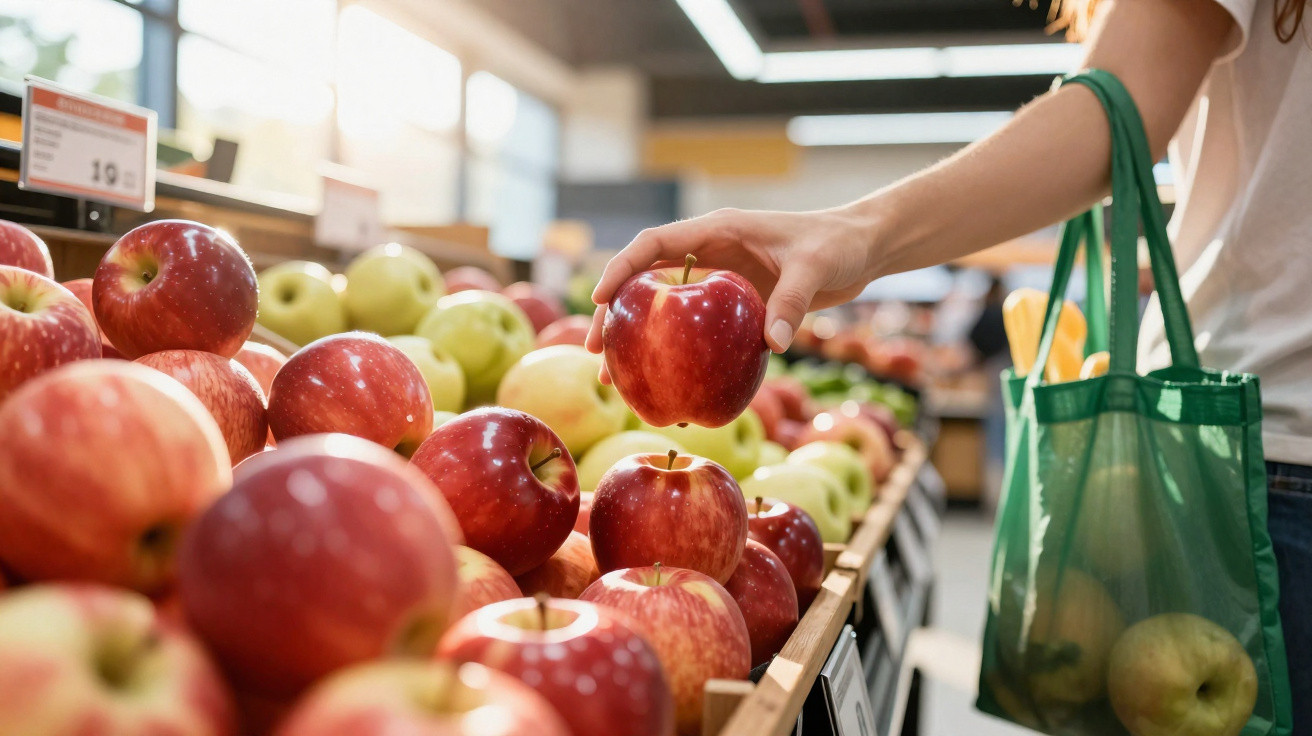
In German supermarkets, the fruit aisle can seem effortlessly colourful and well stocked. Yet behind the overflowing crates lies fierce competition between apple varieties. One apple has stood out clearly for years: Pink Lady. It is notably expensive, considered premium – and still ranks among Europe’s best-selling apples.
Why Pink Lady so often ends up in shopping baskets
Pink Lady regularly divides apple lovers. Some swear by it, while others dismiss it because of the price. However, figures from France, one of Europe’s most important apple markets, make its popularity clear: the variety is among the country’s three most frequently sold apples, just behind established favourites such as Golden Delicious and Gala.
What makes this particularly interesting is that its share of total domestic apple production remains relatively small. In France, only around seven per cent of harvested apples are this variety, grown by just under 600 farms across a few major producing regions. Demand substantially exceeds supply – an unusual situation on the fruit aisle.
High demand, limited supply: despite its low production volume, Pink Lady has secured a place on the podium of the most popular apples.
This combination directly shapes how shoppers view the variety. It is seen as “premium fruit”, a small treat in the shopping basket. Consumers who buy deliberately and prioritise flavour are more likely to choose it – and to accept the higher price tag.
Pink Lady flavour: what makes it so distinctive
Its success is not simply down to its attractive colour. The variety follows a strict quality programme designed to deliver the same flavour experience whether the fruit comes from southern France, northern Italy or Germany.
The careful balance of sweetness and acidity
Pink Lady should be neither overly sweet nor excessively tart. Specialists refer to a very narrow acceptable range for sugar content, which is generally between 13 and 15 per cent. There are also precise requirements for:
- Firmness: The apple must be crisp, with no floury flesh.
- Colour: Its characteristic pink-red blush over a greenish-yellow background is essential.
- Size and shape: A consistent appearance is required for visual impact on the shelf.
Only apples meeting every criterion may carry the familiar Pink Lady label. Those that do not are sent to the juice or food-processing industry.
“Biting into a Pink Lady should feel the same in Berlin as it does in Paris” – this recognisability forms part of the brand.
Why the price per kilogram is considerably higher
The difference becomes obvious on the shelf label: while standard varieties such as Golden or Gala often cost around €2.50 per kilogram, Pink Lady commonly costs around €3.50 per kilogram. This premium is no accident.
Growing the variety requires intensive labour. Each hectare involves around 700 hours of manual work per year, alongside roughly seven months of close care from blossom to harvest. This includes:
- hand-thinning the fruit
- targeted pruning of the trees
- protection from sun and hail
- repeated quality checks in the orchard and at harvest
The more demanding the specification, the greater the amount rejected – and the more expensive the apples that ultimately reach the supermarket become.
From late arrival to supermarket star
The variety’s rise has been remarkable. Pink Lady only began appearing on a larger scale in European supermarkets in the mid-1990s. It launched in France in 1995, followed not much later by Germany. Within a few decades, it achieved what many new varieties do not: a move from niche product to mass-market success.
Marketing more like a fashion label
Where traditional apple varieties tend to sit anonymously on the shelf, Pink Lady is presented as a brand. The fruit is often sold with a highly visible sticker, in dedicated cartons or punnets. Eye-catching point-of-sale promotions and emotional advertising campaigns are also used, focusing not only on freshness but on lifestyle.
The branding has long extended beyond the fruit aisle. In France, a fashion company even launched socks in a Pink Lady design, priced at around €27 per pair. Such promotions reinforce the image of a “stylish premium apple” and particularly appeal to urban, brand-conscious shoppers.
Hardly any other apple variety is marketed as strongly as a fashion brand – from the sticker on its skin to branded merchandise.
What shoppers should consider before choosing Pink Lady
Anyone selecting the pink-red variety in the supermarket pays more, but can also expect more. Four points can help with the decision:
- Flavour: Pink Lady is a good choice for those who enjoy crisp, fairly sweet apples with a light acidity.
- Price awareness: For a large family’s everyday consumption, this variety can become expensive.
- Keeping quality: Its firm structure often means it lasts longer in the fridge than softer varieties.
- Uses in the kitchen: It works well as a snack, in fruit salad or as a topping; for a traditional apple cake, many people prefer slightly tarter varieties.
Where Pink Lady apples come from – and what this means for the environment and consumers
Pink Lady is mainly grown in regions with mild weather and plenty of sunshine. Southern France, northern Italy and Spain are important, as are growing areas around Lake Constance and in South Tyrol. To develop its typical colouring, the apple needs pronounced differences between daytime and night-time temperatures in late summer and autumn.
For consumers, this means that a large proportion of the fruit travels longer distances, even when it remains within Europe. Those wishing to shop locally should specifically check the country of origin on the label. During the season, many retailers also stock Pink Lady apples grown in Germany, from climatically favourable locations.
Apples as lifestyle products: opportunities and risks
Pink Lady demonstrates how a simple staple food can be turned into a lifestyle product. This creates opportunities, but also raises critical questions.
- Opportunities: Greater appreciation of fruit, higher returns for farms that focus on quality, and clear guidance for customers willing to pay more for enjoyment.
- Risks: A focus on only a few strongly marketed varieties, reduced varietal diversity, intense marketing pressure and farmers becoming heavily dependent on a brand.
In everyday life, choosing a Pink Lady occasionally means treating yourself to a deliberately selected snack with strong recognition value. Anyone wanting to keep price, origin or diversity in mind can combine it with other varieties – for example, traditional local apples from a farmers’ market or farm shop.
Ultimately, the bite decides: anyone who enjoys this variety’s crisp, sweet-tart character quickly understands why it is among the best-selling supermarket apples in many countries – despite its considerably higher price and limited production volume.









Comments
No comments yet. Be the first to comment!
Leave a Comment