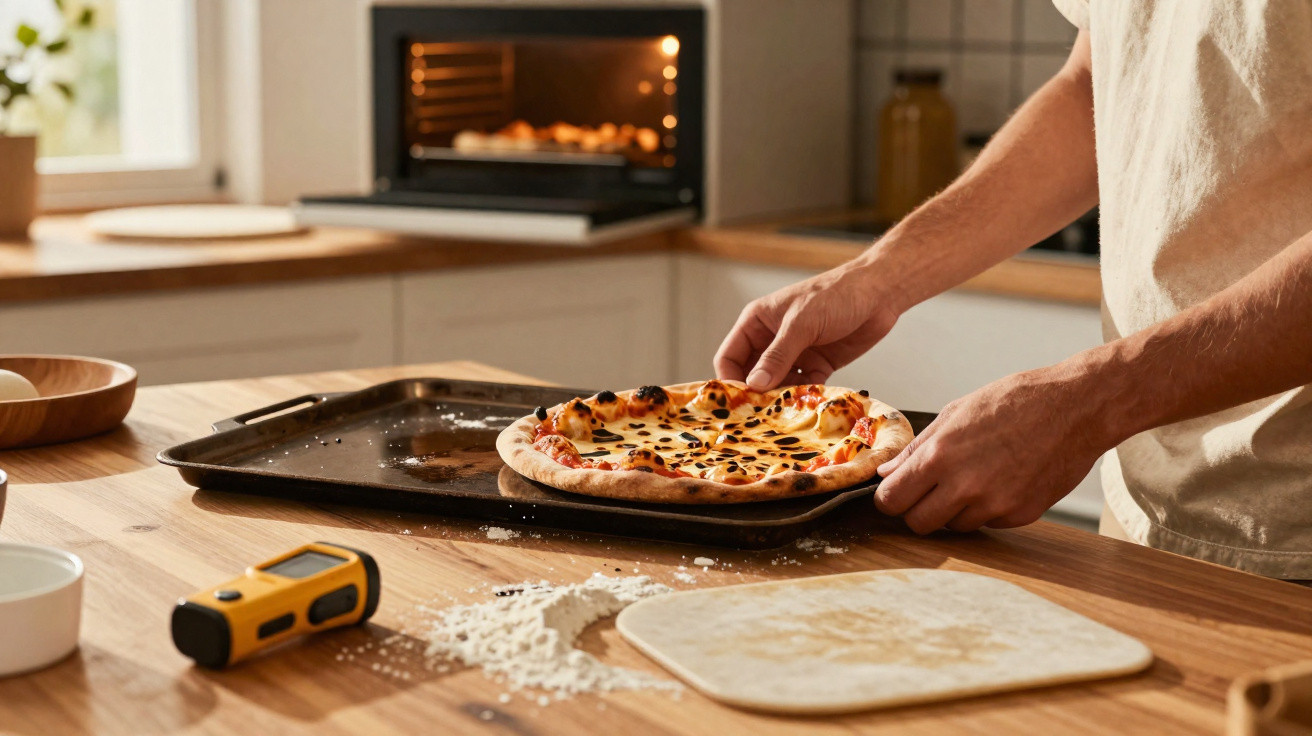
It is Saturday night, the kitchen light is slightly too harsh, and you are watching through the oven door as though it were television. Mozzarella bubbles away, the tomato sauce smells wonderful, and for one perfect moment you believe your homemade pizza will finally resemble the photograph on that recipe blog.
Then you slice it.
The toppings are right, the cheese pulls beautifully, but the crust is pale in the middle, limp at the point and faintly soggy underneath. When you lift a slice, it droops like a dejected flag. You have switched flours, painstakingly adjusted the yeast and even added olive oil “like the Italians.”
Still, the same result appears every time.
There is one fundamental reason your pizza never achieves that clean, crackling crunch.
The real reason your homemade pizza crust stays soft
Most people fixate on the dough recipe while overlooking the one thing that no packet can provide: fierce heat. This is not merely a “hot oven”, but concentrated, stone-against-fire heat. Your kitchen oven may have plenty of character, but its attitude is lukewarm.
We place fragile pizza dough onto a cold, or only slightly warm, tray and expect a miracle. As the dough meets the metal, sauce begins to soak in and, rather than searing immediately, it steams slowly and gently. That suits bread. It does not suit pizza.
A crisp crust is not about toppings. It is about physics.
Consider this: a reader once told a food blogger that she had followed the recipe “exactly”, yet her crust remained floppy. She had weighed her flour, used filtered water and even ordered imported 00 flour online. She kneaded expertly and left the dough to rise for hours.
She then sent a photograph of her arrangement: a room-temperature baking tray, an oven preheated to 200°C, and a pizza topped with sauce and cheese straight from the refrigerator. Its underside was beige and damp-looking, while the centre sagged.
Her issue was not a lack of cooking skill. She simply had not realised how unforgivingly hot pizza dough needs its heat to be.
For a crust to become shatteringly crisp, two things need to occur quickly. First, the dough surface must dry out before sauce and other moisture can seep downwards. Second, the starches and sugars in the dough must brown, which requires sufficiently high temperatures and direct contact.
Traditional pizzerias use ovens firing at 400–480°C, with thick stones already intensely hot. Your domestic oven probably reaches no more than 250°C, while thin metal trays lose heat as soon as cold dough is placed on them.
The base therefore steams rather than sears. It cooks, certainly, but every drop of moisture has had time to travel through the crust in the process.
How to copy pizzeria heat at home (without new appliances)
The most powerful step is almost dull in its simplicity: preheat more intensely and for longer than seems sensible. Place a pizza stone, steel or even an upturned heavy baking sheet on the middle shelf, then heat the oven at its highest setting for at least 45–60 minutes. Not 10 minutes. Not merely “until the light goes off.” Give it a complete hour.
You are heating more than the air. You are filling that surface with stored energy, so that when the dough arrives it receives an immediate blast of heat. This seals the base, drives off surface moisture and makes bubbles race around the crust edge.
The goal isn’t just hot air; it’s a blazing hot floor for your pizza.
How you handle the dough during those final moments matters too. If you stretch it on the worktop, soak it in sauce and then struggle to transfer it onto the hot surface, valuable time is already being lost. The dough sits and takes in liquid like a sponge.
Use baking parchment or a generously floured peel. Stretch the dough swiftly, apply only a light coating of sauce and choose toppings that are neither waterlogged nor ice-cold from the fridge. That pile of cheese and vegetables you may be tempted to add? It brings more water that must escape before the crust can firm up.
Realistically, nobody weighs toppings or dries mozzarella with kitchen paper every single day. But every additional trace of moisture has to go somewhere, and it generally heads directly into your unfortunate crust.
The oven's rhythm also matters. Many home cooks put in the pizza and leave it untouched, relying on whatever the thermostat says. In practice, it is more complicated. Ovens contain hot spots, heat escapes whenever you look through the door, and the back is often hotter than the front.
Turning the pizza halfway through, raising it nearer the top element for its final minute, or briefly changing to the grill setting can help recreate pizzeria-style power from above and below at once. One chef called this “chasing color” across the crust and cheese.
“Crispy pizza is not an accident,” says a Neapolitan pizzaiolo I once watched work a lunch rush. “It is a decision you take for the dough. You protect it from water, and you give it strong fire. Otherwise, it dies.”
- Preheat longer than feels normal - A full hour with stone or steel creates the fierce heat an ordinary tray cannot provide.
- Use less, thicker sauce - Apply it sparingly and leave a border, preventing liquid from flooding the edge.
- Dry your toppings - This is especially important for fresh mozzarella and juicy vegetables, which give off a surprising quantity of water.
- Cook fast, not slow - Target 7–10 minutes at maximum heat rather than a mild 20-minute bake.
- Finish high - One minute close to the top element crisps the blisters instead of turning everything into a damp blanket.
The small shifts that turn “homemade” into “just one more slice”
Once you understand that moisture combined with weak heat is the enemy, your entire approach to homemade pizza changes. Instead of searching for a magical flour, you start noticing how the dough behaves the second it enters the oven: the sound it makes, the small bubbles developing around the rim and the first light scorch marks on the base.
Everyone knows the disappointment of taking out a gorgeously scented pizza that folds like a soft tortilla. The answer is not a longer bake at low heat; that only dries the crumb while leaving the base soft. Instead, bake for less time but with greater force, using a surface hot enough to drive water away before it overwhelms the crust.
You may begin to alter small routines. Allow the dough to come to room temperature, so it stretches readily and rises more in the oven. Be a little restrained with toppings, giving every slice space to breathe. Wipe away excess oil from the pan, allowing the base to fry just enough without becoming oily.
On the first attempt, these changes can seem far too minor to make a difference. Then a friend bites into your pizza crust, hears it crackle and looks genuinely surprised.
That is when it becomes clear: the crust was never a question of talent. It was about respecting the quiet battle between heat and water inside your oven.
You may still encounter the occasional failure: an over-charred edge, a floppy pizza, or an evening when dough clings stubbornly to the peel and folds over itself in the oven. That is all right. Some of the finest pizzas come from evenings with a little chaos.
What changes is your attention. You no longer judge doneness by watching the cheese; instead, you inspect the underside, lifting the pizza briefly to check whether it is crisp and mottled. You listen for that dry, hollow note when you tap the crust.
The more often you cook this way, the less your oven feels like an obstacle and the more it feels like a partner. A quirky, underpowered partner, certainly, but one which, with a long preheat and some determination, can deliver the elusive, perfectly crispy crust you thought only a restaurant could achieve.
| Key point | Detail | Value for the reader |
|---|---|---|
| Preheat for power | Heat a stone/steel or heavy tray at maximum temperature for 45–60 minutes | Recreates pizzeria-style heat beneath the pizza for a crisp base |
| Control moisture | Use less sauce, drier toppings and room-temperature dough | Stops soggy centres and drooping slices |
| Cook fast and fierce | Use a short, intense bake, rotating the pizza and finishing with high heat | Produces blistered, crunchy crust alongside fully cooked toppings |

















Comments
No comments yet. Be the first to comment!
Leave a Comment