That reassuring shepherd’s pie with its golden crust can conceal an unforgiving problem: one mistake can leave the meat filling as dry as cardboard.
In kitchens throughout Britain and France, home cooks report the same disappointment: a handsome, bubbling bake with a wonderful aroma, only for the first spoonful to uncover grey, parched mince. Professional chefs often rely on one small, rather traditional adjustment to ensure the meat remains tender, succulent and full-flavoured.
The classic dish that began as a difficult sell
The French relative of shepherd’s pie, hachis parmentier, has unexpectedly revolutionary beginnings. During the late 18th century, French pharmacist and agronomist Antoine Augustin Parmentier campaigned to persuade France that potatoes were safe to consume.
Potatoes were viewed with distrust at the time. People gave them to livestock, associated them with illness and commonly refused to serve them at home. Parmentier thought the modest vegetable could play a part in preventing famine. He therefore developed inviting, comforting potato dishes, including the layered mash-and-meat bake that bears his name today.
In its earliest form, the recipe was economical. Cooks mashed boiled, seasoned potatoes roughly, then paired them with leftover pot-au-feu or whichever cooked meat or fish was available. Chopped onion and parsley supplied flavour, transforming scraps into a meal generous enough for the family table.
The idea remains unchanged centuries on, although the fillings have developed. Fresh beef mince, duck confit and lentils for a vegetarian alternative are now all common choices. Some cooks add sweet potato for extra sweetness and colour. The essential appeal is still a tender, savoury meat layer beneath a substantial blanket of mash, oven-baked until crisp and golden on top.
Why shepherd’s pie often becomes dry
Although it looks straightforward, this dish can regularly disappoint. Dryness, particularly in the meat filling, is the chief complaint, and it nearly always has the same cause.
When already-cooked meat goes back into a hot oven without protection, it loses moisture fast and tightens up.
Plenty of recipes use leftover roast or stew, or ask cooks to brown mince before it goes into the oven. In either case, the meat has already been heated once. Subject it to another spell at a high temperature without added moisture, and it may turn as hard as a shoe sole.
The way it is assembled is another frequent problem. When the mash fails to cover the meat completely, mince around the edges is exposed to direct heat. These uncovered areas can burn, lose flavour and make the finished pie drier overall.
The simple ingredient top chefs swear by
Chefs known for hearty, bistro-style food use one particular trick to prevent this dryness. It requires just one ingredient that is probably sitting in your fridge already.
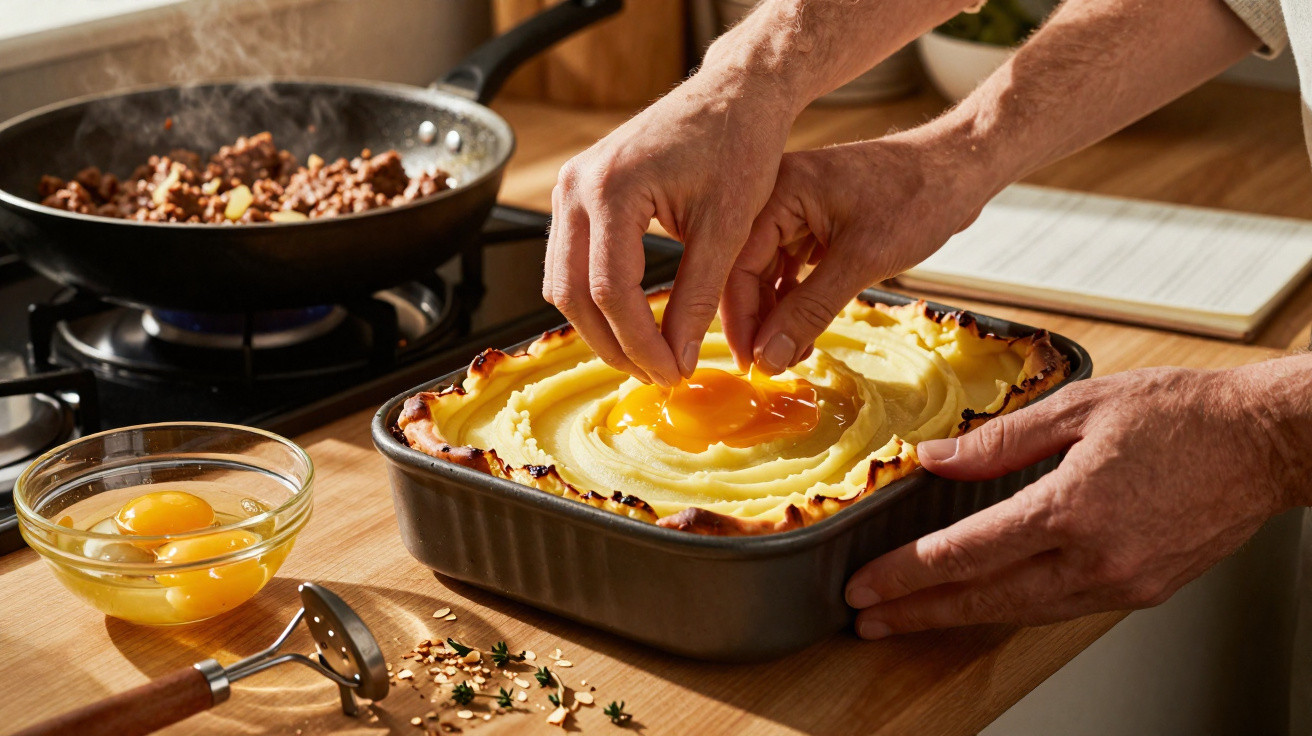
The secret many good cooks use: beat one egg yolk and mix it directly into the warm meat filling before baking.
Egg yolk works as a natural binding agent. Its proteins set gently during baking, retaining the juices rather than allowing them to escape and evaporate. Meanwhile, the yolk’s fat contributes extra richness and a silkier mouthfeel.
This does not produce an “eggy” taste. When used in moderation and thoroughly incorporated, the yolk is virtually undetectable in flavour but makes a clear difference to the texture. The filling becomes softer and less crumbly, retaining moisture even after time beneath a hot grill.
What the egg yolk actually does
- Adds moisture: its fat lubricates lean mince.
- Improves texture: softly setting proteins form a tender, cohesive filling.
- Helps binding: the meat layer serves neatly without breaking apart.
- Boosts flavour: gentle enrichment gives the dish a more luxurious taste.
For a regular family-sized pie containing around 500g to 700g of cooked meat, one egg yolk will generally suffice. Stir it through when the filling is warm rather than boiling, allowing it to distribute evenly before the pie enters the oven.
What if you have no eggs?
Not every kitchen has an extra egg yolk available. Experienced cooks use an effective alternative in those circumstances.
Adding a small splash of hot stock to the meat restores moisture and protects it from drying in the oven.
Beef, chicken and vegetable stock are all suitable. The aim is not to soak the meat, but to rehydrate it lightly. Just a couple of tablespoons may loosen an overly dry filling and return the mince to a saucy consistency.
Some chefs also combine a little stock with leftover gravy or cooking juices before pouring it over the meat in the pan. As well as supplying moisture, this builds flavour, particularly when using leftovers from a roast.
Assembly mistakes that make or break the dish
The ingredient adjustment is important, yet construction of the pie remains crucial. The same assembly faults appear in many dry shepherd’s pies.
| Mistake | What happens | Simple fix |
|---|---|---|
| Meat not fully covered with mash | Exposed meat dries out and may burn at the edges | Spread mash right to the dish’s edge, sealing the top |
| Mash too thin | Heat reaches the meat too quickly, reducing moisture | Aim for a thicker layer, around 2–3cm deep |
| Overbaking at high heat | Filling boils and dries, mash splits | Bake at moderate heat, finish with a short grill for colour |
| Meat mixture too dry before baking | Oven only worsens the dryness | Adjust with yolk or stock while still in the pan |
Treat the mashed potato as both a lid and an insulator. It is there not simply for flavour, but to protect the meat from direct heat while trapping steam within the dish.
Building a juicier shepherd’s pie, step by step
For anyone seeking a dependable approach, it helps to follow a simple framework. This method can be adapted for beef, lamb, duck or lentils.
Preparing the meat layer
- Fry the mince until browned, or heat shredded leftover meat with onion, garlic and herbs.
- If desired, add a little tomato purée, Worcestershire sauce or mustard for depth.
- Assess the moisture level: it should appear saucy, rather than soupy or dry and crumbly.
- Remove from the heat and mix through one beaten egg yolk, adding a small splash of hot stock if necessary.
Now taste the filling and correct the seasoning. Salt, pepper, and a little acidity from tomato or wine vinegar can brighten the whole dish.
Perfecting the potato lid
- Choose floury potatoes, including Maris Piper or King Edward, to make light, fluffy mash.
- Drain the potatoes thoroughly after boiling so the topping does not become watery.
- Mash with butter and a small amount of milk or cream until smooth, but not loose.
- Season well with salt and pepper, perhaps adding nutmeg or grated cheese.
Spoon the meat filling into an ovenproof dish once it is ready, then level the surface before adding the mash. Carefully spread the potato all the way to the edges, leaving no openings. Running a fork across the top creates attractive ridges that brown well in the oven.
Small variations that still keep it moist
The egg-yolk and stock technique suits countless versions of this dish. Duck confit, a frequent French bistro ingredient, contains more fat already but can still benefit from a little extra binding. Green lentils, often chosen for vegetarian versions, hold their shape effectively but may become chalky if baked dry, so egg yolk or additional stock can also help those who eat eggs.
Increasingly popular sweet potato mash is naturally sweeter and moister than standard potato. Combining it with a yolk-enriched meat filling preserves the contrast between a creamy topping and savoury base without compromising texture.
Why texture matters as much as flavour
Shepherd’s pie and hachis parmentier belong squarely in the “comfort food” category, where texture is central to their appeal. A tender spoonful combining creamy mash with juicy meat conveys warmth and care; a dry, crumbly middle has the opposite effect.
For many households, the dish is also an efficient way to use leftovers. Being able to rehydrate cooked meat rather than letting it dry out a second time makes the meal more economical. A modest addition of egg yolk or a ladle of stock can turn a roast or stew into another substantial meal.
Nutritionally, these adjustments are small but worth noting. Egg yolk supplies additional fat-soluble vitamins along with some protein. Stock, rather than plain water, contributes minerals and savoury compounds. Both changes fit neatly with the dish’s original role: making simple ingredients into a satisfying, filling plate that still feels like a treat.

















Comments
No comments yet. Be the first to comment!
Leave a Comment