The first time I took a tray of baked chicken breasts from the oven without finding them dry as cardboard, I genuinely assumed I had done something wrong. The surface of the meat still shone, the juices ran clear, and cutting into it revealed a gentle springiness rather than the familiar, miserable fibrous crumble. Ten minutes earlier, I had been peering through the oven door and debating whether to order a takeaway, as usual. The recipe claimed it would be “juicy every time” - a phrase the internet has thoroughly overused - so I was close to dismissing it.
Then I tried it, and the fork practically told me to stop doubting it.
The best bit? The technique could hardly be simpler.
The secret is control, not magic
Dry chicken breasts are usually not the result of a poor recipe; they are the result of panic. You buy the leanest cut, put it in the hottest oven you can manage, then leave it for “a little longer, just in case”. By the time the timer goes off, the juices have already cooked away. The chicken may be safe to eat, but it is about as enjoyable as chewing a gym towel.
This easy oven method reverses that approach by replacing guesswork with control. Use lower heat, reliable timing and one small tool that you probably already have at home. Once you understand that change, you can stop watching the oven door and trust what is happening inside.
Imagine a Tuesday evening in a compact flat kitchen: one baking tray, two chicken breasts, a half-used lemon rolling across the worktop, and one weary thought: “I cannot face another salad with rubber meat on top.” Add a drizzle of oil, some salt, smoked paprika and perhaps a spoonful of yoghurt because somebody on Instagram recommended it.
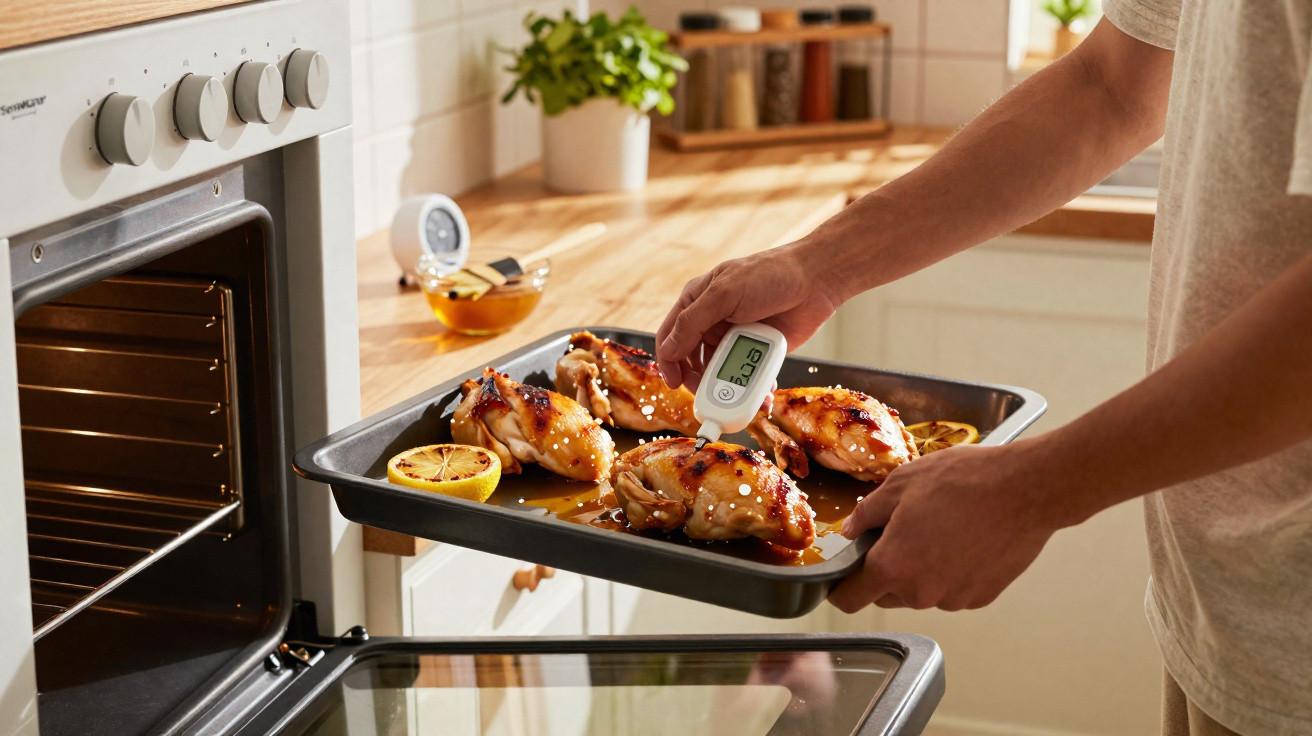
Put the tray into a moderate oven, set the timer for 20 minutes and step away. At 18 minutes, slide a digital thermometer into the thickest section: 72°C, then 73°C; wait for 74°C, then 75°C. Take it out.
Five minutes later, slice it open and discover that, for the first time in months, plain baked chicken actually sounds exciting.
There is a straightforward reason this technique works. Chicken breast is extremely lean, so the gap between “perfectly cooked” and “stringy” is frustratingly narrow. Fierce heat hits the exterior hard, forcing moisture out and into the tray. Gentler, consistent heat gives the centre time to cook before the outside dries out.
That is why restaurant chicken often tastes different: professional kitchens treat temperature almost like a religion. At home, we tend to rely on instinct and colour.
Combine a moderate oven, an exact internal temperature and those final minutes resting on the worktop, and you can hit that small sweet spot where chicken stays juicy rather than becoming tragic.
The easy oven method, step by step
This is the core technique. Heat the oven to 200°C / 400°F - neither fiercely hot nor low enough for slow roasting, but a dependable middle setting. Line a tray with baking parchment or lightly oil an ovenproof dish.
Arrange the chicken breasts flat, pat them dry and rub them with a little olive oil. Season with salt first, followed by anything you enjoy: garlic powder, paprika, dried herbs or lemon zest. There is no need for anything elaborate.
Bake for 18–22 minutes according to their thickness, then test the thickest part using a thermometer. Once it reaches 74°C / 165°F, remove the tray and leave the chicken to rest for 5–10 minutes before slicing. That is all there is to it.
Most people lose this battle in three familiar ways. They begin with chicken straight from the fridge, which needs longer to cook and leaves the edges dry before the middle is ready. They avoid using a thermometer and cut into the meat “to see”, allowing the juices to spill onto the chopping board. Or they turn up the heat because they assume quicker cooking means moister meat.
We have all had that moment when we know the chicken is already overcooked, yet leave it in for “just one more minute”.
Honestly, after a long day at work, nobody follows every textbook kitchen rule. This method is forgiving of that. It centres on two things you can realistically manage every time: moderate heat and a quick temperature check.
The chef who finally broke it down for me put it like this: “You don’t need tricks. You need a number. Cook to 74°C, rest, and stop touching it. The oven is not out to get you.”
- Bring chicken close to room temperature
Remove it from the fridge 15–20 minutes before baking to help it cook more evenly. - Use a simple seasoning base
Salt, pepper, a drizzle of oil and one flavour - lemon, smoked paprika, garlic or honey - is plenty. - Cover if very thin or very thick
When the breasts are uneven, loosely tent them with foil for the first 10 minutes to shield the thinnest sections. - Rest on the worktop
Leave the chicken for 5–10 minutes after baking so its juices can redistribute through the meat. - Slice across the grain
Cutting against the fibres creates the tender bite you are trying to achieve in those photos.
From “just protein” to something you actually crave
Once you master this easy oven method, chicken breasts begin to look different. Instead of being a dull “healthy choice”, they become a dependable blank canvas. You no longer need to bury them beneath heavy sauces simply to make the meal tolerable.
One evening, use lemon and black pepper, then slice it over a mound of greens. The next, brush it with a quick blend of yoghurt, cumin and chilli before tucking it into warm flatbread. The method and tray remain the same, but the mood on the plate changes completely.
Before long, the small routine of preheating the oven and seasoning two pieces of chicken feels less like a task and more like an easy, repeatable success.
The method is simple enough to memorise: moderate oven, oil, salt, 18–22 minutes, 74°C, rest. Once it becomes second nature, you can stop searching for new recipes every night and start trying variations instead: a spoonful of pesto, a splash of soy and honey, or a scattering of Parmesan at the end.
You may even start cooking extra deliberately, just so there are cold, juicy slices in the fridge for lunch the following day. That is often when you realise this is not only about making “better chicken”.
It is about having one reliable technique that quietly makes the week easier.
| Key point | Detail | Value for the reader |
|---|---|---|
| Moderate oven temperature | Cook at around 200°C / 400°F rather than using blasting heat | Lowers the chance of dry, stringy meat |
| Cook to internal temperature | Use a thermometer and remove at 74°C / 165°F | Delivers safety and juiciness every time |
| Resting time | Leave chicken for 5–10 minutes before slicing | Keeps the juices inside for a tender bite |





Comments
No comments yet. Be the first to comment!
Leave a Comment