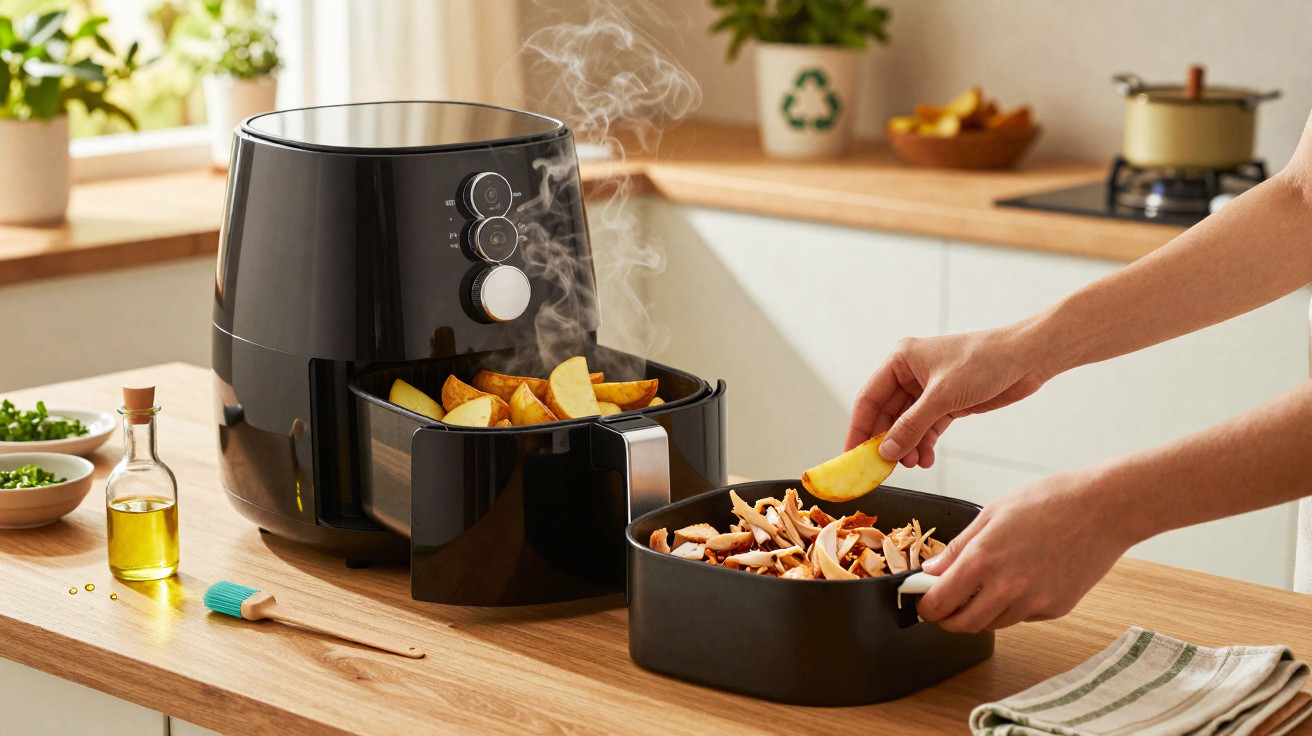
Weeknight meals have shifted once more, with the latest change arriving in the form of a compact upright appliance for the worktop.
Philips’ newest release is aimed at people seeking quick, home-cooked food, less oil and fewer concerns about the substances touching their cookware. The Airfryer Vertical Duo Series 4000 combines a stacked, space-efficient shape with a PFAS-free interior, presenting itself as a further move towards healthier, more sustainable day-to-day cooking.
A vertical take on the classic air fryer
Air fryers are already found in millions of homes, yet Philips wants to rethink their usual shape. Rather than placing two drawers side by side, the Vertical Duo Series 4000 puts its two baskets one above the other in a narrow tower. Philips says this arrangement can use up to 40% less worktop space than a standard dual-drawer model.
Measuring 23.3 cm across, the appliance occupies about as much space as a kettle while providing 10 litres of capacity overall. A couple in a flat can therefore prepare two different foods simultaneously, while a family can make an entire dinner without repeatedly moving trays in and out of a conventional oven.
Two vertically stacked baskets let home cooks run separate recipes at the same time, without mixing flavours or smells.
Philips highlights a straightforward example: vegetables can crisp in the upper basket as salmon fillets brown below. Both can be ready at once, without smells transferring between them or the need to cook a second batch afterwards. For people accustomed to managing oven timings and sheet pans, this ability to cook in parallel could reshape the evening routine.
PFAS-free baskets and the move towards safer cookware
The other central feature of the launch is inside the appliance. Philips says this is its first air fryer made completely without PFAS, the disputed group of “forever chemicals” commonly used in non-stick coatings.
The Vertical Duo instead has hard-wearing ceramic baskets. Ceramic finishes have become more popular with shoppers who want non-stick cookware without fluorinated compounds. With European regulators increasing pressure on PFAS for 2030 and afterwards, Philips describes the appliance as “future proof” for forthcoming rules.
The move to PFAS-free ceramic baskets signals how mainstream brands now respond to tightening chemical regulations and rising consumer concern.
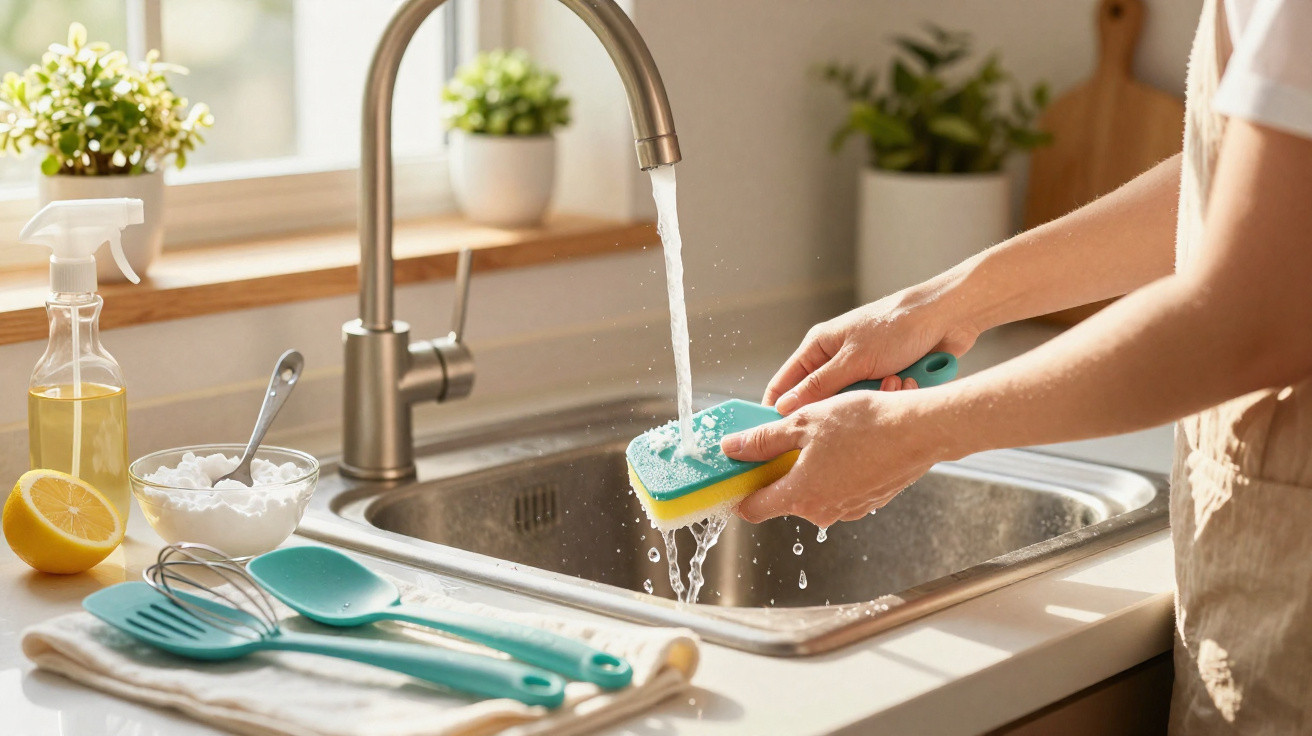
PFAS face scrutiny because they build up in both the environment and human bodies, remaining there for decades. By opting for ceramic, Philips is seeking to appeal to customers who examine cookware materials as closely as food ingredients. Ceramic does, however, require considered use: avoiding sudden changes in temperature and abrasive utensils is important for preserving the coating.
Technology inside the compact Philips Airfryer Vertical Duo Series 4000
Philips is not relying solely on health and sustainability claims. The Vertical Duo Series 4000 operates at 2750 W, closer to the output of a small oven than an ordinary worktop gadget. Heat is moved through the company’s vertical RapidAir system, which sends hot air upwards and downwards to promote even browning.
There are six presets and 13 cooking modes, including air frying, roasting, grilling, baking, reheating and dehydrating. This versatility helps prevent it becoming an appliance used only for “chips”, as happened to many early air fryers now left unused in cupboards.
- RapidAir mode for chips and other snacks with up to 90% less added fat than deep-frying
- A sync function that schedules both baskets so food is ready at the same time
- Integrated viewing windows for checking cooking progress without opening the baskets
The windows might appear to be a minor detail, but they address a genuine annoyance. With early air fryers, users had to remove drawers, shake the contents and hope the food had not become dry. In this model, looking through the glass can show whether skin is crisp enough or cheese has browned sufficiently.
From frozen favourites to complete meals
Many homes begin with familiar options such as frozen chips, nuggets and perhaps crispy cauliflower. Philips suggests the appliance can do more, potentially replacing several other kitchen devices. Its dehydration setting is intended for dried fruit and vegetable crisps. Low-intensity baking can make small cakes or granola, while grill programmes offer stronger heat for searing halloumi or charring peppers.
When used effectively, it can handle:
| Type of use | Examples | Key benefit |
|---|---|---|
| Everyday meals | Chicken thighs, potato wedges, tray-style vegetables | Faster cooking than a conventional oven |
| Healthy snacks | Chickpeas, kale chips, apple rings | Crisp results without deep-frying |
| Batch cooking | Roasted vegetables, protein for the week | Two baskets operating in parallel |
| Weekend treats | Stuffed baked potatoes, brownies, wings | More control over seasoning and fat than takeaway |
Implications for energy use and kitchen routines
This launch arrives amid wider changes in home cooking habits. Energy costs continue to fluctuate, prompting many households to limit oven use. Because they have smaller cooking chambers and heat up quickly, air fryers can consume less energy than using a full-sized oven for one tray of food.
Although 2750 W sounds substantial, cooking durations can often be reduced by a third or more. For somebody roasting vegetables three or four times weekly, the combined savings may become noticeable over a year, particularly where electricity is costly.
By heating a compact space quickly, air fryers can deliver similar browning to an oven while using less energy per meal.
The upright design also reflects the reduced kitchen space found in cities. New-build flats in places such as London and New York seldom offer the large worktops pictured in glossy catalogues. An appliance that rises vertically rather than extending sideways leaves room for a chopping board and kettle while allowing the air fryer to remain plugged in.
How the PFAS debate is influencing the next generation of appliances
Philips is not the only company developing PFAS-free products, but a major global brand introducing an entirely PFAS-free air fryer does raise expectations. As regulators across Europe and elsewhere impose stricter limits on these materials, manufacturers may need to reconsider coatings used on pans, baking trays and smaller appliances.
Consumers will consequently have more materials and labels to assess. Ceramic, enamelled cast iron, stainless steel and emerging hybrid coatings will all compete for attention. Every option has compromises: stainless steel withstands scratches but may cause food to stick; enamel adds weight; ceramic has a smooth feel but does not tolerate rough treatment. The Vertical Duo enters this discussion on the basis that buyers may accept a more delicate finish in return for fewer chemical concerns.
Where it belongs in an everyday kitchen routine
Away from specifications, every appliance must prove that it deserves a lasting place on the worktop. The two-basket system is useful because it addresses two regular difficulties: variety and timing. People often need protein and vegetables cooked in different ways but served at the same time. The sync function is designed specifically for that problem.
There are, naturally, restrictions. Large joints of meat and full sheet-pan pizzas still require a conventional oven. Ceramic baskets call for extra care during washing. An appliance offering 13 modes may also feel complicated to someone who simply wants a quick serving of chips. Its learning curve falls somewhere between that of a toaster and a full smart oven.
Practical ways to get more from an air fryer
For those considering this approach to cooking, several useful habits can deliver more benefit than the presets alone:
- Put food requiring deeper browning in the upper basket, as rising hot air generally crisps the top tray more quickly.
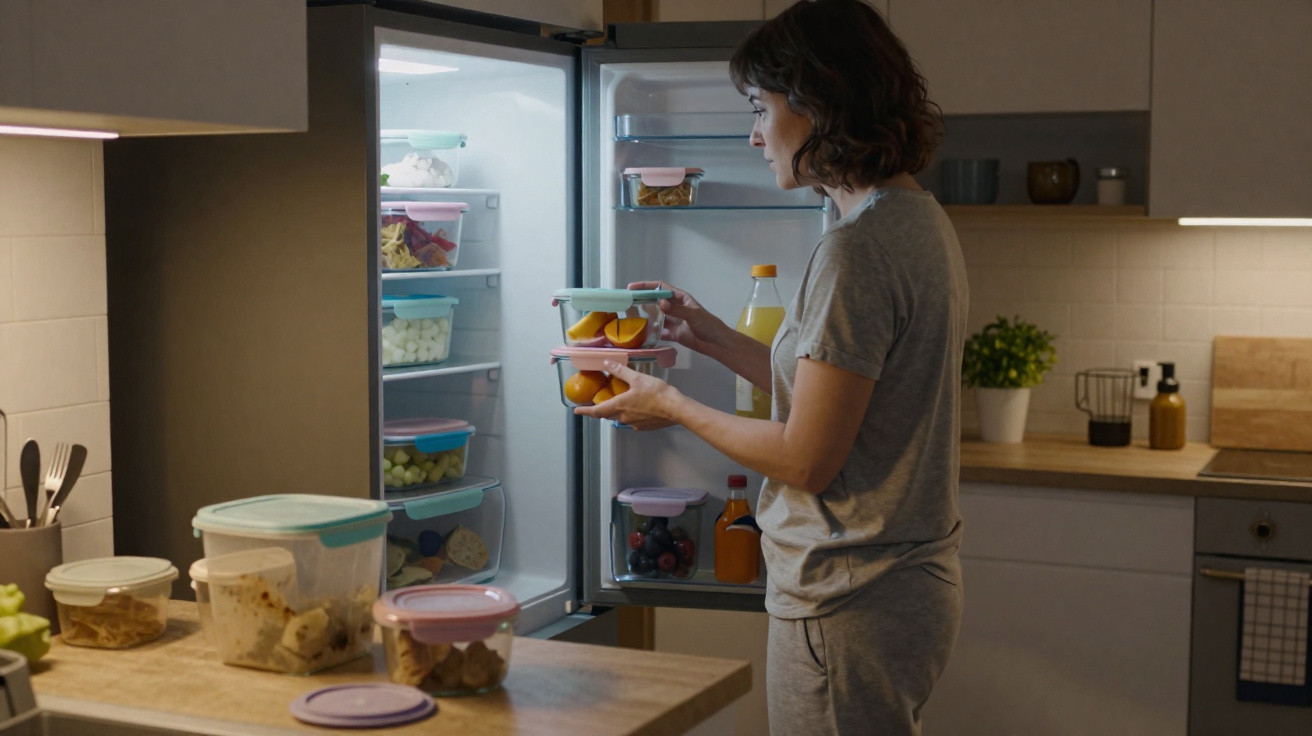
- Cook staples such as chicken breast or root vegetables in batches on Sunday, then reheat smaller servings during the week.
- Make a basic record of the temperatures and cooking times that suit favourite recipes, as real-life results can differ from the manual.
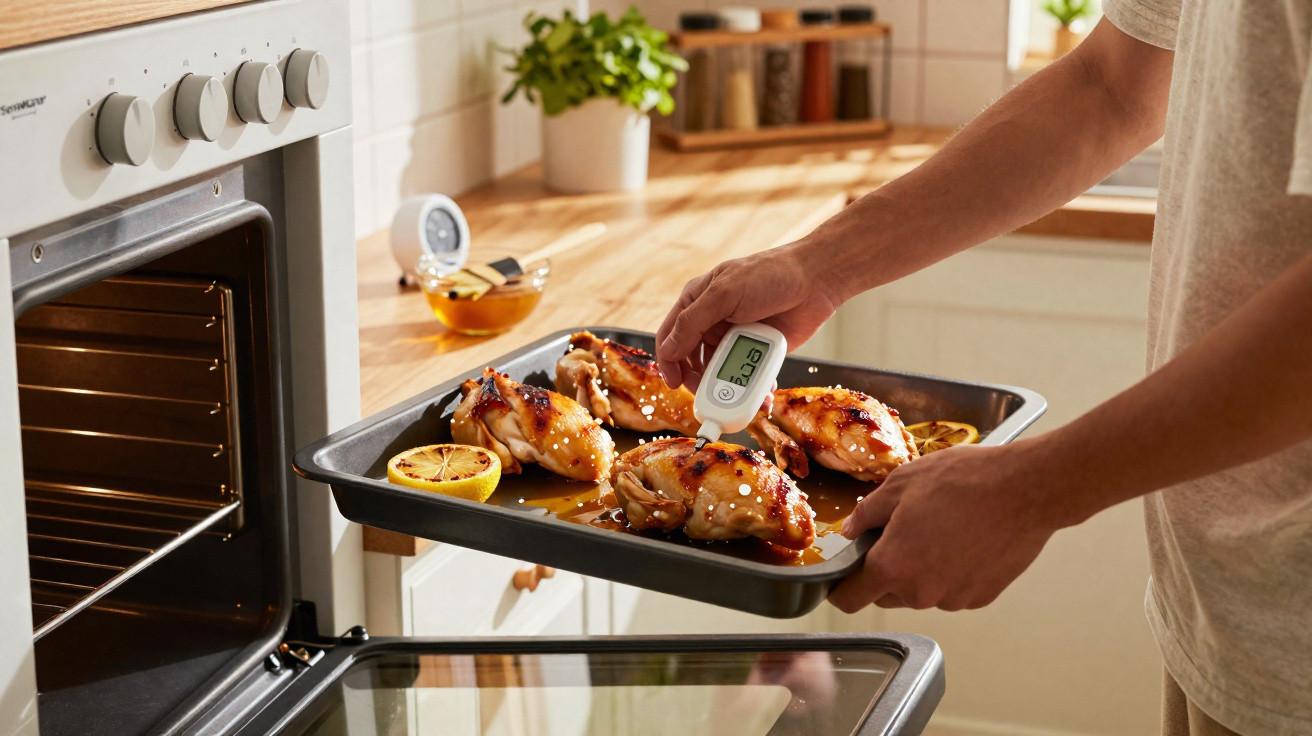
- Use a simple instant-read thermometer with the air fryer to prevent lean meats from overcooking.
- Swap the baskets halfway through a longer cooking session if the colour is uneven between the upper and lower levels.
In safety terms, air fryers lower certain common kitchen risks while creating others. Using less hot oil reduces splash burns and the likelihood of oil fires. However, these compact appliances concentrate heat around plastic casings and power leads. Leaving clearance between the unit and a wall, removing built-up grease and not overloading sockets remain as important as they are with any high-wattage appliance.
For those looking further ahead, the broader story goes beyond a single product. Developments such as Philips’ PFAS-free Vertical Duo illustrate the connection between regulation, health research and kitchen habits. How people cook at home today influences what manufacturers produce next, from materials and coatings to the energy requirements of everyday meals.





Comments
No comments yet. Be the first to comment!
Leave a Comment