
For many families, milk rolls are a regular choice for breakfast or a snack break. Soft, mildly sweet and conveniently packaged, they are easy to pick up. A French nutrition doctor has now examined familiar supermarket options more closely – and ultimately gave a genuine recommendation to just one brand. Here is why, and what to look for when buying them.
Why milk rolls are popular – yet can be problematic
Milk rolls are often seen as a more “innocent” option than croissants or chocolate-filled rolls. They seem less fatty, come in small portions and are quickly added to the trolley when mornings are rushed or children are hungry after school.
Nutrition professionals nevertheless take a critical view. The reason is that they contain plenty of starch and, in most cases, added sugar. Both can raise blood sugar quickly – which may be unfavourable over time, particularly for children who already eat sweet foods frequently.
“Milk rolls are classic treat foods: allowed, but best not eaten every day or in large quantities.”
In his shopping guide, nutrition doctor Jean-Michel Cohen points out that baked goods such as milk rolls, brioche-style rolls and similar products should be viewed more as treats. His rule of thumb is to have them no more than twice a week, rather than making them a fixed part of breakfast every day.
The supermarket verdict: just one milk roll stands out
As part of his guide, the doctor compared supermarket milk rolls. His finding is surprising: in his view, only one industrially made product clearly compares favourably with the rest.
It is a fresh no-added-sugar milk roll from the range of a well-known bakery brand. Its key feature is that the recipe contains no extra table sugar. This sets it apart from many standard milk rolls, whose ingredient lists contain sugar or glucose syrup several times over.
What does “no added sugar” actually mean?
A “no added sugar” claim means that no additional sugar has been put into the product. It may contain only sugars that occur naturally in ingredients such as milk, flour or fruit juice concentrate.
- No added table sugar: no conventional granulated sugar appears in the ingredients list.
- No glucose syrup or fructose syrup: these sweetening ingredients are absent too.
- Natural sugars only: for example, those from milk or cereal ingredients.
This does not automatically make a milk roll “healthy”, but it does noticeably reduce the sugar load compared with many competing products.
Ingredients under scrutiny: what the doctor praises
Cohen highlights not only the lack of added sugar, but also the recipe’s generally well-balanced composition. He describes the recommended milk roll as a sound basic choice for breakfast or a snack – provided the portion size is appropriate.
Several features stand out positively:
- High wheat flour content: around 58 per cent flour forms the basis of the dough.
- Fresh eggs: at roughly 12.5 per cent, the dough contains considerably more egg than is usual in many budget products.
- Fresh skimmed milk: just under 8 per cent low-fat milk adds protein and flavour.
- Rapeseed oil rather than palm fat: most of the fat comes from rapeseed oil, which is rich in unsaturated fatty acids.
- Sourdough rather than yeast: the roll is leavened with sourdough, which the doctor considers a sign of quality.
“The combination of fresh eggs, milk and rapeseed oil provides a more balanced nutritional profile than many traditional sweet rolls.”
Sourdough is also regarded as easier to digest than baker’s yeast alone and may slightly moderate the rise in blood sugar. Minor ingredients such as barley flour or acerola cherry juice can partly act as natural sources of vitamins or acidity, while also helping to preserve the product.
How often milk rolls should really be served
Even this comparatively better option is not considered an everyday staple by the nutrition doctor. It remains a treat food. His advice is to eat milk rolls no more than twice a week, preferably as an occasional meal or snack rather than a daily habit.
Anyone serving them should keep an eye on portion sizes. One small roll will generally be enough for children. Adults should not overdo them either, especially if their diet already includes plenty of other white-flour foods.
Sweet traps: what not to put on a milk roll
Even the best milk roll can quickly become a high-calorie choice if the topping is unsuitable. The doctor clearly recommends limiting sweet spreads.
Less advisable options include:
- thick layers of chocolate-hazelnut spread
- large amounts of jam or jelly
- butter alongside an extra-sweet spread
- caramel spreads or sweetened milk spreads
Those wishing to avoid the sugar trap can choose instead:
- a thin layer of cream cheese with a few slices of strawberry
- low-fat quark with a little banana
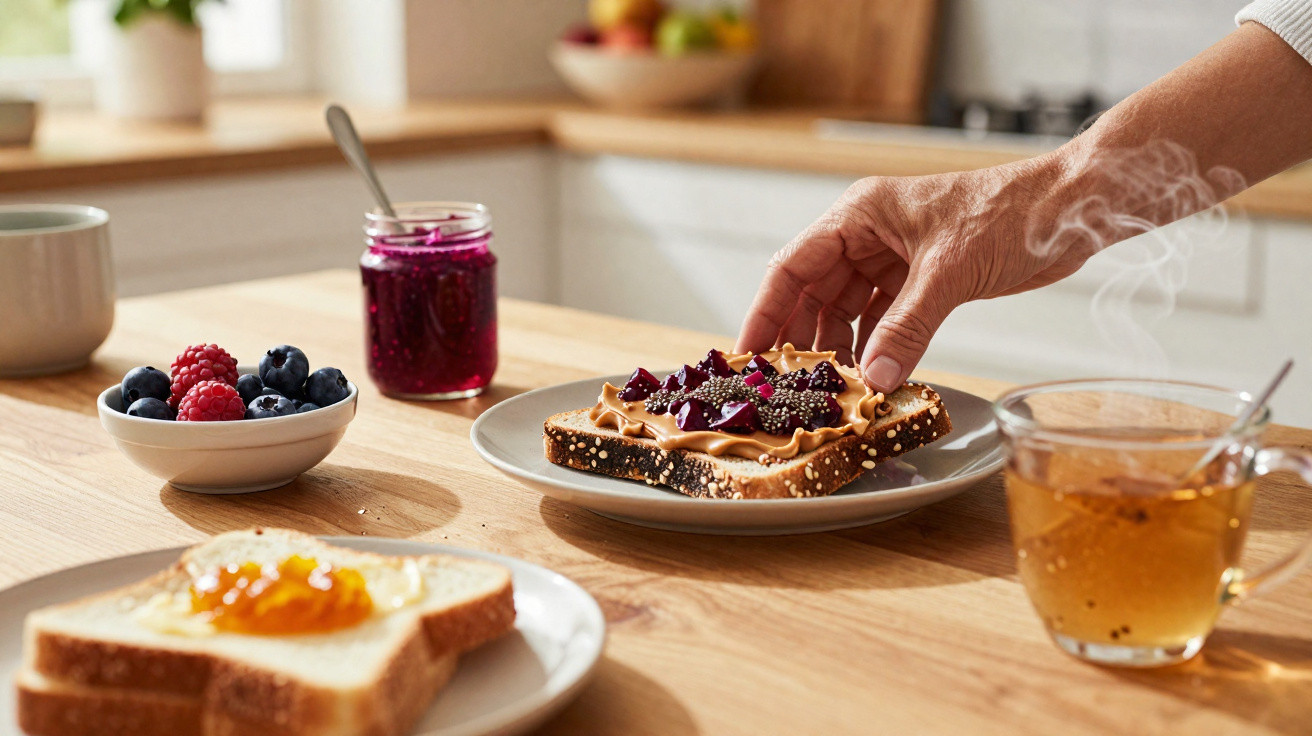
- a small portion of nut butter, without sugar, with apple slices
This keeps the snack sweet and child-friendly without the amount of sugar soaring.
What UK supermarket shoppers can look for
Although the product assessed is currently sold mainly in France, the criteria can easily be applied in UK supermarkets. The most important rule is to read the ingredients list instead of relying solely on claims on the front of the packet.
Useful points to consider while shopping:
| Aspect | Better choice | Best avoided |
|---|---|---|
| Sugar | no or little sugar, “no added sugar” | several types of sugar near the start of the list |
| Fat | rapeseed oil, sunflower oil | large amounts of palm fat, coconut fat |
| Cereals | clearly stated flour content, ideally with some wholemeal flour | lots of starches, with little information about the flour |
| Egg and milk | fresh eggs, milk or skimmed milk | egg or milk powder as the sole source |
| Raising agent | sourdough, combined with a small amount of yeast | yeast only or chemical raising agents |
Using these points as a guide can help shoppers find products that are at least closer to the recipe praised by the doctor.
How milk rolls can fit better into everyday life
Rather than eating milk rolls on their own, nutrition experts advise including them within a balanced meal. One example is a child having a small milk roll with a glass of milk or unsweetened cocoa and a piece of fruit. This spreads the energy intake more evenly and keeps blood sugar peaks lower.
For adults, a milk roll can occasionally replace a filled bread roll if the rest of the day is relatively rich in vegetables and low in sugar. Anyone beginning the day with cereal, juice and sweetened coffee should preferably avoid further sources of sugar.
Is it worth baking milk rolls at home?
Homemade milk rolls make it possible to reduce sugar and fat deliberately. Many recipes use much less sweetness once people have adjusted to the taste. Possible variations include:
- adding some wholemeal flour to the dough
- using rapeseed oil instead of butter
- including small amounts of raisins rather than extra sugar
The result is rolls that may not taste like traditional bakery products, but are more suitable for everyday eating – particularly when children ask for them regularly.
What the doctor’s verdict tells us about milk rolls
The nutrition doctor’s clear assessment demonstrates one main point: there are significant differences between individual milk roll brands. By specifically looking for products with no added sugar and a carefully considered ingredients list, shoppers can limit the harm that sweet baked goods can otherwise cause quickly.
At the same time, the central message remains: milk rolls are not a staple food but a small reward. With considered shopping choices, less frequent consumption and modest sweet toppings, they can still fit into modern family life – without sending blood sugar on a constant rollercoaster.











Comments
No comments yet. Be the first to comment!
Leave a Comment