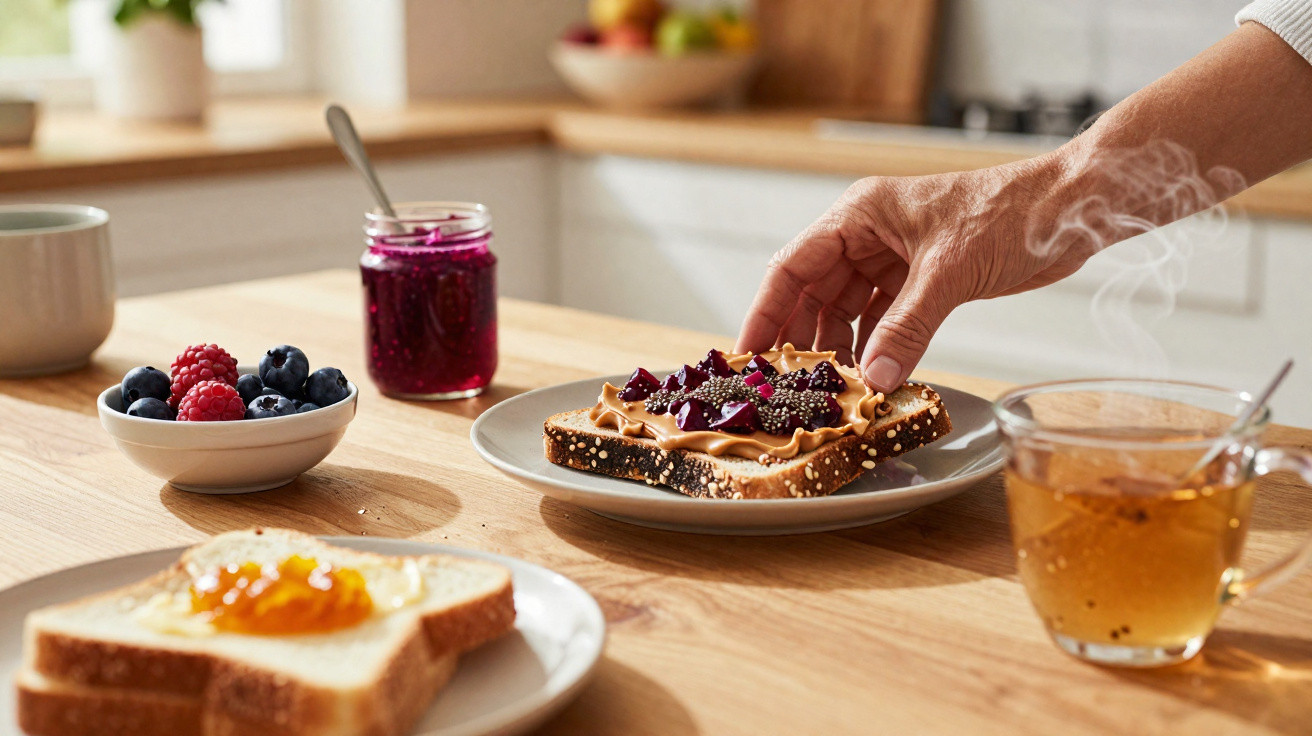
Many people, particularly from around the age of 50, notice that their usual breakfast suddenly feels “heavier” in the stomach, makes them tired more quickly and seems to settle stubbornly around the waist. A nutritionist explains how the classic bread-and-spread combination can be replaced to keep blood sugar steadier – without missing out on sweet flavours.
Why classic jam on toast can become a problem
White bread with butter and jam may sound harmless, but metabolically it creates a perfect storm: plenty of rapidly available sugar, with very little fibre and protein. This exact mix causes blood sugar levels to rise sharply.
“A pronounced blood-sugar spike in the morning brings a rapid high – followed shortly afterwards by an even deeper low.”
Typical consequences of this rollercoaster include:
- cravings by mid-morning
- an energy slump and poorer concentration
- a greater appetite for sweet foods as the day goes on
- over time, increased fat storage around the abdomen
As we get older, and during the menopause, the body responds more sensitively to these fluctuations. Hormones change, muscle mass is more likely to decline, and the basal metabolic rate falls. Excess energy is then stored as fat more readily, especially around the middle. Starting every day with a sugar spike puts unnecessary pressure on the metabolism.
How a low glycaemic index breakfast works
Nutritionist Linia Patel therefore focuses on foods with a low glycaemic index (GI). These foods cause blood sugar to rise only gradually. Fibre, protein and a little fat all play an important part.
Fibre acts like a filter, slowing the rate at which sugar passes from the gut into the bloodstream. For example, a whole apple raises blood sugar much more slowly than apple juice, even though both contain a similar amount of fruit sugar. The difference lies in the intact plant fibres.
The aim is not to banish all sweetness. Instead, it is to include sweet foods in a way that keeps you full for longer and blood sugar as even as possible.
The smart alternative: seeded bread with nut butter and chia fruit spread
Patel suggests a kind of “jam on toast 2.0” as a new everyday breakfast. The concept is to retain bread with a sweet topping, while changing every component to make it more blood-sugar friendly.
The foundation: high-fibre bread rather than white bread
Rather than baguette or pale sliced toast, choose seeded bread or a good sourdough loaf. Both options provide more fibre and keep you satisfied for longer. Their carbohydrates enter the bloodstream more slowly than those in conventional white bread.
Main ingredients for two servings
- 2 slices of seeded or sourdough bread
- 2 tablespoons of nut butter, such as peanut or almond butter
- 1 apple or 1 pear, thinly sliced
- 150 g blueberries, fresh or frozen
- 150 ml water
- 2 tablespoons maple syrup or another moderately used sweetener
- 4 tablespoons chia seeds
Making the chia fruit spread
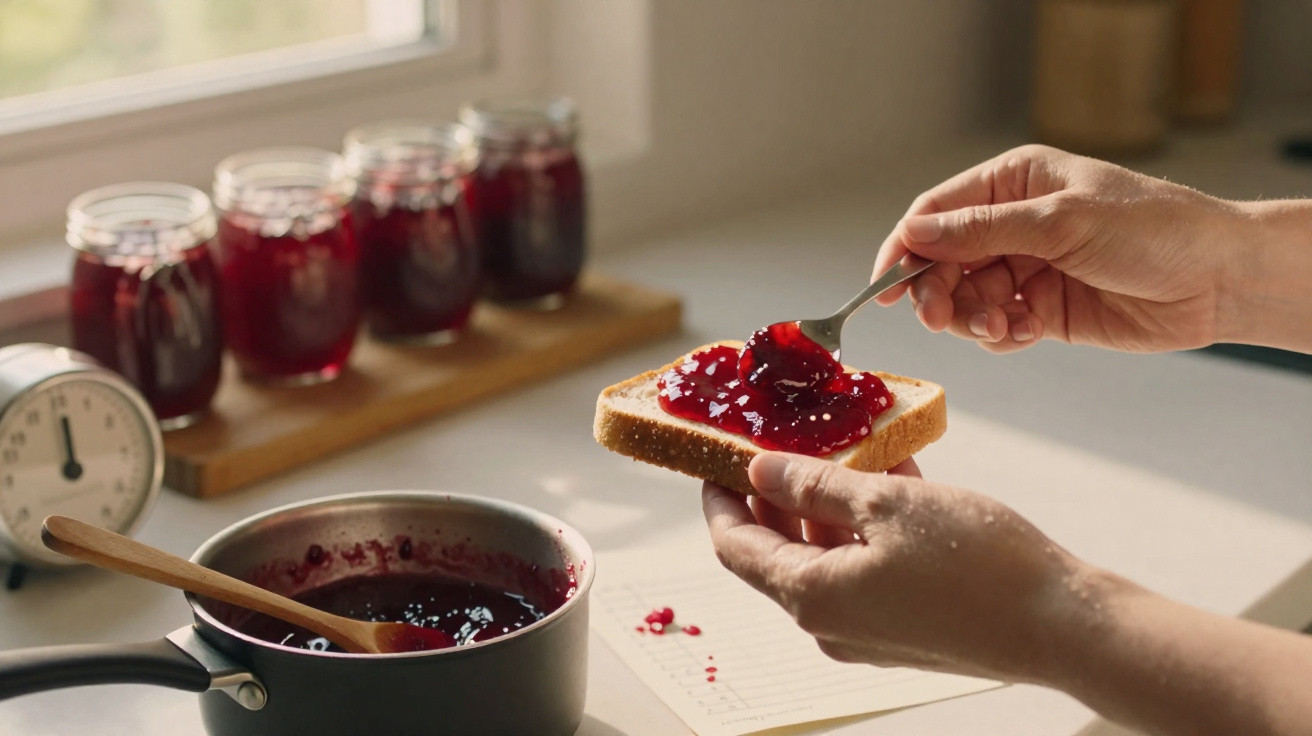
To make the upgraded fruit spread, gently simmer the blueberries, water and maple syrup in a saucepan for around ten minutes, until the berries burst. Add the chia seeds, then cook for another five to six minutes until the mixture thickens. Leave it to cool: as it stands, the gel contained in the chia seeds will set it further.
The topping itself is quick to assemble: toast the bread, spread it with nut butter, add slices of apple or pear, then spoon over the chia fruit spread.
“The combination of seeded bread, nut butter, fruit and chia seeds provides plenty of fibre, protein and healthy fats – and significantly reduces blood-sugar spikes.”
Chia seeds naturally supply omega-3 fatty acids and absorb liquid, helping you stay full for longer. Nut butter contributes protein and unsaturated fats. Fruit provides natural sweetness and vitamins. Compared with standard jam, this spread contains more whole fruit, less free sugar and a considerably better nutritional profile.
Three easy alternatives when you want to skip jam
Anyone who does not want to start using chia seeds and cooking straight away can still gain a great deal from very simple changes. Even small adjustments can make breakfast friendlier to blood sugar.
1. Fruit purée with no added sugar
A useful first step is to replace ready-made jam with unsweetened fruit purée. This can be homemade purée or a product made from 100 per cent fruit with no added sugar.
- Apple or pear purée works well on wholemeal bread.
- Berry purée offers fruity sharpness and less sweetness.
- A spoonful stirred into plain yoghurt replaces sweetened fruit yoghurts.
The fruit sugar remains, but the total sugar content is generally far lower than in standard jams. Paired with wholemeal bread or plain yoghurt, it produces a much gentler blood-sugar response.
2. Fresh fruit instead of a spreadable sweet topping
A slice of bread topped with softly mashed fruit comes even closer to the original flavour. Ripe banana, berries, kiwi, peach or grapes can be pressed directly onto the bread or spread on roughly mashed.
It becomes particularly interesting with a little seasoning:
- a pinch of cinnamon over apple or pear pieces
- vanilla with mashed banana
- grated ginger with berries or kiwi
Studies suggest that cinnamon has a slight regulating effect on blood sugar. Fruit brings fibre, stays in the stomach for longer and provides more volume than a thin layer of jam.
3. Naturally sweet vegetables: squash and sweet potato
It may sound unusual, but it is surprisingly delicious: smooth puréed Hokkaido squash or sweet potato on low-GI bread. Both vegetables are naturally mildly sweet and can quickly become a breakfast highlight when seasoned.
A simple basic recipe:
- Cook the squash or sweet potato until soft.
- Purée it with a little vegetable oil or a dollop of yoghurt.
- Season with vanilla, cinnamon or a little ginger.
The result is a smooth, spreadable topping that tastes like comfort food but places far less strain on blood sugar than jam. Served alongside an egg or some cottage cheese, it makes a very balanced breakfast.
What a good breakfast after 50 should provide
For people around 50 and over, breakfast should primarily offer two things: steady energy and support for muscles and metabolism. A few basic principles can help provide direction.
| Component | Examples | Effect |
|---|---|---|
| Fibre | Wholemeal bread, porridge oats, chia seeds, fruit with the skin on | slows the rise in blood sugar, promotes fullness |
| Protein | Yoghurt, quark, eggs, nut butter, cottage cheese | preserves muscle mass, keeps you full for longer |
| Healthy fats | Nuts, seeds, nut butter, linseed oil | stabilises blood sugar, supports hormones |
| Low GI | Seeded bread, porridge, pulses | prevents major sugar spikes |
People who combine these elements in the morning usually notice effects quickly: fewer cravings, less tiredness and, often, a more relaxed waistline over the course of several weeks.
Practical tips for changing habits without feeling deprived
The mind is often attached to routines. Anyone who has loved a particular type of jam for decades is unlikely to give it up overnight. A gradual transition is more realistic.
- First, use half as much jam as usual and add a few fresh berries.
- Then, choose seeded bread instead of white bread every other day.
- Later, reserve jam for weekends and have fruit purée or fresh fruit on weekdays.
It also helps to deliberately link new recipes with enjoyment: have a nice cup of coffee or tea alongside, sit down to eat, or choose a special loaf from the bakery. Paying attention to the flavour soon shows that less sugar does not automatically mean less pleasure.
Portion size is also worth considering. Many people underestimate how much sugar is contained in a “large” serving of jam. One tablespoon of chia fruit spread or a little apple purée often delivers more flavour than two thickly spread slices of jam on toast – while also providing important nutrients.












Comments
No comments yet. Be the first to comment!
Leave a Comment