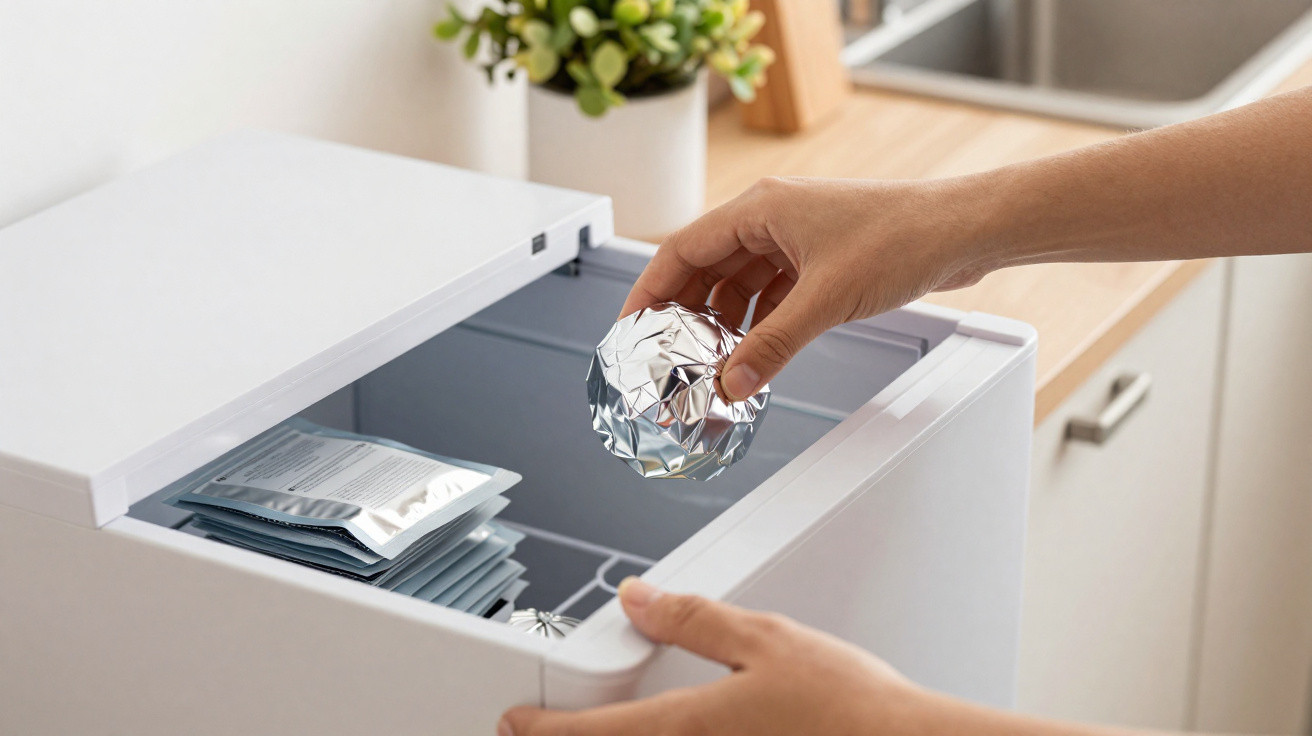
The freezer door remained open a few seconds too long, long enough for condensation to spread everywhere. Plastic bags became coated in frost, pea cartons sat half-open, and a forgotten tub of ice cream was frozen to the back wall. It was the sort of frozen disorder that makes you want to shut the door and order pizza.
Yet it was not the food that drew my attention. A thin, crumpled piece of aluminium foil had been placed along the rear of one shelf. Initially, it seemed like a half-hearted way to catch spills. Then I spotted something unusual: the frost stopped precisely at the edge of the foil.
The meat on that section was frozen hard but still looked almost fresh. There was less ice, fewer odd smells and none of the strange grey freezer burn on its surface.
A quiet, slightly absurd thought came to mind. Could a £2 roll of foil outperform my expensive freezer?
The hidden disorder inside your freezer
Look inside almost any freezer and the same pattern appears: good intentions concealed beneath frost and unidentified containers. Frozen berries have merged into one pink block. Chicken breasts are trapped together in an icy lump that no one wants to separate. You freeze food to save time and money, yet somehow both disappear inside that frozen cavern.
Day to day, the freezer appears “fine”. Then comes the evening when you search for the lasagne you are certain you bought last month, only to find something that resembles an archaeological discovery rather than a meal.
That is when it becomes clear that the issue is not only what you put in the freezer. It is also the way your freezer behaves.
From a cold, technical perspective, a freezer is a miniature weather system. Whenever you open its door, warm and humid air enters. That moisture settles on cold surfaces, becomes frost and gradually affects exposed food. Freezer burn is not grime; it is dehydration caused by cold air and ice crystals.
Research from food safety agencies indicates that properly wrapped meat can retain its quality for months, whereas meat placed in the freezer “as is” may begin to lose flavour and texture within a few weeks. No one intends to waste so much food. It simply occurs quietly and invisibly at -18°C.
The most surprising part is that most of us already have a tool that can slow this process considerably. It is usually in a kitchen drawer, beside the cling film you have been intending to use.
The principle behind the aluminium foil trick is almost embarrassingly straightforward. Freezer burn requires three things: cold, air and time. You cannot realistically remove the cold or the time, but you can tackle the air.
Aluminium foil is dense and less porous than many plastics. When it is wrapped tightly, it prevents more oxygen and water vapour from moving around the food. That means fewer ice crystals directly on the surface, less discolouration and far less of the dry, woody texture that can affect meat and bread.
There is a further benefit from physics: aluminium conducts cold very effectively. This can help food freeze more quickly and evenly when first placed in the freezer, reducing the size of ice crystals inside it. Smaller crystals = less damage to cell structure = a better texture after defrosting.
It may sound like a minor detail. In a freezer, though, small details determine whether something becomes dinner or ends up in the bin.
The aluminium foil freezer hack, step by step
The method that makes such a difference requires remarkably little effort. Before food is exposed to the cold air, tightly wrap the meat, bread, cheese or leftovers you intend to freeze in aluminium foil. Do not leave it loose or wrap it half-heartedly. Press the foil closely against the food and remove the small pockets of air.
For longer-term storage, use two layers: wrap the food in foil first, then place it inside a light freezer bag. The foil shields the food, while the bag protects the foil from tears and keeps portions together.
You can also cover parts of your freezer shelves with foil. There is no need to do every shelf: focus on areas where frost forms fastest, or where you keep delicate items such as herbs, berries or pastries. This thin layer acts as a small barrier, limiting direct frost contact and making cleaning simpler when something leaks or sticks.
The human element matters too. On a hectic weekday evening, nobody wants to follow a 12-step food-preservation routine. Let us be honest: no one really does that every day.
Keep this aluminium foil freezer hack as simple as possible. Start with foods at highest risk: raw meat, fish, bread, sliced cheese and anything you expect to store for more than one month. If you have only 30 seconds, wrap those items in foil and write the date on them with a marker.
One common error is wrapping food while it is still warm. This traps steam beneath the foil, which soon turns into frost. Allow leftovers to cool to room temperature before covering them. Another frequent mistake is using foil filled with creases and tiny tears. If it looks shredded, discard it or reserve it for lining a shelf rather than wrapping food directly.
This is not about getting everything perfect. It is about doing slightly better than putting an unwrapped steak into the freezer.
There is a sentence I heard from a home economist who tests storage methods for a living:
“You don’t need a bigger freezer, you need a smarter relationship with the one you already have.”
That is the point at which this aluminium foil trick becomes less of a “hack” and more of a subtle lifestyle change. You begin to notice what is genuinely wasted, which items always vanish at the back and what your family will not eat once it has become icy and unrecognisable.
A few simple habits make it easy to maintain:
- Keep the foil roll in the same drawer as the freezer bags, close to the fridge.
- Wrap new food before opening the freezer door, rather than standing in the cold with the door open wide.
- Assign one shelf a clear purpose: “foil-protected foods we actually want to eat this month”.
We have all thrown away a bag of something bought with good intentions that we never used. This small strip of metal means that happens far less often.
A small roll of foil and a new view of your freezer
After using it for a few weeks, this hack stops feeling like a “trick” and begins to alter the way you think about frozen storage. Food looks less worn out when you take it out. Ice cream develops fewer strange crystals across the top. The Sunday roast you froze a month earlier still has its rich colour, rather than becoming dull and grey at the edges.
Some readers mention an unexpected effect: opening the freezer actually feels calmer. There is less visual clutter, fewer mystery items and more clearly wrapped, dated portions. Your brain appreciates predictability, even at -18°C.
There is also a quiet financial benefit: every piece of meat that makes it through winter without freezer burn represents a few pounds that remain on your plate rather than going into the bin. You are not transforming your life; you are simply allowing your freezer to work with you instead of against you.
| Key point | Detail | Benefit for the reader |
|---|---|---|
| Double aluminium wrapping | Foil wrapped tightly around food, followed by a freezer bag | Protects texture and limits freezer burn |
| Cool before wrapping | Allow dishes to cool before covering them with aluminium foil | Reduces frost formation and strange smells |
| “Protected” freezer zone | A shelf dedicated to food wrapped in foil | A clearer freezer and less forgotten food waste |









Comments
No comments yet. Be the first to comment!
Leave a Comment