Curry splatters. Butter spots. That stubborn orange ring that seems to mock every wipe. You do not need a cupboard full of sprays to get your microwave gleaming again. One modest pantry ingredient can change everything-quickly, cheaply and with surprising satisfaction.
I once stood beside the office microwave, watching its plate rotate like a miniature planet. Specks of tomato sauce covered the plastic interior like constellations. Somebody had made an attempt at cleaning it: lazy circular marks and a weak lemon fragrance that convinced nobody. “We should just buy a new one,” a colleague said, as though microwaves were as disposable as socks. I took a bottle of white vinegar from a desk drawer and found a glass bowl. A few people laughed. Then steam began to rise, the door misted over, and the result became obvious. The grime started to release. The stale smell turned sharp, then vanished. The first paper towel came away black; the next came away clean. It had taken only five minutes and a splash of vinegar.
The small pantry solution that loosens grime
Grease sticks because heat polymerises it, bonding it to the microwave's plastic and enamel surfaces. Vinegar does not force it off; it weakens that bond. Heating vinegar with water produces warm acetic-acid vapour that reaches the sticky coating and softens it. The dirt stops putting up a fight. Steam handles the hard work, while vinegar breaks through the film and reduces the odours trapped with it.
Most of us know the slight embarrassment of opening the microwave door, even when nobody else is around. One reader said she had scrubbed for twenty minutes with washing-up liquid, yet faint soup stains still marked the ceiling. She tried vinegar steam once and sent a photograph that looked like a magic trick: the same microwave, one bowl and no fuss. It was not clinical perfection. It was simply a properly clean appliance that no longer smelled of last week’s fish pie.
There is some gentle chemistry behind the effect. White vinegar consists mainly of water and contains around five percent acetic acid. Grease and splashed sauces are mildly alkaline, with oils and proteins in the mix. Acetic acid encourages them to break down, while heat expands and releases dried-on residue. Steam reaches every area, including the awkward edge around the door frame. As vinegar is volatile, its scent disappears as the air clears. There is no residue, no coating and no eye-watering perfume-only the calm, clean neutrality of a refreshed appliance.
How to clean a microwave with vinegar steam in 5 minutes
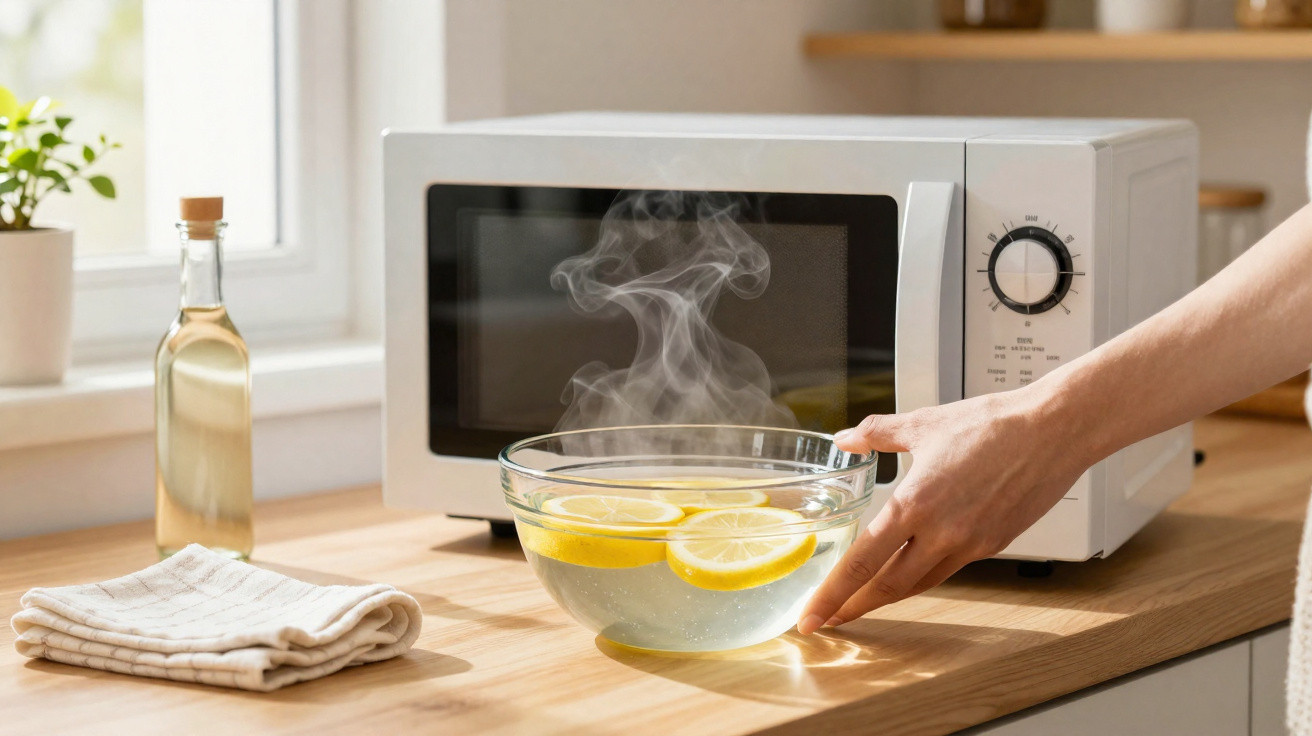
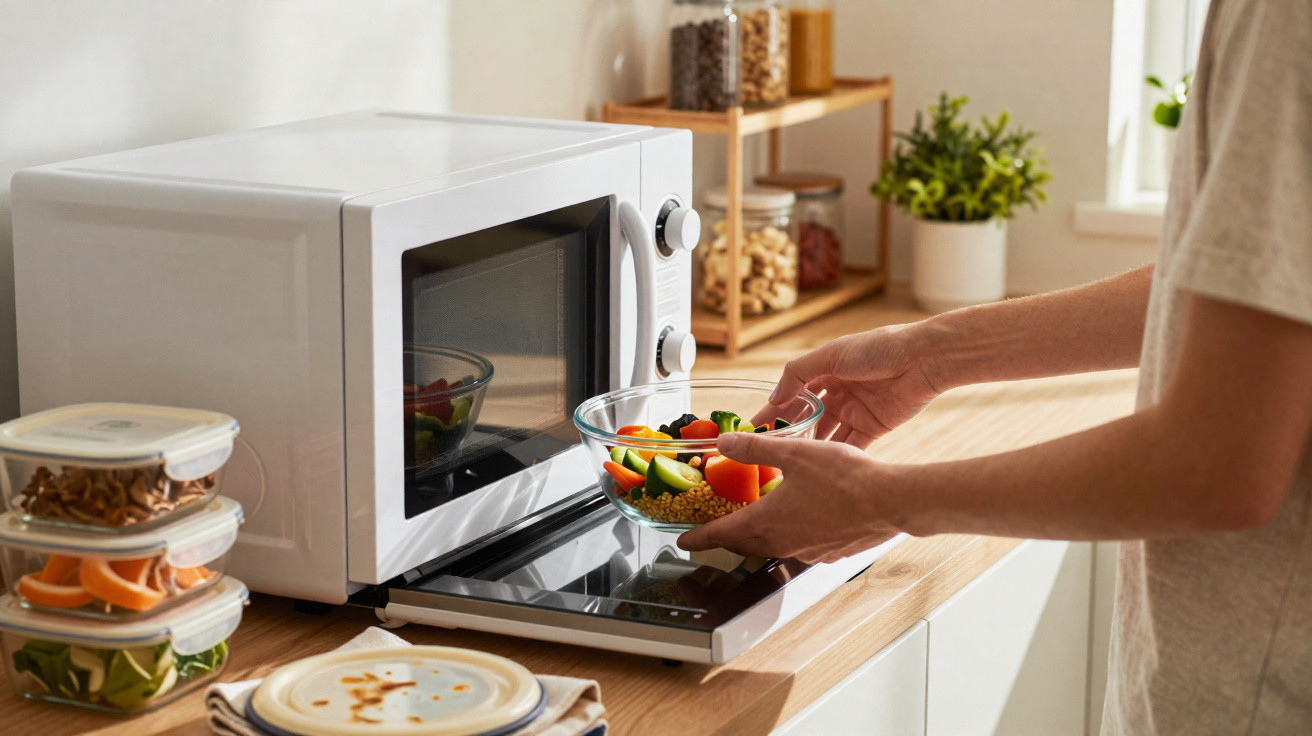
Take a microwave-safe glass bowl and pour in 1 cup of water with 2 tablespoons of white vinegar. Add a wooden stir stick or bamboo skewer to provide a surface where bubbles can form. Heat on high for 3 to 5 minutes, until the window steams up. Leave it for 2 minutes before opening the door; this resting period is when the process really works. Wipe the interior using a soft cloth or paper towel. Wash the turntable in the sink, clean the roller ring and make one final pass around the door seal. That is all there is to it.
In reality, hardly anyone does this daily. Clean it weekly if you use the microwave regularly, or tackle spills immediately while splatter is still fresh and easier to remove. Choose distilled white vinegar rather than apple cider vinegar, which may leave colour and a slight sweet smell. For persistent odours, such as bacon or burnt popcorn, repeat the process once or leave a small bowl of bicarbonate of soda inside overnight with the door shut. Never combine bleach and vinegar, as this creates a dangerous gas. Keep the method straightforward and safe.
If stubborn build-up survives the first wipe, bring in a second method. Put a little bicarbonate of soda onto a damp cloth and gently work only on the worst areas. Wipe it away, then use a quick vinegar-steam cycle to clear any remaining residue. The aim is to make cleaning easier, not turn it into more work.
“Vinegar steam doesn’t just clean-it convinces yesterday’s mess to let go,” a home economist told me. “Heat is the negotiator. Vinegar is the closer.”
- Ratio that works: 1 cup water + 2 tbsp white vinegar
- Ideal timing: 3–5 minutes of heating, 2 minutes of resting
- Safety reminder: always use a microwave-safe bowl and a wooden stir stick
- Final step: wipe the ceiling first, followed by the walls and then the door
- Avoid: bleach, mixing it with ammonia, and metal bowls
Beyond cleaning: a small habit that changes your kitchen
A clean microwave alters the feel of the whole room. Food seems a little fresher when yesterday’s odours are not intruding on the steam from your leftovers. Mornings smell of coffee again rather than last night’s garlic prawns. It is a small victory with a wider effect, and it costs pennies each time instead of a bottle of unidentified foam bearing a warning label.
This approach is also kind to the appliance materials. The enamel interior and glass turntable remain free from scratches because you are wiping away softened splashes instead of scraping at baked-on marks. The rubber door gasket lasts longer without aggressive solvents. Stainless-steel exteriors can benefit too: dampen a cloth with a little diluted vinegar, wipe once along the grain, then dry with a towel for a subtle shine. No rainbow streaks and no sticky polish residue.
There is also the benefit of time. A vinegar steam clean takes a reliably short amount of it. It can fit between a Zoom call and reheating lunch. Because it is easy and forgiving, it is also simple to repeat. That is how routines become habits. You begin to view the microwave less as a cleaning task and more as a two-minute reset button. A small reset can shift the whole day.
Once cleaning stops feeling mysterious, your kitchen feels like yours again. Vinegar is not a specialist product; it is the bottle already sitting behind the olive oil. It does not shout or sting. It simply does its work and disappears without a trace. For renters sharing a microwave, it avoids disputes over who used which spray last. For households with children, it can become a bedtime clean-up ritual with an obvious result. The bowl steams, the door opens and the mess gives way. Simple.
One warning is worth repeating: steam is powerful. Use a wooden stir stick to lower the risk of superheating, open the door carefully and lift the bowl with an oven glove. There is no need for bravado. Your hands will appreciate it.
If you are concerned that the vinegar smell might remain, it will disappear quickly. Open a window for a minute or let the extractor fan run. Your microwave will smell of nothing at all, which is close to perfection for an appliance.
A small ritual with worthwhile returns
A splash of vinegar and a few minutes of steam can transform a grubby appliance into a calm, neutral space where food tastes more like it should. Rather than a chore, it is a reset that pays off each time you press “Start”. The reward is not only clean surfaces, but a more relaxed kitchen routine, fewer sprays beneath the sink and the quiet confidence of solving a problem quickly.
This is the sort of tip you share with a neighbour or a friend balancing dinner with deadlines. It is the kind of advice your future self will value after a late-night pasta explosion. Pass it on, adapt it and make it your own. Steam does the difficult work. Vinegar quietly persuades the mess to release. Everything else is one simple wipe.
| Key point | Detail | Benefit for the reader |
|---|---|---|
| Vinegar + steam combination | 1 cup water, 2 tbsp white vinegar, 3–5 minutes | A quick, dependable clean without harsh chemicals |
| Safety and materials | Microwave-safe glass, wooden stir stick, gentle on seals and enamel | Helps protect the appliance and prevent accidents |
| Odour neutralisation | Warm acetic-acid vapour breaks down odour compounds | Food tastes and smells as it should |









Comments
No comments yet. Be the first to comment!
Leave a Comment