
By 9.17 pm, the day had properly unravelled. My phone kept lighting up with emails I had not finished, the living room resembled the aftermath of a small hurricane indoors, and dinner had drifted from “too late” into “may as well call it breakfast”. I was not hungry in an enjoyable way; it was the empty, exhausted sort of hunger that makes you reconsider every decision you have made.
So I did the only sensible thing: opened the fridge, passed over the kale and reached for the butter.
What followed was not a Pinterest-level feast. It was basic, a little awkward and marginally too salty. Yet with the first mouthful, I felt something in my chest begin to loosen.
A late-night comfort recipe should not have felt so grounding. But it did.
The quiet power of a late-night comfort recipe
There is an unusual stillness in the kitchen once everyone else seems to have moved on to the next day. The lighting feels gentler, the road outside is quieter, and time expands just enough to let you breathe. That was when I broke two eggs into a frying pan, put a slice of bread in the toaster and decided it absolutely qualified as dinner.
There was nothing elaborate about the recipe: eggs, toast, a little cheese grated directly into the pan and a handful of weary cherry tomatoes. It was the sort of meal you make when you have stopped trying to bargain with the day. Somewhere between the butter sizzling and the scent of toasted bread, my mind slowed from frantic scrolling to something more human.
We have all known that moment when the clock insists, “you should just go to bed”, while your body quietly responds, “I need something warm first.” A study by Cornell University found that eating late at night is often emotional rather than physical, driven more by comfort than calories. You recognise it when you are barefoot on cold floor tiles, searching the fridge in old joggers-not for nutrition, but for relief.
That evening, I did not want choice. I wanted something familiar. The first bite of buttered toast, lightly soaked in runny yolk, tasted like every kitchen where I had felt safe: my childhood home, a friend’s student flat, and the tiny rental without a dining table where we ate from boxes for two months.
There is a reason comfort recipes land differently after a difficult day. By night-time, your capacity for making decisions is depleted. Work, people, screens and traffic have used up your mental energy. A straightforward, familiar dish takes away the need to decide. It gives you instructions: warm the pan, crack the eggs, toast the bread, sit down.
That ritual is soothing on its own. Each action has a clear start and finish: chop, stir, serve. When life feels fragmented and without boundaries, following a recipe can feel like finding the outline of something solid again. It gently tells you, “Do this one small thing. Then the next.”
The grounding recipe ritual: how I actually made it
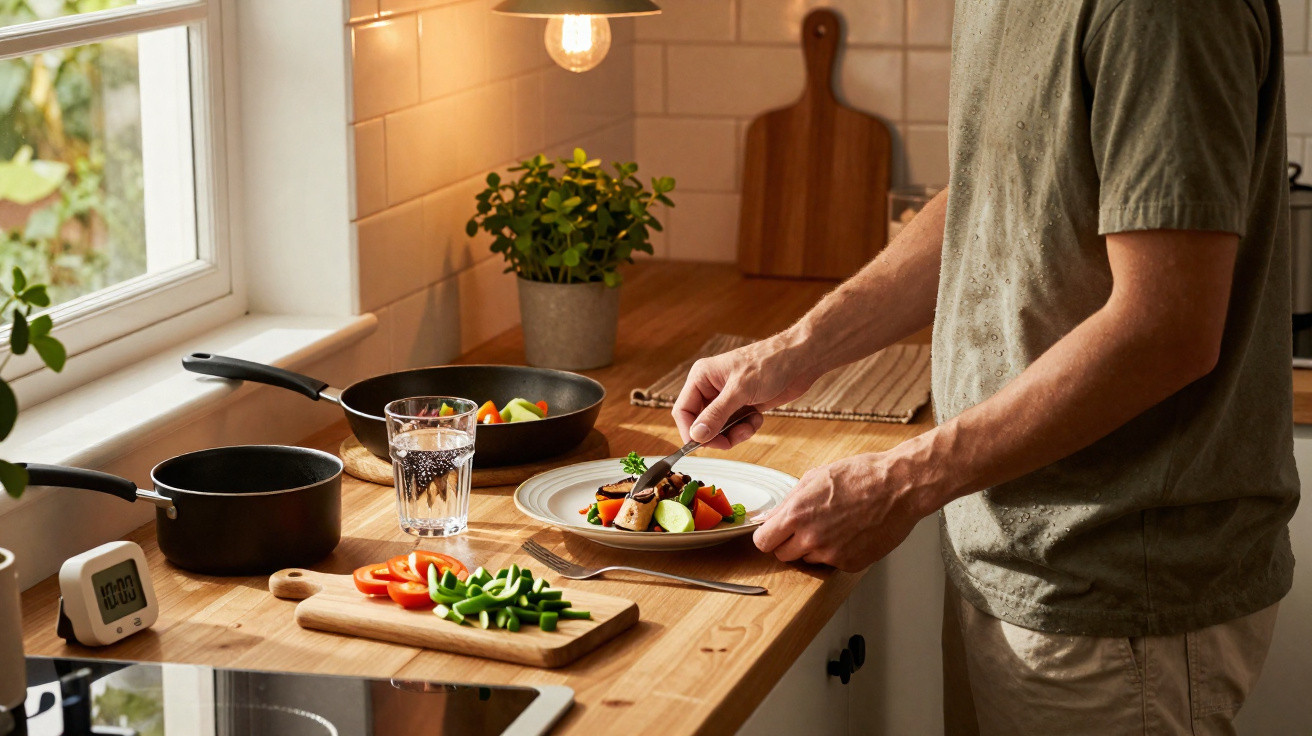
This is what I did in real time, without any aesthetic filter. I took a small frying pan, set it over a low heat and added a thumb-sized piece of butter. As it melted, I put a slice of sourdough in the toaster and cut the slightly wrinkled cherry tomatoes in half. I skipped the chopping board, using only a plate and a small knife because the sink was already full.
When the butter started to foam, I added the tomatoes with a pinch of salt. I waited for their skins to blister and for their smell to turn sweet rather than sharp. Next, I cracked two eggs into the pan, pushed the tomatoes to one side and let the whites set gently as I grated cheese over everything. When the toast popped up, I spread it with more butter, transferred the lot to a plate and sat at the table for the first time that day.
Here is what we do not always want to acknowledge: many of us eat dinner standing up, looking at our phones or half-propped against the kitchen counter. Honestly, no one manages this every day with linen napkins and jazz playing in the background. Most evenings are untidy, improvised and a little hurried.
For me, the change was not in the recipe but in the mindset. I did not calculate grams of protein, criticise myself for eating late or class it as “good” or “bad”. I simply described it for what it was: warm, salty and comforting. The usual mistake is making comfort food into yet another performance-arranging it perfectly, taking photographs or measuring it against something online. The grounding comes from allowing it to be enough as it is.
At one point, with egg yolk on my wrist, I thought, This is exactly as imperfect as I feel, and that’s why it works.
“Comfort food isn’t about culinary technique,” a therapist friend once told me. “It’s about repetition. It’s food that reminds your nervous system you’ve survived days like this before.”
In my mind, I placed those late-night eggs and toast in a small toolbox marked “things that reliably bring me back to earth”. It now sits alongside hot showers, unhurried walks and messaging one trusted friend.
- Keep it simple: use no more than 5–7 ingredients, preferably items already in your kitchen.
- Use all your senses: pay attention to the sizzle, the aroma and the weight of the plate in your hands.
- Eat sitting down, even when the table is covered in post and keys.
- Put your phone in another room for the first five bites.
- Make the same recipe on difficult days so your body learns the routine.
Why this small late-night comfort recipe ritual lasts beyond the meal
What caught me off guard was not the flavour but what came afterwards. Once I had eaten, the kitchen remained slightly chaotic, my inbox was still overflowing and nothing dramatic had shifted. Even so, my body felt pleasantly more weighted, as though somebody had quietly lowered the volume inside me.
A grounding meal cannot fix your problems. It can make them small enough for your nervous system to carry. That late-night recipe became a gentle landing place between “overstimulated chaos” and “finally lying down”. Since then, I have made the same uncomplicated dish on other long days, and it always feels like returning to a small private marker: oh right, I’m here, in this body, in this kitchen, still moving.
| Key point | Detail | Value for the reader |
|---|---|---|
| Simple recipes work best | Few ingredients, little effort, familiar flavours | Eases decision fatigue and provides fast comfort |
| Ritual matters more than perfection | Repeat the same steps, eat seated and pause briefly | Builds a dependable feeling of calm and safety |
| Timing can be flexible | Even a late, imperfect meal can feel nourishing | Removes guilt around “proper” dinner times and rules |
FAQ:
- Question 1 Is it “bad” to eat a comfort recipe late at night?
- Question 2 What if I don’t know what my comfort recipe is yet?
- Question 3 Can a grounding meal still be healthy?
- Question 4 How often can I rely on a comfort recipe like this?
- Question 5 What if I feel guilty enjoying food when my day was unproductive?















Comments
No comments yet. Be the first to comment!
Leave a Comment