An everyday storage mistake can give Salmonella an easy route.
Closing the fridge door usually feels reassuring. Cold temperatures must be hygienic, surely? Yet disease-causing germs such as Salmonella and certain E. coli bacteria can survive refrigeration without difficulty. One common way of arranging food in the fridge, in particular, allows these pathogens to spread – often unnoticed, directly onto food that will later be served without cooking.
Why a fridge is not a safe place from germs
Ideally, a modern fridge should maintain a temperature of between 0 and 4°C. This considerably slows the growth of many bacteria, but it does not kill them. Salmonella can still survive at fridge temperatures and cause illness later.
Health authorities advise setting the coldest area of the appliance to around 4°C and, ideally, checking this with a fridge thermometer. Even then, the following remains true: until food has been heated thoroughly or thrown away, any possible bacterial contamination remains a risk.
A fridge only provides protection when the temperature and organisation are right – incorrect storage turns the appliance into an ideal transfer point for germs.
This is where the issue starts. Many households arrange food according to available space, convenience or appearance rather than hygiene rules. The result is known as cross-contamination: germs pass from one item to another, usually through leaking liquid or direct contact.
The crucial mistake: storing raw meat in the wrong place
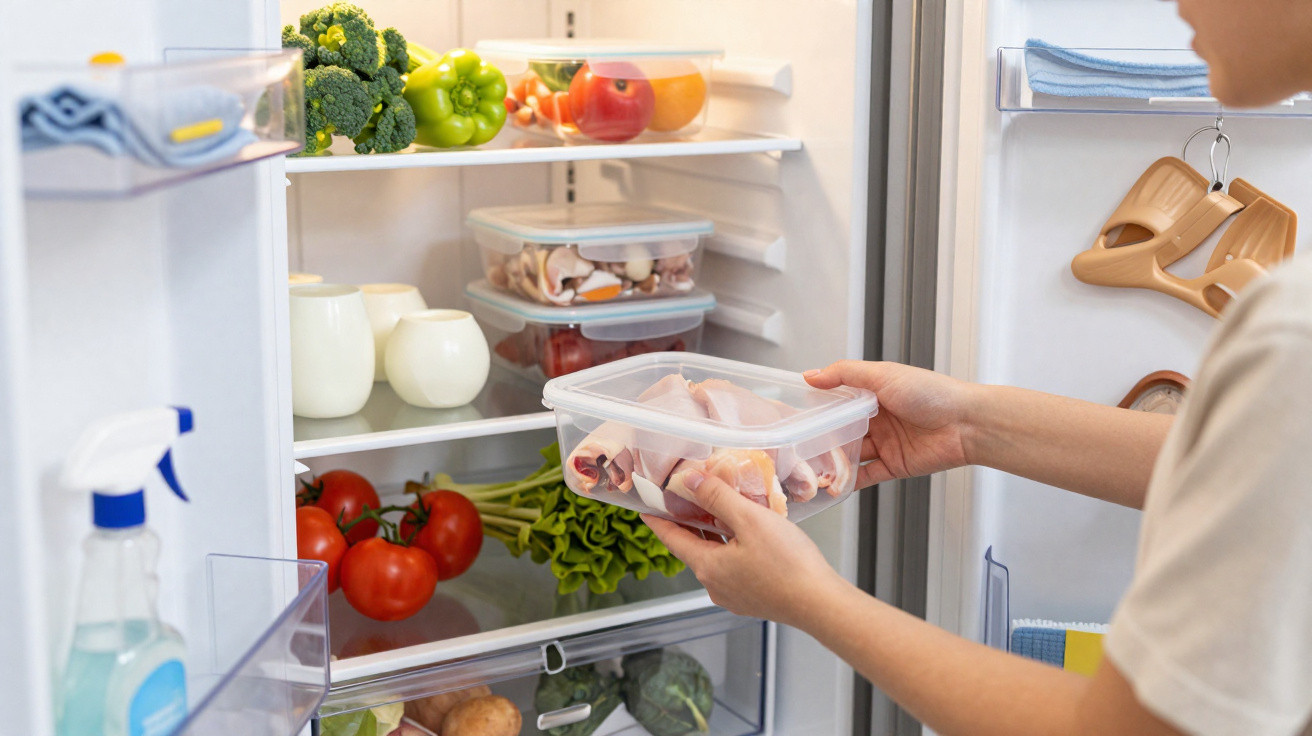
Raw meat, raw poultry, fish and seafood require particularly careful handling. Experts recommend always keeping these foods on the lowest, coldest shelf, in securely sealed containers or trays and without unnecessary outer packaging. In practice, this is often not what happens.
In many kitchens, a pack of chicken breast or minced meat ends up somewhere in the middle of the fridge, sometimes even above a plate of salad or beside cheese that will later be eaten cold. In some cases, vegetables and meat are even kept in the same drawer.
The risk lies in the details: packaging can leak, allowing small amounts of meat juice to escape unnoticed. Just a few drops can contaminate entirely different foods, including:
- leafy salad in an open bag
- pre-cut fruit or vegetables
- cooked leftovers that will only be reheated or even eaten cold
- sliced meats, cheese platters and antipasti
Anyone who later eats that salad or those leftovers without reheating them thoroughly consumes the germs directly. Poultry deserves particular attention because it can often carry Salmonella. Even if the chicken breast is properly cooked later, liquid that leaked earlier can remain on other foods.
How excess packaging brings additional germs into the fridge
Many meat and fish products are now sold in film-covered trays, often with cardboard sleeves or thick plastic outer wrapping as well. These outer layers may look hygienic, but they are not automatically clean.
When shoppers carry unopened packs around the supermarket, they generally place them in a trolley or basket, sometimes on less-than-clean surfaces at the checkout or on the kitchen worktop at home. Bacteria may already collect there. If the pack then goes straight into the fridge without its outer wrapping being removed, the cardboard and film can transfer any germs onto glass shelves or into drawers.
Raw food belongs in sealed containers – outer packaging should not remain in the fridge but go in the bin.
The fridge’s interior surfaces can also become a problem over time if they are not wiped regularly. Traces of dripping meat juice, yoghurt spills and vegetable remnants create an ideal breeding ground.
Three simple rules for making the fridge much safer
A few clear principles can noticeably reduce the risk of Salmonella in the fridge. The following rules are useful in day-to-day life:
1. Create clear zones in the fridge
- Bottom shelf (the coldest zone): raw meat, poultry, fish and seafood – always in securely sealed boxes or trays, with no cardboard outer sleeve.
- Middle shelves: cooked meals, leftovers, bakes, desserts, yoghurt and cheese – always covered and kept in the fridge for no more than two to three days.
- Vegetable drawer: unwashed or washed fruit and vegetables that are usually eaten raw – kept separate and away from meat or fish.
- Door shelves: drinks, sauces, mustard, ketchup, jam and eggs – products that are better able to tolerate the brief temperature fluctuations at the door.
2. Actively prevent cross-contamination
A short routine helps prevent meat juice from spreading unnoticed:
- Always transfer raw meat from the shopping bag straight into an airtight container.
- Do not place salad bowls or fruit bowls underneath raw meat.
- Store food that will be eaten uncooked as far away as possible from raw animal products.
3. Introduce a fridge-cleaning routine
A quick deep clean once a month is worthwhile:
- empty each shelf one after another
- clean glass shelves and compartments with warm water and a little washing-up liquid or a splash of vinegar
- remove visible drips and spills immediately rather than waiting “until there is time”
What a Salmonella infection can cause
Salmonella usually causes an acute gastrointestinal illness. Typical symptoms include watery diarrhoea, abdominal cramps, nausea, sometimes vomiting and fever. In many cases, symptoms ease after a few days, but they can place considerable strain on the body.
Children, older people, pregnant women and people with weakened immune systems are particularly at risk. They may experience more severe illness, sometimes requiring hospital treatment. Correct fridge storage is especially important for these groups.
Clean, well-organised refrigeration protects above all those least able to defend themselves: children, older people and people with pre-existing conditions.
Practical everyday tips for a safer fridge
Many small actions can reduce the everyday risk without making cooking more complicated:
- label perishable foods with the date and place them at the front of the shelf
- put leftovers into shallow glass or plastic containers so they cool more quickly and evenly
- regularly check whether condensation or suspicious marks have formed beneath trays and boxes
- when doing the weekly shop, consider in the shop what will need to go at the bottom of the fridge later and sort the bags accordingly
Once you have absorbed the principle, much of it becomes automatic: raw food at the bottom, ready-to-eat food above, fruit and vegetables separately, and the door reserved for products with a lower risk of contamination. That keeps the fridge a helpful tool for health rather than an everyday risk.






Comments
No comments yet. Be the first to comment!
Leave a Comment