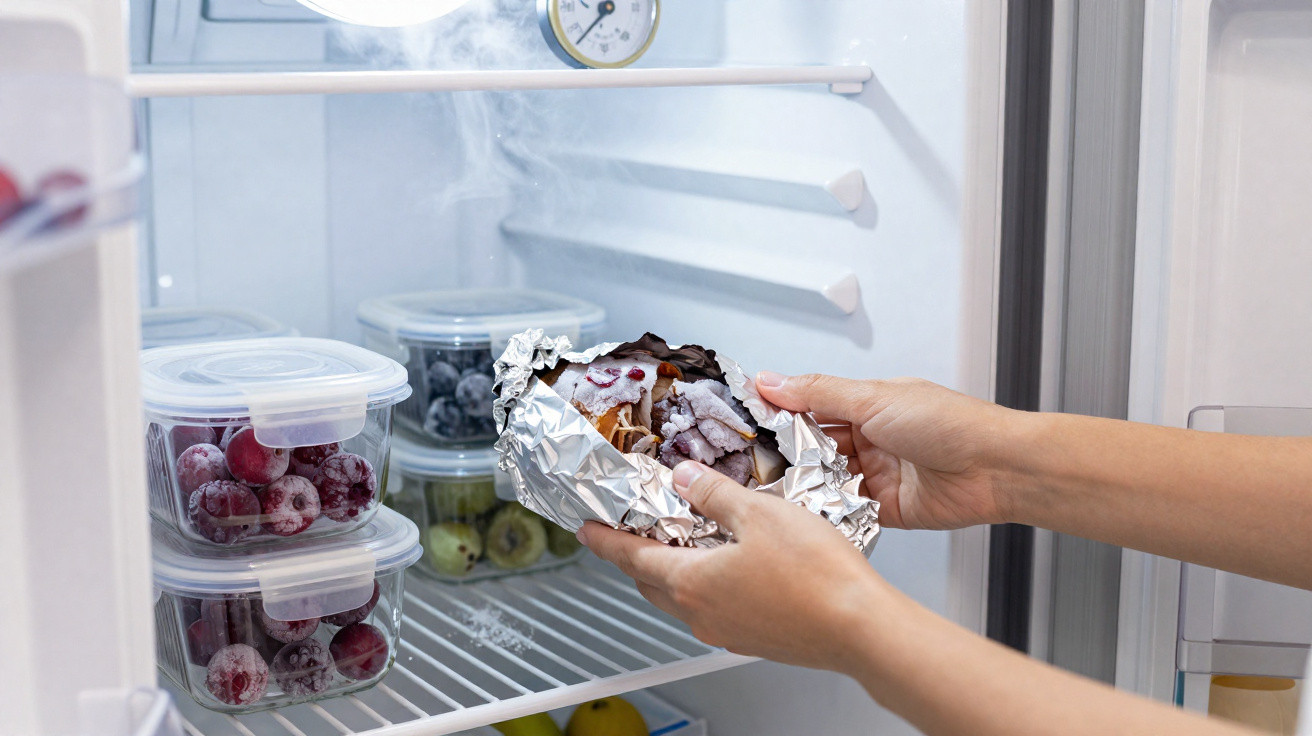
Freezing leftovers or bulk purchases saves both time and money. Yet this is where a common misconception appears: wrap food in anything at all and the job is done. A single tightly pressed layer of aluminium foil is especially popular, often applied as neatly as possible. The disappointment comes during defrosting – for very practical reasons.
Why aluminium foil alone is rarely a good choice for the freezer
At first glance, aluminium seems convenient: it is inexpensive, tears off quickly and moulds easily around food. Many people use it for cheese, quiche, lasagne, bread or cuts of meat. The parcel may look tidy, sometimes even more appealing than a partly filled freezer bag.
However, foil only appears more airtight than it really is. Pressing it around food creates tiny creases, tears and gaps, allowing air to circulate through these small openings. This air is exactly what causes food to lose a noticeable amount of quality.
“Aluminium foil on its own does not create a sealed barrier – air and moisture will always find a way through.”
As food freezes, water moves from its surface outwards and turns into ice crystals. This gradually dries the outer layer. Many people only spot the result after defrosting, when the surface looks paler and duller.
Common damage: ice crystals, dry edges and a soggy texture
Anyone who freezes food regularly will recognise these signs:
- pale, greyish or slightly white patches on meat or fish
- a dry, rough surface on bakes or bread
- a large amount of released liquid after defrosting
These are typical signs of freezer burn. The affected areas are not poisonous, but they can taste bland, dry and sometimes rather pasty. Lasagne becomes less creamy, meat turns softer and slightly mushy, while bread crumbles more and its crust quickly goes soft.
For dishes containing plenty of sauce, water can separate from fat and other ingredients. Once defrosted, the food may look patchy, while the sauce seems thinner and less rich. Seasoning again or adding a little extra liquid can improve many dishes, but they will usually not return to their original condition.
When everything in the freezer smells of everything else
Drying out is not the only major issue: odours matter too. A freezer may contain bread, meat, fish, cake, pizza, vegetables and perhaps ice cubes, all stored close together.
If packaging does not seal properly, aromas transfer between foods. A plain sponge cake can suddenly develop a faint fishy aftertaste. A bake may absorb garlic or onion smells from food stored alongside it.
“Leaking packaging turns the freezer into an odour buffet – and aluminium foil alone barely prevents this exchange.”
The transfer also works the other way round. Bread readily absorbs moisture and smells. Anyone who wraps an open loaf in foil and stores it beside frozen diced onions will notice the result after defrosting.
Problematic contact: aluminium foil and highly seasoned or acidic foods
Foods containing a lot of acid or salt require particular care. These include:
- tomato sauces and tomato-based bakes
- dishes made with lemon juice or lime
- marinades, pickled foods and salads containing vinegar
- salty dishes, ham and cured meat
- heavily seasoned stews and chilli
These foods are often moist or even liquid where they touch the surface. Moisture, acid or salt in combination with aluminium is not ideal. Over time, the material can react, which is not beneficial for either flavour or food quality.
“Anything strongly acidic, tomato-based, heavily seasoned or very salty should not come into direct contact with aluminium foil.”
Freezing such dishes wrapped only in aluminium can lead to unwanted reactions and significantly poorer quality after defrosting.
The simple solution: a double barrier rather than a quick fix
The most effective approach to better freezing is “double wrapping”. It takes little effort but has a substantial effect:
- First layer close to the food: place cling film or baking parchment directly around the food, avoiding trapped air wherever possible.
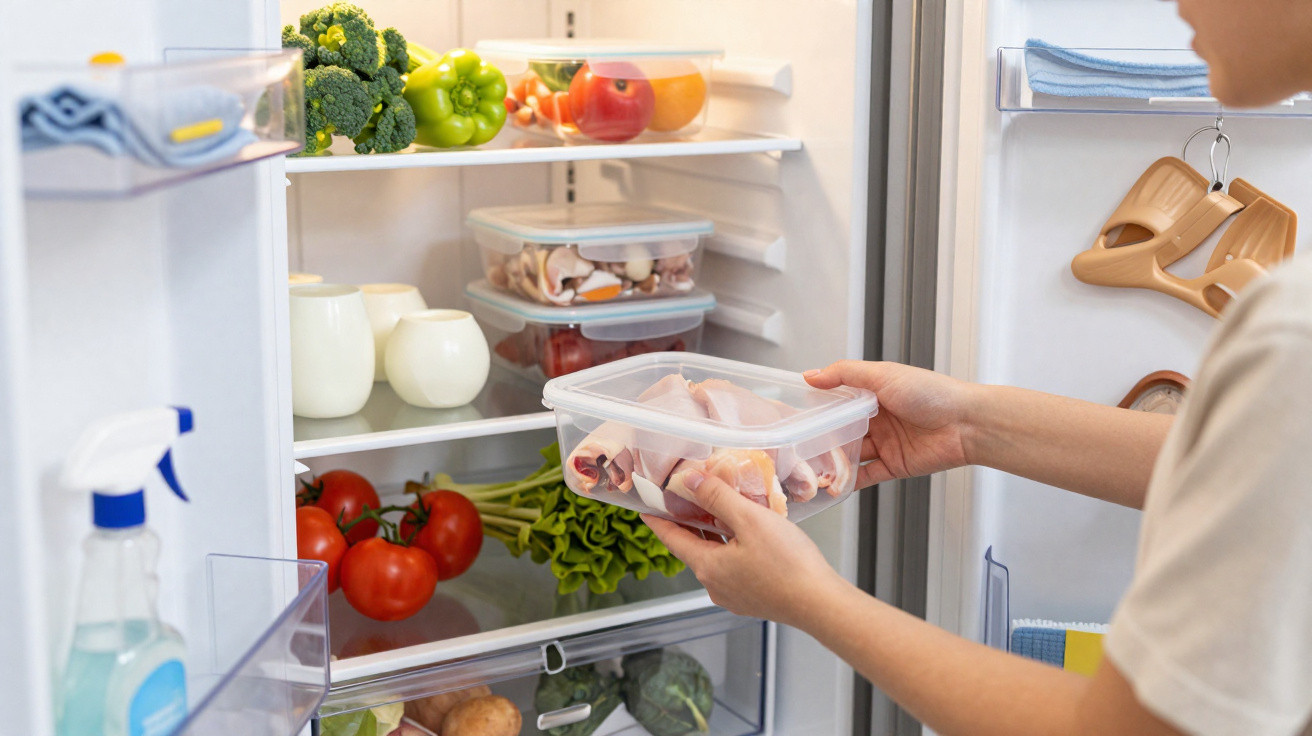
- Second airtight layer: add a freezer bag or a well-sealed container, pressing out as much air as possible.
If you want to use aluminium foil, it can form the outer layer to keep a parcel stable – but it should not be the only protection or sit directly against the food.
Practical everyday options include:
- sturdy freezer containers with lids for soups, stews and sauces
- thicker freezer bags for meat, fish and bread
- vacuum bags, if you have a machine, for high-quality cuts of meat or fish fillets
- baking parchment as a separating layer where food should not stick or aluminium should not touch it directly
How to package different foods correctly
| Food | Best packaging |
|---|---|
| Tomato dishes, stews | Cool before placing in a container or bag; no direct contact with aluminium foil |
| Meat and fish | Cling film or baking parchment directly around the food, then a freezer bag with as little air as possible |
| Bread and bread rolls | Slice or divide into portions, then seal securely in a freezer bag |
| Cakes and pastries | Freeze individual pieces briefly first, then place in a bag or container |
| Cheese | Wrap in film or paper, then put in a container to limit odours |
Five small freezer rules with a big effect
A few straightforward habits will keep frozen food appetising for much longer:
- Portion food: divide leftovers into smaller quantities so that nothing needs to be refrozen.
- Press out air: smooth freezer bags flat before sealing to leave as little air inside as possible.
- Freeze flat: freeze sauces or minced meat in thin, flat portions; this saves space and speeds up defrosting.
- Label everything: write down the name and date so food is not left stored for too long.
- Cool before freezing: allow hot food to reach room temperature first to avoid condensation and ice crystals.
“The quality after defrosting depends less on the appliance and almost entirely on packaging and preparation.”
Why good packaging preserves flavour
Freezer burn is not caused by freezing food “too cold”, but by drying surfaces and exposure to air. When air is consistently kept away, food retains its texture surprisingly well for a long time. Meat remains juicier, bread can taste almost fresh after brief reheating, and sauces need very little adjustment.
Anyone who changes their freezing habits will notice the difference by the next big leftovers day after a family gathering. Instead of disappointed looks around the table, there will again be food on the plate that resembles its original state – rather than tasting like a frozen emergency meal.
A sensible final check before freezing is therefore: can any air really still reach my food, or does it only look as though it cannot? Answering this honestly helps avoid many unpleasant surprises during defrosting.






Comments
No comments yet. Be the first to comment!
Leave a Comment