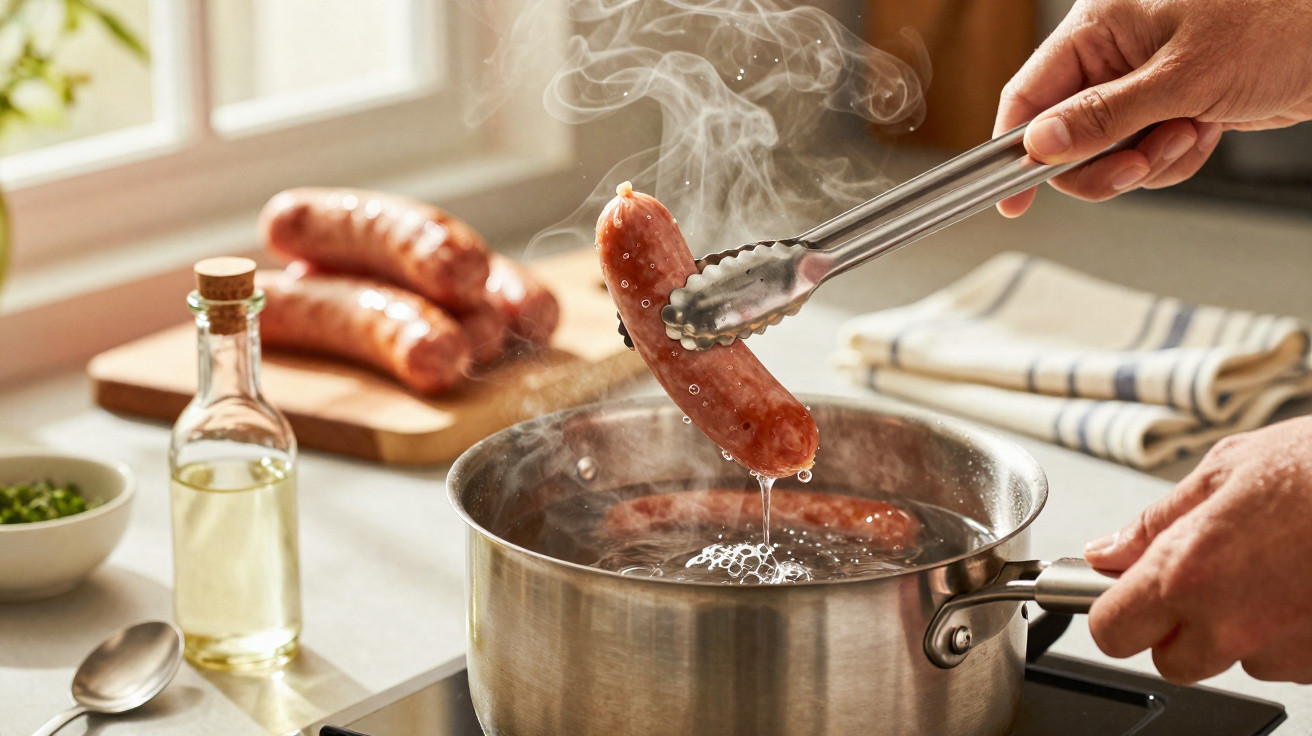
Plenty of home cooks have dealt with sausages that split, oily froth and a smell that fills the kitchen. Yet a small alteration to the cooking water – ordinary cupboard vinegar – can often make a surprising difference.
Why sausages burst so easily in hot water
As sausages enter very hot water, their contents begin expanding rapidly. Their juices and fat warm up, create steam and press against the casing.
With intense heat, that pressure builds more quickly than the casing is able to stretch. The usual outcome is a torn skin, with the tasty filling escaping into the water rather than remaining inside the sausage.
The type of casing is also important. Many standard sausages are made with:
- natural casings from animal intestines, which contain plenty of collagen
- artificial casings commonly made from collagen or cellulose
Collagen performs well at moderate temperatures, but becomes weaker as the water approaches boiling, particularly at around 90–95°C (194–203°F). When the casing starts to lose its structure, even a minor rise in internal pressure may make it split.
Gentle heat keeps the casing supple and the filling stable, sharply reducing the risk of a blowout.
That is why a gentle simmer is more effective than a vigorous boil. Water just below boiling point distributes heat more evenly. The sausage interior heats without forming abrupt pockets of steam, while the outer casing has time to adjust.
How different heating methods affect sausages
Minor adjustments in cooking technique can make a noticeable difference to the finished sausages:
- Hard boiling: vigorous bubbling, fast expansion, greater internal pressure and more split casings
- Gentle simmering: fewer bubbles, consistent heat and smoother, intact casings
- Just-heated water for pre-cooked sausages: sufficient for warming them through, without aggressive bubbling
- Controlled temperature: less strain on the casing and more juices retained in the sausage
A large number of industrial sausages are pre-cooked already, so they simply need reheating to a safe serving temperature rather than forceful boiling. This is one major reason sausages split at home: they are overcooked instead of merely reheated.
What vinegar actually does in the pan
Basic kitchen vinegars, such as white wine vinegar and clear spirit vinegar, generally contain around 5% acetic acid and have a pH of roughly 2.5. Even one spoonful for each litre of water can noticeably alter the chemistry of the cooking liquid.
Effect on the sausage casing
Sausage casings consist largely of protein, including collagen, and proteins respond to pH levels. In mildly acidic water, proteins at the surface tighten and reorganise.
A touch of acidity gently firms the casing, helping it hold together instead of tearing under pressure.
This is not a reason to steep sausages in strong acid, which would make them tough and change their flavour. Instead, it is about a small, measured adjustment. At low levels, vinegar may stabilise the casing’s outer layer while the filling heats gradually in gentler water.
Effect on smell and kitchen air
The other benefit is noticeable by smell. Certain stronger cooking odours are caused by alkaline compounds known as amines. When highly concentrated, these can bring to mind fish, ammonia or “old fridge” smells.
Acid reacts with these compounds, converting them into salts that are less volatile. As a result, more of them remain in the water and fewer enter the air.
A splash of vinegar tames those sharper, lingering sausage smells and leaves the kitchen air milder.
The main benefits of vinegar in sausage water
- A lower chance of bursting because the casing surface is slightly more stable
- A smoother, more even texture rather than a rubbery skin
- Improved flavour balance, with a small amount of acidity cutting through fat and salt
- Fewer persistent odours, as fewer volatile compounds are released
How to use the vinegar trick correctly
The sequence matters more than many people realise. Timing, heat and acidity all work together.
| Step | What to do | Why it helps |
|---|---|---|
| 1 | Fill a pan with cold water | Provides even heating from the beginning |
| 2 | Add about 1 tbsp vinegar per litre | Lightly acidifies the water without making the sausage sour |
| 3 | Heat the water until it is hot but not vigorously boiling | Creates a calm, stable cooking environment |
| 4 | Add the sausages only when the water has reached this stage | Prevents them being shocked by rapidly shifting temperatures |
| 5 | Simmer gently for 5–8 minutes | Heats them through without harming the casing |
This method suits hot-dog sausages, fresh pork sausages, bratwurst, poultry sausages and many mixed-meat types. It is particularly useful when you want a smooth, appealing finish rather than an irregular, split surface.
The right temperature and time for juicy sausages
Most shop-bought sausages marked as pre-cooked need only be reheated to a safe internal temperature, rather than cooked again from raw. Food safety guidance commonly recommends an internal temperature of around 74°C (165°F) for this kind of product.
After the middle has reached that temperature range, maintaining a full boil adds little flavour and increases the likelihood of split casings and dry centres.
A calm pan, moderate heat and a dash of acid often give you plumper sausages with more of their juices locked in.
Keeping the water just below a rolling boil provides this gradual warming. Large, constant bubbles indicate that the heat is too high. Aim instead for the occasional small bubble and gentle movement in the water, rather than a continuous storm.
Common mistakes and how the vinegar method avoids them
From fridge to fury: temperature shock
A common mistake is placing fridge-cold sausages directly into fiercely boiling water. The casing contracts rapidly before the filling expands suddenly, making a tear very likely.
Beginning with cooler water and heating it gradually with the sausages in the pan, or warming the water only to a gentle simmer beforehand, gives them time to acclimatise. Vinegar provides an additional degree of protection by slightly reinforcing the casing surface.
Misjudging the vinegar quantity
Flavour is another concern. Excess vinegar will overwhelm the sausages and create a pickled taste. As a general guide, one tablespoon per litre of water usually remains unobtrusive.
If you are uncertain, use less at first. Next time, you can add a little more to the water if you notice no change in either texture or smell.
Extra tips for better sausage cooking at home
Combining simmering with other cooking methods
Many cooks prefer sausages that are browned and faintly crisp rather than pale. The vinegar trick is well suited to use as the first step before transferring them to a frying pan or grill.
- Simmer the sausages with vinegar as described until heated through
- Dry the sausages with kitchen paper to prevent fat from spitting
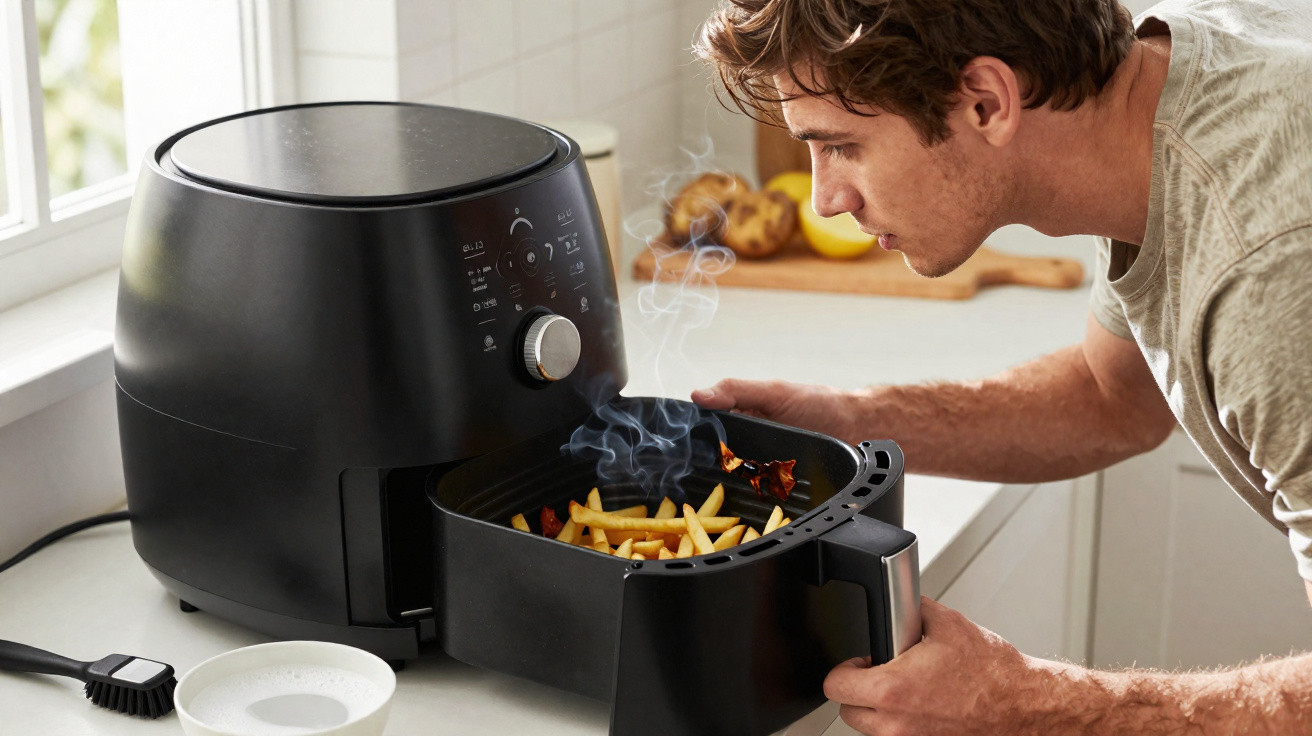
- Finish them in a hot frying pan, air fryer or beneath a grill for colour and light charring
This “gentle then hot” approach preserves an intact, juicy casing, while the final sear adds exterior flavour and texture.
Understanding key terms: collagen and pH
Collagen is the structural protein found in many natural casings. As it heats, it gradually becomes gelatine, giving a tender and pleasant texture in the mouth. However, if it is overcooked or subjected to very high temperatures, the structure can break down and lose its resilience, resulting in a tough or torn casing.
pH is a scale that describes whether a solution is acidic or alkaline. Vinegar moves the water towards the acidic end of the scale. This change affects how proteins behave on the sausage surface and how odorous compounds behave in the air above the pan.
Once you understand those two principles – collagen softening with heat and pH influencing proteins – the vinegar trick no longer seems like a superstition. It becomes an easy kitchen habit that simply makes sense.







Comments
No comments yet. Be the first to comment!
Leave a Comment