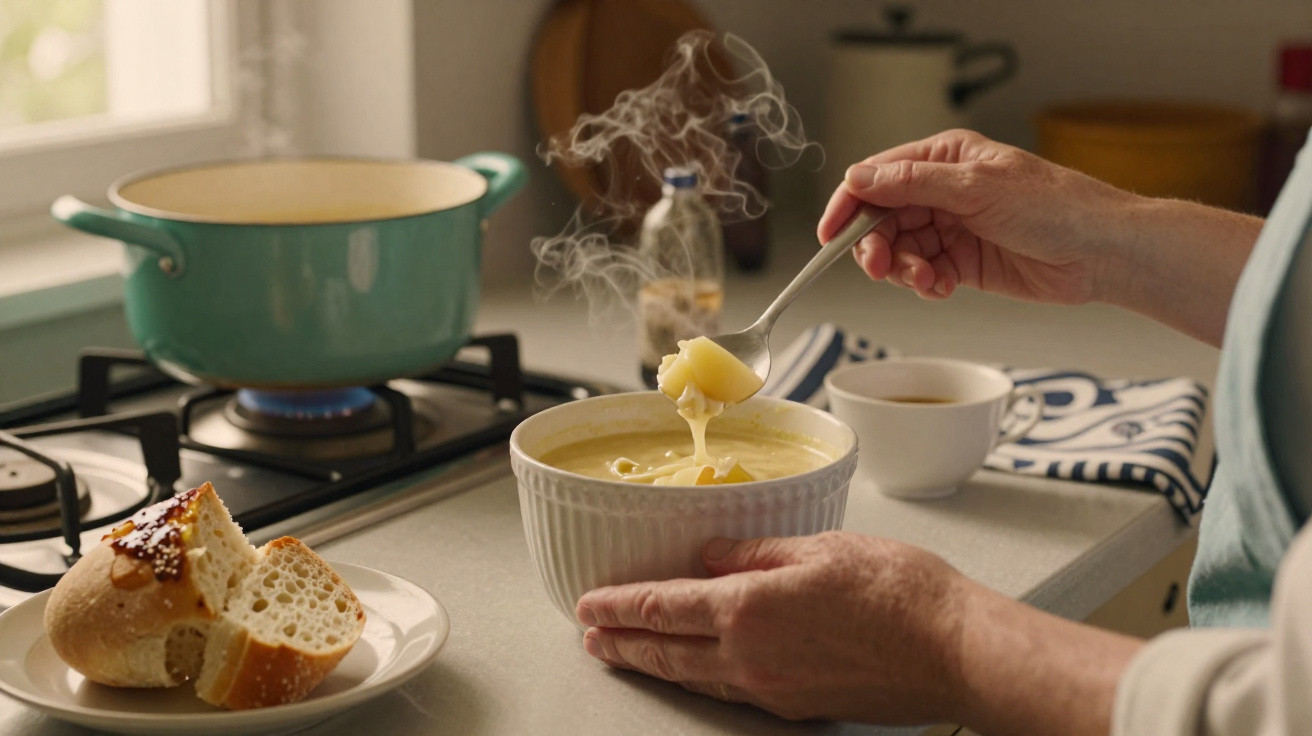
By the time I shut the front door behind me, the weight of the day is already sitting on my shoulders. Keys land on the worktop, my bag goes on a chair, and I turn my phone face down to silence its relentless notifications. The fridge’s low hum is the first gentle sound I notice. I slip off my shoes, head straight for the kitchen and open the cupboards as though they might offer a solution. There is pasta. There is cheese. There is a wrinkled onion well past its best. Then my mind says, “Oh. That.”
On evenings when the commute has dragged on, emails keep arriving and my social battery is completely flat, I do not want choice or novelty. I want my dependable comfort recipe: creamy, garlicky pasta made on the hob, tasting like an edible hug.
It is the meal that recognises my exhaustion before I do.
The understated strength of a go-to comfort recipe
There is a particular sort of tiredness that arrives at about 7.30 p.m., when the day has taken rather more than it has given. Your back aches from your chair, your thoughts flicker like a bargain neon sign, and making one more decision feels impossible. That is when a comfort recipe comes into its own.
Not an elaborate “dinner party” dish. It is the meal you can make half-asleep, with dim lighting and a podcast quietly playing nearby. Mine is a one-pan garlic parmesan pasta: inexpensive, speedy, creamy and generous with carbohydrates and comfort. Every part of it seems to say, You’re safe now. Sit down.
I can clearly remember when this pasta first became “the” recipe. Rain was blowing sideways, my workload was ridiculous, and my delayed train stopped outside the station while everyone checked the clock every thirty seconds. When I eventually arrived home, my clothes were wet and my mood was even worse.
I looked in the fridge and found very little: half a block of parmesan, butter, an opened carton of cream, three garlic cloves and a tired old lemon. I cooked whatever pasta was in the cupboard, softened the garlic in butter, then added cream, cheese, lemon, salt and pepper. Ten minutes later, I was bent over a bowl at the worktop, hair still damp and burning my tongue because I could not wait. That evening, I realised something: this is what I make after a long day.
There is a reason these default recipes can feel almost medicinal. After a day spent deciding things, your brain has had enough. A familiar dish does not present more questions; it settles them. Pasta or rice? Settled. Oven or hob? Settled. Exact quantities? You have made it so often that your hands already know what to do.
Comfort food also tends to deliver the ideal trio: warmth, softness and richness. It makes you slow down. It is the opposite of hurrying, standing, scrolling and replying. It is repetition, and repetition can be unexpectedly restorative. Realistically, no one makes this every day. Yet on the evenings when you do, one bowl can change the entire mood of the night.
How I make garlic parmesan pasta when my brain is frazzled
When the day has thoroughly worn me down, I do not cook like a food stylist. I cook like a person caught between the fridge light and a minor meltdown. The process is untidy, but it gets the job done.
I take a medium saucepan, fill it with well-salted water and start the pasta, usually choosing short shapes that hold on to the sauce. As it cooks, I crush the garlic with the flat of a knife rather than carefully chopping it. I melt a decent knob of butter in a frying pan, add the garlic and cook it only until it smells fragrant. Then I add a splash of cream, a ladleful of starchy pasta water and a handful of grated parmesan. I stir and watch the sauce thicken. Once the pasta is al dente, it goes straight into the pan. Toss, taste, add salt and pepper, then squeeze in lemon if I have one. Finished.
On social media, comfort cooking often appears to be a film-like ritual: immaculate worktops, flawless ingredients and someone who never forgets anything and always keeps fresh herbs in a glass jar. Real life is more like, “Where on earth is the colander?” and “Did I already salt this?”
So I embrace the shortcuts. When I am shattered, I use pre-grated cheese. I tip frozen peas into the pasta water for the final two minutes, simply so that I can say I ate something green. I have burnt the garlic countless times after checking a message, stirring too late and needing to begin again. That is fine. A comfort recipe is not about getting everything perfect. It is about being able to save the meal, even while you are partly distracted and running on empty.
Sometimes, standing over the steam of that pan, I think: “This isn’t just dinner. This is me gently putting the day to bed.”
- Keep three non-negotiables at home
Butter, some form of pasta, and a hard cheese or another salty ingredient. With those to hand, everything else can change. - Use one pan fewer than you think you need
If you are truly exhausted, cook the pasta and make the sauce in the same saucepan. Less washing up means less mental effort. - Set a lower bar for ‘healthy’ on difficult days
A handful of frozen vegetables or a side salad is already a success. Comfort is the aim, not nutritional heroism. - Season right at the end
Tired taste buds cannot always be trusted. Taste after sitting down for a moment: a pinch of salt or squeeze of lemon can bring the whole dish to life. - Build a small ritual around the meal
It could be your favourite chipped bowl, softer lighting or eating at the table rather than on the sofa. Little signals tell your brain: we are off duty now.
Why a comfort recipe matters more than we acknowledge
There is something quietly radical about having one meal reserved for the most exhausted version of yourself. It is not glamorous, and nobody is pleading for its recipe at a party. Still, it is there for you on the days that leave you frayed around the edges. Some may call it lazy; I call it backup.
We have all known that moment: standing hungry in front of the fridge, strangely close to tears, scrolling through food delivery apps we do not truly want to use. That is precisely when a comfort recipe proves its worth. It removes the drama. You know exactly what to do, and your hands begin before your doubts have time to stop you.
What is especially interesting is how individual these dishes are. Mine is garlicky pasta. For somebody else, it may be tomato soup over day-old rice. For another person, toasted bread with fried eggs and far too much black pepper. None would win a prize on a cooking programme, which is exactly their appeal. They are shaped by your cupboard, culture, budget and childhood.
These meals do not require you to perform. They make room for the version of you who eats over the sink, dips the spoon in twice, ignores the “serves 4” instruction and carries on until the tightness in your chest eases a little.
When I consider my comfort recipe, I think about where it may go next, too. Perhaps one day a friend will arrive exhausted after their own difficult day, and I will give them an overly large bowl of this same pasta. Or perhaps I will message someone the loose method, with no quantities and just vibes: “Butter, garlic, cream, cheese, lots of stirring.” Recipes like these spread by word of mouth, from one kitchen to another.
They are not intended to impress strangers online. They are about getting through the week with a little kindness. Perhaps that is the quiet truth in the steam over the pan: you do not have to earn comfort. You only need to boil the water, stir the sauce and spend a while sitting with yourself.
| Key point | Detail | Value for the reader |
|---|---|---|
| Have one “default” recipe | A straightforward dish you know by heart, such as creamy garlic pasta | Reduces decision fatigue on hard days and provides immediate comfort |
| Reduce the pressure around technique | Rely on shortcuts, adaptable ingredients and forgiving methods | Makes it easier to cook at home rather than give up and order a takeaway |
| Create a small ritual around it | A favourite bowl, gentler lighting and a few peaceful minutes to eat | Changes a basic meal into a small act of self-care and reset |






Comments
No comments yet. Be the first to comment!
Leave a Comment