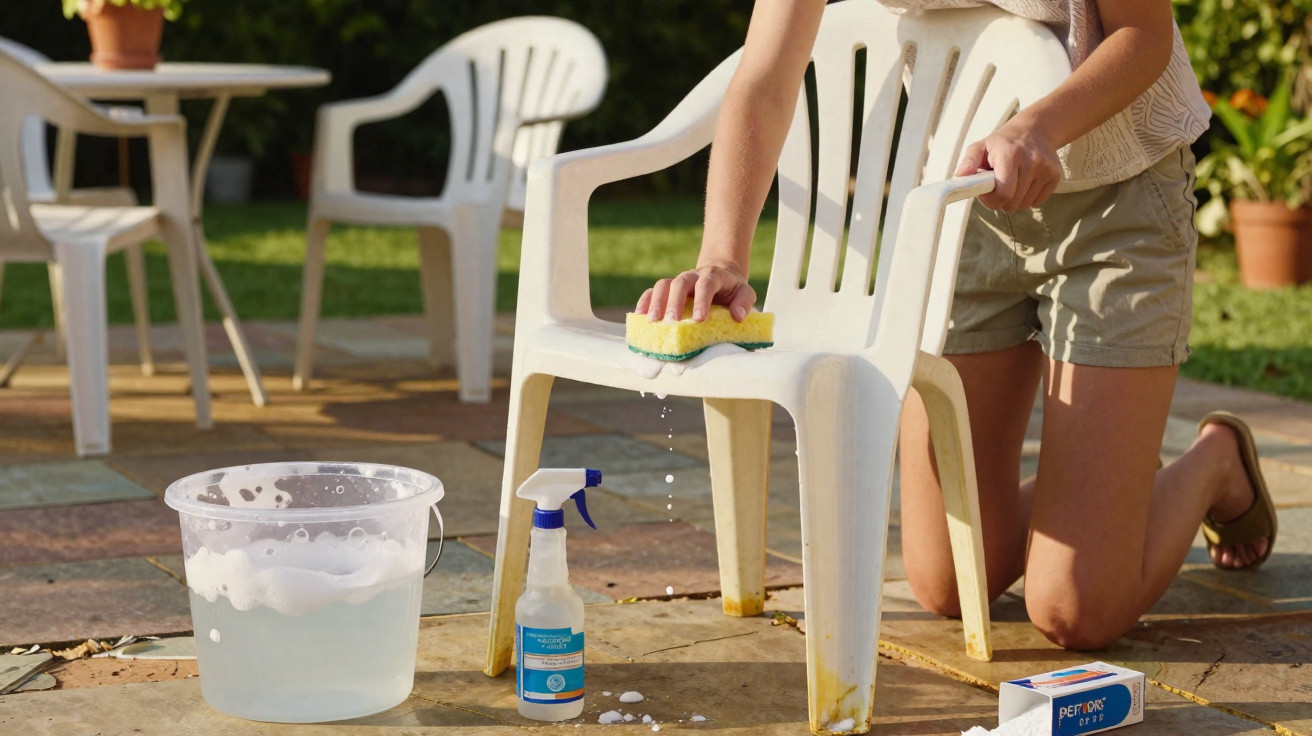
Every spring brings the same sight: the table looks dull, white chairs appear grey and blotchy, and all the plastic seems tired. Many people immediately consider buying replacements. Yet, with a little time, a bucket of water and a smart household remedy, much of this deterioration can be reversed remarkably well.
Why plastic garden furniture becomes dull and yellow so quickly
Plastic is considered easy to maintain. At first, it often looks brilliantly white or attractively coloured, but within a few years it can turn grey. There are several reasons for this.
- Sun: UV radiation attacks the surface, making it brittle and porous.
- Rain and moisture: These create a grey film that traps dirt.
- Dust and pollen: They settle in the tiny pores and make the surface look grimy.
- Cheap plastic: Furniture without colour running through the material and without UV protection fades especially quickly.
White chairs made from PVC or similar materials can easily develop a yellow tinge. Coloured versions are more likely to look faded and uneven. The good news is that, as long as the material remains stable and has no cracks, thorough cleaning can restore a great deal.
Other materials come with problems of their own: metal can rust without a good coating, wood turns grey and rough and needs oil and sandpaper, while natural rattan does not cope well with constant rain. By comparison, plastic is often the most practical option, provided it receives occasional care.
The two-stage plan for plastic garden furniture: clean thoroughly, then refresh
The key is not a miracle product from the DIY shop, but a combination of basic cleaning and a simple household-remedy mixture. A quick spray with the garden hose alone will barely make a difference. First remove the heavier dirt, then tackle discolouration directly.
Step 1: Remove surface dirt with warm soapy water
Before the household remedy can work, visible dirt needs to be removed. Only then can the mixture reach the yellowed surface.
- Clear away cobwebs, leaves and dust with a soft brush or hand brush.
- Fill a bucket with warm water and add a little washing-up liquid.
- Thoroughly wipe down all surfaces with a soft cloth or sponge, including underneath the seats.
- Rinse briefly with clean water so that no soap film remains.
“The basic clean is crucial: the household remedy can only tackle grey haze and yellowing effectively on a reasonably clean surface.”
Step 2: Household remedy mixture for grey haze and yellowing
Now comes the main trick: a blend of warm water, clear household vinegar and bicarbonate of soda or baking powder. This combination loosens deposits and visibly brightens a yellowed surface.
For a standard spray bottle, use the following mixture:
- 500 millilitres of warm water
- 1 tablespoon of clear household vinegar
- 2 tablespoons of bicarbonate of soda or baking soda
- a small squirt of washing-up liquid
Shake everything thoroughly until the powder has largely dissolved. If the bottle seems too small, simply halve the quantities or divide the mixture between several bottles.
How to use it:
- Spray the mixture generously over the chairs and table.
- Work it in with a soft sponge or microfibre cloth, without rubbing too hard.
- Leave it for a few minutes so the film can loosen.
- Rinse with plenty of water, ideally using a garden hose or watering can.
- Allow the furniture to air-dry rather than covering it with cushions immediately.
After one treatment, many pieces of furniture look noticeably fresher. The grey haze disappears, the white shows through more clearly and colours appear sharper. For stubborn marks, such as plant-pot rings or sunscreen residue, a second treatment is worthwhile.
When that is not enough: specialist cleaners and useful tricks
Some stains are so ingrained that the household-remedy mixture alone will not be sufficient. White surfaces in particular can tolerate a slightly bolder approach.
Gentle abrasion for white furniture
For heavily yellowed white chairs, a cleaning paste made from mineral powder, soap and glycerine can be useful. Often sold as stone-cleaning or scrubbing paste, it works like an extra-mild cream cleaner.
- Dip a damp sponge into the paste.
- Rub it over the affected area using circular movements.
- Leave it to work briefly.
- Rinse thoroughly with plenty of water so that no residue remains.
Important: use the paste sparingly. Rubbing too vigorously can leave fine scratches that will later collect dirt again.
Take care with coloured chairs and tables
With coloured furniture, test the product first on an inconspicuous area. Some cleaning products lighten not only dirt but also the colour itself. If the test area looks good, the surface can be treated carefully. Stop immediately if a dull patch appears, then continue using water only.
When it is time to say goodbye
No amount of cleaning can help if the material itself is no longer safe. Before starting a major clean, it is worth carrying out a quick safety check.
- Are there obvious cracks in the seat or backrest?
- Does the chair creak as soon as someone sits down?
- Are small pieces crumbling away in places?
A chair that could break under an adult’s weight no longer belongs on the patio. Even the best household-remedy mixture cannot solve that problem: the risk of falling is simply too high.
Purely cosmetic signs of age are different. Light scratches or patchy colour can sometimes be disguised with sandpaper and specialist plastic spray paint. First sand very lightly, for example with 120-grit paper, remove the dust and then spray according to the manufacturer’s instructions. This creates a more even finish.
How to keep plastic furniture looking good for longer
After a major rescue job, nobody wants their chairs to look the same again a year later. A few regular habits can help prevent this.
“Anyone who protects their plastic furniture will need to resort to drastic spring cleaning far less often.”
Protection when buying and storing furniture
- When buying, specifically ask for UV-protected versions.
- During winter, store furniture somewhere dry and protected from direct sunshine whenever possible.
- If there is no cellar or shed, use durable protective covers.
- Do not leave impermeable sheets directly on the furniture long term, as condensation can build up underneath.
Regular care instead of a major cleaning session
Rather than starting a cleaning marathon every two years, a small routine is often enough:
- During the season, wipe furniture down with warm soapy water every few weeks.
- Remove potting compost, bird droppings and greasy splashes from the barbecue promptly.
- Do not use greasy oils or furniture polishes on plastic, as they often make the surface softer and more vulnerable.
What is really behind “yellowing”
Many people assume that the colour itself is changing. In reality, it is usually caused by a combination of material breakdown, layers of dirt and tiny micro-cracks. Light, oxygen and moisture attack certain components in the plastic. The surface changes chemically, becoming duller and sometimes slightly yellow or grey.
The household-remedy mixture cannot reverse these processes, but it does loosen deposits and visually brighten the surface. This is why some furniture can look almost new after treatment, while other pieces remain slightly patchy, depending on how severely sunlight has already damaged the structure.
Practical additions for everyday life in the garden
Anyone reorganising their patio anyway can combine a few useful measures: light-coloured seat cushions protect seating surfaces from direct sunshine and add comfort at the same time. Put saucers beneath plant pots so standing moisture does not leave a ring on the table. Placing a parasol over the dining table protects not only skin, but also the material.
There is another point many people underestimate: sunscreen, self-tanner and insect repellent can leave greasy films on plastic. A quick wipe after an intense sunbathing session prevents these residues from soaking in permanently and becoming difficult to remove later.











Comments
No comments yet. Be the first to comment!
Leave a Comment