When the annual bill from the energy supplier arrives at the end of winter, many people look for reasons: heating used too much, poor insulation or ageing windows. Hardly anyone considers the quiet appliance that runs constantly in the kitchen: the refrigerator. Yet this is where an energy-hungry culprit that many households completely overlook is hiding.
The overlooked energy guzzler in almost every kitchen
A refrigerator operates 24 hours a day, 365 days a year. It makes little noise, rarely flashes and simply sits against the wall. That is precisely why it is seldom seen as a potential problem. Most people dutifully wipe the inside, throw away out-of-date food and occasionally scrape ice from the freezer compartment.
Its rear, by contrast, may go unnoticed for as long as five years. This is exactly where the component responsible for a considerable share of hidden extra costs is located.
The black grille at the back – almost nobody looks at it
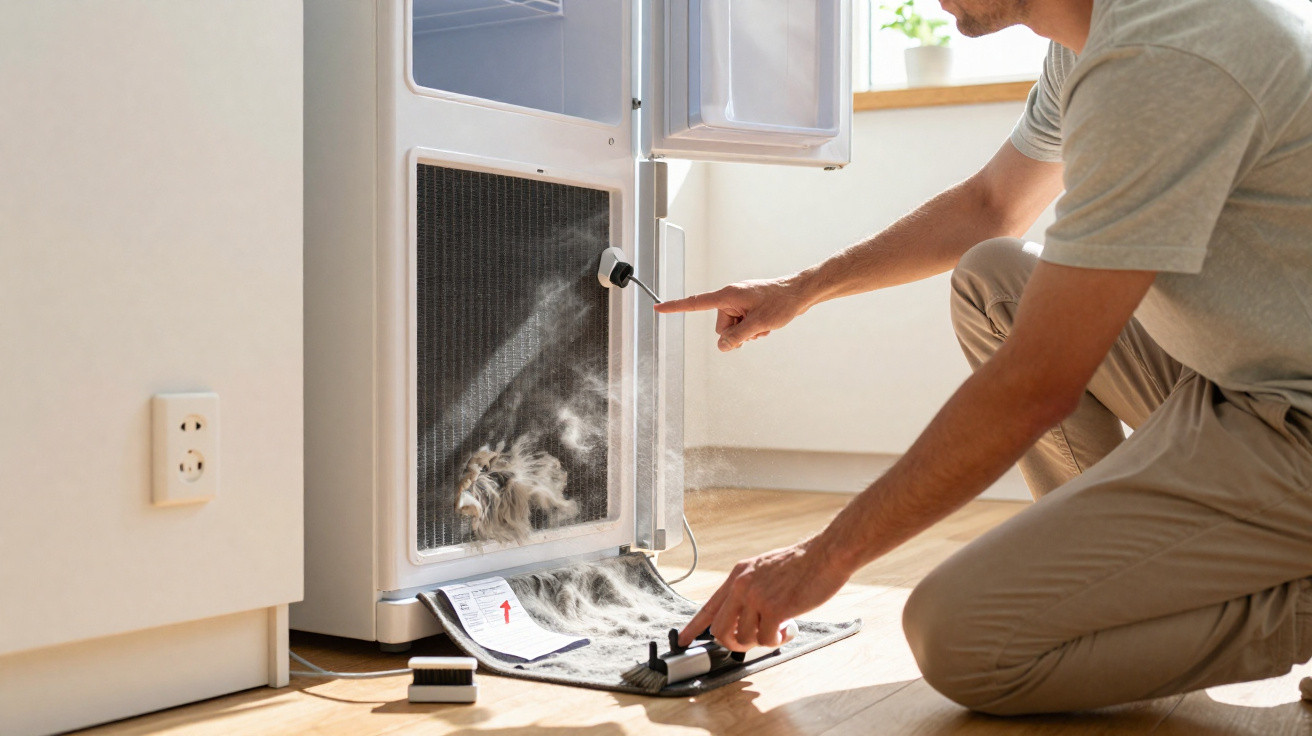
Running across the rear of the appliance is a black metal grille, usually formed into a serpentine pattern: the condenser. It releases the heat that the refrigerator removes from the food inside. Without it, the appliance would simply overheat.
“Anyone who leaves this grille uncleaned for years sends unnecessary money to their energy supplier month after month.”
In modern fitted kitchens, the condenser is sometimes concealed behind panelling. However, it remains openly visible on many freestanding appliances in German households – in theory. In reality, the refrigerator is often positioned so close to the wall that nobody ever looks behind it.
What builds up there over the years
Kitchen air contains more than ordinary household dust. Cooking releases grease droplets and steam into the room. Gradually, all of this settles on the metal grille. A light layer of dust first becomes grey fluff, then turns into a proper furry coating.
After several years, a thick, dense layer can develop, lying over the metal like a blanket. That is when the trouble begins: the refrigerator can no longer release its heat properly into the surrounding air.
How dust drives up electricity bills
A refrigerator does not “produce” cold; it transfers heat from the inside to the outside. For this to work, the condenser needs sufficient airflow. Without it, the system is constantly forced to work at full capacity.
When the motor has to struggle continuously
The dust layer acts like an insulating jacket around the pipes. Heat remains trapped there. The refrigerant cannot cool down sufficiently, reducing the required difference in pressure and temperature. The compressor responds in a very straightforward way: it runs for longer and switches on more often.
Typical signs of a dirty appliance include:
- the motor starts noticeably more frequently
- the rear feels unusually hot
- the interior may even become warmer despite the thermostat remaining at the same setting
- the electricity meter turns perceptibly faster
Consumption can rise by up to 30 per cent
Energy measurements from France, including those by the country’s environmental agency, show that if the rear grille is heavily clogged, a refrigerator’s electricity consumption can increase by around 30 per cent on average.
“An appliance that runs around the clock turns every small waste into real money – year after year.”
Older or larger refrigerators in particular can consume considerably more electricity as a result. At current energy prices, this can soon amount to several tens of pounds per year – with no added benefit for the household.
The five-minute refrigerator check behind the appliance
The good news is that no technician or expensive replacement appliance is needed to make this saving. A vacuum cleaner, a little space and five to ten minutes are enough.
First step: put safety first
Before touching anything at the rear, unplug the appliance from the mains. There are electrical components at the back, some of which become hot. Working there while it is running risks an electric shock or damage to the appliance.
Then carefully pull the refrigerator forwards. Take care with delicate flooring – furniture pads or an old towel beneath the feet can help – and make sure the cable is not pulled too tightly.
How to clean the grille properly
Once there is a clear view, the full extent of the problem often becomes obvious: grey clumps, sheets of dust and perhaps pet hair. Remove it, but do not use force.
| Tool | Use |
|---|---|
| Vacuum cleaner with a narrow attachment | Vacuum up coarse dust and fluff, moving it carefully over pipes and supports |
| Soft, dry brush | Loosen stubborn dust, especially in corners and between narrow fins |
| Dry cloth | Remove remaining dust from the surrounding area and floor |
Water, cleaning products and damp cloths do not belong here. Moisture near electrical parts can cause short circuits and encourage rust.
What changes after cleaning the condenser
Once the condenser is clear again, the refrigerator can operate far more easily. The difference is not only reflected in the electricity bill.
Shorter running times and less heat
After being plugged back in, the appliance needs some time to settle into its normal operation again. Under normal use, however, the motor’s running periods should become noticeably shorter. The rear panel should feel warm, but no longer burning hot.
“Anyone who measures the difference before and after cleaning often has a small lightbulb moment – especially with heavily soiled appliances.”
A simple plug-in energy meter can show how much electricity the refrigerator uses each day. After a thorough clean, these readings often fall significantly.
A longer life for the compressor
Constant strain damages any motor. If the compressor must continuously operate near its limit, internal temperatures rise, seals age more quickly and components wear out. Many costly refrigerator faults begin with years of overloading.
An appliance that can breathe freely puts less strain on the motor. This reduces the risk of breakdowns and extends its usable life. Anyone who keeps their refrigerator running for a few more years without repairs can soon save several hundred pounds – quite apart from the environmental benefit.
How often you should check behind the refrigerator
Many households only move this heavy appliance when fitting a new floor or moving home. That is far too infrequent for the dust layer on the grille.
Put a fixed date in the cleaning calendar
As a rule of thumb, once a year is sufficient in most homes. In households with pets or frequent frying and deep-frying, a check every six months may be sensible.
- Household without pets and with little cooking vapour: clean roughly every 12 months
- Household with a dog or cat, or frequent meat frying: check every 6 months
- Very dusty older properties: inspect it slightly more often
Anyone already planning a spring clean can simply add the rear of the refrigerator to the list. That keeps the effort minimal while making the benefit long-lasting.
Other kitchen electricity-consumption pitfalls
The condenser is not the only area where a refrigerator can waste energy unnecessarily. While standing behind the appliance, it is worth checking a few other things as well.
Distance from the wall and air circulation
Many people push the appliance as close to the wall as possible so that it sits neatly flush. That is harmful to heat dissipation. Even a small gap from the wall and some space above are enough to allow warm air to circulate.
Nearby heat sources, such as a cooker or radiator, also increase consumption. If the refrigerator stands directly beside the oven, it must constantly work against the additional heat.
Temperature settings and everyday use
Setting the temperature unnecessarily low places further strain on the system. Around 7°C is usually enough for the refrigerator compartment, while -18°C is suitable for the freezer section. Every degree colder uses additional energy.
Daily habits also matter:
- do not leave the door open for minutes at a time
- allow hot food to cool before putting it away
- check seals regularly to ensure they remain clean and flexible
Why this small task can make such a difference
When an energy bill hurts, many consumers first look at new insulation, modern heating systems or smart thermostats. Looking behind the refrigerator seems almost trivial by comparison. That is exactly what makes it so appealing: no renovation, no investment and no specialist contractor – just a brief, slightly awkward reach behind a familiar appliance.
Anyone who has done it once quickly sees the logic. A refrigerator runs continuously. Every watt-hour saved adds up without changing everyday life. For people who want to live more economically, the forgotten grille therefore belongs on the same list as LED bulbs and switchable extension leads.













Comments
No comments yet. Be the first to comment!
Leave a Comment