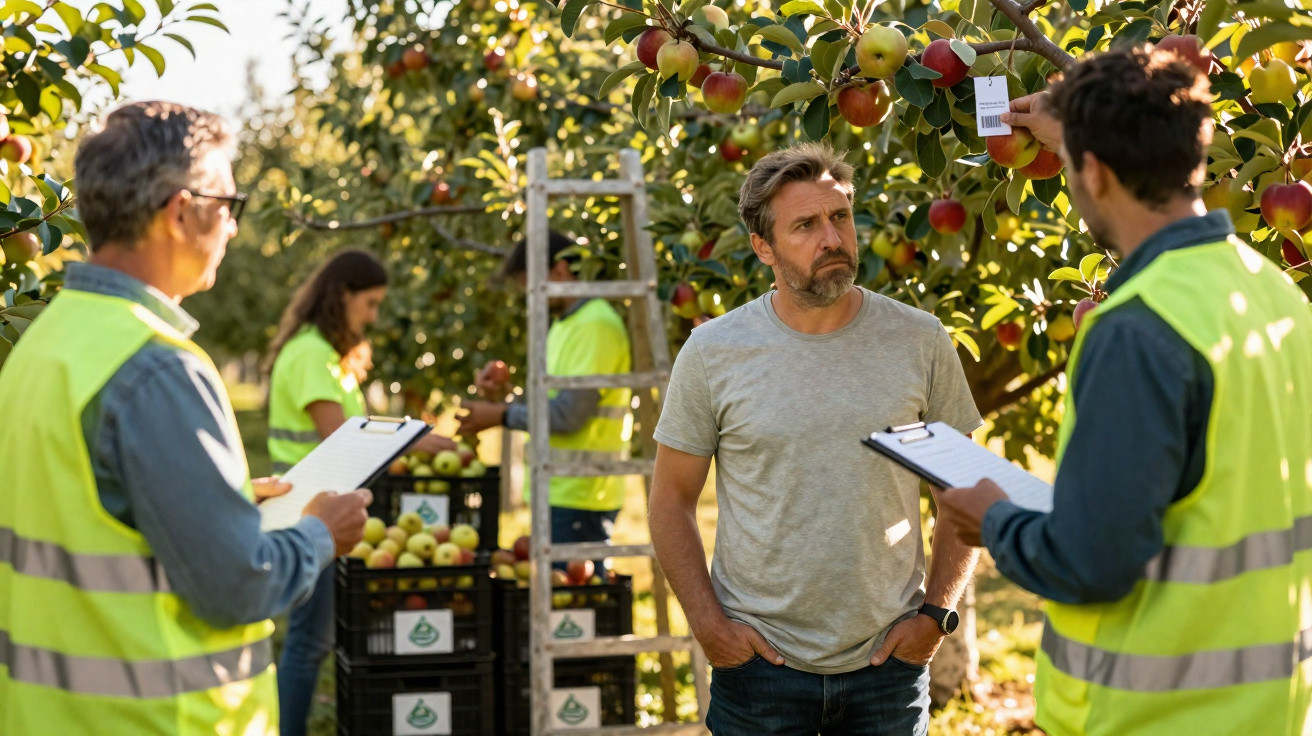
Inspectors then arrived with an entirely new charge - a “charitable harvesting tariff” - turning a good deed into a dispute over paperwork and penalties.
Before the sun rose above the ridge, Elliot March swung open the farm gate and guided in a white van carrying a food bank logo. Dew coated the grass, the bees were barely awake, and apples gleamed among the branches like coins. His former life as a baker was still apparent: he pressed each piece of fruit with his thumb and gave a quiet approval, much as though he were checking a sponge cake.
He once piped lemon cream in a city hotel kitchen. These days, he prunes on Tuesdays and handles the accounts at the kitchen table. The arrangement had been straightforward: volunteers would glean the remaining fruit, while food pantries received apples before they became bruised waste. Then the bill arrived.
An orchard, surplus fruit and an unexpected rule
March’s orchard is not large enough to challenge a supermarket, but after a bumper week it can leave him overwhelmed by windfalls and fruit within moments. He cannot bear watching apples decay on the ground, and he dislikes skips even more. Allowing food banks to collect the leftovers seemed the clearest link between plenty and hunger.
In theory, everyone benefits: the trees, the pantries and the environment. Yet a clipboard introduced a fresh classification: charitable harvesting, covering collection that takes place without wages or a wholesale agreement. The charge now sits within that category, tucked away in a form with a courteous expression.
During one Saturday, 12 volunteers wearing assorted flannel shirts collected 1.4 tonnes of apples from the lower branches in four hours. The fruit was divided among four pantries. A retired nurse recorded the totals. One teenager, who confessed that he “didn’t know apples grew in town”, kept everyone laughing until he later saw the queue outside a pantry and fell silent.
Most of us have experienced the point when an abstract idea becomes a person in front of us. The pantry director sent March a photograph of somebody smiling with a bag of Pink Ladies, along with the message: “Best week in months.” That afternoon, March received a letter setting out a per-bin fee for “noncommercial gleaning oversight.” The contrast was painful.
The “tariff” - the inspectors’ term, not March’s - combines liability, sanitation inspections and what officials call crop displacement calculations into a set figure. It may sound sensible in a meeting room, but in the orchard it feels like a toll charge on generosity. March says one week of gleaning could cost more than his entire insurance rider.
Inspectors maintain that every organised harvest, whether volunteers are paid or not, creates risks that must be controlled: ladder safety, hygiene in transport and traceability if anything goes wrong. They did not create those hazards. They simply began charging for the administrative work. Some rules seem to have appeared before anyone had asked the most important question.
How the charitable harvesting tariff works and what orchard owners can do
Orchard owners confronting the same unexpected charge have a practical route forward. Begin with a seasonal memorandum of understanding between the farm and the food bank. Limit it to two pages. Identify a site lead for each party, and clearly set out the dates, hours and whether volunteers may use ladders or only pole pickers. Straightforward is better than elaborate.
Then ask the insurer for a gleaning rider. Many mutual insurers already provide one, and it costs less than making a claim. Walk through the site 24 hours before volunteers arrive, marking low branches, uneven ground and areas busy with bees using bright tape. Place a handwashing station at the gate, as well as a corner where crates can be hosed down. Let’s be honest: nobody really does that every day.
The same mistakes recur. Do not advertise open-call gleaning events on public pages. Restrict attendance to pre-registered groups, with one captain for every ten pickers. Keep ladders below 8 feet unless people have training. Mark every crate with the date, fruit variety and “noncommercial donation.” Ask the pantry partner to record where the fruit is distributed. That log will protect you if questions arise later.
“We’re not against generosity,” said a regional inspector who agreed to speak provided his name was not published. “We’re trying to make sure generosity doesn’t end with someone in the ER and no way to trace a problem.”
- The “tariff” generally includes one inspection before the visit.
- Administrative processing charged by bin or acre.
- A modest contribution to a risk pool, linked to volunteer numbers.
- Required on-site signs and a compliance inspection.
- Rules governing the disposal of fruit deemed unsuitable.
A modest dispute with major consequences
The anger is not solely about the charge itself. It also reflects the sense that the boundary between sensible precautions and compliance became unclear at precisely the wrong time. March opened his gate because he had more fruit than he could sell, while the need exceeded what one pantry could meet. Add a tariff, and small growers may quickly decide it is no longer worth continuing.
Local officials are aware of the frustration. A neighbouring county has proposed a waiver for farms below 15 acres, while a nonprofit consortium is creating a standard gleaning plan that would replace half of the inspections with self-audits. The momentum exists if people continue to press the issue. Gleaning is not a crime.
There is, however, an uncomfortable reality: liability matters. A single fall can ruin a season, while one bad crate can become a news story. The solution is not to close the gate. It is to create a template that anyone can print, sign and keep in a binder near the barn. Feed people, not dumpsters. Keep the receipts as well.
March says the vans are still welcome while his solicitor challenges the tariff’s scope. He has changed the ladder policy to “feet on the ground only” and introduced two bright-orange safety vests. After every collection, messages from the pantry director appear on his phone: a photograph of older people, a note from a parent, a suggestion of dignity delivered in cardboard boxes. The fee may live on a form, but the stakes live in a kitchen.
He is not so much mounting a rebellion as offering a reminder. The orchard was there before the line items, and neighbours will remain neighbours once the meeting has finished. Sometimes the quickest way to expose an unreasonable rule is to compare it with a sack of pears at 9 a.m. beneath an indifferent sky.
Nearby farmers have begun exchanging useful scripts: the waiver wording that did not alarm the insurer, the map that satisfied an inspector and the sections that can be omitted. One older grower voiced the underlying concern: “I’d rather pay a small fee than shut the gate,” then paused. “But not this much.” There is a point at which generosity becomes too costly.
March has retained one practice from his pastry-making years. When volunteers have gone, he takes a thermos through the rows and looks for fruit they missed. He chooses an apple, polishes it on his sleeve and bites into it loudly. The noise is absurdly cheerful. If asked what he wants, he would say: write a rule that lets him keep that sound in the world.
Outrage can reduce a story to heroes and villains. The fuller picture is more complicated, but also easier to repair. Waive or reduce the charge for small farms. Replace compulsory site inspections with standard checklists and training videos. Allow food banks to take on the administrative work, as they already operate within compliance systems. Above all, remember the reason for this: fruit was falling while people were hungry.
A broader issue sits beneath the dispute: the food system has been built so abundance and need can stand beside one another, separated by a fence. A tariff is simply another sort of fence. If you have dealt with this in your own town, share the template, waiver or wording that succeeded. On certain mornings, a neighbour’s PDF is the most effective policy tool.
March’s final text before dusk was not angry. It contained a weather update and a question: “Pears are ready early. Same crew Thursday?” The pantry replied with a heart and three crate emojis. Policies may change, petitions may spread and fresh acronyms may appear. The pears will not wait.
| Key point | Detail | Why it matters to the reader |
|---|---|---|
| What the “charitable harvesting tariff” is | A charge combining inspection, administration and risk-pool costs for volunteer-led harvesting | Explains why a bill may arrive after a donation |
| Practical workarounds | Memorandum of understanding, insurance rider, site lead, safety checklist and crate labelling | Helps keep gleaning going without falling foul of legal requirements |
| Policy options worth requesting | Small-farm waivers, self-audits and pantry-led compliance | Turns frustration into a specific request at the next meeting |














Comments
No comments yet. Be the first to comment!
Leave a Comment